
Sustainable Packaging Regulations: EU PPWR and Plastic Reduction Compliance
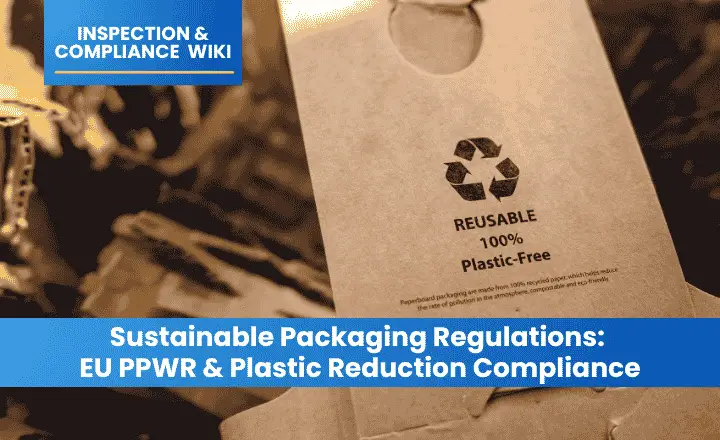
Global regulatory frameworks governing commercial packaging are undergoing a fundamental shift from simple transit protection toward environmental sustainability and circular economy mandates. The EU Packaging and Packaging Waste Regulation (PPWR), alongside regional single-use plastic bans and plastic packaging taxes (such as the UK Plastic Packaging Tax), establishes legally binding obligations for importers, brand owners, and overseas manufacturers.
Under these updated directives, commercial packaging entering international markets must meet strict requirements regarding design for recycling (DfR), maximum empty-space ratios, minimum post-consumer recycled (PCR) plastic content, heavy metal concentration limits, and complete avoidance of restricted hazardous chemicals (e.g., PFAS).
Core Legislative Mandates of the EU PPWR and Global Packaging Rules
Importers must ensure that primary, secondary, and transport packaging comply with specific regulatory pillars across the product lifecycle:
| Regulatory Pillar | Legislative Reference | Mandatory Compliance Target |
| Packaging Recyclability | EU PPWR Article 6 (Design for Recycling) | All packaging must be recyclable by design (Grade A, B, or C performance classes). |
| Minimum Recycled Content | EU PPWR Article 7 & Regional Plastic Taxes | Mandatory minimum post-consumer recycled (PCR) plastic ratios in primary & transport packaging. |
| Packaging Minimization | EU PPWR Article 9 & EN 13428 | Maximum allowable empty-space ratio of 50% in e-commerce and transport packaging. |
| Heavy Metal Limitations | Directive 94/62/EC & US CONEG | Sum of Lead (Pb), Cadmium (Cd), Mercury (Hg), and Hexavalent Chromium (CrVI) < 100 ppm. |
| PFAS & Hazardous Chemicals | EU PPWR Article 5 & REACH Annex XVII | Strict ban on intentionally added per- and polyfluoroalkyl substances (PFAS) in food-contact packaging. |
Technical Evaluation of Recyclability Performance Classes
Under the EU PPWR framework, commercial packaging is graded based on its technical processing compatibility within standard recycling streams:
| Recyclability Grade | Recyclability Yield (%) | Technical Assessment & Market Status |
|---|---|---|
| Grade A | ≥ 95% Recyclable | High circular efficiency; eligible for full market access and lowest Extended Producer Responsibility (EPR) eco-fees. |
| Grade B | ≥ 80% to < 95% | Standard recyclability; acceptable for general commercial import and retail distribution. |
| Grade C | ≥ 70% to < 80% | Minimum threshold for market entry; requires eco-design optimization to avoid future bans. |
| Non-Compliant | < 70% Recyclable | Restricted from entering the EU market; subject to severe EPR fee surcharges and sales bans. |
Engineering Criteria for Plastic Reduction and Material Substitution
Transitioning to sustainable packaging requires evaluating material properties to ensure transit protection while eliminating excess plastic volume:
- Elimination of Single-Use Plastic Wraps: Replace expanded polystyrene (EPS) foam, PVC blister packs, and plastic bubble wrap with molded paper pulp, honeycomb corrugated cardboard, or FSC-certified tissue paper.
- Mono-Material Laminate Structures: Replace traditional hard-to-recycle multi-layer pouches (e.g., PET/PE/Aluminum foil laminates) with high-barrier mono-material flexible structures (e.g., mono-PE or mono-PP flexible films).
- Dimensional Optimization and Empty-Space Reduction: Re-engineer master cartons and inner product boxes to eliminate void space, ensuring compliance with the 50% maximum empty-space ratio mandate and optimizing pallet loading density.
Practical Module: Sustainable Packaging Factory Audit & QC Verification
Quality Assurance (QA) auditors conducting supplier evaluations or Pre-Shipment Inspections (PSI) must verify physical packaging compliance using the following audit parameters:
| Inspection Gate | Audit Focus | Practical Verification Action |
|---|---|---|
| Heavy Metal Screening | XRF Chemical Analysis | Perform instant X-Ray Fluorescence (XRF) screening on printing inks, paperboard coatings, and plastic films to confirm heavy metal concentration is below 100 ppm. |
| Post-Consumer Recycled (PCR) Audit | Chain of Custody & Traceability | Audit supplier purchasing records, raw material weigh-bridge logs, and GRS (Global Recycled Standard) / ISCC Plus certificates to verify declared PCR plastic percentages. |
| Empty-Space Ratio Calculation | Packaging Volume Optimization Check | Measure outer carton dimensions versus total product volume to calculate the void ratio: mpty Space Ratio = [(Package Volume - Product Volume) / Package Volume] * 100%, ensuring it remains <= 50%. |
| Drop & Transit Re-Validation | Structural Integrity Verification | Conduct standard ISTA 1A or ISTA 3A drop and vibration tests on new eco-friendly / recycled packaging configurations to guarantee zero compromise on product protection. |
Frequently Asked Questions (FAQ)
What is the main objective of the EU Packaging and Packaging Waste Regulation (PPWR)?
The EU PPWR aims to reduce packaging waste volume, eliminate non-recyclable multi-material packaging, mandate minimum recycled plastic content, harmonize eco-labeling across EU member states, and enforce a maximum 50% empty-space ratio for commercial transport and e-commerce packaging.
How does the heavy metal concentration limit (Directive 94/62/EC) apply to packaging?
The cumulative sum of four heavy metals—Lead (Pb), Cadmium (Cd), Mercury (Hg), and Hexavalent Chromium (CrVI)—contained within any individual packaging component (inks, cardboard, plastic films, labels) must not exceed 100 mg/kg (100 ppm) by weight.
What is the difference between post-consumer recycled (PCR) and post-industrial recycled (PIR) plastic?
PCR plastic is derived from materials used and recycled by end-consumers (e.g., used plastic bottles), whereas PIR plastic comes from industrial manufacturing waste. Regulatory frameworks and plastic tax exemptions prioritize PCR plastic content.
Can biodegradable or compostable plastics be used to fulfill PPWR requirements?
Compostable plastics are restricted to specific, mandatory applications under PPWR (such as tea bags, coffee pods, and light fruit bags) and must conform to EN 13432 industrial composting standards without contaminating conventional mechanical plastic recycling streams.
How can importers prevent "greenwashing" claims when sourcing sustainable packaging overseas?
Importers must require factory suppliers to provide accredited ISO 17025 laboratory test reports for chemical compliance, alongside third-party chain-of-custody certifications (such as GRS, ISCC Plus, or FSC) to verify recycled or renewable material claims during on-site quality audits.
References
[1] European Parliament and Council. Regulation (EU) on Packaging and Packaging Waste (PPWR) amending Regulation (EU) 2019/1020[S]. Brussels: Official Journal of the European Union, 2024. https://eur-lex.europa.eu/
[2] European Parliament and Council. European Parliament and Council Directive 94/62/EC on Packaging and Packaging Waste[S]. Brussels: Official Journal of the European European Union, 1994. https://eur-lex.europa.eu/legal-content/EN/TXT/?uri=CELEX:31994L0062
[3] European Committee for Standardization. EN 13428:2004 Packaging — Requirements Specific to Manufacturing and Composition — Prevention by Source Reduction[S]. Brussels: CEN, 2004.
Reference Notes
- The EU PPWR sets legally binding European targets for packaging waste reduction, recyclability performance grading, PCR plastic content, and empty-space restrictions.
- Directive 94/62/EC establishes foundational European environmental safety limits, including the maximum 100 ppm heavy metal threshold for commercial packaging.
- EN 13428 specifies technical evaluation procedures for packaging source reduction, material minimization, and environmental impact optimization.
Related Knowledge Base
UN 38.3 and Dangerous Goods Packaging Guide for Lithium BatteriesISTA Packaging StandardsISO 17025: General Requirements for Testing and Calibration LaboratoriesGlobal Recycled Standard (GRS): Recycled Material TraceabilityMIL-STD-810H: Environmental Engineering Considerations and Laboratory TestsCarton Drop Testing: ISTA and Amazon FFP Packaging StandardsPackaging and Drop Test Standards (ISTA 3A)Supplier Quality Evaluation (SQE)
TradeAider