
- About Us

- Our Services
- Your Industry
- Resources
- News & Blog
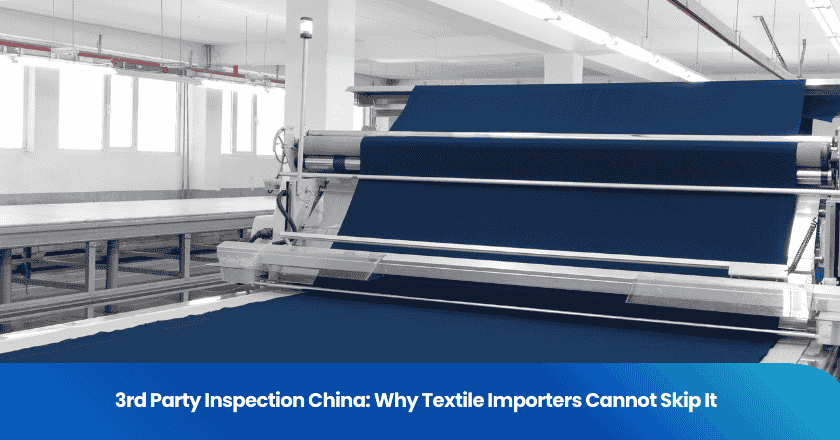
The textile and apparel industry operates on razor-thin margins where a single quality disaster can erase months of profit. For importers sourcing fabrics and garments from China—the world's largest textile manufacturer—the distance between factory floor and warehouse creates a visibility gap that has cost businesses millions in returns, chargebacks, and damaged brand reputation. Third-party inspection bridges this gap, transforming the gamble of overseas sourcing into a calculated business decision with predictable outcomes.
This article examines why textile importers specifically cannot afford to skip third-party inspection when sourcing from China. From the unique quality challenges that textiles present to the financial mathematics of defect prevention, we'll explore what makes this product category particularly vulnerable to quality failures and how professional inspection provides protection that no amount of supplier trust can replace.
Key Takeaways
- Textiles present unique inspection challenges—Fabric defects, color consistency, and sizing accuracy require specialized expertise that general inspectors may lack.
- The cost of textile defects extends far beyond the product—Returns, chargebacks, and brand damage from quality failures can total 5-10x the inspection cost.
- AQL standards for textiles differ from other products—Understanding garment-specific AQL levels helps set realistic quality expectations with suppliers.
- Multiple inspection checkpoints protect textile supply chains—Fabric inspection, during-production checks, and pre-shipment inspection each address different risk points.
- Real-time inspection monitoring is transforming textile quality control—Live visibility enables immediate decisions when fabric or garment issues are discovered.
Why Textile Imports Face Unique Quality Risks
Textiles differ from most imported products in ways that amplify quality risks. Understanding these differences explains why textile importers cannot rely on the quality control approaches that work for other product categories.
The Complexity of Fabric Quality
A textile product's quality depends on multiple interconnected factors: the raw fiber quality, the spinning process, the weaving or knitting method, the dyeing and finishing treatments, the cutting and sewing precision, and the final packaging. A problem at any stage can create defects visible only after the product reaches customers. A fabric might pass visual inspection but shrink excessively after the first wash. Colors might match under factory lighting but show obvious variation under daylight. These latent defects are invisible to casual inspection but devastating to customer satisfaction.
According to industry quality control experts, fabric inspectors have documented over 23 distinct types of common fabric defects, ranging from horizontal lines and shade variation to drop stitches and holes. Each defect type has specific causes in the manufacturing process and requires different prevention strategies. An inspector without textile expertise may miss subtle defects that experienced fabric specialists would catch immediately.
The stakes are particularly high for textile importers because fabric defects often don't become apparent until customers use the products. A garment that looks perfect on the rack may develop pilling after a week of wear, fade after the first wash, or lose its shape after normal use. By the time these problems surface, the products have already reached consumers, generating returns, negative reviews, and lasting brand damage. Pre-shipment inspection cannot catch every potential issue, but it significantly reduces the risk of shipping products with obvious defects.
Color Consistency Challenges
Color matching represents one of the most persistent quality challenges in textile production. Fabric dyeing is a chemical process influenced by numerous variables: water quality, temperature, dye lot, fabric preparation, and processing time. Even under controlled conditions, achieving consistent color across different dye lots is difficult. When factories rush production or cut corners, color variation becomes more pronounced.
Professional fabric inspection includes systematic color checking using standardized lighting conditions and color measurement tools. Inspectors compare production samples against approved color standards, identifying shade variation before products ship. Color shading and dye streaks rank among the most common defects found during fabric inspections. Without third-party inspection, color consistency depends entirely on the supplier's quality standards—standards that may not match your customers' expectations.
The business impact of color inconsistency extends beyond single orders. When a retailer receives a shipment where garments don't match their displayed samples, they may reject the entire order or demand significant discounts. The relationship damage from such rejections can cost future orders worth far more than the inspection investment that would have caught the problem.
Sizing and Fit Variability
Garment sizing might seem straightforward—follow the spec sheet and measure the results. In practice, achieving consistent sizing across a production run requires disciplined process control at every stage. Fabric must be cut consistently, seams must be sewn at precise allowances, and finishing processes must not distort dimensions. When factories rush or lack proper quality systems, sizing drift occurs.
For textile importers selling to retailers or direct to consumers, sizing inconsistency creates immediate problems. Products that don't match their labeled size generate returns, regardless of whether they're technically within tolerance. Customers don't measure garments against spec sheets—they try them on and judge whether they fit. A product that's technically "correct" but doesn't fit as expected fails in the marketplace.
The Financial Case for Third-Party Inspection
Textile importers sometimes view inspection as an optional expense rather than an essential investment. The financial mathematics tell a different story. Understanding the true cost of quality failures makes the ROI case for inspection compelling.
Calculating the True Cost of Defects
When a defective textile product reaches a customer, the visible cost is the refund or return processing. But the total cost includes numerous hidden factors that multiply the direct expense. Return shipping costs, restocking labor, inventory write-offs for unsellable returns, customer service time handling complaints, and the opportunity cost of products that could have been sold at full price all contribute to the real cost of quality failures.
Industry analysis indicates that quality failures leading to returns directly impact profitability. According to textile quality insights from industry sources, defects in stitching, sizing, color fastness, and fabric durability drive higher return rates that erode margins (per 3-Tree). For importers operating on 10-20% margins, a 5% return rate due to quality issues can consume half or more of the profit from that order.
Beyond direct financial costs, quality failures create intangible damage that's harder to quantify but equally real. Negative reviews reduce conversion rates on future sales. Retailer relationships suffer when shipments arrive with quality problems. The reputation damage from a widely-shared quality complaint can haunt a brand for years. These costs don't appear on any invoice, but they're real nonetheless.
Inspection ROI: The Numbers
Consider a concrete example. A textile importer places a $30,000 order for garments from a Chinese supplier. The cost of third-party pre-shipment inspection is approximately $299 for one man-day. If that inspection catches quality issues that would have resulted in a 10% return rate, the importer has prevented $3,000 in direct product returns plus associated costs. The inspection investment of $299 has delivered a 10x return in prevented losses alone.
The ROI calculation becomes even more favorable when considering the full spectrum of risks inspection mitigates. An inspection that catches a critical compliance issue—incorrect labeling, missing required warnings, safety hazards—can prevent regulatory penalties or forced recalls that dwarf the inspection cost. An inspection that identifies systematic quality problems early enables negotiation with the supplier while goods are still at the factory, when remediation costs less than after products have shipped.
For textile importers with ongoing supplier relationships, inspection serves another financial function: it changes supplier behavior. Suppliers who know their products will be professionally inspected invest more effort in quality control. The inspection investment creates accountability that improves quality across all orders, not just those inspected. Over time, this quality improvement reduces inspection needs while maintaining confidence in supplier performance.
Critical Inspection Points for Textile Supply Chains
Effective textile quality control requires inspection at multiple supply chain stages. Each checkpoint addresses different risks and provides different value. Understanding these inspection types helps importers design a quality control program appropriate to their risk profile and budget.
Fabric Inspection Before Cutting
The earliest opportunity for textile quality control is inspecting raw fabric before it's cut into garment pieces. Fabric inspection examines the material for weaving defects, printing flaws, color consistency, and physical properties like weight and density. Catching fabric problems before cutting prevents wasting labor on defective materials.
Fabric inspection typically uses the "four-point system" or similar grading methods that assign penalty points based on defect severity and length. The total penalty points per 100 square yards indicate whether the fabric lot meets quality standards. According to garment industry quality guidelines, AQL 2.5 is commonly used for major garment defects, meaning no more than 2.5% of garments can have defects (per TextileCoach). Fabric inspection ensures that the raw material will support achieving these finished goods standards.
During Production Inspection
During production inspection (DPI) for textiles examines partially completed garments when 20-30% of production is finished. This checkpoint catches construction problems—incorrect seam allowances, missing operations, assembly errors—before they propagate through the entire order. DPI is particularly valuable for new styles, new factories, or orders with complex construction details.
The value of DPI lies in timing. When an inspector discovers that seam allowances are consistently 2mm too narrow, production can stop and correct the issue before hundreds or thousands of defective units are produced. Without DPI, this problem might not surface until pre-shipment inspection, when the only options are to ship defective products or delay the order while the factory reworks everything.
Pre-Shipment Inspection
Pre-shipment inspection (PSI) is the final quality gate before products leave the factory. For textiles, PSI examines finished garments for construction quality, measurement accuracy, appearance, labeling, and packaging. Inspectors randomly sample according to AQL standards, providing a statistical assessment of overall batch quality.
PSI serves multiple purposes beyond defect detection. The inspection verifies that the correct products were produced in the correct quantities. It confirms that packaging and labeling meet requirements. For products with compliance requirements—children's sleepwear, flame-resistant fabrics, specific fiber content labeling—PSI can verify that necessary documentation is included and correct.
Modern inspection services like TradeAider enhance PSI value through real-time monitoring. Instead of waiting 24-48 hours for a report, importers can view inspection findings as they happen. When an inspector photographs a defect, the importer sees it immediately. Questions can be asked and answered while the inspector is still at the factory. Learn more about how TradeAider's real-time inspection platform provides visibility that traditional inspection cannot match.
| Inspection Type | When It Occurs | Key Focus Areas | Primary Value |
|---|---|---|---|
| Fabric Inspection | Before cutting | Weaving defects, color, weight, printing | Prevents wasting labor on defective material |
| During Production | 20-30% complete | Construction, assembly, measurements | Catches problems before they propagate |
| Pre-Shipment | 80-100% complete | Final quality, labeling, packaging | Final gate before products ship |
| Container Loading | At shipment | Quantity, packaging condition, loading | Prevents shipping damage and shortages |
Common Textile Defects Third-Party Inspection Catches
Understanding the specific defects that textile inspections commonly identify helps importers appreciate what's at stake. These aren't theoretical risks—they're problems that occur regularly in textile production and cause significant damage when they reach customers.
Construction and Assembly Defects
Garment construction defects include issues like skipped stitches, broken seams, incorrect seam allowances, missing operations, and twisted seams. These problems typically result from equipment malfunction, operator error, or inadequate training. While sometimes subtle, construction defects affect product durability and appearance. A skipped stitch that goes unnoticed at the factory becomes a seam failure after a customer wears the garment a few times.
Industry documentation of common garment defects identifies open seams, holes, and needle lines among the top 10 defects found during garment inspection. Each of these defects has specific causes and prevention strategies that experienced inspectors understand. An inspector who knows what to look for catches defects that a casual observer would miss.
Color and Appearance Defects
Color defects range from obvious mismatches between garments to subtle shade variations within a single piece. Fabric appearance defects include horizontal lines from weaving problems, barre (vertical bands), uneven printing, and dye marks. These defects often result from process control issues in dyeing or finishing that the cutting and sewing operations cannot correct.
The challenge with color and appearance defects is that they're subjective. What one person considers acceptable variation might be obvious and objectionable to another. Third-party inspection provides objective assessment against defined standards, removing subjectivity from quality decisions. When an inspector documents a color defect with photographs and references the approved standard, the importer has the information needed to make a clear decision.
Dimensional and Measurement Defects
Measurement defects occur when finished garments don't meet specified dimensions. This can happen due to cutting errors, sewing inconsistency, or fabric shrinkage during finishing. For products with strict fit requirements—performance wear, fitted garments, standardized sizing—measurement accuracy directly affects customer satisfaction.
Professional textile inspection includes systematic measurement checking across multiple garment points. Inspectors measure samples against spec sheets, documenting any deviations. When measurements consistently drift outside tolerance, the inspector's report provides the evidence needed to address the problem with the supplier.
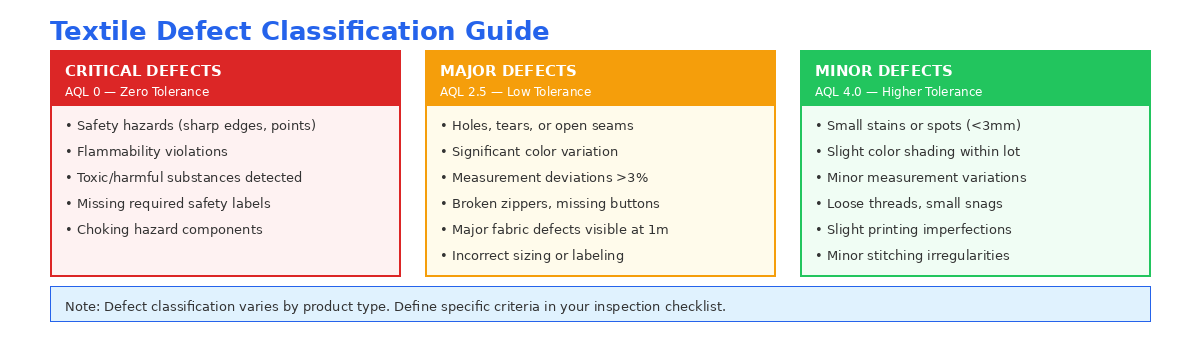
Textile defect classification helps importers understand quality findings and make informed decisions
What to Look for in a Textile Inspection Partner
Not all inspection companies are equally qualified for textile inspection. The specialized knowledge required for effective fabric and garment quality control means textile importers should evaluate potential inspection partners carefully.
Industry-Specific Experience
Textile inspection requires expertise that general product inspection doesn't provide. Inspectors need to understand fabric construction, recognize different defect types, know how to measure garments correctly, and appreciate the quality factors that affect textile products in actual use. An inspector who can effectively evaluate electronics or hard goods may lack the specialized knowledge to catch subtle fabric defects.
When evaluating inspection companies, ask about their textile experience. What percentage of their inspections are textile products? Do they have inspectors who specialize in fabrics and garments? Can they provide sample inspection reports from similar products? The answers reveal whether the company has the textile-specific expertise your products require.
Comprehensive Service Capabilities
Textile importers often need services beyond basic product inspection. Laboratory testing for color fastness, dimensional stability, fiber content, and regulatory compliance may be required. Factory audits to evaluate supplier quality systems help prevent problems before production starts. Container loading supervision ensures products are properly packed and shipped.
The most valuable inspection partners offer comprehensive services that address the full quality control needs of textile importers. When fabric testing, inspection, and auditing come from a single provider, integration improves and accountability is clearer. TradeAider offers textile importers comprehensive quality control solutions spanning inspection, testing, and supplier audit.
Technology and Communication
Modern textile quality control benefits from technology that traditional inspection cannot provide. Real-time inspection monitoring allows importers to see findings as they happen. Digital reports with photographs provide clear documentation of quality issues. Online dashboards enable tracking of quality trends across suppliers and product categories.
When evaluating inspection partners, ask about their technology capabilities. How quickly are reports delivered? Can you view inspection progress in real time? How are defects documented and communicated? The answers indicate whether the inspection company operates with modern efficiency or relies on outdated processes that delay information flow.
Implementing an Effective Textile Quality Program
Third-party inspection delivers maximum value when integrated into a comprehensive quality program rather than used as an isolated checkpoint. The following principles help textile importers develop quality control approaches that protect their supply chains effectively.
Start with supplier qualification before production begins. Factory audits evaluate whether potential suppliers have the quality systems, capabilities, and commitment to meet your standards. An audit that reveals quality weaknesses before you place an order prevents problems that inspection alone cannot solve.
Define quality requirements clearly in specifications that suppliers can follow. Detailed spec sheets with measurements, tolerances, color standards, and construction requirements provide the basis for both supplier quality control and third-party inspection. Vague specifications produce vague inspection results.
Use inspection at appropriate stages based on product risk and supplier history. New suppliers and new products warrant more inspection checkpoints. Established relationships with proven suppliers may require less frequent inspection while maintaining periodic verification.
Act on inspection findings consistently. When inspection reveals quality problems, address them with suppliers promptly and firmly. Accepting defective products to maintain relationships or meet deadlines undermines the inspection investment and signals to suppliers that quality standards are negotiable.
Frequently Asked Questions
How much does textile inspection cost in China?
Textile inspection in China typically costs $199-$299 per man-day, covering one inspector for approximately 8 hours of work. A single man-day is usually sufficient for pre-shipment inspection of 3,000-5,000 garments. Fabric inspection, laboratory testing, and other specialized services may have different pricing structures. TradeAider offers all-inclusive pricing at $199 per man-day with no additional fees.
What AQL level should I use for textile products?
The standard AQL for textile products is 2.5 for major defects and 4.0 for minor defects, consistent with ISO 2859-1 sampling standards. Critical defects (safety issues) should have AQL 0, meaning zero tolerance. Premium products or products with strict quality requirements may warrant tighter AQL levels such as 1.5 for major defects. Discuss appropriate AQL levels with your inspection partner based on your product positioning and customer expectations.
When should textile inspection be scheduled?
Pre-shipment inspection should be scheduled when 80-100% of production is complete and at least 80% of goods are packed. Fabric inspection should occur before cutting begins. During production inspection is most valuable when 20-30% of production is complete. Always schedule with buffer time before your ship date to allow for potential remediation if quality issues are found.
Can third-party inspection catch all textile defects?
Third-party inspection significantly reduces the risk of shipping defective products but cannot guarantee 100% defect-free shipments. Sampling-based inspection provides statistical confidence in batch quality rather than checking every unit. Some defects—particularly latent issues that appear after use like color fastness problems—may require laboratory testing in addition to visual inspection. A comprehensive quality program combining inspection, testing, and supplier development provides the strongest protection.
Textile importers cannot afford to leave quality to chance. TradeAider provides the inspection expertise, real-time visibility, and comprehensive services needed to protect your textile supply chain. Get a free quote or book your inspection today to experience quality partnership t
Related Articles

Grow your business with TradeAider Service
Click the button below to directly enter the TradeAider Service System. The simple steps from booking and payment to receiving reports are easy to operate.

