
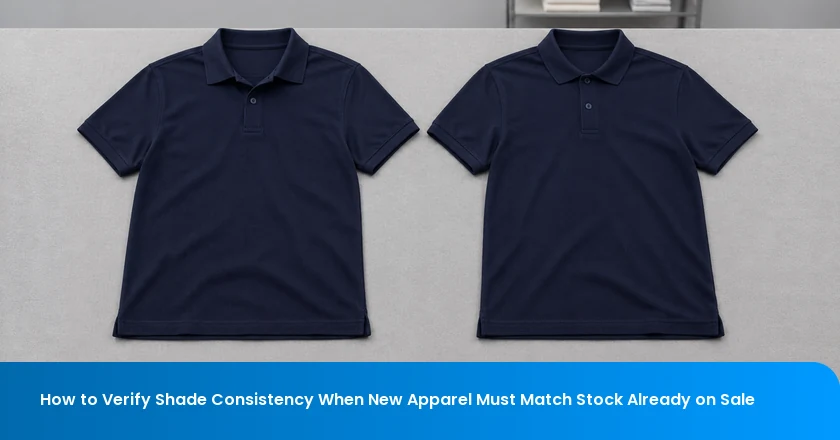
Before approving an apparel reorder, compare finished garments with physical samples from the sellable stock they will join and with the approved master, the retained sample that defines the target shade. Name the stock samples and viewing lights in the purchase order or its inspection instructions. Record each comparison separately. A navy polo can meet the master and still look out of place among the navy polos already on the shelf. That second result tells you where the reorder can go.
Choose physical samples from the stock you will replenish
Choose identifiable, unworn garments in their original saleable condition from each stock group the reorder is intended to join and retain the approved master separately. The master gives you a stable production target. Each stock reference shows what buyers are already being offered under the same colorway, the named color version of the style. To choose the references, start with where the old and new garments can meet.
- Pull clean, unworn samples for the actual store, warehouse or shared fulfillment inventory that will receive the reorder.
- Agree on the finished areas to compare, the light sources and the visual acceptance rule before approving bulk production.
- Log each result by reference and traceable shade group so the buyer can decide what inventory can mix.
Check the distribution plan with the merchandising or inventory team. Two stores supplied from one pool may need the same comparison. Two warehouses carrying visibly different historical shade groups need their own references if either could receive the replenishment. Include garments that represent the actual variation you intend to keep selling together. If the existing groups already look different beside each other, decide where a limited reorder allocation is practical before asking the factory to match them all. One unusually good-looking garment picked from the showroom tells you little about the wider stock.
Where possible, pull a fresh garment from protected, saleable units in the original factory finish, including any approved garment wash. Set aside anything laundered after sale. Record the style, color code, size, original order or lot, location and date. Give it a reference ID. Identify which lot the garment represents, or record the limits of the identification if the old packaging has been lost. Keep an approved counterpart with the buyer when practical, and confirm the copies together before sending one to the factory. Avoid using a sun-exposed display piece as the default target. If its appearance matters for a particular display, add it as a separately identified comparison.
Keep approved development swatches in the order file. For the retail question, compare finished garments with finished garments. A swatch can help explain which component changed. The polo already on sale lets you see how the body fabric, collar and placket look together.
Write the shade comparison into the reorder
Agree on comparative parts, setup, viewing lights and the acceptance rule before examining new goods. An instruction such as “match previous navy” leaves two people free to choose different garments or lamps. The buyer and factory should sign off on the references and requirements together and send the same revision to whoever performs the check. Give the order-specific shade instruction to the inspector alongside the sampling terms in TradeAider’s inspection standard. The shade instruction defines what counts as an acceptable comparison.
Use the same viewing conditions for each pair
AATCC EP9 gives a procedure for visually comparing textile specimens with a standard to assess their color difference. Agree on the procedure and follow it. For an agreed garment comparison, present like areas side by side against a neutral background, orient the material consistently, and view both samples at the same time. Compare body to body and collar to collar. Also check parts intended to match within the new garment, such as its two sleeves or the body and a matching patch pocket. On ribbed or brushed fabrics, check that the texture and direction are comparable before judging the shade.
ASTM D1729 describes visual appraisal for diffusely illuminated opaque materials and identifies D65, simulated average daylight, as a recommended viewing condition. If the order needs a separate retail-light check, agree on a named light source or a documented booth setting chosen to represent that setting and make sure both parties can reproduce it. “Store LED” alone gives the factory little to reproduce when stores have different fixtures.
A color match under one light can break when the light changes, a phenomenon the International Commission on Illumination (CIE) describes as illuminant metamerism. Compare each pair under the required lights in turn. If the shades separate only under one light, log that result for that light. A store-light failure stays visible in the record even when the daylight comparison passes.
Agree on acceptable variation before production
ASTM D2244 calls for buyer and seller to agree on the color tolerance and how it is calculated. It also notes that factors such as texture can affect whether a measured color difference is commercially acceptable. For visual acceptance, consider approved physical examples of acceptable and unacceptable differences from a named reference. If the order also calls for Delta E (ΔE), a numerical measure of color difference, specify the formula, limit and measurement conditions. Set the rule for a disagreement between the visual result and the reading before either is used for release.
Copy these fields into the reorder specification. Give each required master and stock comparison its own entry when the parts, light or acceptance rule differ.
FieldWhat to writeWhat the inspector recordsPhysical referencesMaster ID and condition. Stock garment IDs, lots and intended destinations.IDs and condition of the references actually presented.Finished areasLike-for-like locations plus panels or trims intended to match. Identify the approved finish or wash.Areas compared and any different appearance within one garment.Viewing conditionsAgreed method, named lights, background and garment presentation.Setup used and a comparison outcome for each required light.Decision rulePhysical limit examples or other visual criteria. If measured, the formula, limit and method. Name the approver for ambiguous results.Pass, difference outside the limit, or unresolved for each pair. Include measurements when required.CoverageShade groups, carton access, sample count or plan, and what to hold if a comparison fails or remains unresolved.Garment, group and carton IDs with any gaps in coverage.
If readings are required, confirm the instrument geometry, measurement area and how the material will be backed, oriented and measured more than once. Identify the illuminant and observer settings used for the calculation. A collar and an open knit body may present different measurement challenges, so agree on the parts the instrument can cover.
Check finished garments and keep their shade groups traceable
Compare garments after the intended final finish and keep the link from the sampled garment to its fabric or shade group and carton. A dye lot identifies a batch of dyed material. A shade group is a set of material or garments identified as having a similar appearance under the agreed check. Keep both IDs when the factory sorts one dye lot into several groups. These records help you locate a shade problem among finished goods even after roll labels and cutting tickets are out of sight.
Ask for fabric and trim approvals before bulk cutting. Then compare an early finished garment from the actual repeat materials, after any approved garment wash, brushing or other finish. If the order moves to another dye lot or the finish changes, request another finished comparison for the affected group. Keep earlier approvals with their respective group and revision. That lets the factory narrow the issue to a roll, collar batch or finish run while the affected goods are still identifiable.
Use the factory’s roll, finish and packing records to establish which cartons contain each group. Compare that map with the cartons actually presented. Check for cartons that were relabeled or consolidated between packing and the visit. When the report needs a result for every relevant group, require coverage for each one in the agreed plan. Ask the inspector to flag a group if the items or the named comparator are unavailable.
As the NIST Engineering Statistics Handbook explains, acceptance sampling uses the evidence from a sample for a decision on a defined lot. If you request a targeted check of a suspected shade group alongside a random workmanship sample, agree how each will be selected and reported. Keep the targeted result labeled. The combined paperwork should tell you which observations support the lot decision and which apply to the group under investigation.
TradeAider performs pre-shipment inspection when the order quantity is 100% complete and at least 80% is packed for export. If the finished shade comparison is needed at that stage, agree on access to the reference garments, the viewing setup and the mapped cartons before the visit. Specify how to escalate an unresolved visual check or arrange an instrument comparison if it was part of the purchase requirements.
Two existing navy stock lots and one new shade group
Illustrative scenario. A brand is restocking one navy cotton polo style. Its East warehouse holds lot E1 and its West warehouse holds lot W1, both already on sale under the same item code. Each warehouse sends a clean stock reference. The buyer keeps master M1 in the inspection pack. The signed instruction covers the body and collar after the normal production finish. It requires a match to M1 and to the destination reference within agreed physical limits under D65 and the agreed shop-light setting.
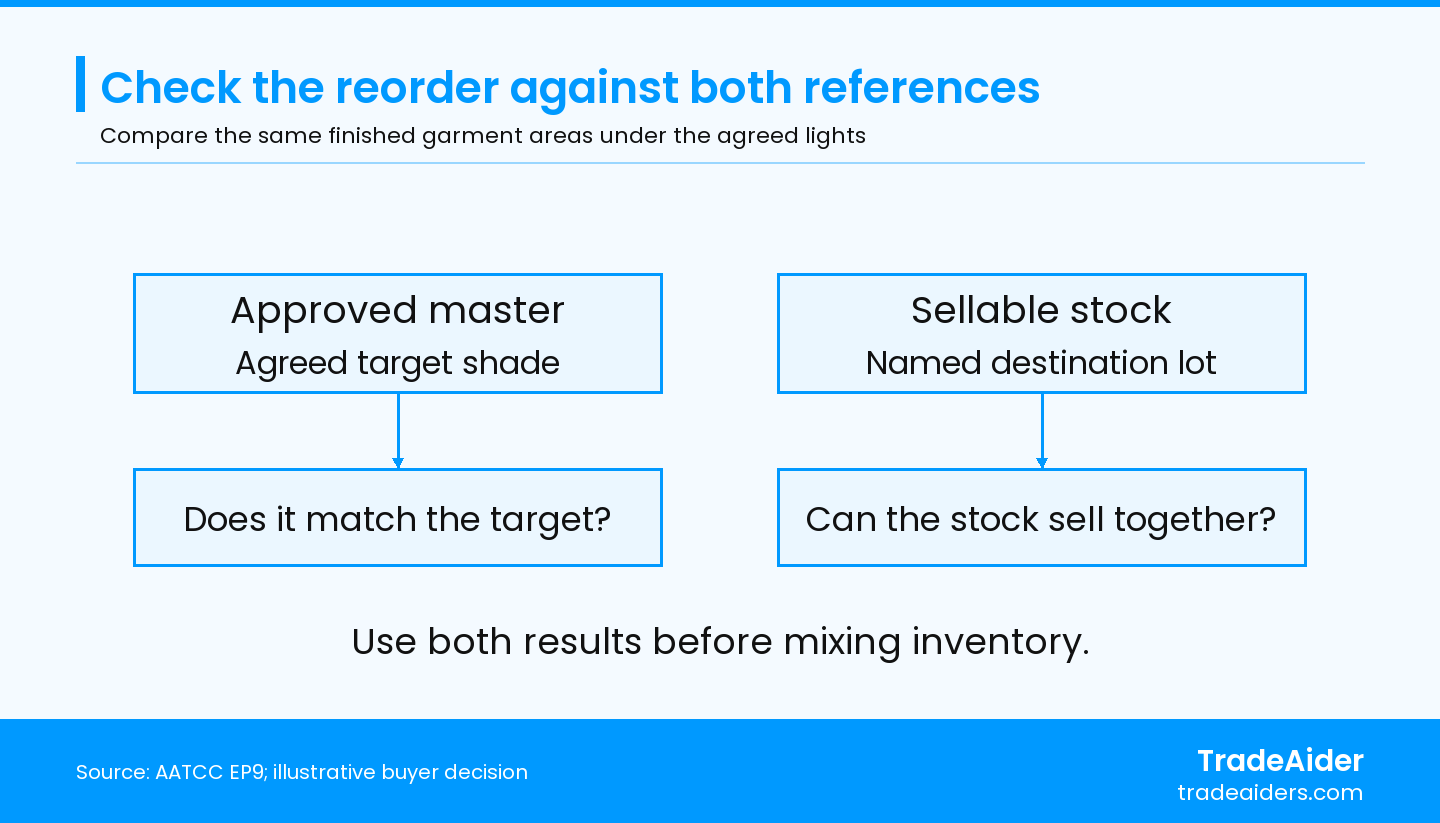
Evaluate both physical references on the same finished areas under the agreed lights. A result against one stock group applies to that group.
For the new group R1, the inspector logs results against M1, E1 and W1 separately. R1 meets the approved limits against M1 and E1 under both lights. Against W1 it meets the limit under D65, yet the body looks too red under the shop light, beyond the agreed physical limit. The collar is within the agreed limit. The inspector checks the reference IDs and garment orientation, repeats the relevant pair comparison, and records the confirmed difference against W1. The evidence is specific enough to act on without guessing how a different destination would see it.
A group can meet the agreed master check while failing the separate stock comparison for one destination. Here the buyer can approve the R1 cartons for East if the reported scope and the other order requirements are satisfied. West replenishment stays on hold. The warehouse team can route East cartons separately only if the packing records identify R1 reliably and the fulfillment system can keep those units out of West orders. If both warehouses become eligible to fill the same customer order from a common pool, the proposed East allocation needs a new decision.
If the factory cannot establish which cartons contain R1 after repacking, the buyer places the potentially affected cartons on hold until their contents can be verified. Approving the East match does nothing to resolve a missing carton map. Likewise, a pass against W1 for a corrected group would need its own finished comparison and documented scope.
Record the exact stock the buyer can mix
Record the comparison result for each named reference and release for mixing only within the demonstrated stock and shade-group scope. The final report should identify the compared areas and finish, the light for each result, the sample and carton IDs, and which groups or locations were outside the agreed check. A useful release entry says which reorder cartons may join which existing stock, what remains on hold and who approved any exception.
- Mix the documented stock. The applicable master and destination comparisons meet the agreed rule, the eligible goods can be identified, and any other release requirements are satisfied.
- Keep the goods separate. A group may work for one destination or an approved separately managed run. Obtain a buyer decision, then confirm that carton labels, warehouse locations and order allocation actually preserve the separation.
- Hold and resolve. If a reference is absent, a required light was unavailable, a shade group failed, or the cartons cannot be traced, record what blocks the choice. Ask for the missing comparison, verified sorting, replacement or a revised allocation as the situation warrants.
Keep photos alongside the written observations. They help people identify a sample and see where the question arose. Use the agreed physical comparison to settle a close shade decision, since a camera, image processing and the recipient’s screen can each change the appearance. If the buyer wants a separate reference sent for approval, document the exact garment and where it came from before it leaves the inspection site.
To scope a TradeAider inspection for a reorder, send the style and color code, the master and stock reference IDs, the viewing instructions and the factory’s shade-group and packing map. If some of these are still being prepared, include what you have and contact TradeAider to discuss the remaining requirements and site access.
Frequently Asked Questions
Can a reference garment come from a customer return?
Use a returned garment for the formal comparison only when its identity, condition and purchase history support treating it as representative of current sellable stock. An unopened return with an intact lot label may provide a usable comparison when the buyer can verify its storage and condition. If wear, washing or a missing label complicates identification, keep the return as evidence of the issue and obtain another garment for the approval check.
What if the original master is missing or damaged?
Ask the buyer to authorize an identified replacement reference and document its scope before using it to make a color decision for the reorder. Look first for an approved duplicate with a verifiable sign-off and suitable condition. If the buyer adopts a new reference from retained garments or current stock, record the effective date and applicable orders. Keep that change visible in future reorders so the color target does not drift one approval at a time.
Does washing the garments help confirm an initial match?
Add a washed comparison as a separate requirement when the buyer needs to assess appearance after laundering as well as appearance at sale. Make the at-sale comparison on garments in their finished saleable condition. For a post-laundering comparison, reserve identified specimens from both groups and agree on the laundering procedure and assessment points in advance. Keep the two results in the report so that a difference after washing can be traced to the specimens and conditions used.
Related Articles


Grow your business with TradeAider Service
Click the button below to directly enter the TradeAider Service System. The simple steps from booking and payment to receiving reports are easy to operate.