
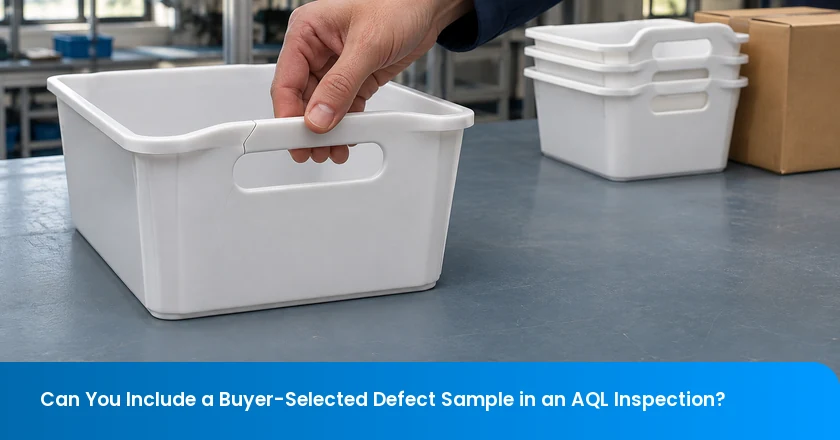
Yes. Ask the inspector to examine the buyer-selected defect sample as a separate targeted check during the visit. Keep the planned random draw intact and count only units that entered it under the agreed selection procedure. If the inspector independently draws the same unit, document that overlap and apply the plan’s counting rule. A defect found in a targeted check can still justify holding goods, even when the random sample meets the acceptance criteria.
Add the suspect unit to the inspection brief
Book the buyer-selected unit as a separate targeted check. Tell the inspector what prompted the request, such as a supplier photo showing a split handle or a failure reported by the buyer’s receiving team. Specify the exact unit, the product requirement to check and the evidence you want back. Ask the factory to preserve the unit as found, including its labels and source carton information, and to disclose any movement, cleaning or repair since the issue was noticed.
- Identify the specimen, defect concern, agreed check method and applicable requirement.
- Record whether the unit is still eligible for the independent random draw or was already removed from the goods presented.
- Agree who receives an alert, which finding can trigger a hold and who can lift it.
Give the inspector the purchase order (PO), product code, lot or production mark, carton and pallet references, and the person who identified the unit. A close-up photo helps the inspector find the symptom. An overview with the carton and product marks gives the buyer a way to check whether the symptom belongs to the goods being inspected. If the specimen arrived from elsewhere, provide the shipment and date it came from and record any gap in its trace.
TradeAider performs pre-shipment inspection when the order quantity is 100% complete and at least 80% is packed for export. Confirm the add-on scope in the booking instructions, including whether the inspector can access the named unit and safely perform the agreed check without altering evidence needed later.
Decide what belongs in the AQL count
Track specimen membership by how it was selected. Acceptance quality limit (AQL) is a parameter used to set an acceptance sampling plan. For this visit, the plan determines the eligible lot, the drawing procedure and the basis for counting. A directed request gives the inspector a separate reason to look at one particular item.
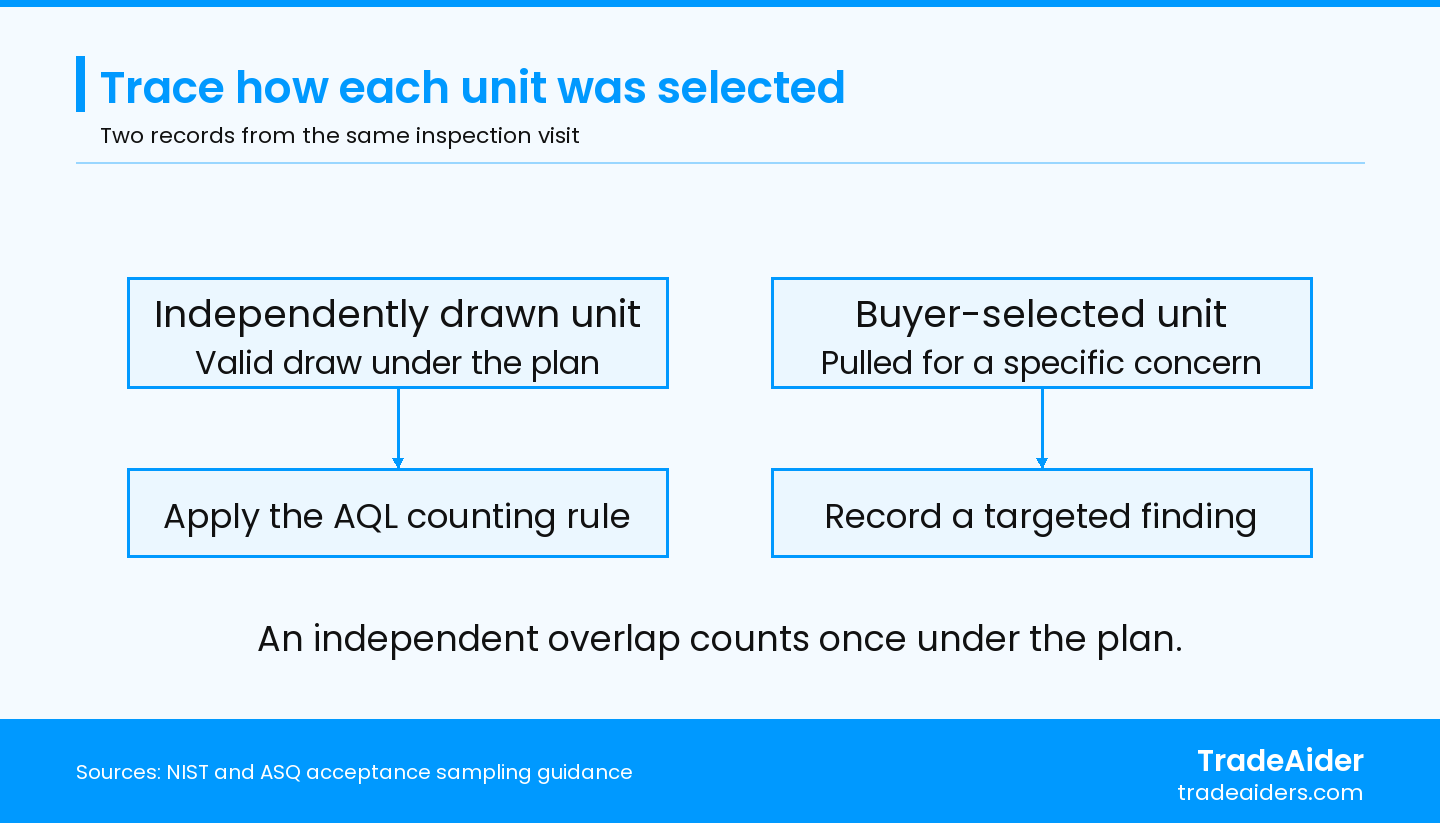
Record why each item entered the check. If the same item was independently drawn under the plan, cross-reference the targeted finding without counting the same observation twice.
The NIST Engineering Statistics Handbook describes acceptance sampling as using a randomly selected sample from the lot to help decide the lot’s disposition. Use the draw record to establish how a unit entered the sample before applying the criteria.
How the unit entered the checkAQL treatmentReport evidenceExamined only because of an observed symptomRecord outside the AQL tallyTargeted record with specimen ID and originIndependently drawn and later recognized as the named unitApply the plan once to that unit and findingDraw record and cross-reference to targeted checkInserted as a substitute for a drawn unitVerify or correct the affected draw before using its resultRecord the substitution and retain both observationsReturned from an older shipment or origin uncertainOutside the current lot sampleRecord the observed condition and limits of attribution
Record the directed check separately
A unit pulled because it looked defective belongs in the targeted record. Find out whether the factory kept it within the goods available for selection or had already quarantined, repaired or replaced it. If suspect stock was removed, reconcile the quantity and affected IDs before drawing. Document the inventory presented, the known exclusions and their disposition. The buyer can confirm whether the available goods still match the approved inspection scope or whether the lot and drawing instructions need to be agreed again before sampling.
A returned unit with the same product code may help reproduce a defect. Only verified production or shipment records can connect it to the current lot. Capture the sample’s condition, its stated origin and any unresolved trace gap. If the buyer wants to check whether the symptom is recurring, agree a separate search of the traceable stock or a new lot inspection with its own sampling basis.
Count a genuine overlap once under the plan
If a unit enters independently under the agreed draw, apply the plan’s counting rule and cross-reference the targeted finding. For example, the original draw log records a pallet, carton and unit position selected before the inspector matched a unit marking to the buyer’s photo. Check that the unit was eligible, that the factory had not put it in a selected position, and that its identity is clear. If the plan counts nonconforming units, apply that basis within the relevant class. If it counts individual nonconformities, follow its rule for distinct findings. The same finding appears only once in the applicable tally.
If a targeted examination would change the unit’s condition, record the planned inspection observations first and agree how and when to perform the add-on test. If the factory supplies a different unit in place of a drawn one, preserve the original draw and defect notes. Clarify what changed, identify the affected coverage, and confirm how to restore a valid draw before relying on any lot result. A specimen name added after the visit does not establish selection history.
Under a double sampling plan, the result of the first draw determines whether the second sample is required. An add-on directed check is a separate task, even if the inspector performs it immediately after the random checks.
Give the random result and targeted finding separate entries
Use separate entries for the random result and the targeted finding. Keep the scope of each entry beside the finding so the reader can see both what was confirmed and which goods it can be attributed to. Where the report template provides one overall result field, add the disposition and reason in a visible summary, with links or references to both entries.
ASQ’s guidance on attribute sampling describes sampling plans as specifying sample sizes and associated criteria for acceptance or non-acceptance. In the random entry, include the lot and quantity presented, the draw method and sample size, the applicable defect class and counting basis, the acceptance and rejection numbers, the observed count and the result. The acceptance number is the maximum count that meets the applicable rule for a single sampling plan. Attach or reference the draw record.
For the targeted entry, include the specimen ID, who requested it, the unit’s source and handling history, the method and criterion, and the observed condition. Use an overview and close-up with identifiers so a second person can match the evidence to the unit. If origin or method could not be confirmed, record that uncertainty next to the observation. Add a cross-reference if the independently drawn specimen also appears in this entry.
Use TradeAider’s inspection standard when preparing the checklist. In the order-specific instructions, record the defect criteria, exception alert and authorization rules. If the report uses the word “pass,” qualify which part passed and record any hold in the same summary. That keeps the buyer’s shipping team from relying on a label without seeing the outstanding action.
A cracked handle puts a traced carton group on hold
Illustrative scenario. A buyer orders 600 white storage bins. The factory sends a photo of a crack at a molded handle on unit C17-B, then puts the unit back in its documented position in carton C17 without repair. All 600 units, including C17-B, are eligible and available when the inspector draws the 80 units specified in the buyer’s plan. The inspector uses the agreed carton and unit selection procedure across the presented goods. The draw log shows the planned sample was filled by other units. The buyer has separately instructed the inspector to examine C17-B after the random draw and alert the buyer if the reported crack is confirmed.
A passing random sample can coexist with an order hold based on a separately confirmed issue. In this example, the agreed random plan counts units with a major nonconformity and has an illustrative acceptance number of 2 and rejection number of 3 for that class. The inspector records 1 of 80 with a major nonconformity under that rule. In the separate check, the inspector matches C17-B to its carton and the supplier photo, then confirms a visible crack at the handle against the buyer’s requirement for an intact handle.
- Random sample. Major nonconformity count 1 of 80. Result meets the agreed rule. See the draw log.
- Targeted check. Crack confirmed on C17-B. Attach the unit mark and close-up. The unit was available but did not enter the random draw.
- Disposition. The lot record traces the suspect unit to a 120-unit molding run with an identifiable carton range. The buyer holds that range and requests documented sorting and disposition of any affected units. The buyer reviews the remaining 480 units for separate release only after verifying separation and satisfying the other order requirements.
If the independently documented draw had included C17-B and the crack met the same major classification, it would contribute one nonconforming unit under the plan. If the other major finding also remained, the count would then be 2 of 80. The buyer’s separate hold instruction would still apply to the confirmed crack.
Decide what to hold and what evidence will clear it
Base the release review on the affected goods, the severity rule and the remaining evidence needed. A confirmed defect on the named unit establishes its condition. Trace data and agreed criteria help determine where to look next. If the buyer cannot yet identify the affected range, record the broader scope under review and the evidence needed to narrow it. Preserve the inspection result as recorded. Later sorting, repair or reinspection needs its own dated record.
Ask the supplier for a map of suspect production or cartons, the sorting method and marking used to separate checked goods, the result by group, and how affected units were handled. Specify what verification is required before release, such as reviewing the documented sort or checking a correctly defined lot again. Name the buyer or designated quality owner who can approve shipment and record the exact goods their decision covers. If the buyer’s defect criteria require immediate escalation, follow that rule at the time of observation.
To add a directed check to a booking, contact TradeAider with the PO, specimen and carton identifiers, photos of the concern, the check method and your hold instruction. Ask for separate random and targeted entries, with the selection history and evidence trace attached.
FAQ
Can I send only a photo of the suspect unit?
Yes. Use it to identify the symptom and request a check, and describe the named unit as photo evidence unless an inspector verifies it physically. If the original cannot be located, identify what the inspector actually examined and which parts of the buyer’s request remain unresolved. Preserve the photo’s date and any visible packaging or product marks.
Can we add a targeted check after the inspector arrives?
Yes, if the inspector can confirm the amended scope and preserve the original draw and the condition of the specimen. Record who requested the change, its time, the specimen reference and the newly agreed check. If the method or access is unavailable, record the requested check as pending and keep the original inspection observations available for review.
Can I request a separate AQL result for a suspect batch?
A separate result can be appropriate when the suspect goods form an identifiable inspection lot under an agreed plan and are available for a valid draw. First confirm their boundaries and quantity. If the buyer is asking the inspector to look only at known defective or already segregated pieces, report that examination and its trace as targeted evidence.
مقالات ذات صلة

نمِ عملك مع خدمة TradeAider
انقر على الزر أدناه للدخول مباشرة إلى نظام خدمة TradeAider. الخطوات البسيطة من الحجز والدفع إلى تلقي التقارير سهلة التشغيل.