
- About Us

- Our Services
- Your Industry
- Resources
- News & Blog
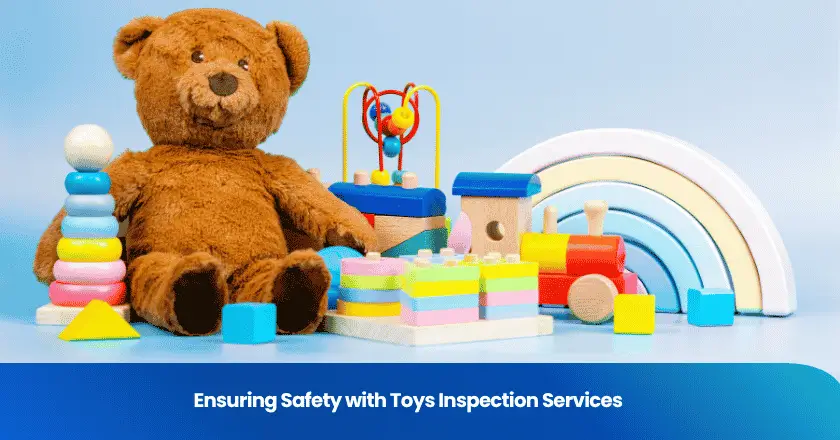
For children, toys are gateways to imagination, learning and play. For brands, importers and retailers sourcing from China — the world’s largest toy manufacturing base — they also carry rigorous safety obligations and high regulatory risk. A single non-compliant batch can trigger customs detention, mandatory product recalls, regulatory fines and lasting damage to brand trust, with consequences extending far beyond commercial loss.
Professional third-party toy inspection services deliver systematic, independent verification of product safety and compliance at every stage of production. By aligning checks with global mandatory standards and on-site audit expertise, inspection acts as a critical safety gatekeeper, ensuring toys deliver joy without compromising child well-being.
Why Toy Safety Inspection Is Non-Negotiable for Global Sourcing
The High Stakes of Non-Compliant Toys
Toys are among the most heavily regulated consumer product categories worldwide, due to the vulnerability of child end-users. Non-conforming products can pose choking, poisoning, injury or fire hazards, and regulators in major markets enforce strict penalties for violations. In the US, the Consumer Product Safety Commission maintains ongoing toy recall programs and can impose significant civil penalties for non-compliance. In the EU, unsafe toys are subject to rapid alert and market withdrawal under the Toy Safety Directive. For importers, the total cost of a single recall — including reverse logistics, public communication and inventory write-off — typically far exceeds the cost of proactive inspection.
Limitations of Factory Self-Declaration
While most reputable toy factories maintain internal quality control teams, in-house QC often operates under pressure to meet tight production and shipment deadlines. This can lead to downplayed hazards, incomplete safety checks and overstated compliance claims. Independent third-party inspection removes this conflict of interest: inspectors have no stake in production outcomes, and apply uniform evaluation criteria to every batch, delivering objective, defensible safety data for buyers.
Core Hazard Categories Identified by Professional Toy Inspection
A comprehensive toy inspection covers physical, chemical, flammability and labeling risk dimensions, aligned with regulatory requirements for the target market.
Physical and Mechanical Hazards
Physical defects are the most commonly identified toy safety issues. Inspectors verify:
- Small part integrity to prevent choking and aspiration risks for age-appropriate categories
- Absence of sharp edges, sharp points and protruding parts that could cause cuts or punctures
- Structural stability and impact resistance to prevent breakage into dangerous fragments
- Secure attachment of eyes, noses, buttons and other small components on plush and plastic toys
- No string, cord or strap lengths that present strangulation risks for young children
Chemical Safety Hazards
Chemical non-compliance is a leading cause of toy recalls globally. Inspection includes document review and targeted sampling verification for restricted substances, including:
- Heavy metal migration (lead, cadmium, chromium and others) in surface coatings and substrate materials
- Phthalate content in plastic and PVC components
- Banned azo dyes, formaldehyde and allergenic fragrances in textile and plastic toys
- Toxic heavy metals and harmful organic compounds per regional regulatory limits
Flammability and Electrical Risks
For plush, fabric and stuffed toys, inspectors verify compliance with flammability requirements to prevent rapid burn risks. For battery-operated and electronic toys, checks include electrical insulation, battery compartment safety, wiring integrity and overheat protection to avoid shock, fire or burn hazards during normal use and reasonably foreseeable abuse.
Labeling and Instruction Deficiencies
Even safe toys can fail regulatory compliance due to incorrect labeling. Inspection confirms:
- Clear age grading warnings and choking hazard statements where required
- Legible manufacturer and importer identification marks
- Accurate safety and usage instructions in the language of the destination market
- Correct traceability marks and batch coding for recall readiness
Global Toy Safety Standards and Regulatory Framework
Professional toy inspection is structured around the mandatory safety standards of each major import market. The following frameworks form the baseline for compliance evaluation.
EU Toy Safety Directive and EN 71 Series
The EU’s Toy Safety Directive (2009/48/EC) sets the core safety requirements for all toys placed on the European market, supported by the harmonized EN 71 standard series covering mechanical and physical properties, flammability, and migration of certain elements. Inspections align with these requirements to help importers meet CE marking obligations.
Reference: European Commission – Toy Safety
US ASTM F963 and CPSC Safety Requirements
In the United States, ASTM F963 is the mandatory consumer safety specification for toys, enforced by the Consumer Product Safety Commission. It covers mechanical safety, flammability, chemical limits and labeling requirements for all toys intended for children 12 and under. Inspection protocols map directly to ASTM F963 clauses to support compliance and reduce import detention risk.
Reference: U.S. CPSC – Toy Safety Standards
China GB 6675 National Toy Safety Standard
GB 6675 is China’s mandatory national toy safety standard, covering basic safety, mechanical and physical properties, flammability and chemical migration limits. It applies to toys sold in the domestic Chinese market and is also widely used as a baseline for export-oriented production quality control.
End-to-End Toy Inspection Workflow
Maximum safety control requires inspection at multiple production stages, rather than a single final check. A complete toy quality and safety program covers four core nodes.
Pre-Production Material and Raw Component Audit
Before bulk production begins, inspectors verify raw materials, plastic resins, paints, coatings and small components against approved specifications and safety requirements. This stage catches high-risk material issues — such as non-compliant paint or unqualified small parts — at the lowest-cost point, before they are built into finished products.
During-Production Process Checks
When 20–30% of the order is complete, inspectors audit semi-finished and early finished units on the production line. This stage identifies recurring assembly defects, process deviations and workmanship issues early, allowing factories to adjust workflows before defects are replicated across the full batch.
Final Random Inspection (FRI) Before Shipment
Conducted when production is 100% complete and at least 80% of goods are packed, final inspection uses internationally recognized AQL (Acceptable Quality Limit) sampling to evaluate the full batch. Inspectors assess workmanship, physical safety, function, packaging and labeling against approved standards, delivering a clear pass / fail / hold recommendation before shipment is approved.
Container Loading Supervision
Loading supervision verifies that the correct, qualified products are properly packed, secured and loaded into containers. It prevents short shipment, wrong-SKU loading and transit damage, and creates a sealed, documented handover point between production and logistics, ensuring the inspected batch matches the goods that actually ship.
TradeAider Toy Inspection Services Across China
TradeAider provides professional third-party toy inspection services across all major toy manufacturing regions in China, including Guangdong, Zhejiang, Jiangsu and Shandong provinces — the core production hubs for plastic, plush, wooden and electronic toys.
Our local inspectors are trained in international toy safety standards and follow customized checklists aligned with your target market requirements, product category and age grading. We cover the full inspection lifecycle: pre-production material verification, during-production process audits, final random inspection and container loading supervision.
Clients receive official photo-documented inspection reports within 24 hours of on-site completion. Through our online service system, buyers can also monitor inspection progress and view real-time findings, enabling fast, informed decisions on batch acceptance, on-site rework or shipment hold. Contact now.
Frequently Asked Questions
What types of toys can be inspected?
We inspect all major toy categories, including plastic toys, plush and stuffed toys, wooden toys, electronic and battery-operated toys, educational toys, ride-on toys, baby products and toy stationery. Inspection protocols are adjusted based on product type, target age group and destination market standards.
Does on-site inspection replace laboratory chemical testing?
No. On-site inspection verifies physical safety, workmanship, labeling and documentation, and includes visual screening for high-risk chemical indicators. Quantitative chemical analysis requires accredited laboratory testing. Inspection and lab testing are complementary services, and many buyers combine both for full compliance coverage.
How long does a standard toy final inspection take?
A typical final random inspection for a 20-foot container equivalent takes 2–4 hours on site, depending on product complexity and sample size. The official report with photo documentation is issued within 24 hours of inspection completion.
How often should I arrange toy inspection for my suppliers?
For new suppliers or first-time orders, we recommend inspection at both the during-production and final stages. For stable, long-term suppliers with a proven quality track record, final random inspection per batch is the standard configuration. Inspection frequency can be adjusted based on past performance and product risk level.
Conclusion
Toys carry a unique responsibility: they must delight children while protecting them from harm. In a global sourcing landscape where regulatory requirements grow stricter and consumer expectations for safety continue to rise, proactive quality control is no longer optional.
Professional toy inspection services turn abstract safety standards into concrete, batch-specific verification. They identify hazards before products leave the factory, reduce recall and compliance risk, and give brands, importers and parents the confidence that every toy delivers safe, reliable play value.
For businesses sourcing toys from China, independent on-site inspection is the most cost-effective way to uphold safety commitments, protect brand reputation and ensure that every product that reaches a child’s hands lives up to the highest safety standards.
Related Articles
Grow your business with TradeAider Service
Click the button below to directly enter the TradeAider Service System. The simple steps from booking and payment to receiving reports are easy to operate.

