PPI, DUPRO, and PSI
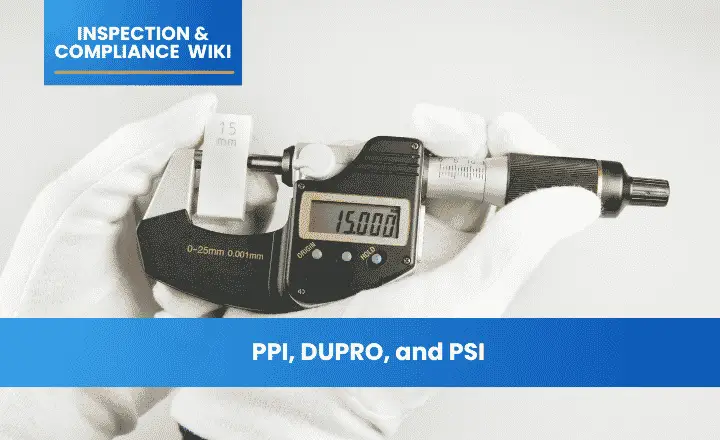
Product quality inspection can take place at different stages of manufacturing. Three common checkpoints are Pre-Production Inspection (PPI), During Production Inspection (DUPRO), and Pre-Shipment Inspection (PSI).
Each serves a different purpose: PPI checks production readiness before bulk manufacturing begins, DUPRO evaluates quality while production is underway, and PSI checks finished goods before shipment.
These inspections help buyers identify different types of quality issues at different points in the manufacturing process. They are not interchangeable, and the appropriate scope depends on the product, production schedule, and agreed inspection requirements.
PPI vs. DUPRO vs. PSI: Key Differences
| Inspection Type | When It Takes Place | Main Purpose | Typical Inspection Focus |
|---|---|---|---|
| Pre-Production Inspection (PPI) | Before mass production begins | Check materials, specifications, samples, and production readiness | Raw materials, components, approved samples, specifications, production processes, and initial preparation |
| During Production Inspection (DUPRO) | While manufacturing is underway; TradeAider typically conducts it when 20–50% of the order is completed | Identify quality issues early enough for corrective action during production | Workmanship, dimensions, function, materials, production processes, and available packaging |
| Pre-Shipment Inspection (PSI) | When 100% of the order is complete and at least 80% is packed | Evaluate finished goods before shipment | Product appearance, workmanship, dimensions, function, quantity, packaging, labeling, and other agreed requirements |
The timing and scope shown above reflect TradeAider's service descriptions. Actual inspection requirements should be confirmed for each order.
Pre-Production Inspection (PPI)
A Pre-Production Inspection takes place before mass production begins. Its purpose is to check whether the factory has the necessary materials, product references, and preparation in place to start manufacturing according to the buyer's requirements.
Depending on the product and agreed scope, a PPI may include:
- Checking raw materials and components against the specified requirements.
- Comparing available materials, components, or initial products with approved samples.
- Reviewing product specifications, drawings, and other relevant references.
- Examining production processes and preparation.
- Checking relevant packaging materials and accessories when available.
Why it matters: If a material, component, or product reference is incorrect, identifying the issue before mass production can help avoid repeating the same problem across a large quantity of goods.
PPI does not establish the final quality of an entire production order. It evaluates readiness and the items available for inspection at that stage.
Learn more about TradeAider's Pre-Production Inspection service
During Production Inspection (DUPRO)
A During Production Inspection takes place while manufacturing is in progress. TradeAider typically conducts DUPRO when 20–50% of the order is completed, allowing the inspector to examine production output while time remains to address identified issues.
Depending on the product and inspection scope, a DUPRO may include:
- Examining product appearance and workmanship.
- Checking dimensions, weight, and other specified measurements.
- Performing relevant functional checks.
- Reviewing materials, components, and production techniques.
- Checking packaging and accessories that are available at the time.
- Identifying recurring defects or inconsistencies in the production output.
Why it matters: Problems found during production may be addressed before they affect more units. Buyers can use the findings to discuss corrective action with the supplier while manufacturing is still underway.
DUPRO is not a final assessment of the complete order when some products are still being manufactured. Its findings reflect the production status and items available at the time of inspection.
Learn more about TradeAider's During Production Inspection service.
Pre-Shipment Inspection (PSI)
A Pre-Shipment Inspection is a final quality checkpoint before goods leave the factory. TradeAider conducts PSI when the order is 100% complete and at least 80% packed. The inspection typically uses sampling to evaluate the finished goods against the agreed requirements.
Depending on the product and inspection scope, a PSI may include:
- Checking product appearance and workmanship.
- Measuring dimensions and weight.
- Performing specified functional tests.
- Verifying quantity and product assortment.
- Checking packaging, labeling, shipping marks, and accessories.
- Evaluating defects under the applicable inspection criteria and sampling plan.
Why it matters: PSI provides information about finished-goods quality, packaging, and other specified requirements before shipment. The findings can support the buyer's decision about whether further action is needed.
A sampling-based PSI does not mean every unit has been inspected. Its result must be interpreted according to the applicable sampling plan and agreed acceptance criteria.
Learn more about TradeAider's Pre-Shipment Inspection service.
How the Three Inspection Stages Work Together
PPI, DUPRO, and PSI can be used as complementary checkpoints throughout an order:
- Before mass production — PPI: Review materials, specifications, and production readiness.
- During manufacturing — DUPRO: Check production output and identify issues while corrective action may still be possible.
- Before shipment — PSI: Evaluate finished goods and shipment preparation against the agreed requirements.
Not every order requires all three inspections. The appropriate combination depends on the product, manufacturing process, buyer's requirements, and risks that need to be addressed.
These checkpoints also do not replace specialized laboratory testing, product certification, or other verification when those are separately required.
Inspection Reports and Timely Quality Decisions
An inspection is most useful when its findings can support timely decisions. TradeAider provides online real-time inspection updates through its Service System, allowing clients to follow identified issues while the inspection is underway. An official report is provided within 24 hours after the inspection.
When defects are found, buyers can review the findings and provide instructions based on their requirements. Depending on the situation and agreed service scope, this may involve accepting commercially acceptable products, requesting correction and re-inspection, or rejecting products that do not meet the applicable criteria.
The three inspection stages provide different types of information. PPI focuses on readiness, DUPRO on production progress and emerging quality issues, and PSI on finished goods before shipment.
Frequently Asked Questions
Is PPI the same as DUPRO?
No. PPI takes place before mass production to review materials and production readiness. DUPRO takes place while production is underway to evaluate actual production output and identify issues during manufacturing.
Is DUPRO necessary if a PSI is planned?
Not for every order. PSI evaluates finished goods before shipment, while DUPRO provides an earlier opportunity to identify issues during production. If a problem is found only at the final stage, correcting it may be more difficult or disruptive.
When should PSI take place?
For TradeAider's PSI service, the order should be 100% complete and at least 80% packed. This allows the inspection to evaluate finished products and relevant packaging before shipment.
Do these inspections guarantee that all products are defect-free?
No. Inspection results apply to the checks performed and the agreed scope. In particular, sampling-based inspections evaluate selected units rather than every product in the lot. Inspection helps identify issues but cannot guarantee the absence of all defects.
Can buyers arrange only one inspection stage?
Yes. The inspection arrangement depends on the order requirements and the buyer's quality control plan. Buyers may arrange one checkpoint or combine several stages when broader oversight is needed.
Related Knowledge Base
TradeAider