
- About Us

- Our Services
- Your Industry
- Resources
- News & Blog
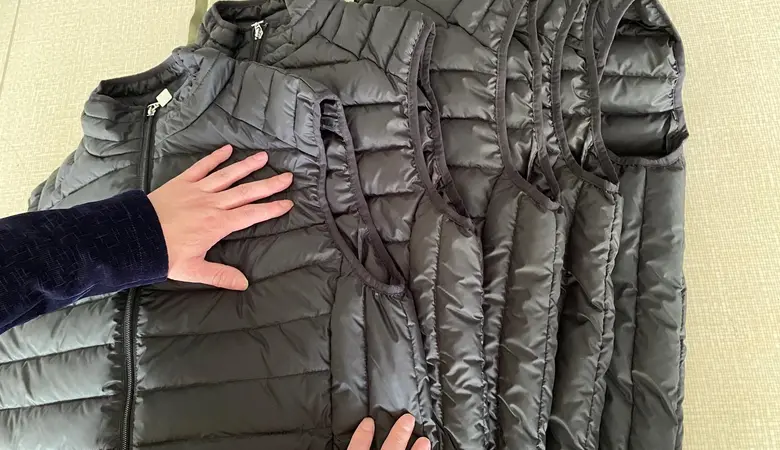
A garment can look perfect in a production sample and still have defects when the bulk order is completed.
Color variation, incorrect measurements, stitching defects, damaged trims, wrong labels, packing errors, and workmanship problems can appear during mass production. Once the shipment leaves the factory, correcting these issues becomes much more expensive and complicated.
That is why garment final inspection before shipment is an important control point for clothing buyers.
A final inspection provides an independent check of the finished garments against the buyer's approved specifications before the shipment is released.
For most apparel orders, the inspection should cover more than appearance. A practical final inspection can include quantity, workmanship, measurements, fabric and color consistency, accessories, labeling, packaging, and selected functional checks, with sampling and acceptance criteria agreed in advance.
What Is Garment Final Inspection?
Garment final inspection is a quality inspection performed after production is substantially completed and the finished garments are ready for shipment.
The purpose is to determine whether the finished order conforms to the buyer's requirements before it leaves the factory.
Depending on the inspection plan, a garment final inspection may verify:
- Product style and specifications
- Quantity and assortment
- Fabric appearance and workmanship
- Measurements and size grading
- Color and shade consistency
- Stitching and seam quality
- Buttons, zippers, snaps, and other trims
- Labels and care instructions
- Printing, embroidery, and logos
- Packaging and carton markings
- Selected functional or workmanship checks
- Defect classification and overall inspection result
The inspection scope should always be based on the approved sample, technical specifications, purchase order, packing requirements, and applicable product requirements.
Why Should Clothing Buyers Inspect Garments Before Shipment?
The final inspection is essentially a release decision before the buyer loses control of the goods.
1. Bulk Production Can Differ From the Approved Sample
The approved sample establishes the expected appearance and construction of the garment, but mass production introduces more variables.
For example, production may involve:
- Different fabric lots
- Multiple sewing lines
- Different operators
- Repeated cutting and sewing processes
- Different accessory batches
- Changes made during production
A final inspection helps determine whether these variations have affected the finished order.
2. Defects Are More Expensive After Shipment
A defective garment found at the factory can potentially be repaired, reworked, replaced, or removed before shipment.
The same defect discovered by the buyer or consumer after delivery can result in:
- Rework or replacement costs
- Returns
- Customer complaints
- Inventory write-offs
- Marketplace disputes
- Delayed product launches
- Damage to brand reputation
The earlier a significant quality problem is identified, the more options the buyer has to respond.
3. Clothing Has Many Quality Variables
Apparel quality is not determined by one measurement.
A garment may have the correct size but poor stitching. It may have good workmanship but incorrect labeling. It may look acceptable on the outside while having a defective zipper or poorly finished internal seams.
A final inspection therefore needs to evaluate the garment from multiple perspectives rather than relying on a simple visual check.
When Should Garment Final Inspection Be Conducted?
Final inspection should be scheduled when the order is sufficiently complete for meaningful inspection and the finished goods are available for examination.
For a typical pre-shipment inspection, the goods should be substantially produced and sufficiently packed to represent the shipment.
TradeAider's apparel inspection guidance describes Final Random Inspection as taking place when 100% of the goods are manufactured and at least 80% are packed, with samples selected according to an agreed AQL sampling procedure.
The exact timing can vary according to:
- Order size
- Production schedule
- Product complexity
- Packing method
- Shipping deadline
- Buyer inspection requirements
The key principle is:
Inspect early enough to allow corrective action, but late enough that the inspection represents the actual shipment.
What Does a Garment Final Inspection Check?
A useful apparel final inspection can be divided into several major checkpoints.
1. Product and Quantity Verification
The inspector first confirms that the goods being inspected correspond to the buyer's order.
Typical checks include:
- Style number
- Product description
- Color
- Size
- Quantity
- Assortment
- Carton quantity
- Packing configuration
- Shipping marks
This is particularly important for apparel orders containing multiple styles, colors, and sizes.
A shipment can have excellent workmanship and still create a serious commercial problem if the wrong size-color assortment is shipped.
2. Visual Workmanship Inspection
Visual workmanship is one of the most important parts of garment final inspection.
Inspectors may check for defects such as:
- Loose or broken threads
- Open seams
- Skipped stitches
- Uneven stitching
- Seam puckering
- Uneven hems
- Fabric holes
- Stains
- Oil marks
- Color shading
- Creases or pressing problems
- Distortion
- Poor finishing
- Printing defects
- Embroidery defects
The inspection should distinguish between defects that affect appearance, function, durability, and safety.
3. Measurement and Size Verification
Garment measurements should be compared with the buyer's approved measurement specifications or size chart.
Depending on the garment, measurements may include:
- Body length
- Chest or bust
- Waist
- Hip
- Shoulder width
- Sleeve length
- Inseam
- Outseam
- Collar dimensions
- Cuff dimensions
The measurement plan should define the relevant points of measure and allowable tolerances.
A garment that visually looks correct may still fail because important dimensions are outside the buyer's tolerance.
4. Fabric and Color Consistency
Fabric-related checks may include:
- Color consistency
- Shade variation
- Visible fabric defects
- Surface appearance
- Texture
- Pattern alignment
- Fabric matching between panels
For products containing multiple fabric panels, inspectors should also look for obvious shade differences between components.
Where laboratory performance is important, visual inspection should not be treated as a substitute for textile testing.
5. Trims, Accessories and Closures
Small components can create disproportionately large customer complaints.
Final inspection may check:
- Buttons
- Zippers
- Snaps
- Buckles
- Hooks
- Drawcords
- Elastic
- Labels
- Patches
- Decorative trims
Inspectors can verify both attachment and basic functionality where applicable.
For example, a zipper that is correctly positioned but does not operate smoothly is still a product defect.
6. Labels and Branding
Labeling should be checked against the buyer's approved requirements.
Depending on the product and destination market, checks may include:
- Brand label
- Size label
- Care label
- Fiber-content information
- Country-of-origin marking
- Hangtags
- Barcode
- SKU information
- Logo placement
- Print quality
Regulatory labeling requirements vary by market and product category, so buyers should define the applicable requirements before production.
7. Packaging and Carton Checks
The final inspection should also look beyond the individual garment.
Packaging checks may include:
- Folding method
- Polybag condition
- Size stickers
- Barcode labels
- Hangtags
- Carton markings
- Carton quantity
- Assortment
- Carton dimensions or weight where specified
- Packaging damage
Incorrect packing can cause receiving problems even when the garments themselves meet quality requirements.
How Does AQL Apply to Garment Final Inspection?
Garment final inspection commonly uses an Acceptable Quality Limit (AQL) sampling plan to determine how many units should be inspected and how defects are evaluated.
AQL does not mean that a buyer accepts a certain percentage of defective garments as acceptable.
Instead, it is a statistical sampling approach used to make a consistent inspection decision based on:
- Lot size
- Inspection level
- Sample size
- Defect classification
- AQL values
- Acceptance and rejection criteria
For apparel, this is especially important because one production lot may contain multiple styles, colors, and sizes. The sampling plan should therefore be designed carefully rather than treating the entire shipment as a simple homogeneous batch.
TradeAider's dedicated apparel AQL guide also emphasizes that AQL should be defined together with the lot, size-color distribution, inspection level, defect classifications, and release rules.
For buyers who need a detailed explanation of AQL sampling, see:
AQL Sampling for Apparel: A Complete Buyer's Guide for Clothing Importers
What Is the Difference Between Critical, Major and Minor Defects?
Defect classification helps buyers distinguish between problems with different levels of impact.
Critical Defects
Critical defects may create a safety risk, violate an essential requirement, or make the product unsuitable for its intended use.
The treatment of critical defects should be clearly defined in the buyer's inspection standard.
Major Defects
Major defects are problems that are likely to affect the garment's usability, appearance, performance, or customer acceptance.
Examples may include:
- Significant measurement deviations
- Broken or non-functional zippers
- Open seams
- Significant stains
- Incorrect size labeling
- Obvious color mismatch
Minor Defects
Minor defects are generally less significant issues that do not substantially affect the garment's function or intended use.
Examples can include small loose threads or minor cosmetic imperfections, depending on the buyer's agreed standards.
Defect classification should be defined before inspection, because different buyers may have different tolerances for the same defect.
Garment Final Inspection Checklist for Buyers
Before arranging an inspection, buyers can use the following checklist to define their requirements.
| Inspection Area | Key Checks |
|---|---|
| Product | Style, color, size and specification |
| Quantity | Total quantity and assortment |
| Appearance | Fabric, stains, shading and visual defects |
| Workmanship | Stitching, seams, hems and finishing |
| Measurements | Size chart and agreed tolerances |
| Accessories | Buttons, zippers, snaps and trims |
| Branding | Logos, prints and embroidery |
| Labels | Size, care, fiber and other required information |
| Packaging | Folding, polybags, tags and cartons |
| Cartons | Quantity, markings and assortment |
| Defects | Critical, major and minor classification |
| Sampling | Agreed inspection level and AQL |
| Documentation | Inspection results and photographic evidence |
This checklist should be adapted to the garment type and the buyer's technical specifications.
Can Final Inspection Guarantee Every Garment Is Defect-Free?
No.
This is an important distinction for buyers.
A random final inspection examines a sample rather than every garment in the shipment. It provides evidence about the quality of the inspected lot according to the agreed sampling plan; it does not guarantee that every individual garment is perfect.
For high-risk or high-value products, buyers may consider additional controls such as:
- 100% inspection
- Increased inspection frequency
- During Production Inspection
- Fabric inspection
- Product testing
- Supplier audits
TradeAider's apparel inspection resources similarly recommend combining quality controls across production stages rather than relying on one inspection point alone.
When Is Final Inspection Not Enough?
A final inspection is a valuable last checkpoint, but it cannot replace earlier quality controls.
For example, if a factory uses incorrect fabric throughout an entire production run, discovering the problem only at final inspection may mean that thousands of garments already require rework.
A stronger apparel quality-control process can therefore follow a staged approach:
Pre-Production → During Production → Final Inspection → Loading
Pre-Production
Verify materials, approved samples, specifications, patterns, colors, and production requirements before bulk production.
During Production
Monitor workmanship, measurements, construction, fabric and color consistency while production is still underway.
Final Inspection
Verify the finished shipment before release.
Loading Supervision
Confirm that the correct finished goods are loaded and shipped according to the buyer's instructions.
Each stage addresses a different risk.
Should Clothing Buyers Use an Independent Inspection Company?
An independent inspection company can be particularly useful when the buyer is sourcing remotely and cannot regularly visit the factory.
An independent inspector can:
- Follow the buyer's inspection specification
- Select samples according to the agreed sampling plan
- Identify and classify defects
- Take photographic evidence
- Verify quantities and packing
- Document measurements and workmanship
- Issue an inspection report
- Provide an independent basis for the shipment release decision
This does not replace the buyer's own product specifications. Instead, the inspector provides an on-site verification layer against those specifications.
How TradeAider Conducts Garment Final Inspection
TradeAider provides apparel and garment inspection services covering different stages of production, including final inspection/ pre-shipment inspection.
Depending on the buyer's requirements, the inspection scope can cover:
- Quantity and assortment
- Garment workmanship
- Measurements
- Fabric and appearance
- Accessories and closures
- Labels and markings
- Packaging
- Defect classification
- AQL sampling
- Functional checks where applicable
- Photographic documentation
Inspection results can be documented in a formal report to help buyers make a shipment release decision.
TradeAider also supports apparel quality control across production stages rather than treating final inspection as the only quality checkpoint. Its apparel inspection guidance covers pre-production, in-process, final random inspection, and loading inspection.
Final Takeaway
Garment final inspection is the last practical opportunity to identify quality problems before finished clothing leaves the factory.
For clothing buyers, the goal is not simply to find defects.
A well-defined final inspection should answer a more useful question:
Does this finished shipment meet the specifications we agreed to, and is it ready to be released?
To answer that question reliably, buyers should define the inspection scope, measurement tolerances, defect classifications, AQL requirements, packaging standards, and applicable product requirements before production begins.
And when the order is large, high-value, or supplied remotely, independent final inspection can provide the on-site evidence needed to make a more informed shipment decision.
Sourcing garments from China and need an independent final inspection before shipment? TradeAider can inspect your finished apparel against your specifications and agreed quality standards.
Request a Garment Inspection Quote
Frequently Asked Questions
What is garment final inspection?
Garment final inspection is a quality inspection performed after production is substantially complete to verify finished clothing against the buyer's specifications before shipment.
What is checked during a garment final inspection?
Typical checks include quantity, workmanship, measurements, fabric appearance, color consistency, accessories, labels, packaging, defects, and selected functional requirements.
Is garment final inspection the same as AQL inspection?
Not exactly. AQL is a sampling method that can be used during a final inspection to determine sample size and acceptance criteria. Final inspection refers to the broader inspection activity.
What AQL should be used for garments?
There is no single AQL value that is appropriate for every apparel order. Buyers should define the inspection level, AQL values, defect classifications, and acceptance criteria according to product risk and commercial requirements.
When should a garment final inspection be performed?
It should generally be performed when production is sufficiently complete and the finished goods are available for representative inspection, while there is still time to correct significant problems before shipment.
Does final inspection check every garment?
Not necessarily. Standard final inspections commonly use random sampling. Buyers with high-risk or high-value products may choose 100% inspection or additional inspection stages.
Can garment inspection replace laboratory testing?
No. Visual and physical inspection cannot replace laboratory testing when specific chemical, physical, flammability, colorfastness, or other regulated performance requirements need to be verified.
Why use a third-party garment inspection company?
A third-party inspection company provides independent on-site verification for buyers who may not have their own quality personnel at the factory. It can help document whether the finished shipment meets the agreed inspection requirements before release.
Related Articles
Grow your business with TradeAider Service
Click the button below to directly enter the TradeAider Service System. The simple steps from booking and payment to receiving reports are easy to operate.

