
- About Us

- Our Services
- Your Industry
- Resources
- News & Blog
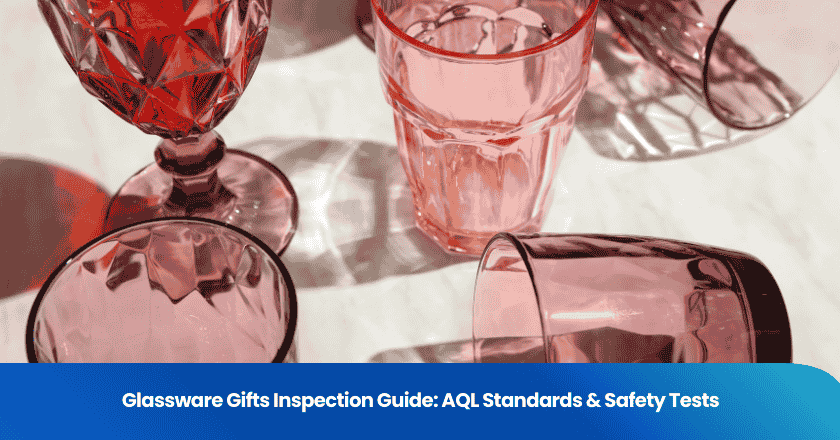
Quality control for glassware gifts demands rigorous adherence to AQL standards to evaluate visual defects like bubbles and waviness. Inspectors treat these items as Hardline Products, prioritizing both aesthetic appeal and physical safety. Guided by international standards such as EN 14072:2003 and ASTM C1036-21, inspections verify durability and finish quality. With advancements in real-time reporting, clients can now access high-resolution defect images and analytics instantly, enabling faster and more informed decisions.

Key Takeaways
- AQL standards ensure glassware gifts meet quality and appearance requirements, significantly reducing defect rates.
- Inspectors perform checks during production and before shipment, allowing for immediate corrective actions.
- Real-time reporting provides clients with instant visibility into inspection results.
- Tempered fragmentation tests verify that glass breaks safely into blunt pieces, reducing injury risks.
- Effective quality control builds customer trust, leading to repeat purchases and stronger brand loyalty.
Glassware Gifts Inspection Standards
AQL for Bubbles and Waviness
Acceptable Quality Limit (AQL) standards are the benchmark for evaluating visual defects in glassware. Inspectors scrutinize items for bubbles and waviness during both During Production Inspection (DPI) and Pre-Shipment Inspection (PSI). These checks ensure that the visual quality aligns with buyer expectations.
DPI allows for early detection when only a portion of the order is complete, enabling factories to rectify issues before mass production finishes. PSI involves a final review of finished goods, checking quality, quantity, and packaging against the purchase order.
Defect Categories and Limits
Defects are categorized by severity to standardize acceptance criteria:
| Defect Type | Definition | Example |
|---|---|---|
| Minor | Cosmetic flaws not affecting usability. | Small surface scratches. |
| Major | Defects impacting function or saleability. | Large chips or noticeable bubbles. |
| Critical | Safety hazards or serious compliance failures. | Sharp edges or cracks. |
Inspectors assess specific flaws like spikes, internal fragments, and blisters. For instance, a bubble larger than 1/16 inch might be classified as a major defect, while any sharp edge is critical.
Note: Real-time reporting tools allow clients to see these defects immediately and decide on the shipment's fate.
International Standards Overview
Inspections adhere to global standards like ASTM C1036-21 (Standard Specification for Flat Glass) and EN 14072:2003 (Glass in furniture - Test methods). These documents define testing protocols for strength and visual quality, ensuring products meet international safety and performance criteria.
Visual and Workmanship Checks

Appearance Inspection Process
Inspectors utilize both manual and automated methods to identify defects. Skilled personnel examine glassware under strong LED lighting to spot tiny "seeds" (bubbles) or subtle waviness. Automated sensors complement this by providing rapid, precise detection of flaws across large batches.
| Technique | Description |
|---|---|
| Manual Inspection | Skilled workers check for surface defects like bubbles, cracks, and scratches. |
| Automated Detection | Sensors rapidly detect flaws with precision, ensuring higher consistency. |
Inspector's Checklist
A detailed checklist guides the inspection process, covering:
- Glass transparency and clarity
- Surface defects (bubbles, scratches, waviness)
- Coating and color uniformity
- Dimensions, weight, and capacity
- Water leakage tests
- Packaging and labeling accuracy
Client Decision Flow
Real-time reports empower clients to act instantly. Upon receiving detailed photos and findings, buyers can approve the shipment, request rework, or reject the batch, minimizing delays and ensuring quality standards are upheld.
Tempered Fragmentation and Safety Tests

Impact Resistance Testing
Impact resistance tests determine a product's durability against sudden force. Two primary methods are:
| Test Name | Description |
|---|---|
| Pendulum Impact Test | Simulates human impact by swinging a heavy pendulum into the glass. |
| Roller Bead Test | Assess endurance by dropping small steel balls onto the glass surface. |
These tests often follow standards like EN 12600, using calibrated impactors at specific drop heights to verify safety levels.
Fragmentation Test Procedures
The fragmentation test verifies that tempered glass breaks safely. Upon impact, the glass should shatter into small, blunt particles rather than large, sharp shards. The process involves impacting a sample and counting the particles within a defined area (typically 50 x 50 mm). Compliance is achieved if the particle count meets the minimum requirement set by safety standards.
Automated image analysis is increasingly used to count fragments accurately, reducing human error in this critical safety verification.
Compliance with Safety Standards
Inspectors document all test conditions and results in detailed reports. Adherence to ASTM and EN standards ensures that manufacturers maintain product quality and consumers receive safe glassware.
Importance of Quality Control
Safety and Customer Satisfaction
Quality control is vital for protecting users and building brand reputation. Strict protocols prevent contamination and structural failures, especially in glass used for food or medicine.
| QC Aspect | Safety Outcome |
|---|---|
| Compliance | Reduces risks of unsafe products reaching consumers. |
| Defect Prevention | Ensures products function safely without breakage. |
Reducing Defects and Returns
Common defects like inclusions, chipped finishes, and "bird swings" (glass strings) can lead to high return rates. By classifying defects according to AQL standards and catching them early, manufacturers save costs and protect their brand image.
| Defect | Classification Example |
|---|---|
| Opened air bubble | Critical |
| Large bubble (>2mm) | Major |
| Small bubble (≤2mm) | Minor (depending on location) |
Glassware Gifts Inspection balances aesthetic appeal with rigorous safety checks. Engineers verify structural integrity, while inspectors ensure visual perfection. Prioritizing comprehensive quality control builds consumer confidence and ensures the delivery of safe, beautiful products.
FAQ
What does AQL mean in glassware inspection?
AQL stands for Acceptable Quality Limit. It is a statistical standard used to determine the maximum number of defects allowed in a batch for it to be accepted.
How do inspectors classify bubbles in glassware?
Bubbles are classified by size and location. A large bubble on the rim might be a major or critical defect, while a tiny bubble on the base might be considered minor.
Why are tempered fragmentation tests important?
Fragmentation tests verify safety. They ensure that if the glass breaks, it shatters into small, blunt cubes rather than dangerous jagged shards, minimizing injury risk.
Can clients see inspection results in real time?
Yes, modern inspection services provide real-time digital reports containing photos and data, allowing clients to make immediate decisions on shipment approval.
Related Articles


Grow your business with TradeAider Service
Click the button below to directly enter the TradeAider Service System. The simple steps from booking and payment to receiving reports are easy to operate.

