
Give the inspector an approved reference and method for each check. Use signed drawings, specifications or photos for the features they define. For a required physical comparison, arrange access to the retained sample, an approved duplicate or a substitute authorized for that feature. If the comparison cannot be completed, mark it pending, specify what evidence will close it, and decide whether the affected goods can move. The rest of the visit can still produce usable findings.
Build a brief around what the inspector can verify
Identify the retained sample and specify what the inspector is authorized to use for each feature. Include the purchase order (PO), stock keeping unit (SKU), product and packing revisions, sample ID, approval date and current custodian. Tell the team the physical sample is overseas, and identify which signed documents, approved photos and physical references are available at the factory.
- Attach the approved file or sample record that controls each check.
- Name any approved substitute, the feature it covers, and the method and limit to apply.
- List unresolved comparisons and agree who can close them and whether they block release.
ASQ’s guidance on quality plans describes a plan as specifying relevant standards, resources, specifications and the sequence of activities. For this briefing, make the inspection instructions specific enough for a second person to repeat the check. For each feature, name the reference, how the inspector should check it, what counts as conforming and what evidence should go in the report.
Use TradeAider’s inspection standard when confirming the overall scope. Add a cover sheet listing the current revisions and superseded files so a factory printout from an earlier order is easy to spot. If an approval email limits a sample to fabric appearance or a packing configuration, put that limit beside the sample ID. Ask the inspector and factory contact to confirm which references and equipment they can actually access before the appointment.
Assign a reference and method to each check
The approved reference and check method determine what can be concluded for a feature. Use the following worksheet to decide what the inspector can do on site. Replace each example with your actual file, sample or method reference. If several versions exist, send the exact version with the brief.
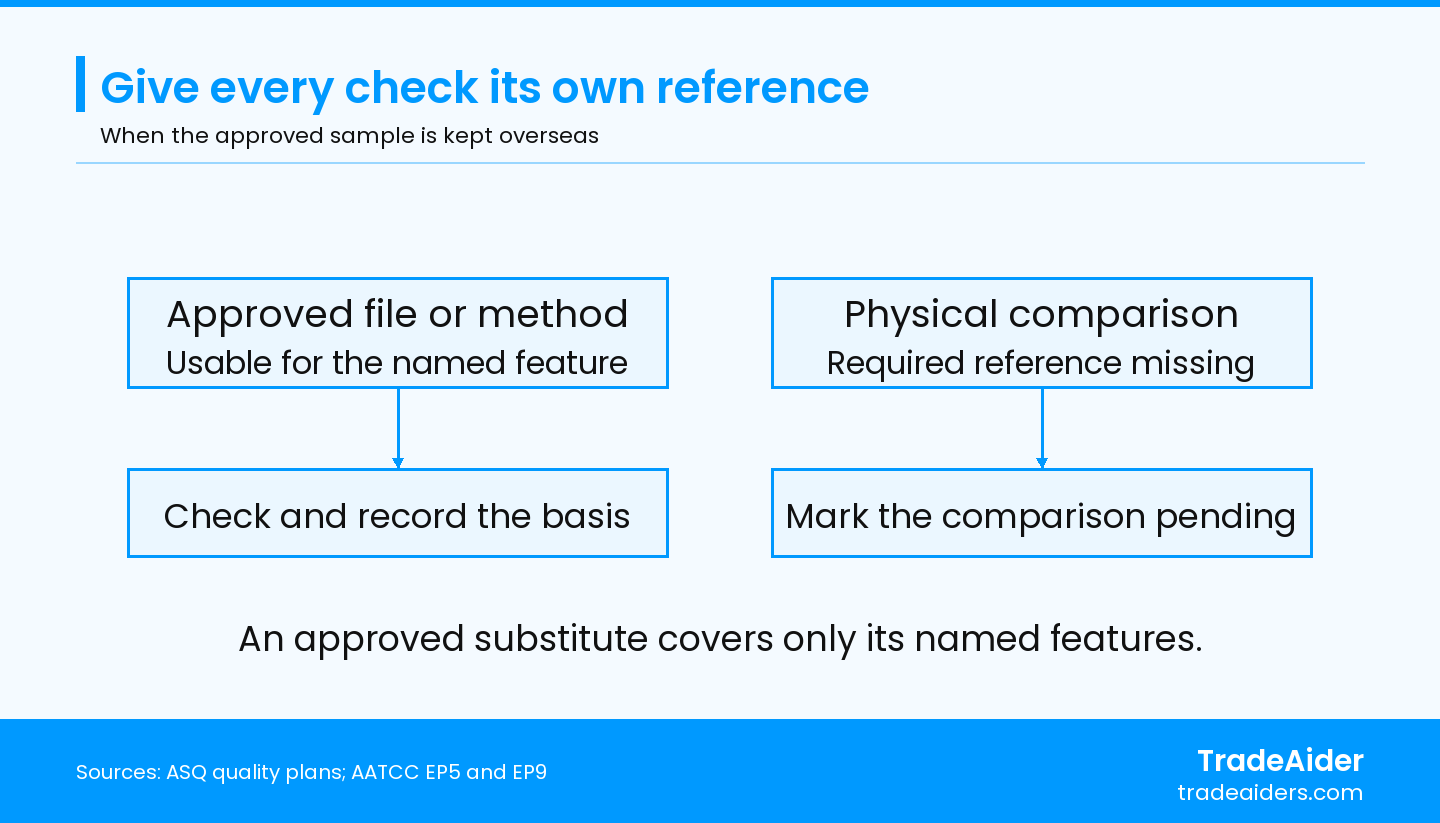
List the approved source and method for every conclusion. If a required physical comparison is unavailable, record what evidence will close it.
FeatureReference to name in the briefWhat the inspector should recordText, layout or visible assembly detailApproved artwork or annotated photos with the relevant views and criteria.The versions and areas compared, with any differences or obscured details.Dimension with a toleranceApproved drawing or specification with measurement points, conditions and limits.Readings on the actual units, method and conformity against the specified limits.Shade or appearance defined by a physical matchApproved physical reference and viewing method, or the buyer’s authorized measurement method and acceptance limit.The reference and conditions used, or a pending comparison if the required evidence is absent.Feel or fit defined by the retained sampleApproved physical reference, matching part, fixture or another method approved for that feature.What was assessed and with which comparator. Flag unsupported conclusions as pending.
Use approved drawings and images for defined checks
Check visible details against the approved view and measure toleranced features on actual units. For a logo that needs to be in a named panel, mark the relevant side and position in an approved view. If position has a numerical limit, give the inspector the starting point and the allowed deviation so it can be measured. With a label, state which content and location the team should check and which file controls each. Include back or interior views if the acceptance criteria cover those areas.
ISO’s general principles for technical drawings cover how dimensions and associated tolerances are presented. For the field check, specify the measurement points, unit, tool or method, and how to position the product. A photograph with a ruler can clarify where to look. If the brief calls for a measured value, record the reading from the actual unit rather than estimating it from that image.
Use a physical reference for comparisons that depend on it
Use the identified physical reference or an authorized substitute for comparisons that depend on physical appearance, fit or feel. Accessories may fit a production unit under an approved functional check while still requiring a separate comparison to the retained sample for the approved feel of the fit. An identified matching part or verified fixture may cover a specified fit criterion when the buyer approves its use. Describe exactly which check the fixture covers.
AATCC EP9 describes visual assessment of textile color difference by comparison with a standard. If the order defines shade by a side-by-side physical match, a photo can show where to look. Lighting, image processing and screens can change what viewers see. If the buyer has approved a numerical color target, give the method, conditions and tolerance before the visit and confirm the available equipment.
AATCC EP5’s fabric-hand procedure requires the evaluator to handle a specimen under defined conditions. Hand feel describes tactile qualities such as softness or stiffness. A recorded demonstration can show how someone handles fabric, but the person watching cannot directly assess that sensation. For hand feel tied to a retained sample, agree who can handle both references under the specified method or confirm another approved basis.
Mark uncertain comparisons before fieldwork
A check stays pending when the governing evidence or an approved method is unavailable. Record what is missing and what can still be observed. If an old factory unit and the approved photo show different details, send the exact feature and version information to the buyer’s designated approver. Ask for a written instruction naming the reference that controls the feature before the inspector classifies it.
When the inspector has a coated product in hand but its finish master is overseas, the report can record a scratch against an explicit cosmetic limit while leaving the finish match pending. Use a separate line for each result. In the brief, state whether an unresolved check blocks dispatch, whether a follow-up may cover it later, and who can revise that decision. If the visit would leave a release-critical comparison open, weigh waiting for the reference against doing the other commissioned checks now.
TradeAider performs pre-shipment inspection when the order quantity is 100% complete and at least 80% is packed for export. Check the readiness of each reference and method as well as the packing status. Confirm which checks the visit can complete and which ones need another arrangement before booking.
An overseas pouch sample leaves two checks open
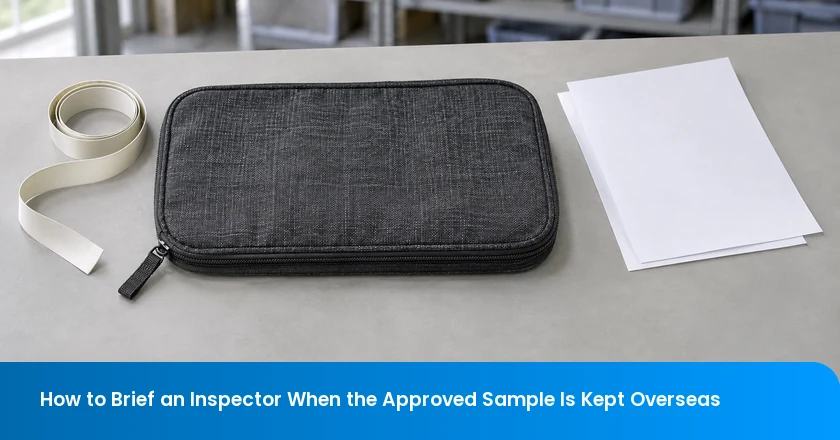
Illustrative scenario. A buyer keeps approved charcoal travel pouch P-17 at its overseas office. The factory has photo set A-17 and drawing revision C. The brief names the photo for embroidery layout and the drawing for finished width. In this example, the drawing sets the width at 240 mm with a tolerance of 2 mm either way. The brief also explains where to measure along the lower seam on a closed pouch laid flat.
The same inspection can record verified workmanship and dimensions while leaving master-dependent shade and feel comparisons open. The inspector checks the visible embroidery layout against A-17. On three example units, the inspector records widths of 239, 240 and 241 mm against revision C. All three readings are within the stated tolerance. The buyer separately requires a physical comparison for shade and hand feel, and has no approved onsite equivalent for those two checks.
The inspector records the embroidery observations and width readings with their references and identifies shade and hand feel as pending for the presented lot. Close-up photos document the actual units and help the buyer see what was presented. The brief treats both physical comparisons as release conditions, so the buyer keeps the affected lot on hold while arranging the comparison.
The buyer can send an approved duplicate for the two comparisons or arrange for selected production units to reach the office for comparison with P-17. If only a swatch is available and the buyer approves it for shade alone, hand feel remains pending. When the buyer receives samples from the factory, match their IDs and source cartons to the report before recording any new result.
Close each open item with a traceable decision
Record who can close each issue, what evidence is needed, and which goods and release decision that evidence covers. In the inspection report, list the method actually used and the affected sample IDs for each result. Give the pending comparison an owner, a reason and a planned resolution, such as a controlled comparison to a buyer-approved duplicate.
The NIST Engineering Statistics Handbook describes using a sample from a defined lot to support a decision about that lot. If physical follow-up is needed, agree who selects production units, which group they come from, and which decision the follow-up covers. Keep the unit and carton IDs through transfer. Record the result for the identified units and apply the agreed decision rule before using it for a wider lot disposition.
Put any authorized change or later approval in a dated record attached to the original inspection. State whether it resolves the check, changes the governing requirement, or permits a specific release while the check remains unperformed. The site report should still show what was observed on the day and where the later evidence came from.
When you contact TradeAider, share the PO, retained sample ID, approved files, available comparators and the checks that may be left open. Ask the team to confirm feasible fieldwork, expected report evidence and any follow-up before the visit is approved.
Frequently Asked Questions
Can the factory use a duplicate sample already on site?
A factory duplicate can serve as a comparator when the buyer has approved that identifiable unit for the specific features being checked. Verify its reference ID, revision, approval date and present condition. A worn sample or a different fabric finish can change the comparison even if the unit carries the correct product code.
Can the buyer approve an appearance feature on video?
A buyer can make a limited video-based decision if the order allows it and the intended evidence can support that specific feature. For example, a live view may show which side has a pocket or a pull tab. Record the exact characteristic, goods and approving person. Leave a separately required tactile or controlled shade comparison open until it is resolved under the agreed method.
Who decides when the drawing and retained sample disagree?
The buyer’s designated technical owner should confirm which reference governs the disputed feature and issue a recorded instruction to the inspection team. Send the measured or observed difference, drawing revision and sample ID so the decision is traceable. If the instruction changes the order criteria, identify when it takes effect and which goods it covers.
関連記事


TradeAiderサービスでビジネスを成長させる
下のボタンをクリックして、TradeAiderサービスシステムに直接入ります。予約から支払い、報告書の受け取りまでの簡単な手順は操作が簡単です。