
- 会社概要

- 当社のサービス
- あなたの業界
- リソース
- ニュース&ブログ
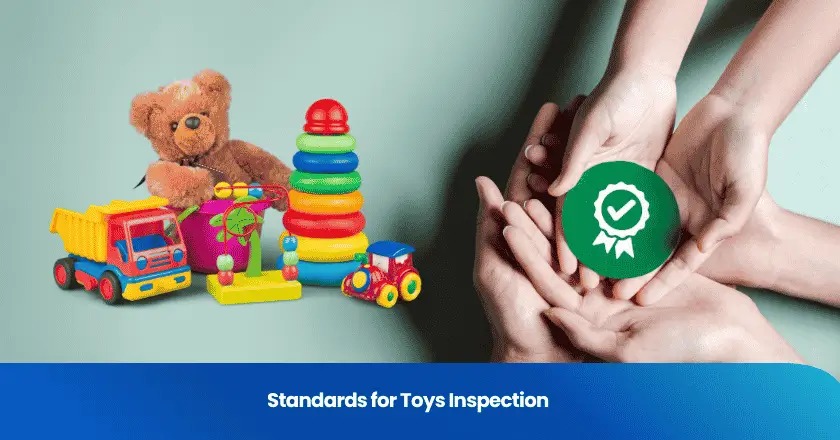
Toys are far more than recreational products — they are daily objects that come into direct, prolonged contact with children during critical developmental stages. Because of this elevated safety risk, every major consumer market enforces mandatory, regularly updated toy safety regulations. As the world’s largest toy manufacturing and export base, China requires all domestically sold toys to meet national mandatory standards, while export products must comply with the regulatory frameworks of their destination markets. For brands, importers and e-commerce sellers, a clear grasp of applicable inspection standards is the foundation of compliant sourcing, risk reduction and long-term market access.
China GB 6675: National Mandatory Toy Safety Standard
GB 6675 is the core mandatory national toy safety standard in China, governing all toys designed for children under 14 years old. It has evolved through multiple iterations to align with global best practices and strengthen safety controls.
Version Evolution and Implementation Timeline
The original GB 6675-2003 National Technical Specification for Toy Safety was released to align with the international ISO 8124 standard series, covering mechanical properties, flammability and element migration requirements. On May 6, 2014, the Standardization Administration of China and the former General Administration of Quality Supervision released the updated GB 6675-2014 Toy Safety national standard, which officially took effect on January 1, 2016. The 2014 version significantly expanded safety requirements and remains the current effective baseline for the Chinese market.
Four Core Parts of GB 6675-2014
The standard is structured into four interconnected parts, covering every major dimension of toy safety.
| Standard Part | Full Name | Core Technical Requirements |
|---|---|---|
| GB 6675.1 | Basic Specification | Defines general safety principles, electrical safety, hygiene and radiation requirements. Added mandatory limits for 6 types of phthalates in plastic toys and components. |
| GB 6675.2 | Mechanical and Physical Properties | Covers physical hazard controls including small parts, sharp edges and structural integrity. Added hearing protection requirements for sound-emitting toys, and specific safety rules for magnets and magnetic components to prevent injury from accidental ingestion. |
| GB 6675.3 | Flammability | Sets burn rate and flame spread limits for toy materials. Revised test methods for plush and stuffed toys; added flammability requirements for molded face masks and floating components on head-mounted toys. |
| GB 6675.4 | Migration of Certain Elements | Defines maximum migration limits for heavy metals including lead, cadmium, chromium, mercury and arsenic in toy materials and surface coatings. |
Major Global Toy Inspection Standards
Beyond China’s domestic standard, each major import market operates its own mandatory regulatory framework. The following standards form the global baseline for toy inspection and compliance testing.
EU: Toy Safety Directive and EN 71 Series
The EU Toy Safety Directive (2009/48/EC) is the overarching legal framework for all toys placed on the European market, enforced through harmonized European standards. The EN 71 standard series is the primary technical reference for compliance, with three core parts:
- EN 71-1: Mechanical and physical properties
- EN 71-2: Flammability
- EN 71-3: Migration of certain elements
- Products meeting the directive and corresponding harmonized standards qualify for CE marking, which is mandatory for market entry.
United States: ASTM F963 and CPSIA Regulations
In the United States, ASTM F963 Consumer Safety Specification for Toy Safety is the mandatory technical standard for all toys intended for children 12 and under, enforced by the U.S. Consumer Product Safety Commission (CPSC). The Consumer Product Safety Improvement Act (CPSIA) adds additional legal requirements including mandatory third-party testing, total lead content limits and permanent tracking labels for all children’s products.
Other Regional Standards
- Japan: ST 2024 toy safety standard, administered by the Japan Toy Association, covering physical safety, flammability and chemical limits.
- Australia / New Zealand: AS/NZS ISO 8124 series, aligned with the international ISO 8124 standard and enforced as the mandatory entry requirement.
- Canada: Hazardous Products (Toys) Regulations SOR/2011-17, governing mechanical, chemical and flammability requirements for the Canadian market.
Global Standards Comparison
| Market | Core Regulatory Framework | Primary Technical Standard | Mandatory Marking |
|---|---|---|---|
| China | GB 6675 mandatory national standard | GB 6675 series (4 parts) | CCC certification for applicable categories |
| European Union | Toy Safety Directive 2009/48/EC | EN 71 standard series | CE marking |
| United States | CPSC + CPSIA | ASTM F963 | CPC (Children’s Product Certificate) |
| Australia / New Zealand | Consumer product safety laws | AS/NZS ISO 8124 | Mandatory warning labeling |
How Safety Standards Apply to On-Site Toy Inspection
Toy safety standards are not only for laboratory certification — they also form the evaluation basis for on-site third-party inspection across every production stage.
Pre-Production Stage
At the raw material and component stage, inspectors verify that incoming plastic resins, paints, coatings and small parts meet the chemical and physical requirements of applicable standards. This is the most cost-effective point to catch non-compliant materials before they are built into finished products.
During Production Stage
When 20–30% of the order is complete, inspectors audit semi-finished products against standard requirements for assembly integrity, small part security and workmanship consistency. Early identification of process deviations prevents defects from being replicated across the full batch.
Pre-Shipment Inspection (Final Random Inspection)
Pre-上hipment inspection uses AQL random sampling to evaluate finished packed products against the full standard scope: physical safety, structural integrity, function, packaging and labeling accuracy. This is the standard pre-shipment compliance gate for bulk production orders.
Supporting Laboratory Testing
On-site inspection covers physical, visual and documentation verification. For quantitative chemical analysis, precision flammability measurement and formal certification, inspection is paired with accredited laboratory testing to provide full standard compliance coverage.
TradeAider Toy Inspection Services Aligned With Global Standards
TradeAider provides professional third-party toy inspection services across all major toy manufacturing regions in China, including Guangdong, Zhejiang, Jiangsu and Shandong provinces.
Our local inspectors are trained in all mainstream toy safety standards. Inspection checklists are customized to match your product category, target age group and destination market requirements. We cover the full inspection lifecycle: pre-production material verification, during-production process audits, final random inspection and container loading supervision.
Clients receive official photo-documented inspection reports within 24 hours of on-site completion. Through our online service system, buyers can also monitor inspection progress and view real-time findings, enabling timely decisions on batch acceptance, on-site rework or shipment hold.
Frequently Asked Questions
Is GB 6675 fully equivalent to EN 71?
While many core test items align across the two frameworks, they are not fully equivalent. Differences exist in specific threshold limits, phthalate requirements, magnet safety rules and labeling obligations. Products exported to the EU must still meet EN 71 and the Toy Safety Directive requirements to qualify for CE marking.
Can one test report satisfy multiple market standards?
Most core safety test items overlap across standards, so testing can often be scoped to cover multiple markets in a single laboratory engagement. However, each market retains unique labeling requirements, documentation rules and specific substance thresholds that must be addressed separately.
How often do toy safety standards get updated?
Major markets typically review and update toy safety standards every 3–5 years, generally tightening chemical restrictions and expanding hazard coverage. Importers should monitor regulatory updates regularly to maintain ongoing compliance.
Do standards apply to all toy categories equally?
Standards apply to all toy products, but specific requirements are tiered by age group and product type. For example, toys for children under 3 have far stricter small part and chemical limits, and electronic toys have additional electrical safety requirements.
Conclusion
Toy safety standards are the backbone of the global toy trade. They translate child development research and injury prevention data into enforceable technical requirements, protecting children from preventable harm and creating a level playing field for compliant manufacturers and brands.
For businesses sourcing toys from China, understanding the full landscape of domestic and international standards is the first step toward building a low-risk supply chain. When embedded into every stage of production through professional on-site inspection and accredited testing, these standards become more than compliance obligations — they are a practical investment in product safety, brand credibility and long-term market success.
関連記事
TradeAiderサービスでビジネスを成長させる
下のボタンをクリックして、TradeAiderサービスシステムに直接入ります。予約から支払い、報告書の受け取りまでの簡単な手順は操作が簡単です。

