
- About Us

- Our Services
- Your Industry
- Resources
- News & Blog
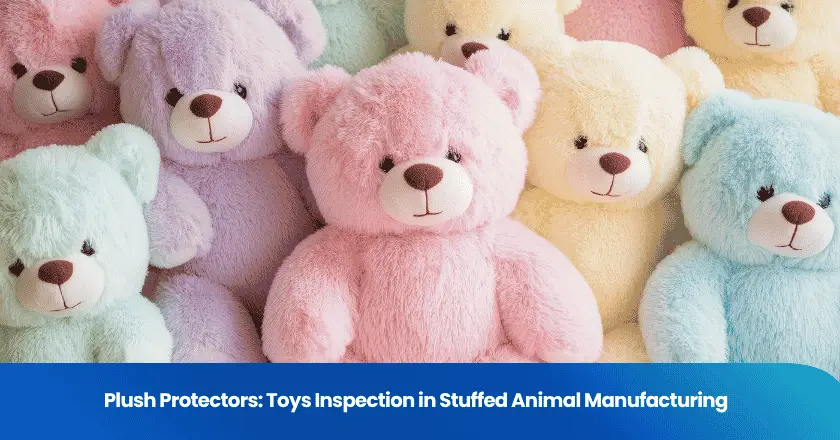
Stuffed animals are designed to be soft, durable, and safe for children, but their construction involves many components that require careful quality control. Fabric, stuffing, seams, eyes, noses, accessories, internal supports, labels, and packaging can all affect the quality of a finished plush toy.
For manufacturers, brands, importers, and e-commerce sellers, toy inspection in stuffed animal manufacturing helps identify production defects and potential physical safety risks before products are shipped.
Unlike a general visual inspection, plush toy inspection should consider the specific construction and failure points of stuffed animals. This includes checking seam integrity, attachment strength, stuffing, metal contamination, workmanship, and product-specific requirements.
Why Inspection Is Important for Stuffed Animals
Plush toys are often handled, squeezed, pulled, dropped, and carried repeatedly during normal use. A weakness that appears minor during a visual check may become a quality or safety concern after repeated handling.
Common problems include:
| Risk Area | Examples of What Can Go Wrong |
|---|---|
| Seams | Loose stitching, skipped stitches, fabric separation, weak seams |
| Attachments | Loose eyes, noses, buttons, ribbons, or decorative components |
| Stuffing | Uneven filling, foreign materials, contamination, or stuffing leakage |
| Fabric | Stains, holes, color variation, poor surface quality, or excessive shedding |
| Internal Components | Exposed wires, sharp components, or foreign metal objects |
| Workmanship | Poor symmetry, deformation, incorrect assembly, loose threads |
| Packaging | Incorrect labels, damaged packaging, or inappropriate packaging components |
A structured inspection process helps buyers determine whether mass-produced plush toys match the approved sample and defined quality requirements.
Key Inspection Areas for Stuffed Animals
1. Fabric and Material Inspection
Fabric is one of the most visible components of a stuffed animal, but appearance is only one part of material quality.
Inspectors may check:
- Fabric type and color against the approved sample
- Surface defects, holes, stains, and weaving problems
- Color consistency between production units
- Printing or embroidery quality
- Loose fibers and threads
- Material composition where specified
- Cleanliness and overall appearance
Where chemical, flammability, or other technical requirements apply, laboratory testing may be necessary in addition to an on-site inspection.
2. Seam and Stitching Inspection
Seam integrity is particularly important for plush toys because the fabric shell contains the stuffing and may be subjected to repeated pulling and squeezing.
Inspection can focus on:
- Stitch consistency
- Skipped or broken stitches
- Loose threads
- Seam alignment
- Fabric caught correctly in the stitching
- Weak areas around limbs and attachment points
- Signs of seam opening or fabric separation
For products with specific mechanical requirements, appropriate strength testing should be performed according to the applicable test method rather than relying only on visual inspection.
3. Attachment and Pull Testing
Many stuffed animals include eyes, noses, buttons, bows, plastic accessories, or other attached components.
These components need to be checked for secure attachment because a component that becomes detached may create a potential small-part hazard.
Depending on the product and applicable requirements, inspectors may perform tension or pull testing on relevant attachments. TradeAider's plush-toy inspection guidance identifies attachment strength, including pull testing of features such as eyes and noses, as an important part of plush toy quality control.
The exact test force and method should always be determined according to the applicable standard, product design, age grading, and testing requirements.
4. Metal Detection and Foreign-Material Control
Metal contamination is a specific manufacturing risk for sewn plush products.
During production, sewing needles or other metal fragments can potentially become trapped inside a finished toy. A metal detection procedure can therefore be used as part of the factory's quality control process.
A typical control process may include:
| Control | Purpose |
|---|---|
| Detector calibration | Confirm that the equipment operates at the required sensitivity |
| Product screening | Pass finished plush toys through the metal detector |
| Test-piece verification | Check detector performance at defined intervals |
| Rejection control | Separate products that trigger the detector |
| Investigation | Identify and address the source of contamination |
TradeAider's current plush-toy guidance specifically highlights metal detection for identifying broken needles or metal fragments that may remain inside stuffed toys.
Metal detection is a manufacturing control and does not replace other physical safety or laboratory testing where those are required.
5. Stuffing and Internal Construction
The stuffing inside a plush toy is not visible during normal use, so production controls are important.
Inspectors can check:
- Whether stuffing is evenly distributed
- Whether stuffing is securely contained
- Whether seams allow filling to escape
- Whether foreign materials are present
- Whether the toy has the required firmness and shape
- Whether internal supports or wires are properly positioned
For plush toys containing internal wires or structural supports, particular attention should be paid to whether any rigid component can become exposed through the fabric during use or after mechanical stress.
6. Appearance and Workmanship
Stuffed animals are often highly appearance-sensitive products. Even when a toy is structurally sound, poor workmanship can affect its commercial quality.
Common visual defects include:
- Asymmetrical facial features
- Incorrect positioning of eyes or ears
- Uneven stuffing
- Poor embroidery
- Loose threads
- Fabric stains
- Color variation
- Incorrect proportions
- Deformed limbs or body sections
- Poorly finished seams
A buyer's approved sample should be used as an important visual reference when evaluating these characteristics.
7. Functional and Mechanical Checks
Not every plush toy has the same functional requirements.
A simple stuffed animal may require mainly structural and workmanship checks, while an interactive plush toy may contain batteries, sound modules, lights, moving components, or other mechanisms.
The inspection scope should therefore reflect the actual product design.
For example:
| Plush Toy Type | Additional Inspection Considerations |
|---|---|
| Basic stuffed animal | Fabric, stitching, stuffing, attachments, appearance |
| Plush with plastic accessories | Attachment strength, sharp edges, component security |
| Plush with internal wire | Wire position, exposure risk, structural integrity |
| Electronic plush toy | Battery compartment, functions, switches, wiring, labeling |
| Musical or interactive plush | Sound/function testing and relevant electrical components |
| Character plush | Shape, facial features, colors, printing, embroidery, accessories |
8. Labels and Packaging
Packaging and labeling should also be included in the inspection because they are part of the finished product delivered to the customer.
Depending on the destination market and buyer requirements, inspectors may check:
- Product labels
- Age grading
- Warning statements
- Care instructions
- Tracking or identification information
- Barcodes
- Retail packaging
- Inner packaging
- Carton markings
- Product quantity
The exact regulatory requirements vary by market and product. An inspection can verify that defined labeling and packaging requirements are present, but it should not be treated as a substitute for the applicable regulatory assessment or certification process.
Inspection vs. Laboratory Testing for Plush Toys
A common mistake is to treat inspection and laboratory testing as the same activity.
They serve different purposes:
| Inspection | Laboratory Testing |
|---|---|
| Evaluates actual production units on site | Analyzes samples using defined laboratory methods |
| Focuses on workmanship, construction, appearance, quantity, packaging, and defined physical checks | Evaluates specific physical, mechanical, chemical, flammability, or other technical properties |
| Helps identify production inconsistencies | Provides test results for specified requirements |
| Can be performed during production or before shipment | Usually requires samples to be submitted to an appropriate laboratory |
| Useful for verifying mass-production consistency | Useful when formal technical testing is required |
For plush toys, laboratory testing may be appropriate for certain chemical, flammability, mechanical, or other requirements depending on the destination market and product.
Therefore, a practical quality control program may combine production inspection + finished-product inspection + laboratory testing rather than relying on any single method.
When Should Stuffed Animals Be Inspected?
Inspection timing should reflect the production process and the buyer's risk priorities.
| Stage | What It Can Help Check |
|---|---|
| Pre-Production | Materials, approved samples, components, packaging, and production requirements |
| During Production | Stitching, workmanship, stuffing, component attachment, and production consistency |
| Pre-Shipment | Finished-product appearance, construction, functionality, packaging, quantity, and defined quality criteria |
| Container Loading | Quantity, carton condition, loading arrangement, and shipment details |
For plush toys with multiple components or higher production risk, checking quality at more than one stage can provide better visibility than waiting until the finished products are ready for shipment.
Preparing an Inspection Checklist for Plush Toys
A good inspection begins with clear requirements.
Before production starts, buyers should provide as much relevant information as possible:
| Requirement | Useful Reference |
|---|---|
| Product specifications | Dimensions, materials, colors, construction |
| Approved sample | Physical sample or approved reference images |
| Component details | Eyes, noses, buttons, accessories, internal components |
| Packaging | Retail packaging, inner packing, carton requirements |
| Labeling | Age grading, warnings, barcode, instructions |
| Quality criteria | Defect classification, AQL, buyer-specific requirements |
| Testing requirements | Applicable laboratory or mechanical tests |
| Destination market | Country or region where the product will be sold |
This allows the inspection criteria to be tailored to the actual product instead of using a generic toy checklist.
Corrective Action After Plush Toy Inspection
Inspection is most useful when identified problems are followed through to resolution.
If inspectors find defects such as loose seams, weak attachments, incorrect labels, or packaging problems, the buyer can communicate the findings to the factory and request corrective action.
TradeAider can help supervise corrective actions on site, verify the improvements, and support re-inspection when needed.
This creates a practical quality loop:
Identify → Correct → Verify → Re-Inspect if Needed
The objective is not simply to produce an inspection report, but to provide buyers with clearer information about the actual production status and help them follow up on identified quality issues.
Third-Party Inspection for Stuffed Animal Manufacturing
For buyers sourcing plush toys from overseas factories, independent third-party inspection can provide an additional layer of production oversight.
A third-party inspector can assess the actual production batch against the buyer's defined requirements without requiring the buyer to visit the factory personally.
For stuffed animals, the inspection scope can be tailored to the product's specific risks, including:
- Fabric and workmanship
- Stitching and seam integrity
- Attachment security
- Small parts
- Stuffing and internal construction
- Metal detection
- Appearance and dimensions
- Functionality
- Labels and packaging
- Quantity and shipment condition
TradeAider provides third-party inspection and testing services that can be integrated into different stages of the production process.
Conclusion
Stuffed animal manufacturing involves more than checking whether a finished toy looks attractive. The quality of seams, attachments, stuffing, fabric, internal components, packaging, and labeling can all affect the finished product.
A structured toys inspection process for stuffed animal manufacturing helps buyers identify production defects and potential physical safety concerns before products are shipped.
For more technical requirements, inspection can be combined with appropriate laboratory testing. When issues are identified, corrective action and re-inspection can provide an additional step for verifying improvements.
By tailoring inspection criteria to the actual plush toy, its intended use, and the destination market, buyers can build a more practical quality control process from material selection through finished-product shipment.
Frequently Asked Questions
1. What should be checked during a stuffed animal inspection?
Key areas include fabric, stitching, seams, stuffing, attachments, small parts, internal components, workmanship, appearance, functionality, labels, and packaging.
2. Why is pull testing important for plush toys?
Pull testing can help evaluate whether relevant attached components, such as eyes, noses, or decorative parts, remain securely attached under the specified test conditions.
3. Why is metal detection used for stuffed animals?
Metal detection can help identify broken needles or other metal fragments that may accidentally remain inside plush toys during manufacturing.
4. Is plush toy inspection the same as laboratory testing?
No. Inspection focuses on production quality and defined physical checks, while laboratory testing evaluates specific properties using designated test methods.
5. When should stuffed animals be inspected?
Depending on the product and production risks, inspection can take place before production, during production, before shipment, or during container loading.
Related Articles
Grow your business with TradeAider Service
Click the button below to directly enter the TradeAider Service System. The simple steps from booking and payment to receiving reports are easy to operate.

