
- Sobre Nós

- Nossos Serviços
- Sua Indústria
- Recursos
- Notícias e Blog
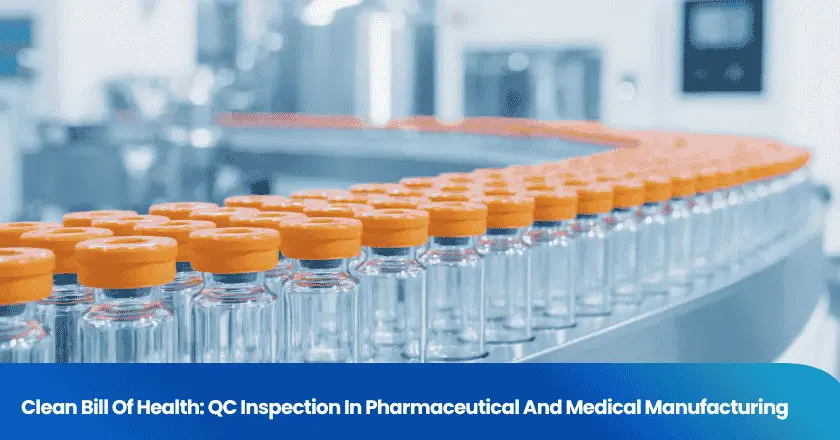
Quality control is particularly important in pharmaceutical and medical manufacturing because products may be used in environments where consistency, traceability, and defined specifications matter.
For buyers sourcing pharmaceutical-related products, medical devices, healthcare supplies, laboratory equipment, and other medical products from China, quality control involves more than checking the finished appearance. Materials, components, dimensions, workmanship, labeling, packaging, documentation, and specified functional characteristics may all need to be evaluated.
Third-party QC inspection provides an independent on-site assessment against the buyer's defined requirements. It can help identify observable manufacturing issues before products move to the next production stage or are released for shipment.
However, inspection should not be confused with pharmaceutical approval, GMP certification, or regulatory authorization. Some requirements can be evaluated through physical inspection, while others require laboratory testing, document review, or assessment by the relevant regulatory or certification body.
Why QC Inspection Matters in Pharmaceutical and Medical Manufacturing
Medical and pharmaceutical products can involve complex manufacturing processes and detailed product specifications.
Depending on the product, quality risks may involve:
| Quality Risk | Potential Impact |
|---|---|
| Incorrect materials or components | Product may not match approved specifications |
| Dimensional variation | May affect assembly, fit, or intended use |
| Workmanship defects | May affect product performance or appearance |
| Contamination or visible foreign matter | May be unacceptable for the intended application |
| Packaging defects | May affect product protection and handling |
| Incorrect labeling | Can create identification or traceability problems |
| Quantity discrepancies | Can cause inventory and shipment issues |
| Functional deviations | May affect intended product operation |
| Inconsistent production | Can create variation between batches |
The appropriate inspection scope depends heavily on the product category.
A reusable medical device, disposable healthcare product, laboratory instrument, and pharmaceutical package should not necessarily use the same inspection checklist.
What Can a Third-Party QC Inspection Check?
A third-party inspector can evaluate characteristics that can be observed, measured, or tested on site according to the agreed inspection criteria.
Typical inspection areas include:
| Inspection Area | Examples |
|---|---|
| Product identity | Model, SKU, product type, version |
| Materials and components | Visual identity and specified characteristics |
| Dimensions | Measurements against approved specifications |
| Appearance | Surface condition, marks, defects, workmanship |
| Construction | Assembly, seams, joints, components |
| Function | Applicable basic functional checks |
| Packaging | Individual and outer packaging condition |
| Labels | Product identification and specified information |
| Quantity | Quantity and assortment |
| Documentation | Required records or markings within inspection scope |
The inspection criteria should be established before the inspector arrives at the factory.
Pharmaceutical Manufacturing: Where QC Inspection Fits
Pharmaceutical manufacturing involves quality systems and controls that go beyond a conventional commercial product inspection.
Depending on the product and manufacturing arrangement, buyers may need to consider areas such as:
- Raw materials and components
- Packaging materials
- Manufacturing processes
- Batch identification
- Finished-product specifications
- Labeling
- Packaging
- Storage conditions
- Documentation and traceability
A third-party inspection can provide an independent physical assessment of defined requirements, but it does not replace the manufacturer's quality system, laboratory controls, regulatory inspections, or required pharmaceutical certification.
For pharmaceutical products, buyers should determine in advance which requirements need document review, laboratory analysis, regulatory assessment, or other specialized verification.
Medical Device Inspection
Medical devices can range from relatively simple products to complex electronic or mechanical equipment.
The inspection criteria therefore need to reflect the product's design and intended use.
Depending on the device, inspection may cover:
| Area | Examples |
|---|---|
| Product configuration | Model, version, components |
| Dimensions | Critical dimensions and tolerances |
| Assembly | Component installation and construction |
| Appearance | Surface defects, contamination, damage |
| Function | Specified functional checks |
| Accessories | Quantity and correct components |
| Labels | Model, identification, markings |
| Packaging | Protection and packaging configuration |
| User information | Instructions or other specified materials |
For electronic medical equipment, additional functional or electrical testing may be necessary. Such testing should be based on the applicable product requirements and test methods rather than being assumed to be part of a standard visual inspection.
Raw Materials and Components Should Not Be Overlooked
Quality problems in finished products can originate from materials or components introduced at the beginning of production.
A pre-production inspection can therefore be useful when buyers need to verify raw materials, components, samples, or production readiness before mass production starts.
TradeAider's Pre-Production Inspection includes checks of raw materials and semi-finished products, production processes, samples versus bulk products, packaging, dimensions, weight, and other buyer-specified requirements.
For medical and pharmaceutical manufacturing, buyers can define critical components or materials that require particular attention before production proceeds.
This can help prevent a material problem from being repeated across a large production batch.
During-Production Inspection for Medical Products
Waiting until the end of production to identify a manufacturing problem can limit the factory's ability to correct it efficiently.
During Production Inspection provides a checkpoint while production is still underway.
TradeAider's DPI/DUPRO service is designed to take place during production, generally when around 20%–50% of goods have been completed and packed, depending on the service arrangement. The inspection can cover production processes, product appearance, packaging, accessories, dimensions, weight, functional checks, and other specified requirements.
For medical products, the inspection scope should focus on the characteristics that are meaningful for the specific product.
Examples may include:
- Assembly consistency
- Component installation
- Dimensions
- Surface condition
- Packaging configuration
- Label placement
- Product quantity
- Specified functional checks
The purpose is to identify observable deviations while there is still an opportunity for the factory to investigate and correct them.
Pre-Shipment Inspection
A pre-shipment inspection provides a final quality-control checkpoint before goods are released for shipment.
Depending on the product and agreed scope, it may cover:
- Product appearance
- Workmanship
- Dimensions
- Quantity
- Packaging
- Labels
- Accessories
- Functional checks
- Sampling-based defect assessment
TradeAider's broader inspection service includes pre-shipment inspection as one of its main inspection stages, alongside pre-production, during-production, factory audit, and container loading supervision.
For pharmaceutical and medical products, the buyer should define what constitutes an acceptable result before the inspection takes place.
Inspection vs. Laboratory Testing
One of the most important distinctions in pharmaceutical and medical quality control is the difference between physical inspection and laboratory testing.
A third-party inspector can observe, measure, count, compare, and perform specified on-site checks. However, some characteristics require specialized laboratory equipment and validated test methods.
| Requirement | Typical Approach |
|---|---|
| Product appearance | On-site inspection |
| Dimensions | On-site measurement |
| Quantity | On-site inspection |
| Packaging condition | On-site inspection |
| Label information | On-site inspection/document review |
| Basic specified function | On-site functional check where applicable |
| Chemical composition | Laboratory testing |
| Microbiological characteristics | Appropriate laboratory testing |
| Material performance | Laboratory testing where required |
| Specific sterility-related requirements | Specialized testing and applicable quality system |
| Regulatory conformity | Appropriate regulatory/documentation assessment |
This distinction prevents buyers from expecting a visual QC inspection to answer questions that require laboratory analysis.
TradeAider also distinguishes on-site QC inspection from laboratory testing because the two services address different types of product requirements.
Packaging Inspection Is Especially Important
For pharmaceutical and medical products, packaging can be an important part of product protection and identification.
Depending on the product, packaging inspection may include:
- Packaging material
- Packaging condition
- Sealing
- Label placement
- Product identification
- Batch or lot information
- Quantity per package
- Carton markings
- Shipping marks
- Accessories and inserts
Packaging inspection does not by itself verify every aspect of packaging integrity or shelf-life performance. Where specific barrier, seal, sterility, or stability characteristics need to be established, appropriate specialized testing should be used.
Labeling and Traceability
Incorrect or inconsistent product identification can create operational problems even when the physical product itself appears acceptable.
Depending on the buyer's requirements, inspectors may check:
- Product name
- Model or reference number
- Batch or lot information
- Serial number where applicable
- Manufacturing information
- Expiry information where applicable
- Required markings
- Barcode or QR code
- Packaging labels
- Instruction materials
The inspection should compare these details with the buyer's approved documents or specifications.
For regulated products, however, a physical label check does not replace a complete regulatory labeling review.
Documentation and Inspection Evidence
A useful QC inspection report should provide evidence that allows the buyer to understand what was checked and what was found.
Depending on the service, inspection documentation may include:
| Report Element | Purpose |
|---|---|
| Product information | Identifies the inspected goods |
| Inspection scope | Defines what was checked |
| Quantity | Records inspected quantity |
| Measurements | Documents actual results |
| Defect findings | Identifies deviations |
| Photographs | Provides visual evidence |
| Functional results | Records applicable test outcomes |
| Packaging findings | Documents packaging condition |
| Final assessment | Supports the buyer's decision |
TradeAider provides online inspection information with photos, videos, measurements, and findings, followed by a formal inspection report.
For remote buyers, this can provide visibility into the inspection while the inspector is still at the factory.
Corrective Action After QC Findings
Finding a defect is only the first step.
If an inspection identifies a manufacturing issue, the buyer and supplier may need to determine:
- What caused the issue?
- Which products or production batches are affected?
- What corrective action is required?
- Has the correction been implemented?
- Does the corrected product meet the agreed requirements?
- Is re-inspection necessary?
TradeAider's inspection model allows buyers to review findings during an inspection and communicate decisions while the inspector remains on site. During-production inspection can therefore be used as an earlier intervention point rather than waiting until the shipment is completely finished.
What Buyers Should Prepare Before Inspection
Clear requirements are particularly important for pharmaceutical and medical products.
Before arranging an inspection, buyers should provide as much relevant information as possible.
| Information | Examples |
|---|---|
| Product specification | Technical specifications and approved drawings |
| Approved sample | Reference product where applicable |
| Component information | Critical components and requirements |
| Dimensions | Critical measurements and tolerances |
| Functional requirements | Defined functional checks |
| Packaging | Packaging specifications |
| Labeling | Approved artwork and required information |
| Defect criteria | Critical, major, and minor defect definitions where applicable |
| Testing requirements | Required laboratory or on-site tests |
| Documentation | Relevant product and quality documents |
This allows the inspection to be based on objective criteria instead of subjective assumptions.
Third-Party QC Is One Part of the Quality System
Pharmaceutical and medical manufacturing requires a broader quality framework than an individual product inspection.
Depending on the product and market, buyers may need to consider:
Supplier Qualification → Quality System Review → Material Control → Production Control → In-Process Checks → Laboratory Testing → Finished Product Inspection → Packaging & Label Review → Shipment
Third-party inspection can support selected parts of this process, particularly physical product and production checks.
It should not be presented as a substitute for the manufacturer's quality management system, required regulatory approvals, laboratory controls, or applicable certifications.
Frequently Asked Questions
What is QC inspection in pharmaceutical manufacturing?
Pharmaceutical QC inspection is an independent assessment of defined product, material, production, packaging, or documentation requirements. The exact inspection scope depends on the product and buyer's requirements.
Can third-party inspection replace GMP certification?
No. A third-party QC inspection is not a substitute for GMP certification, regulatory inspection, or the manufacturer's required quality management system.
What can be checked during a medical device inspection?
Depending on the device, inspectors may check appearance, dimensions, assembly, components, labeling, packaging, quantity, and specified functional characteristics.
Can a QC inspector test pharmaceutical products for chemical composition?
Not through ordinary visual inspection. Chemical composition and similar characteristics generally require appropriate laboratory testing and test methods.
When should pharmaceutical or medical products be inspected?
Inspection can be performed at different production stages. Pre-production inspection can check materials and production readiness, during-production inspection can identify issues while manufacturing is underway, and pre-shipment inspection can provide a final physical quality check before shipment.
Is laboratory testing necessary for medical products?
It depends on the product, intended use, market, and applicable requirements. Some characteristics can be checked through physical inspection, while others require specialized laboratory testing.
Can packaging be included in a medical product inspection?
Yes. Packaging condition, configuration, labels, quantity, and other buyer-defined requirements can be included in an inspection. Specialized packaging performance or integrity requirements may require separate testing.
What documents should buyers provide before a pharmaceutical or medical inspection?
Technical specifications, approved samples, drawings, component requirements, packaging information, label artwork, inspection criteria, defect definitions, and applicable testing requirements are useful starting points.
Does QC inspection guarantee that pharmaceutical or medical products are compliant?
No. QC inspection evaluates the characteristics included in the agreed inspection scope. Regulatory compliance may require additional testing, documentation review, certification, or assessment by the relevant regulatory authority.
Can TradeAider perform inspections during production?
Yes. TradeAider provides During Production Inspection to evaluate production and products while manufacturing is underway, including product appearance, packaging, dimensions, weight, functional checks, and other buyer-specified requirements.
Conclusion
Quality control in pharmaceutical and medical manufacturing requires more than a final visual check.
Materials, components, production processes, product characteristics, packaging, labeling, and documentation can all contribute to the quality of the final shipment. Third-party QC inspection provides an independent way to evaluate defined physical and manufacturing requirements at appropriate stages of production.
At the same time, inspection has clear boundaries. Laboratory testing, regulatory assessment, GMP systems, and certification address requirements that cannot be established through ordinary on-site QC inspection alone.
For buyers sourcing pharmaceutical-related products, medical devices, healthcare supplies, and other medical products from China, a product-specific inspection plan combined with appropriate testing and documentation can provide a more structured approach to quality control from production through shipment.
Artigos Relacionados


Expanda seu negócio com o Serviço TradeAider
Clique no botão abaixo para entrar diretamente no Sistema de Serviço TradeAider. Os passos simples desde a reserva e pagamento até o recebimento de relatórios são fáceis de operar.

