
- Sobre Nós

- Nossos Serviços
- Sua Indústria
- Recursos
- Notícias e Blog
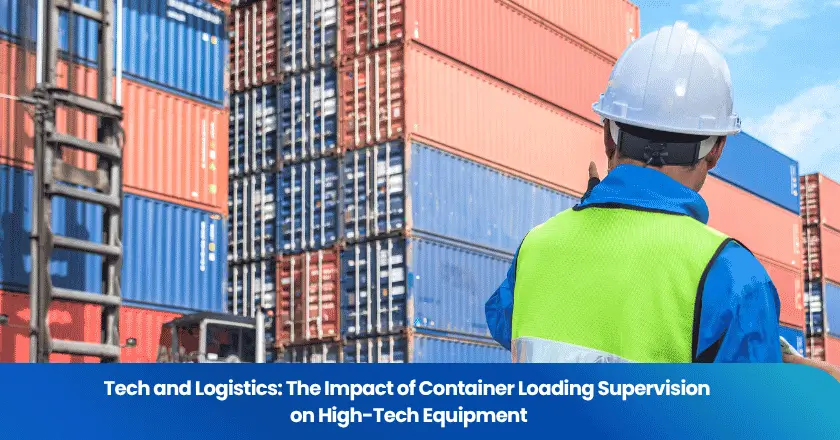
High-tech equipment often combines high product value, sensitive components, complex packaging, and strict handling requirements. For importers and manufacturers, protecting these products does not end when production is completed or when a pre-shipment inspection has passed.
The loading stage is another important control point.
Once equipment is moved into a shipping container, poor handling, unsuitable stacking, inadequate protection, or an unsuitable container can create risks that may only become visible after the shipment reaches its destination. Container Loading Supervision (CLS) provides an on-site check of the goods, packaging, container condition, and loading process before the container is sealed.
For high-tech equipment, this final verification can help buyers identify loading-related risks before the shipment leaves the factory.
Why High-Tech Equipment Requires Careful Loading
High-tech products can include electronic equipment, industrial machinery, instruments, communication equipment, control systems, and other products containing sensitive components.
Their transportation risks are not limited to visible product defects. The way equipment is packaged and loaded can also affect its condition during transportation.
Common risks include:
| Loading or Transportation Risk | Potential Impact on High-Tech Equipment |
|---|---|
| Rough handling | Scratches, dents, broken external components, or internal damage |
| Improper stacking | Excessive pressure on cartons, crates, or equipment |
| Insufficient securing | Cargo movement during transportation |
| Poor packaging condition | Reduced protection against impact or vibration |
| Moisture or water exposure | Damage to electronic or metal components |
| Unsuitable container condition | Additional risk from moisture, contamination, or structural problems |
| Incorrect loading sequence | Difficult unloading or unstable cargo arrangement |
| Short shipment or wrong goods | Quantity discrepancies or shipment disputes |
A product may leave the production line in acceptable condition but still be exposed to additional risks during loading. This is why loading supervision should be considered part of the broader quality-control process rather than simply a logistics activity.
What Is Container Loading Supervision?
Container Loading Supervision is an on-site service conducted while finished goods are being loaded into a container.
The purpose is to verify that the shipment being loaded corresponds to the buyer's requirements and that the loading process is carried out appropriately.
Depending on the inspection requirements, a CLS can cover:
| Inspection Area | What Can Be Checked |
|---|---|
| Product and quantity | Product identity, carton quantity, models, and packing list |
| Packaging | Carton, crate, pallet, cushioning, and visible packaging condition |
| Container condition | Cleanliness, dryness, odors, visible damage, and suitability for loading |
| Loading process | Handling, stacking, placement, and protection of goods |
| Cargo securing | Use of appropriate blocking, bracing, or other agreed protection |
| Container sealing | Container number, seal information, and final loading status |
| Documentation | Photos, loading records, findings, and final report |
TradeAider's Container Loading Supervision service similarly focuses on quantity, packaging, container and trailer condition, the loading process, and container sealing, with additional requirements incorporated according to the buyer's instructions.
How Loading Supervision Protects High-Tech Equipment
1. Checking the Container Before Loading
The container itself is the first physical environment that the cargo will encounter after leaving the factory.
Before loading begins, the condition of the container can be checked for issues such as visible damage, moisture, contamination, unusual odors, or other conditions that could affect the shipment.
For equipment containing electronic or precision components, this step is particularly relevant because moisture and contamination can create risks that are difficult to identify from the outside.
2. Verifying Packaging Condition
High-tech equipment often relies on multiple layers of packaging for protection.
Depending on the product, this may include:
- Inner protective materials
- Foam or other cushioning
- Individual cartons
- Wooden cases or crates
- Pallets
- Corner protection
- Moisture-resistant materials
Container Loading Supervision is not a substitute for formal packaging performance testing. However, an inspector can identify visible packaging problems before loading, such as crushed cartons, damaged crates, insufficient protection, or packaging that does not match the agreed requirements.
This distinction is important: CLS verifies the condition and handling of the shipment at loading; laboratory or packaging tests are used when specific performance characteristics need to be evaluated.
3. Monitoring Handling and Loading
Handling is especially important for heavy, fragile, or precision equipment.
During loading, supervisors can observe whether goods are being handled according to the agreed requirements and whether inappropriate practices could create avoidable damage.
For example, the loading process may require attention to:
- How heavy equipment is positioned
- Whether fragile products are protected from excessive pressure
- Whether cartons or crates are stacked appropriately
- Whether gaps could allow cargo to move
- Whether protective materials are correctly positioned
- Whether workers handle packages according to specified instructions
The objective is not to redesign the logistics process on site, but to identify and document deviations that could affect the shipment.
Loading Configuration Matters
High-tech equipment can vary considerably in size, weight, packaging method, and sensitivity. There is therefore no single loading configuration that applies to every shipment.
A suitable loading plan should consider factors such as:
| Factor | Why It Matters |
|---|---|
| Product weight | Influences stacking and load distribution |
| Product dimensions | Determines available container space and positioning |
| Packaging structure | Affects protection and stacking capability |
| Center of gravity | Important for heavy or irregularly shaped equipment |
| Fragility | Determines handling and protection requirements |
| Number of units | Influences loading sequence and space utilization |
| Securing method | Helps limit unwanted cargo movement |
For complex equipment, buyers should provide clear loading and handling requirements before the inspection. This gives the inspector a defined basis for evaluating the process rather than relying on assumptions.
Container Loading Supervision vs. Pre-Shipment Inspection
Container Loading Supervision and Pre-Shipment Inspection serve different purposes.
A Pre-Shipment Inspection generally focuses on whether finished products meet defined quality requirements before shipment. Container Loading Supervision focuses on what happens when those goods are actually loaded and secured for transportation.
| Control Point | Pre-Shipment Inspection | Container Loading Supervision |
|---|---|---|
| Main focus | Product quality | Loading and shipment integrity |
| Timing | After sufficient production completion | During container loading |
| Product appearance/function | Yes, according to requirements | Limited to agreed loading-stage checks |
| Quantity verification | May be included | Yes |
| Packaging condition | Can be checked | Yes |
| Container condition | Usually not the main focus | Yes |
| Loading process | No | Yes |
| Container sealing | No | Yes |
| Loading photos/records | May be included | Core part of loading documentation |
Using both services can create different quality-control checkpoints: one evaluates the finished goods before shipment, while the other verifies how those goods are handled when they leave the factory.
When Should Buyers Consider Container Loading Supervision?
CLS can be particularly useful when the shipment involves high-value, fragile, bulky, or technically sensitive equipment.
It may also be worth considering when:
- The shipment has a high total value.
- Equipment is difficult or expensive to replace.
- Products use specialized packaging or wooden cases.
- Multiple product models are being loaded into one container.
- The shipment contains heavy or oversized items.
- The buyer cannot send its own representative to the factory.
- Previous shipments have experienced loading or quantity issues.
- The buyer needs photographic evidence of the loading process.
The decision should ultimately depend on the product, shipment value, packaging, loading complexity, and buyer's risk-control requirements.
What Buyers Should Prepare Before the Inspection
A loading supervisor can work more effectively when the buyer provides clear shipment information in advance.
| Information | Examples |
|---|---|
| Product information | Model, SKU, product name |
| Quantity | Expected quantity and carton count |
| Packing list | Carton numbers and packing details |
| Packaging requirements | Pallet, crate, cushioning, or other specifications |
| Loading requirements | Stacking or placement instructions |
| Handling requirements | Special instructions for fragile or heavy equipment |
| Container information | Container type or loading requirements |
| Sealing requirements | Seal instructions, if applicable |
| Special concerns | Specific risks the buyer wants checked |
Clear requirements also make the inspection report more useful because findings can be assessed against documented expectations.
Real-Time Visibility During Loading
One advantage of on-site loading supervision is that problems can potentially be identified while loading is still taking place.
Instead of waiting until the container reaches the destination to discover that cartons were damaged, incorrectly loaded, or missing, buyers can receive information about the loading situation while the inspector is still on site.
TradeAider provides real-time online inspection updates, including photos, videos, measurements, and findings, allowing clients to review the situation and make timely decisions when issues are identified. An official report is also provided after the inspection.
This is particularly useful for high-value equipment because a loading issue can be addressed at the factory before the container leaves, rather than becoming a destination-side dispute.
Container Loading Supervision as Part of a Broader Quality-Control Process
Container Loading Supervision should not be viewed as a replacement for production quality control, product inspection, or laboratory testing.
For high-tech equipment, a more complete quality-control process may involve different checkpoints:
Production → During-Production Inspection → Finished Product Inspection → Packaging Verification → Container Loading Supervision → Shipment
Each checkpoint addresses a different stage of the supply chain.
For example, production inspections can identify manufacturing problems, while a final inspection can evaluate finished products against agreed specifications. Loading supervision then provides a final opportunity to verify the shipment's condition, quantity, container, and loading process before departure.
This approach helps buyers avoid relying on a single inspection point to manage every quality and logistics risk.
The Role of Third-Party Supervision
When buyers cannot be physically present at the factory, an independent third party can provide on-site visibility during the loading process.
The value is not simply in producing a report. The inspector can document what was observed at the loading site, including product quantities, packaging condition, container condition, loading activities, and sealing information.
For high-tech equipment, this provides an additional record of the shipment's condition at the point where responsibility for the goods moves toward transportation.
However, CLS cannot eliminate all transportation risks. Once the container leaves the factory, cargo may still be exposed to handling, vibration, weather, temperature, humidity, and other conditions during transit. Loading supervision should therefore be understood as a risk-control checkpoint rather than a guarantee that goods will arrive without damage.
Conclusion
For high-tech equipment, quality control should not stop when manufacturing is complete.
The loading stage creates its own risks, particularly when products are valuable, fragile, heavy, or sensitive to environmental and handling conditions. Container Loading Supervision provides an additional checkpoint to verify the goods, packaging, container condition, loading process, and final sealing before shipment.
By combining production and product inspections with appropriate loading supervision, buyers can gain better visibility from the factory floor to the point of shipment and address observable problems before the container leaves the supplier's facility.
For businesses shipping high-tech equipment from China, this final loading-stage check can be a practical part of a broader quality-control strategy.
Artigos Relacionados



Expanda seu negócio com o Serviço TradeAider
Clique no botão abaixo para entrar diretamente no Sistema de Serviço TradeAider. Os passos simples desde a reserva e pagamento até o recebimento de relatórios são fáceis de operar.

