
- About Us

- Our Services
- Your Industry
- Resources
- News & Blog
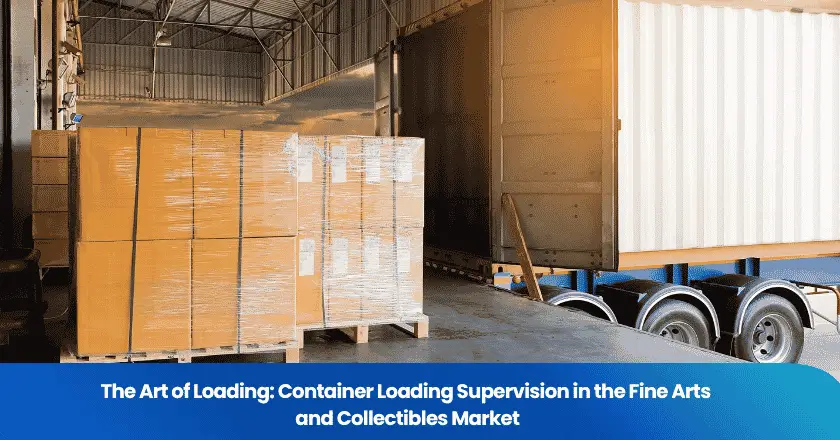
Fine art and collectibles require a different level of attention when they are prepared for international shipment. Paintings, sculptures, antiques, decorative pieces, limited-edition objects, and other collectibles may be valuable, fragile, oversized, or particularly sensitive to handling and environmental conditions.
For these products, quality control does not end when the item has been inspected and approved.
The loading stage creates another important control point. How artworks and collectibles are handled, positioned, protected, and secured inside a container can influence their condition during transportation.
Container Loading Supervision provides an on-site check of the shipment and loading process before the container leaves the facility. For buyers, galleries, dealers, collectors, and other businesses involved in international trade, this can provide additional visibility at one of the final stages before shipment.
Why Loading Matters for Fine Art and Collectibles
Fine art and collectibles can have characteristics that make them more difficult to transport than ordinary commercial products.
A sculpture may have fragile protruding parts. A framed artwork may require specialized protective packaging. An antique may have an irregular shape or delicate surface. Multiple pieces in the same shipment may also require different packaging and handling methods.
Common loading-related concerns include:
| Risk | Potential Impact |
|---|---|
| Rough handling | Scratches, dents, cracks, or broken components |
| Insufficient cushioning | Increased exposure to impact and vibration |
| Inadequate securing | Movement inside the container |
| Incorrect stacking | Pressure or weight placed on unsuitable items |
| Damaged packaging | Reduced protection during transportation |
| Moisture or contamination | Potential damage to sensitive materials |
| Incorrect quantity | Shipment discrepancies or disputes |
| Poor loading arrangement | Difficult unloading or unnecessary handling at destination |
These risks do not mean that damage will necessarily occur during transportation. Rather, they demonstrate why the loading stage deserves attention when the cargo has a high value or is particularly fragile.
What Is Container Loading Supervision?
Container Loading Supervision is an on-site quality-control service performed while goods are being loaded into a shipping container.
The inspection can be based on the buyer's product specifications, packing requirements, loading instructions, and shipment information.
For fine art and collectibles, the inspection scope may include:
| Inspection Area | Typical Checks |
|---|---|
| Product identity | Artwork, collectible, model, item number, or reference |
| Quantity | Number of pieces, cases, or packages |
| Packaging | Crates, cartons, cushioning, wrapping, and visible condition |
| Container condition | Cleanliness, dryness, odor, visible damage, and suitability |
| Handling | Loading practices and movement of fragile items |
| Positioning | Placement and stacking according to agreed requirements |
| Securing | Blocking, bracing, straps, or other agreed methods |
| Documentation | Photos, container number, seal information, and loading records |
The exact scope should be defined according to the characteristics of the shipment rather than applying the same checklist to every type of collectible.
Packaging Is the First Line of Protection
For artwork and collectibles, packaging is often an important part of the transportation process.
Depending on the item, protection may involve:
- Wooden crates
- Reinforced cartons
- Foam or cushioning materials
- Corner protection
- Protective film
- Moisture-resistant materials
- Pallets or custom supports
- Internal bracing
During loading supervision, the condition of the packaging can be visually checked before and during loading.
This can help identify obvious problems such as damaged crates, crushed cartons, loose protective materials, or packaging that does not match the agreed requirements.
However, visual loading supervision should not be confused with packaging performance testing. If a buyer needs to evaluate whether packaging can withstand specified impact, vibration, compression, or other conditions, appropriate packaging or laboratory testing may be required.
Handling Fragile and Irregular Items
Fine art and collectibles can be difficult to handle because their shapes and materials vary significantly.
A large sculpture, for example, may require a different loading approach from a framed painting. A collection of smaller decorative objects may require individual protection to prevent contact between pieces.
During loading, attention may therefore be given to:
- Lifting and handling methods
- Protection of fragile surfaces
- Placement of irregularly shaped items
- Separation between individual pieces
- Protection of corners and protruding parts
- Avoidance of excessive pressure
- Stability of crates and packages
The purpose is to observe whether the loading process follows the agreed handling requirements and to document relevant deviations.
Verifying the Shipment Before the Container Leaves
For valuable collectibles, knowing exactly what has been loaded is important.
A container may contain multiple artworks, different item numbers, or several packages representing one collection. Errors in quantity or identification can create difficulties after the shipment reaches its destination.
Container Loading Supervision can therefore include checks such as:
| Shipment Information | Verification |
|---|---|
| Item reference | Compare loaded items with the packing list or buyer instructions |
| Quantity | Confirm the number of pieces or packages |
| Packaging identification | Check labels, marks, or package numbers |
| Container number | Record the container identification |
| Seal number | Record the final seal information |
| Loading status | Document the completed loading condition |
These records can provide useful evidence of what was observed at the factory or loading location before departure.
Loading Arrangement and Cargo Stability
A container should not simply be viewed as an empty space that needs to be filled.
The arrangement of cargo can influence how items are supported and protected during transportation.
For fine art and collectibles, buyers may have specific requirements concerning:
- Weight distribution
- Stacking restrictions
- Orientation
- Separation between items
- Position of fragile packages
- Protection around sensitive surfaces
- Securing of crates
The appropriate method depends on the product and packaging. There is no universal loading arrangement suitable for every type of artwork or collectible.
For this reason, specific instructions should be provided before the inspection whenever the buyer has defined loading requirements.
Container Condition Matters
Before loading begins, the container itself can also be checked.
Relevant observations may include:
- Visible structural damage
- Cleanliness
- Moisture or water intrusion
- Unusual odors
- Contamination
- Floor condition
- General suitability for the intended cargo
For collectibles made from materials that may be sensitive to moisture or contamination, these checks can be particularly relevant.
Again, this is a visual and physical check of the container condition at the time of inspection. It does not guarantee the environmental conditions of the container throughout the entire transportation journey.
Container Loading Supervision vs. Product Inspection
A final product inspection and container loading supervision address different stages of quality control.
| Control Point | Product Inspection | Container Loading Supervision |
|---|---|---|
| Main purpose | Evaluate product quality | Verify loading and shipment condition |
| Product appearance | Core inspection area | Limited to agreed checks |
| Quantity | May be checked | Checked against shipment information |
| Packaging | Can be checked | Checked during loading |
| Container condition | Usually not the main focus | Core loading-stage check |
| Loading process | Not normally covered | Core inspection area |
| Cargo securing | Not normally covered | Can be checked |
| Container sealing | Not normally covered | Checked and recorded |
For high-value artwork and collectibles, using different checkpoints can provide broader visibility than relying only on a final product inspection.
When Should Fine Art Buyers Consider Loading Supervision?
Container Loading Supervision may be particularly relevant when:
- The shipment contains high-value items.
- The cargo is fragile or difficult to replace.
- Artwork requires specialized crates or protective packaging.
- Multiple artworks or collectibles are shipped together.
- Items have unusual shapes or dimensions.
- The buyer cannot attend the loading personally.
- The shipment has experienced loading issues in previous orders.
- The buyer requires photographic documentation of the loading process.
It is not necessary for every shipment. The appropriate level of inspection depends on the value, fragility, packaging, shipment complexity, and buyer's requirements.
What Buyers Should Provide Before Loading
Clear instructions make the loading inspection more effective.
For fine art and collectibles, buyers may provide:
| Information | Examples |
|---|---|
| Item list | Artwork names, item numbers, or collection references |
| Quantity | Number of individual pieces or packages |
| Packing list | Package and crate information |
| Packaging specifications | Crate, cushioning, wrapping, or other requirements |
| Handling instructions | Special requirements for fragile items |
| Loading instructions | Stacking, positioning, or orientation requirements |
| Container requirements | Container type or special conditions |
| Documentation requirements | Photos, videos, seal information, or records |
If an item has special handling requirements, these should be communicated before loading rather than relying on the inspector to determine them independently.
The Value of Photographic Loading Records
For international shipments, the buyer is often not physically present when the container is loaded.
Photographs and other inspection records can therefore provide useful visibility into the loading process.
Depending on the inspection scope, records may document:
- Product condition before loading
- Packaging condition
- Container condition
- Loading sequence
- Cargo arrangement
- Securing methods
- Final loaded condition
- Container number
- Seal application
These records do not replace insurance, transport documentation, or professional art-handling services. They provide an additional quality-control record of what was observed at the loading location.
Real-Time Visibility Before Shipment
One of the practical benefits of on-site loading supervision is that issues can potentially be identified while the cargo is still at the loading location.
If an inspector observes a quantity discrepancy, damaged packaging, unsuitable container condition, or another issue within the agreed inspection scope, the buyer can be informed before the container leaves.
TradeAider provides online inspection updates with photos, videos, measurements, and findings, allowing buyers to review loading information remotely. An official inspection report is provided after the inspection.
This can be especially useful for international buyers who cannot send their own representatives to the factory or warehouse.
Container Loading Supervision Is Not a Guarantee Against Transit Damage
It is important to understand the scope of loading supervision.
An inspection can document the condition of goods, packaging, container, and loading process at a specific point in time. It cannot control everything that happens after the container leaves the loading location.
During transportation, cargo may be exposed to:
- Vibration
- Shock
- Temperature changes
- Humidity
- Rough handling
- Delays
- Transshipment
- Other logistics conditions
Therefore, container loading supervision should be viewed as a quality-control checkpoint before shipment, not as a guarantee that artwork or collectibles will arrive without damage.
For particularly valuable items, buyers may need to consider appropriate packaging design, professional art handling, transportation arrangements, and insurance separately.
Building a Quality-Control Process for Fine Art Shipments
For valuable or fragile cargo, loading supervision works best as part of a broader process.
A practical sequence may look like:
Product Assessment → Packaging Verification → Final Product Inspection → Container Loading Supervision → Shipment
Each stage addresses a different point of risk.
Product inspection evaluates the condition of the artwork or collectible. Packaging verification focuses on whether the protective materials are in the expected condition. Container Loading Supervision then provides a final on-site check of the shipment, container, loading process, and sealing before departure.
This staged approach allows buyers to identify different types of issues before the shipment moves to the next stage.
Conclusion
Fine art and collectibles require careful attention throughout the shipping process. Even when an item has passed a product inspection, inappropriate packaging, handling, positioning, or securing during loading can create additional risks.
Container Loading Supervision provides a practical checkpoint before shipment by verifying the goods, packaging, container condition, loading process, cargo securing, and final sealing according to the agreed inspection scope.
For galleries, dealers, collectors, manufacturers, and international buyers shipping artwork or collectibles from China, independent loading supervision can provide additional visibility and documentation at the point where the shipment leaves the supplier or loading facility.
Related Articles



Grow your business with TradeAider Service
Click the button below to directly enter the TradeAider Service System. The simple steps from booking and payment to receiving reports are easy to operate.

