
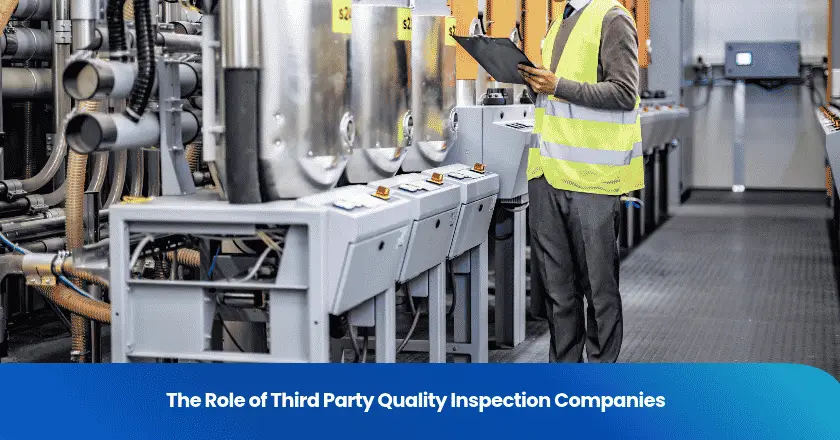
When businesses manufacture products in China or other overseas markets, maintaining consistent product quality can be challenging. Buyers may not be able to visit factories regularly, supervise every production stage, or independently verify every shipment.
Third-party quality inspection companies help address this challenge by providing independent product inspections and objective quality information. They work alongside manufacturers' internal quality control teams, checking products against buyers' specifications and agreed inspection criteria.
Their role goes beyond identifying visible defects. They help businesses verify product requirements, monitor manufacturing quality, document inspection findings, and make more informed decisions before shipment.
Ⅰ. Why Do Businesses Work with Third-Party Quality Inspection Companies?
Businesses engage third-party quality inspection companies for several practical reasons. The main value lies in obtaining independent quality verification and having a clearer understanding of whether products meet the agreed requirements.
1. Obtain Independent Verification of Product Quality
Manufacturers are responsible for controlling the quality of their own production. However, buyers may also need an independent assessment to verify whether finished products meet their specifications.
A third-party inspection company examines products according to agreed inspection criteria, which may include appearance, workmanship, dimensions, materials, functionality, quantity, and packaging.
The resulting inspection findings give buyers an external reference for evaluating product quality instead of relying entirely on the manufacturer's internal quality records or verbal assurances.
2. Identify Quality Problems Before Shipment
Product defects discovered after goods arrive at their destination can lead to additional handling, returns, rework, or customer complaints.
Third-party inspection companies can check products at different manufacturing stages, helping buyers identify potential problems earlier.
For example, a during-production inspection can reveal recurring workmanship issues while production is still underway. A pre-shipment inspection can assess finished goods before they leave the factory.
When issues are identified, buyers can discuss corrective action with the supplier and arrange follow-up inspections when necessary.
3. Improve Visibility into Overseas Manufacturing
For international buyers, geographical distance can make it difficult to understand what is happening inside a supplier's factory.
An independent inspector can visit the manufacturing site and provide documented information about the inspected products and relevant production conditions.
Inspection reports, photographs, measurements, and defect records help buyers understand the actual inspection results. This is particularly useful when managing multiple orders or working with suppliers in different locations.
4. Support Better Supplier Communication and Quality Decisions
Quality issues can be difficult to resolve when buyers and manufacturers have different interpretations of product requirements or defect severity.
A third-party inspection report provides a common reference by documenting the inspection criteria, observed defects, measurements, and supporting photographs.
Based on these findings, buyers can communicate more clearly with suppliers, request corrective action, decide whether re-inspection is necessary, and assess whether the inspected goods meet the agreed acceptance criteria.
The inspection company provides the evidence; the buyer and supplier remain responsible for agreeing on commercial decisions and corrective actions.
5. Maintain Consistent Quality Records Across Orders
For businesses that place repeat orders or work with multiple manufacturers, maintaining inspection records can help track product quality over time.
By reviewing reports from different orders, buyers may identify recurring defects, compare inspection results, and determine whether additional quality checks are needed.
These records can also provide useful references when updating product specifications or discussing quality improvements with manufacturers.
Ⅱ. How to Choose a Qualified Third-Party Quality Inspection Company
Not all inspection providers offer the same services, product experience, or reporting capabilities. Before selecting a company, buyers should evaluate whether its actual inspection resources and procedures match their requirements.
1. Check Relevant Product and Industry Experience
Product inspection requirements vary considerably between categories. For example, inspecting apparel requires attention to fabric, stitching, measurements, and workmanship, while electrical products may require specific functional checks and technical knowledge.
Buyers should ask whether the inspection company has experience with similar products and whether it can provide relevant inspection checklists or sample reports.
Relevant experience helps ensure that inspectors understand the product characteristics and potential quality issues that need to be checked.
2. Evaluate Inspector Competence and Technical Capabilities
The quality of an inspection depends heavily on the competence of the people conducting it.
A professional inspection provider should be able to explain how inspectors are selected, trained, assigned, and supervised. It should also have the appropriate equipment and procedures for the checks included in the agreed inspection scope.
For specialized product testing, buyers should confirm whether the provider performs the required tests itself or works with an appropriately qualified laboratory. Routine on-site inspection should not be confused with specialized laboratory testing.
3. Review Inspection Procedures and Standards
A reliable inspection company should have clearly defined procedures for conducting inspections and recording results.
Before placing an order for inspection, buyers should confirm:
- Whether the inspection follows the buyer's product specifications and approved samples.
- Which inspection checklist and acceptance criteria will be used.
- Whether an AQL-based sampling plan is required and, if so, which standard and inspection level apply.
- How defects are classified and documented.
- How inspection results are determined and reported.
Clear procedures help reduce misunderstandings and make inspection results more consistent and transparent.
4. Examine Sample Inspection Reports
An inspection report is one of the most useful ways to evaluate a service provider's reporting quality.
A good report should make it easy to understand what was inspected, how many units were checked, what defects were found, and whether the results met the agreed acceptance criteria.
Buyers should look for clear photographs, defect descriptions, measurements where relevant, sampling information, and an overall inspection result.
A report that only states "Pass" or "Fail" without sufficient supporting evidence may not provide enough information for effective quality decisions.
5. Confirm Reporting Transparency and Communication
Timely communication is particularly important when inspections take place overseas.
Buyers should find out how inspection results are shared, whether photographs and findings can be accessed during the inspection, and how urgent quality issues are communicated.
Some providers offer online reporting that allows buyers to review inspection findings while the inspector is still at the factory. This can make it easier to clarify issues and provide instructions without waiting for the final report.
6. Understand Service Coverage and Follow-Up Support
Businesses working with suppliers in different manufacturing regions may need an inspection provider with a broad service network.
Buyers should confirm the areas covered, inspection scheduling arrangements, and availability of inspectors for their product categories.
They should also clarify whether the provider can arrange follow-up inspections to verify corrective actions when defects are identified.
The ability to conduct an inspection is important, but the ability to document findings clearly and verify specified improvements can also contribute to a more effective quality control process.
Ⅲ. What Services Can Third-Party Quality Inspection Companies Provide?
Depending on their capabilities and service scope, third-party quality inspection companies may offer several types of inspection services.
| Service | Main purpose |
|---|---|
| Pre-Production Inspection (PPI) | Check relevant materials, components, specifications, and production preparations before mass production |
| During Production Inspection (DUPRO/DPI) | Examine products while manufacturing is underway and identify recurring quality problems |
| Pre-Shipment Inspection (PSI) | Assess finished products, workmanship, quantities, packaging, and labeling before shipment |
| Container Loading Supervision (CLS) | Monitor loading activities and verify product quantities, packaging condition, and loading arrangements |
| Factory Audit | Assess selected aspects of a manufacturer's facilities, processes, or management systems against defined audit criteria |
These services serve different purposes. Buyers should select them according to the product, supplier, order requirements, and potential quality risks rather than assuming that every order needs every type of inspection.
It is also important to distinguish inspection from laboratory testing and product certification. Inspection examines products or specified production conditions, while laboratory testing evaluates particular characteristics using defined test methods. Certification follows a separate assessment and certification process.
Ⅳ. How TradeAider Supports Independent Quality Inspection in China
TradeAider provides third-party inspection services in China for international buyers, importers, wholesalers, and e-commerce businesses.
With a nationwide network of professional inspectors and 80,000+ quality specialists throughout China, TradeAider supports buyers at different production stages through pre-production inspection, during-production inspection, pre-shipment inspection, factory audit, and container loading supervision.
Its reporting process gives buyers access to inspection findings, photographs, videos, measurements, and defect records online while the inspection is taking place. This allows buyers to review quality issues and communicate instructions directly with the inspection team.
When defects are identified, buyers can discuss corrective action with the supplier. Where required, TradeAider can also arrange follow-up inspections to verify whether specified improvements have been made.
An official PDF inspection report is generally provided within 24 hours after the inspection is completed.
By combining on-site inspection, real-time reporting, and follow-up verification, TradeAider helps businesses maintain better visibility into product quality when working with manufacturers in China.
Frequently Asked Questions
What is the main role of a third-party quality inspection company?
Its main role is to independently examine products or specified production conditions against agreed requirements and provide documented inspection findings. This helps buyers verify product quality and make informed decisions.
Are third-party quality inspection companies responsible for a manufacturer's product quality?
No. Manufacturers remain responsible for their production processes and product quality. Third-party inspection companies provide independent assessments and report findings; they do not replace the manufacturer's internal quality control responsibilities.
Can third-party inspection companies issue product certification?
A routine inspection report is not the same as a product certificate. Product certification requires a separate process under an applicable certification scheme. Buyers should confirm the specific service and qualifications required for their target market.
Do third-party inspection companies perform laboratory testing?
Some providers may offer both inspection and testing services, while others focus on inspection and work with external laboratories when specialized testing is required. Buyers should confirm the testing scope, methods, and laboratory qualifications before arranging the service.
How can buyers evaluate the reliability of an inspection company?
Buyers should review its product experience, inspector competence, inspection procedures, sample reports, reporting transparency, service coverage, and follow-up arrangements. The provider should also clearly explain the scope and limitations of its services.
Conclusion
Third-party quality inspection companies provide independent verification that helps businesses monitor product quality, identify defects, and evaluate goods against agreed requirements. Their role is especially valuable for international buyers who cannot regularly supervise overseas manufacturing in person.
Choosing a suitable inspection partner requires more than comparing prices or company size. Buyers should look for relevant product experience, competent inspectors, clearly defined procedures, transparent reporting, and reliable communication.
With the right inspection arrangements, businesses can gain better visibility into manufacturing quality and make more informed decisions throughout the production and shipment process.
Related Articles
Grow your business with TradeAider Service
Click the button below to directly enter the TradeAider Service System. The simple steps from booking and payment to receiving reports are easy to operate.

