
- About Us

- Our Services
- Your Industry
- Resources
- News & Blog
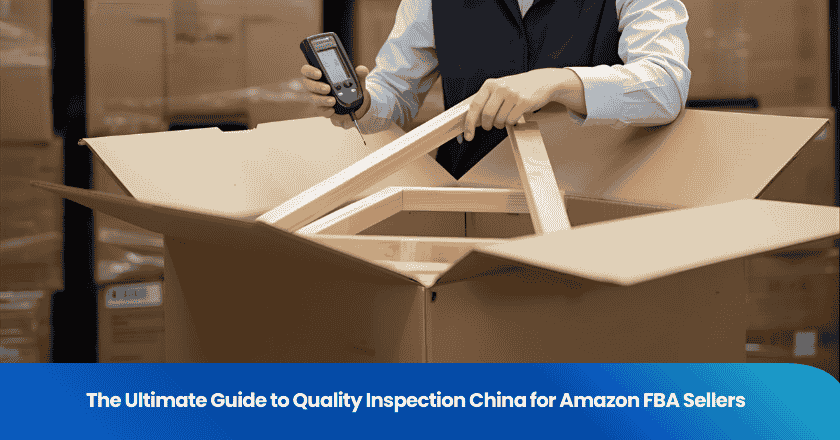
Every Amazon FBA seller who sources from China faces the same critical question: How can you be certain your products will meet customer expectations before they ship? The distance between your supplier's factory and Amazon's fulfillment centers creates a visibility gap that has cost sellers millions in returns, damaged reputations, and in some cases, forced product recalls. Quality inspection in China bridges that gap, transforming uncertainty into confidence and protecting both your margins and your seller rating.
This guide walks through everything you need to know about quality inspection for Amazon FBA—from the inspection types that protect different stages of production to the AQL standards that define acceptable quality, and from the real costs you should expect to the modern innovations that are changing how sellers interact with the inspection process.
Key Takeaways
- Quality inspection prevents costly returns—Almost one-third of Amazon returns stem from damaged or poor-quality products, making pre-shipment inspection a critical investment rather than an expense.
- AQL 2.5 is the industry standard for most consumer products—Understanding Acceptable Quality Limit standards helps you set realistic expectations and communicate clearly with inspectors.
- Multiple inspection types serve different production stages—Pre-shipment, during-production, pre-production, and container loading inspections each address specific quality risks.
- Real-time monitoring changes the inspection equation—Modern inspection services allow sellers to view inspection progress live, enabling immediate decisions rather than waiting days for a PDF report.
- Inspection costs typically range from $199-$299 per man-day—This investment protects orders worth thousands or tens of thousands of dollars, making inspection one of the highest-ROI expenditures in your sourcing budget.
Why Quality Inspection Matters for Amazon FBA Sellers
The Amazon marketplace operates on thin margins and high customer expectations. When a customer receives a defective product, the consequences cascade far beyond that single return. Negative reviews accumulate, your seller rating drops, and Amazon's algorithm begins suppressing your listings. In severe cases, especially involving safety issues, you may face account suspension or mandatory product recalls that can devastate your business.
The Hidden Costs of Defective Products
Most sellers calculate the cost of defects as simply the refund amount plus return shipping. But the true cost extends much further. According to industry research, nearly one-third of all Amazon returns are attributed to damaged or poor-quality products. Each return triggers a series of hidden expenses that compound quickly: the cost of processing the return, the loss of the product if it cannot be resold, the storage fees for returned inventory, and the reputational damage from negative reviews.
Consider a seller moving $50,000 in monthly inventory. If defective products trigger a 5% return rate, that's $2,500 in returned products monthly. Add processing costs, unsellable inventory, and the impact of negative reviews on future sales, and the real cost easily doubles. A single pre-shipment inspection at $199-$299 can prevent thousands in downstream losses.
Beyond financial costs, defective products create operational chaos. Your team spends time handling customer complaints and return logistics instead of growing the business. Inventory forecasting becomes unreliable when you cannot distinguish between normal demand fluctuations and quality-driven returns. The mental bandwidth consumed by quality issues diverts attention from the strategic decisions that drive growth.
Amazon's Stance on Product Safety
Amazon has dramatically increased its focus on product safety in recent years, and the implications for FBA sellers are significant. In July 2024, the U.S. Consumer Product Safety Commission determined that Amazon is a "distributor" of products that are defective or fail to meet federal consumer product safety standards. This ruling means Amazon can be held responsible for hazardous products sold by third-party sellers on its platform.
According to reporting from NPR, Amazon sold more than 418,000 recalled units between 2018 and 2021 before the safety issues were identified. In response, Amazon has implemented stricter compliance requirements and more aggressive removal of potentially hazardous products. For sellers, this means the stakes of quality control have risen substantially. A product that passes a cursory factory check but fails safety standards can result in forced recalls, account penalties, and potential legal liability.
Quality inspection serves as your first line of defense against these risks. A professional inspector following a comprehensive checklist can identify safety hazards, compliance issues, and quality defects before products enter the supply chain. This proactive approach protects not only your customers but also your seller account and your business's long-term viability.
Types of Quality Inspections for FBA Sellers
Quality inspection is not a single event but a suite of services designed to address different stages of the production cycle. Understanding when to deploy each type of inspection allows you to allocate your quality control budget effectively and catch problems at the optimal point in your supply chain.
Pre-Shipment Inspection (PSI)
Pre-shipment inspection, also known as Final Random Inspection (FRI), is the most common inspection type for Amazon FBA sellers. Conducted when 80-100% of production is complete and at least 80% of goods are packed, PSI provides a final quality check before products leave the factory. Inspectors randomly sample products according to AQL standards, checking for cosmetic defects, functional issues, packaging quality, labeling accuracy, and compliance with your specifications.
For most sellers, PSI represents the minimum quality control investment. It catches problems before shipping, allowing you to address issues with your supplier while goods are still at the factory. The cost of remediation at this stage—whether repair, replacement, or negotiation with the supplier—is dramatically lower than dealing with defects after products reach Amazon's warehouses. Learn more about how TradeAider's pre-shipment inspection service works to protect your Amazon orders.
During Production Inspection (DPI)
During production inspection, also called DUPRO, occurs when 20-30% of production is complete. This mid-process checkpoint allows you to identify quality issues while there's still time to correct them without delaying your shipment. DPI is particularly valuable for large orders, new suppliers, products with complex manufacturing processes, or situations where you've experienced quality issues in previous production runs.
The advantage of DPI lies in its timing. If an inspector discovers systematic defects—a pattern of incorrect assembly, material quality problems, or packaging errors—you can halt production and address the root cause before the entire batch is affected. This prevents the worst-case scenario where you discover a problem only after 100% of production is complete, when remediation requires either shipping defective products or delaying your order while the factory reworks everything.
Pre-Production Inspection (PPI)
Pre-production inspection verifies that your supplier is ready to manufacture your products correctly before production begins. Inspectors check raw materials, components, production equipment, and factory understanding of your specifications. This inspection type is essential when working with a new supplier, launching a new product, or manufacturing products with specific material requirements.
PPI can prevent problems that no amount of downstream inspection can fix. If your supplier has sourced inferior materials or misunderstood your specifications, catching these issues before production starts saves both time and money. The inspection also establishes a quality baseline and demonstrates to your supplier that you take quality seriously, which can influence their attention to detail throughout production.
Container Loading Supervision (CLS)
Container loading supervision ensures that the correct products, in the correct quantities, are loaded into containers properly. Inspectors verify product counts, check that cartons are packed to prevent damage during transit, and document the sealing of containers. For FBA sellers shipping full container loads, CLS provides protection against quantity shortages and shipping damage.
The value of CLS becomes apparent when you consider what can go wrong during loading. Products can be damaged by improper stacking, exposed to moisture without proper container preparation, or even substituted for inferior goods in extreme cases. A supervisor present during loading documents the entire process and ensures your products begin their journey in optimal condition.
Understanding AQL Standards for Consumer Products
The Acceptable Quality Limit (AQL) is the foundation of statistical sampling in quality inspection. Developed as part of the ISO 2859-1 international standard, AQL provides a systematic method for determining how many units to inspect and how many defects are acceptable within that sample.
What is AQL and How Does It Work?
AQL works by establishing three defect categories with different tolerance levels. Critical defects are those that could cause harm to users or violate regulations—these have zero tolerance in most cases. Major defects are those that would cause the product to fail or significantly reduce its usability—the typical AQL for major defects is 2.5%. Minor defects are aesthetic issues that don't affect functionality—the typical AQL is 4.0%.
The inspection process begins with determining your lot size—the total number of units you're inspecting. The AQL tables then specify the sample size code letter and the corresponding sample size. For example, an order of 3,200 units with General Inspection Level II would require inspecting 200 units. The AQL 2.5 column for that sample size allows up to 10 major defects before the lot fails inspection.
This statistical approach means you don't need to inspect every unit to have confidence in your batch quality. The mathematics of sampling ensure that if the defect rate in your production truly exceeds your AQL threshold, the inspection will catch it with high probability. For a deeper understanding of the sampling methodology, comprehensive guides to ISO 2859 explain the underlying statistical principles.
Choosing the Right AQL Level for Your Products
Selecting appropriate AQL levels requires balancing quality expectations with practical production realities. AQL 2.5/4.0 (major/minor) represents the industry standard for most consumer products and is appropriate for most Amazon FBA categories. Products with higher safety requirements—children's products, electronics, medical devices—may warrant tighter AQL levels such as 1.5/2.5.
Consider your product category, price point, and competitive landscape when setting AQL levels. Premium products command premium prices and face higher customer expectations; a minor defect that customers might overlook in a $10 item becomes unacceptable in a $50 product. Your AQL levels should reflect the quality your customers expect and the price they're paying.
Communication with your supplier about AQL expectations is essential. When suppliers understand the quality standards they'll be measured against, they can implement appropriate controls in their own processes. Many quality issues stem from unclear expectations rather than supplier negligence.
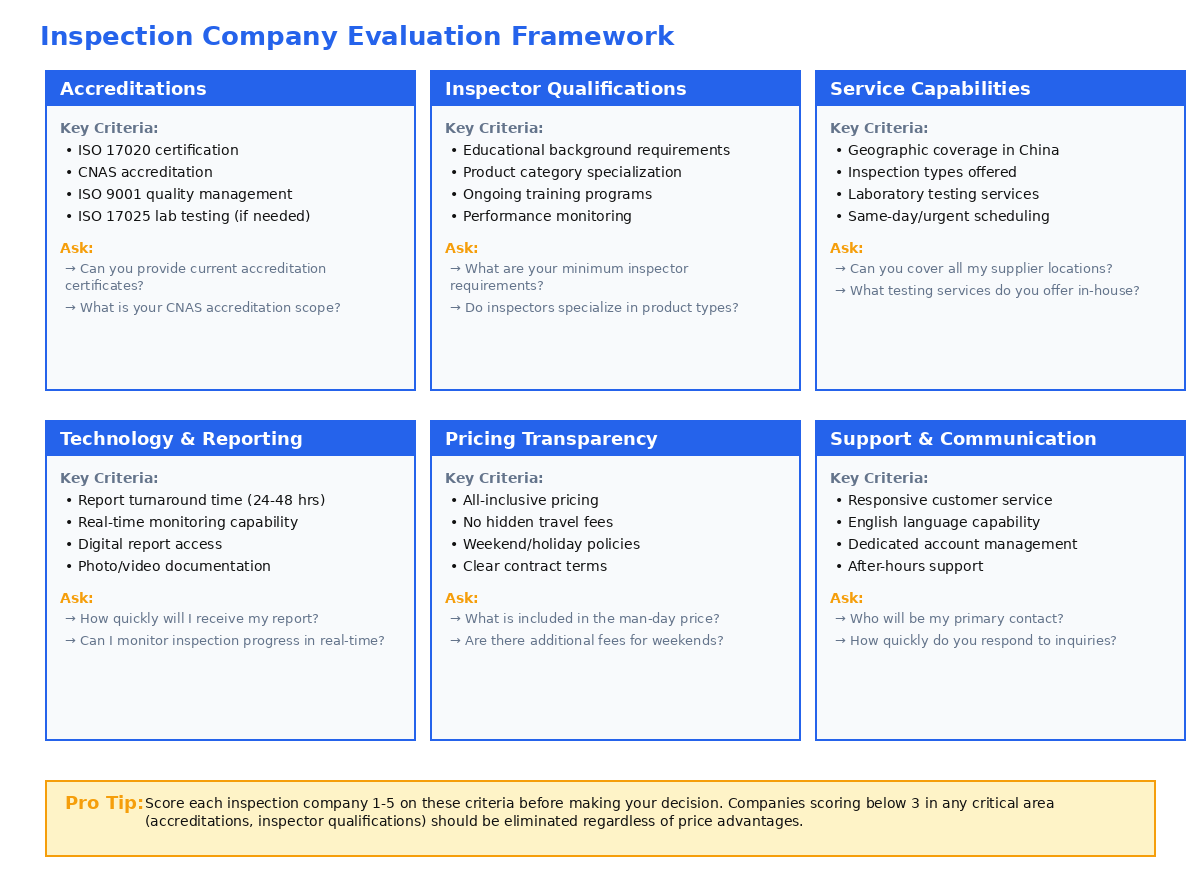
The AQL inspection process follows a systematic flow from lot size to final pass/fail determination
The Step-by-Step Inspection Process
Understanding what happens during an inspection helps you prepare effectively and interpret results accurately. The inspection process involves three main phases: preparation, execution, and reporting.
Preparing Your Inspection Checklist
Your inspection checklist is the foundation of a successful inspection. A vague request to "check quality" produces vague results. Instead, provide your inspection company with detailed specifications covering product dimensions and tolerances, material requirements, color standards with reference samples, functionality tests, packaging specifications, labeling requirements including barcodes and FNSKU labels, and specific defects to watch for.
For Amazon FBA products, your checklist should include Amazon-specific requirements. Products must meet Amazon's packaging standards, labels must be correctly placed and scannable, and any poly bags must have the required suffocation warnings. Missing these requirements can result in Amazon rejecting your shipment and charging you for reprocessing or return.
Reference samples are invaluable during inspection preparation. Send your inspector a "golden sample" that represents your quality expectations, and clearly mark any areas where your specifications differ from what a typical product in this category might look like. Inspectors can only check what they know to check—comprehensive communication improves inspection accuracy.
What Happens During an Inspection
A typical inspection lasts one man-day, which is approximately eight hours of inspector time. The inspector arrives at the factory with your checklist and any reference samples you've provided. They first verify that the production lot matches your order—checking quantities, confirming the products are yours, and ensuring the factory hasn't packed the inspector's samples in advance.
The inspector then randomly selects products for inspection according to AQL sampling requirements. Random selection is crucial—if the factory chooses which units to inspect, they can hide defects. The inspector examines each sampled unit against your checklist, documenting any defects with photographs and detailed notes.
Modern inspection services like TradeAider's real-time inspection platform allow you to monitor the inspection as it happens. Instead of waiting 24-48 hours for a PDF report, you can view inspector findings in real time, communicate with the inspector, and make immediate decisions. If the inspector discovers a problem, you can direct them to investigate further or focus on specific areas—all while the inspector is still at the factory.
Reading Your Inspection Report
A professional inspection report provides both quantitative results and qualitative context. The quantitative section shows the number of units inspected, defects found by category (critical, major, minor), and the pass/fail determination based on AQL limits. The qualitative section includes photographs of defects, descriptions of issues found, and the inspector's professional assessment of overall quality.
Pay attention to patterns in the report. A random distribution of minor defects is different from the same number of defects clustered in one area of production. If all defects appear in units from a single production line or production day, this suggests a localized problem that might be fixable. Widespread random defects suggest a systemic issue that may require a broader solution.
The report should also verify compliance with Amazon FBA requirements. Check that packaging, labeling, and barcode sections confirm your products will be accepted at Amazon fulfillment centers. A product that passes quality inspection but fails Amazon's receiving requirements creates a different set of problems.
Real-Time Inspection Monitoring: A Game Changer
Traditional inspection creates a fundamental limitation: by the time you receive your inspection report, the inspector has left the factory. If you have questions, want additional photos, or need the inspector to investigate something specific, you must schedule a follow-up inspection—at additional cost and time delay. Real-time inspection monitoring eliminates this limitation.
Traditional vs. Real-Time Inspections
In a traditional inspection, the inspector arrives at the factory, conducts the inspection according to your checklist, documents findings, and returns to their office to compile the report. You receive the results 24-48 hours later. If the report reveals issues that need clarification, your options are limited. You can accept the report as-is, schedule a re-inspection, or make decisions based on incomplete information.
Real-time monitoring transforms this dynamic. As the inspector works, findings appear in your dashboard immediately. You see defects as they're discovered, view photos in real time, and can communicate directly with the inspector through the platform. If you want the inspector to check additional units, focus on a specific quality concern, or investigate a defect more thoroughly, you can direct them while they're still on-site.
This capability is particularly valuable when you're uncertain about a quality issue's severity. A photo might make a defect look worse than it is, or a description might understate a real problem. With real-time access, you can request additional angles, ask the inspector to check more units in that area, or request video of the functionality test. The result is more confident decision-making based on complete information.
| Feature | Traditional Inspection | Real-Time Monitoring |
|---|---|---|
| Report delivery | 24-48 hours after inspection | Immediate, as inspection progresses |
| Communication with inspector | Not possible after inspection ends | Real-time chat during inspection |
| Additional investigation | Requires new inspection booking | Direct inspector while on-site |
| Decision timing | Delayed until report received | Immediate, same-day decisions possible |
| Video evidence | Often unavailable or extra cost | Standard, viewable in real-time |
Quality Inspection Costs and ROI
Quality inspection is an investment that pays for itself many times over by preventing losses. Understanding the cost structure helps you budget appropriately and evaluate the return on this investment.
Typical Pricing for China Inspections
Most third-party inspection companies in China charge per man-day, which covers one inspector for one working day (typically 8 hours). Industry pricing typically ranges from $199 to $299 per man-day for inspections in major manufacturing regions. Some companies charge additional fees for travel to remote areas, weekend inspections, or rush reporting, while others like TradeAider offer flat-rate pricing with no hidden fees.
The number of man-days required depends on your order size and inspection complexity. A typical consumer product order of 3,000-5,000 units usually requires one man-day for a standard AQL inspection. Larger orders, products requiring extensive functional testing, or inspections at multiple factories may require additional days.
When comparing inspection costs, consider what's included. Some companies charge separately for travel, reporting, or weekend work. Others bundle these into a single price. The lowest headline rate isn't always the best value if it comes with hidden fees or reduced service scope.
Calculating Your Return on Investment
To evaluate inspection ROI, compare the cost of inspection against the cost of the problems it prevents. Consider a $5,000 order with a $299 inspection. If that inspection catches quality issues that would have resulted in a 10% return rate, you've prevented $500 in direct product losses, plus return processing costs, plus the reputational impact of negative reviews. The inspection more than pays for itself on the first order.
The ROI calculation becomes even more favorable when you consider the full range of risks inspection mitigates. A single major quality incident can generate dozens of negative reviews, each of which reduces conversion rates on future sales. One safety-related recall can threaten your entire Amazon business. Quality inspection is insurance against these high-impact, lower-probability events.
For high-value orders or ongoing supplier relationships, some sellers opt for comprehensive quality programs that include multiple inspection types. Pre-production inspection combined with during-production and pre-shipment inspections creates multiple checkpoints, catching problems at the earliest possible stage when remediation is least expensive. The investment in comprehensive quality control reflects the value of the orders being protected.
Common FBA Inspection Mistakes to Avoid
Even sellers who invest in inspection sometimes undermine its effectiveness through common mistakes. Awareness of these pitfalls helps you maximize the value of your quality control investment.
Insufficient specification detail is the most common mistake. An inspector cannot find defects they don't know to look for. A checklist that simply says "check quality" without specific criteria leaves too much to interpretation. Provide detailed specifications, reference samples, and clear photos of what acceptable and unacceptable products look like.
Scheduling inspections too late reduces your options when problems are found. If inspection occurs the day before your scheduled ship date, you have no time to address issues. Schedule inspections with buffer time for potential remediation. A failed inspection discovered three days before your ship date is a problem; a failed inspection discovered the day before is a crisis.
Ignoring inspection results defeats the purpose of inspection. Some sellers, facing tight timelines or eager to ship, proceed with orders that failed inspection. This transforms the inspection expense into pure cost without any benefit. If you inspect, commit to acting on the results. A shipment delay to address quality issues is preferable to shipping defective products.
Not communicating with suppliers about inspection expectations creates adversarial relationships. Your supplier should know what quality standards they're being measured against. Surprise inspections with previously uncommunicated requirements create friction and make suppliers defensive. Clear upfront communication about quality expectations and inspection criteria sets a collaborative tone that improves quality outcomes.
Frequently Asked Questions
How much does quality inspection cost in China?
Quality inspection in China typically costs $199-$299 per man-day, which covers one inspector for approximately 8 hours of work. This price usually includes random sampling according to AQL standards, a comprehensive report with photos, and basic functional testing. Additional costs may apply for travel to remote factory locations, weekend or holiday inspections, or specialized testing requirements. TradeAider offers flat-rate pricing at $199 per man-day with no hidden fees, including weekends and holidays.
When should I schedule my inspection?
Schedule pre-shipment inspection when 80-100% of production is complete and at least 80% of goods are packed. For during-production inspection, schedule when 20-30% of production is complete. Always schedule with buffer time before your ship date to allow for potential remediation if issues are found. A good rule is to inspect at least 3-5 business days before your planned shipment, giving you time to address any problems discovered.
What is AQL 2.5 and is it right for my products?
AQL 2.5 means that during inspection, up to 2.5% of sampled units can have major defects before the lot fails. This is the industry standard for most consumer products and is appropriate for the majority of Amazon FBA categories. Products with higher safety or quality requirements—children's products, electronics, premium goods—may warrant tighter AQL levels like 1.5 or even 1.0. Work with your inspection provider to determine the appropriate AQL for your specific products and customer expectations.
Can I trust inspection results without being there?
Professional third-party inspectors are trained to follow systematic procedures and document their findings thoroughly. However, the trustworthiness of results depends on the quality of your preparation. A detailed checklist, reference samples, and clear communication significantly improve inspection accuracy. Real-time monitoring services take this a step further by allowing you to observe the inspection as it happens and communicate with the inspector directly, eliminating the "black box" nature of traditional inspection reporting.
TradeAider goes beyond traditional inspection by giving you real-time visibility into every quality check—so you catch defects before they ship, not after. Whether you need a single pre-shipment inspection or full production quality control with our WeGuarantee service, our team is ready to help. Book your inspection now or get a free quote to protect your next order.
Related Articles
Grow your business with TradeAider Service
Click the button below to directly enter the TradeAider Service System. The simple steps from booking and payment to receiving reports are easy to operate.

