
- About Us

- Our Services
- Your Industry
- Resources
- News & Blog
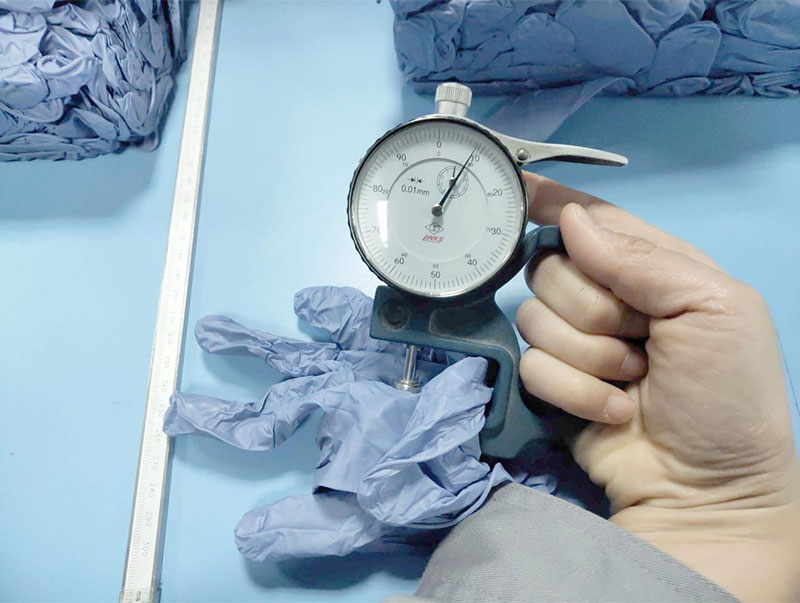
In short: Quality assurance (QA) is the ongoing system of standards, checkpoints, and documentation that keeps a product's quality consistent from raw material to shipped order — not a single inspection, but the framework that decides when and how inspections happen. Quality control (QC), including third-party inspection, is how that system actually gets executed at each stage of production.
What Quality Assurance Service Actually Means for a Buyer
For a company sourcing or manufacturing products — especially across borders, where the buyer isn't physically present at the factory — quality assurance service is the structured plan that governs how quality gets verified from the moment a specification is agreed to the moment goods are shipped. It's not one inspection. It's the decision framework behind which inspections happen, at which stage of production, against which standard, and what happens when something fails.
A useful way to see the difference: a buyer who books a single pre-shipment inspection on one order has used a QC service. A buyer who has a defined plan — factory audit before onboarding a new supplier, in-line checks at a fixed percentage of production, AQL-based pre-shipment sampling on every order, a documented process for what happens when a batch fails — has a quality assurance program. QA is the system; QC, including third-party inspection, is how the system gets carried out on the ground.
Quality Assurance vs. Quality Control: The Distinction That Actually Matters
These two terms get used interchangeably often enough that it's worth being precise, because the distinction changes what a buyer should actually be asking a supplier or an inspection company for.
| Quality Assurance (QA) | Quality Control (QC) | |
|---|---|---|
| What it is | The overall system and standards that define how quality gets managed | The specific checks that verify a product meets those standards |
| When it happens | Ongoing — spans the full relationship with a supplier | At defined points — before production, during production, before shipment |
| Focus | Preventing defects by controlling the process | Detecting defects in the product |
| Example | A defined inspection schedule, AQL standard, and escalation process built into every purchase order | A Pre-Shipment Inspection checking a specific batch against that AQL standard |
| Who typically owns it | The buyer's sourcing or quality team, in partnership with an inspection provider | The inspector or QC technician doing the check |
In practice, most buyers need both, and most professional inspection companies — including TradeAider — sit at the intersection: providing the individual QC checkpoints (inspections, audits, testing) that a buyer's broader QA program is built around.
The Building Blocks of a Quality Assurance Program
A functioning QA program for an importer or brand sourcing overseas is typically built from a defined sequence of checkpoints, each covering a different point of failure:
- Factory audit, done before committing to a new supplier — verifies the factory actually has the capacity, equipment, and compliance standing it claims, before a single unit is produced. See TradeAider's Factory Audit service.
- Pre-production inspection (initial stage), checking raw materials and components against the approved spec before mass production starts. See Pre-Production Inspection (PPI).
- In-line inspection, done while a run is in progress, catching process drift — sizing, assembly, workmanship — early enough to correct before the full batch is finished. See During Production Inspection (DPI/DUPRO).
- Problem-solving on-site. When an in-line or pre-shipment inspection finds a defect, a QA program includes a defined path for what happens next — the inspector working with the factory to determine whether a batch can be reworked to an acceptable level, needs a price adjustment, or has to be rejected — rather than leaving that decision unresolved after the inspector has left.
- Sampling pick-up, retaining physical samples from a production run with clear labeling and documentation, so there's a physical reference point if a later dispute arises over what was actually approved.
- Final inspection (pre-shipment), sampling the completed, packed order against an AQL standard before it leaves the factory. See Pre-Shipment Inspection (PSI/FRI).
- Container loading supervision, confirming the correct SKUs and quantities are what actually gets loaded. See Container Loading Supervision (CLS).
- In-house / managed QA, for buyers who want an ongoing relationship rather than booking each checkpoint separately — see WeGuarantee Total Quality Control (TQC/TQM).
Five Principles Behind a Working QA Program — With What They Actually Look Like
These principles show up in every description of quality assurance, but they mean little as abstractions. Here's what each one looks like in an actual sourcing relationship:
Systematic. A QA program covers the full order lifecycle rather than a single checkpoint — a buyer who only inspects the finished goods at pre-shipment, with no material check earlier in the process, finds out about a fabric substitution or a wrong-gauge component only after it's already built into thousands of units.
Preventive. The value of an in-line inspection isn't the defects it finds — it's the defects it stops from being repeated across the rest of the run. Catching a stitching error at 25% of production means the remaining 75% gets corrected before it's made, not reworked after.
Data-driven. A single inspection report is a snapshot. A buyer running the same product category through multiple orders can compare defect rates and defect types across reports over time — a rising rate of a specific defect on the same line is a signal to the buyer before it becomes a customer-facing problem, in a way a single pass/fail report never surfaces on its own.
Continuous improvement. A QA program that treats a factory relationship as static misses the point — standards, AQL thresholds, and inspection frequency get revisited as a factory's track record, order volume, or product complexity changes, not set once and left alone.
Customer-oriented. The AQL standard, the specific defects checked for, and the severity classification a QA program uses should trace back to what actually matters to the end buyer of the finished product — a cosmetic scuff that would trigger a return on a premium retail item may be an acceptable minor defect on a low-cost promotional item. A QA program that applies one generic standard across very different products isn't actually customer-oriented, regardless of how thorough its checklist looks.
Where QA Requirements Actually Differ by Product Category
Quality assurance isn't one-size-fits-all across product types, and treating it that way is a common way buyers end up with a program that looks thorough but misses the risks specific to what they're actually sourcing:
- Apparel, footwear, and textiles need QA built around sizing consistency, colorfastness, seam strength, and material composition — risks that don't apply the same way to a hard good. See Softline Products Testing.
- Toys, furniture, and general consumer goods carry structural and mechanical safety risks — small parts, sharp edges, load testing — that need to be built into the checklist from the design stage, not added after a batch is already made. See Hardline Products Testing.
- Electrical and electronic products require compliance testing (safety, EMC, relevant certification marks) that a purely visual inspection can't confirm on its own. See Electrical & Electronic Products Testing.
- Industrial products — machinery, building materials, components — typically need functional and performance testing against technical specifications rather than the appearance-focused checks used for consumer goods. See Industrial Products Testing.
Why This Matters Beyond the Inspection Report
A quality assurance program's value shows up in three places most buyers actually track:
Defect and return rates. Catching problems earlier in production, rather than after goods have shipped, is directly why buyers with a real QA program tend to see fewer defective units reach the end customer — the cost of a fix scales up dramatically the later in the process it's caught.
Cost. Rework at the factory, before shipment, costs a fraction of what a return, a chargeback, or a recall costs once the product has already reached a customer. A QA program is, in large part, a way of moving cost from "after the sale" to "before the shipment."
Brand trust and account standing. For a brand, a defective batch reaching customers costs more than the unit cost — it costs reviews, repeat purchases, and marketplace account standing on platforms with strict return-rate thresholds. A documented QA program is also what a buyer can point to — with actual inspection reports — if a dispute over a defective shipment ever needs to be resolved with a supplier; see Inspection Reports as Dispute Evidence.
Where Third-Party Inspection Fits Inside a QA Program
Third-party inspection companies occupy a specific and necessary position inside a broader QA program: they're the independent party actually executing the checkpoints, with no stake in either the factory's shipment schedule or the buyer's purchasing decision.
Within a QA program, a third-party inspection company typically contributes in four ways:
- Execution. Running the actual checks — factory audits, in-line inspections, pre-shipment sampling — against the standards the buyer's QA program defines, and producing a documented report as evidence.
- Recommendations. Beyond a pass/fail result, an experienced inspection provider can flag recurring issues and suggest process changes — a stitching defect appearing repeatedly on the same production line points to a training or machine-calibration issue the factory can address, not just a batch to rework.
- Risk identification. Reviewing defect patterns and factory audit findings over time to flag where a buyer's supply chain is exposed — a factory whose capacity is consistently stretched thin, or a category with a rising defect rate — before it becomes a shipment failure.
- Credibility. An independent inspection report gives a product's quality claim more weight than the factory's or the buyer's own say-so — both to the buyer making a purchasing decision and, further downstream, to the retailer or end customer relying on the buyer's quality claims.
How TradeAider Supports a Buyer's QA Program
TradeAider provides the QC checkpoints most buyers build their QA program around — Factory Audit, Pre-Production Inspection, During Production Inspection, Pre-Shipment Inspection, and Container Loading Supervision — across hardline, softline, electrical, and industrial categories, backed by lab-based product testing where a visual check alone isn't enough.
For buyers who want the checkpoints structured into an ongoing program rather than booked order by order, WeGuarantee Total Quality Control (TQC/TQM) bundles inspection and factory oversight into a managed relationship. Every checkpoint produces a documented report — a standard Official Report within 24 hours, or an Online Real-time Report a buyer can follow while the inspector is still on the factory floor, useful when a same-day decision is needed on a defective batch. Buyers building their own internal QA capability can also use TradeAider's training and certification services, and can check sampling levels and cost in advance with the AQL Calculator and inspection service charge calculator.
Frequently Asked Questions
Is quality assurance the same thing as quality control?
No. Quality assurance is the overall system — the standards, schedule, and process that define how quality gets managed across a supplier relationship. Quality control is the specific checks, like a pre-shipment inspection, that verify a product meets those standards at a given point.
Do I need a full QA program, or is one pre-shipment inspection enough?
It depends on the relationship. A one-off order from a known, reliable supplier may only need a pre-shipment check. An ongoing manufacturing relationship — especially with a new factory, a complex product, or high order volume — benefits from a defined program: factory audit before onboarding, in-line checks during production, and pre-shipment sampling on every order, rather than relying on a single checkpoint.
Who is usually responsible for a company's QA program — the buyer or the factory?
The buyer. A factory's own internal QC process is useful but isn't independent — it's the buyer's QA program, typically executed with the help of a third-party inspection provider, that gives an outside, trustworthy check on what the factory reports about its own output.
How does third-party inspection data get used beyond a single pass/fail result?
Buyers running multiple orders through the same factory or product category can track defect rates and defect types across reports over time, which surfaces trends — a rising rate of a specific defect — well before it would show up as a customer complaint.
Working With TradeAider
TradeAider provides the on-site inspection, factory audits, and lab-based testing that make up the QC layer of a buyer's quality assurance program — across hardline, softline, electrical and electronic, and industrial product categories.
- Review the Quality Inspection Standard and Factory Audit Standard to see what TradeAider's checkpoints are measured against.
- Contact TradeAider's team to scope a QA program across your production schedule, or book directly through TradeAider's service system for a single inspection.
Related Articles
Grow your business with TradeAider Service
Click the button below to directly enter the TradeAider Service System. The simple steps from booking and payment to receiving reports are easy to operate.

