- معلومات عنا

- خدماتنا
- صناعتك
- الموارد
- الأخبار والمدونة
UL Certification: Electrical Safety Standards
UL Certification refers to product safety testing and certification provided by UL Solutions (formerly Underwriters Laboratories). As a Nationally Recognized Testing Laboratory (NRTL) accredited by the US Occupational Safety and Health Administration (OSHA), UL tests electronic products, components, and industrial equipment against stringent North American safety standards to prevent electrical shock, fire hazards, and mechanical failures.
Although UL certification is not always legally mandatory under federal US law, obtaining it is practically essential for selling electrical products in North America, as retail distributors, insurance carriers, and municipal building inspectors widely demand it.
UL Listed vs. UL Recognized Component
Importers must clearly distinguish between the two primary types of UL certification marks to avoid misleading product claims:
| Feature | UL Listed Mark | UL Recognized Component Mark |
|---|---|---|
| Mark Symbol | Circle containing the letters "UL"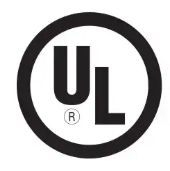 | Reversed "RU" symbol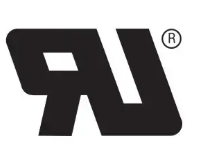 |
| Application | Complete, standalone finished consumer products (e.g., toaster, power bank, LED lamp). | Components or sub-assemblies destined for factory installation into larger systems (e.g., switches, internal wiring, power supplies). |
| Retail Usability | Authorized for consumer-facing product packaging and marketing materials. | Cannot be displayed on consumer packaging as a standalone safety mark for the finished product. |
Key UL Safety Standards for Electronics Importers
- UL 1642: Standard for Lithium Batteries (evaluates user-replaceable and technician-replaceable lithium cells against explosion and thermal runaway).
- UL 2056: Outline of Investigation for Power Banks (evaluates overcharge protection, short-circuit safety, and structural integrity for portable power banks).
- UL 62368-1: Audio/Video, Information and Communication Technology Equipment (the mandatory hazard-based safety engineering standard replacing UL 60950-1 and UL 60065).
- UL 94: Tests for Flammability of Plastic Materials for Parts in Devices and Appliances (classifies plastic flammability from V-0, V-1, to V-2).
Ongoing Surveillance and Factory Follow-Up Services (FUS)
Achieving an initial UL test pass does not complete the compliance obligation. UL maintains a strict post-certification monitoring regime:
- Quarterly Unannounced Inspections: UL field representatives conduct unannounced quarterly visits to certified manufacturing facilities.
- Construction Consistency Verification: Inspectors verify that ongoing mass production units match the exact engineering drawings, materials, and critical component lists documented in the official UL Follow-Up Service Procedure.
- Variation Notices (VN): If an unapproved component swap is detected during a factory visit, UL issues a Variation Notice, immediately halting the application of the UL mark until corrective action is accepted.
On-Site UL Verification & Factory Inspection Practice
To protect against fraudulent UL labels and non-compliant factory modifications, importers should mandate the following physical verification steps:
Step 1: Verifying UL Certificate Authenticity
- Obtain the UL File Number (format: letter 'E', 'MH', or 'S' followed by 5 to 6 digits) from the supplier.
- Access the official UL Product iQ Database to confirm that the file number matches the manufacturer's name, factory location, exact model number, and rating specifications.
Step 2: Physical Labeling & Packaging Inspection
- Required Mark Elements: Verify that the physical UL Listed mark on the product rating label contains four required elements:The UL symbol in a circle.The word "LISTED".The product category or control number (e.g., "E123456").The issue number or serial number (where applicable).
- Permanent Labeling Test: During an AQL pre-shipment inspection, perform a rubbing test on the rating label using a cloth soaked in water and alcohol for 15 seconds to ensure safety markings remain completely legible and durable.
Step 3: Critical Component Traceability Audit
- Open a sample unit during on-site inspection and inspect internal critical components (e.g., transformer, PCB board, fuse, internal wiring).
- Cross-check the markings on internal components against the critical component list specified in the factory's official UL Construction Evaluation Report. Unapproved component swaps invalidate the entire product's UL certification.
References
[1] UL Solutions. UL 62368-1: Audio/Video, Information and Communication Technology Equipment - Part 1: Safety Requirements[S]. Northbrook: UL Standards & Engagement, 2019. https://www.ul.com/
[2] Occupational Safety and Health Administration. Nationally Recognized Testing Laboratory (NRTL) Program Requirements (29 CFR 1910.7)[R]. Washington D.C.: OSHA, 2020. https://www.osha.gov/nrtl
[3] UL Solutions. UL 2056: Outline of Investigation for Safety of Power Banks[S]. Northbrook: UL Standards & Engagement, 2018. https://productiq.ulprospector.com/
Reference Notes
- UL 62368-1 is the global hazard-based safety engineering standard governing information technology, audio/video, and electronic consumer hardware.
- OSHA 29 CFR 1910.7 establishes federal accreditation criteria for NRTL organizations to test and certify electrical products for market entry.
- UL 2056 specifies detailed safety testing protocols against overcharge, short circuits, and thermal runaway specifically tailored for portable battery packs.
Related Knowledge Base
TradeAider