
- Über uns

- Unsere Dienstleistungen
- Ihre Branche
- Ressourcen
- Nachrichten & Blog
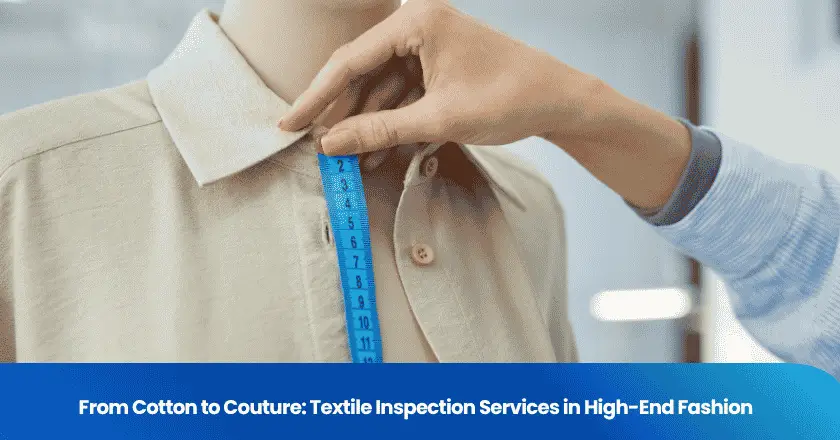
In high-end fashion, quality begins long before a garment reaches the runway, showroom, or customer. The fabric selected for a collection influences its appearance, hand feel, drape, durability, color, and overall perception of quality. A subtle shade variation, uneven surface, incorrect fabric weight, or repeated weaving defect can affect the finished garment and create costly problems during production. This is why textile inspection services play an important role in high-end fashion supply chains.
For fashion brands, importers, and apparel buyers sourcing fabrics from overseas suppliers, textile inspection provides an opportunity to identify material problems before they become garment production problems. From raw cotton and synthetic fibers to woven fabrics, knitted materials, printed textiles, and finished fashion fabrics, the inspection scope should be tailored to the material and the buyer's specifications.
Why Textile Quality Matters in High-End Fashion
Luxury fashion places considerable emphasis on material quality. Consumers may not know the technical specifications of a fabric, but they can immediately notice differences in:
- Color
- Texture
- Hand feel
- Drape
- Surface appearance
- Pattern alignment
- Garment construction
- Overall finishing
A small material inconsistency can therefore have a disproportionate effect on the perceived quality of a finished product. For example, a fabric that is slightly different in shade may become visibly inconsistent when different panels are sewn together. A small weaving defect may become highly noticeable on a large garment panel. Fabric that is heavier or lighter than specified can also change the garment's drape and fit.
For high-end fashion buyers, material consistency is part of product consistency.
What Are Textile Inspection Services?
Textile inspection services involve the independent examination of textile materials against predefined specifications and quality requirements. Depending on the material and inspection objective, textile inspection may evaluate:
- Fabric appearance
- Color and shade
- Fabric width
- Fabric weight or GSM
- Construction
- Surface defects
- Printing or pattern alignment
- Roll condition
- Length
- Identification and traceability
- Packaging
- Buyer-specific requirements
The inspection scope should be established before production based on the approved sample, technical specification, purchase order, and intended use of the textile. Inspection should also be distinguished from laboratory testing.
Visual and dimensional inspection can identify many material problems, but characteristics such as colorfastness, tensile strength, shrinkage, chemical safety, and abrasion resistance may require appropriate laboratory testing.
What Should High-End Fashion Buyers Check?
There is no universal textile inspection checklist that fits every fabric. A silk fabric, denim, wool, knitted jersey, lace, coated textile, and technical synthetic fabric can have very different quality requirements.
However, several inspection areas are commonly important.
1. Fabric Appearance
The first step is usually a systematic examination of the fabric surface.
Depending on the textile, inspectors may look for:
- Holes
- Cuts
- Stains
- Slubs
- Knots
- Broken yarns
- Missing yarns
- Uneven surfaces
- Creases
- Oil marks
- Dye spots
- Weaving or knitting defects
The inspection method should be appropriate for the fabric construction and the buyer's acceptance criteria.
A defect that may be acceptable in one material could be unacceptable in a premium fashion fabric.
2. Color and Shade Consistency
Color consistency is particularly important for fashion collections.
Fabric should be compared with the buyer's approved color standard, lab dip, swatch, or other agreed reference.
Inspection may consider:
- Overall shade
- Shade variation between rolls
- Shade variation within a roll
- Panel-to-panel consistency
- Print color consistency
- Obvious dyeing irregularities
Where exact color performance is commercially or technically important, visual inspection may need to be complemented by laboratory color testing.
3. Fabric Width
Fabric width affects both garment design and cutting efficiency.
Inspectors can measure the actual width and compare it with the buyer's specified range.
A fabric that is narrower than expected may increase material consumption or affect the cutting layout.
For large-volume production, even a relatively small width difference can create significant additional material requirements.
4. Fabric Weight and GSM
Fabric weight can influence:
- Hand feel
- Drape
- Warmth
- Appearance
- Durability
- Garment structure
GSM, or grams per square metre, can be measured where it is part of the agreed specification.
For high-end products, buyers should establish acceptable tolerances in advance rather than relying on subjective descriptions such as “lightweight” or “heavyweight.”
5. Construction and Surface Consistency
The construction of the textile should be consistent with the approved specification.
Depending on the material, inspection may examine:
- Weave structure
- Knit structure
- Yarn appearance
- Density
- Surface texture
- Selvage condition
- Pattern repeat
- Coating or finishing consistency
These characteristics can affect how the fabric behaves during cutting, sewing, pressing, and finishing.
6. Pattern, Stripe and Print Alignment
Patterned textiles require additional inspection attention.
Inspectors may check:
- Pattern repeat
- Stripe alignment
- Plaid alignment
- Print registration
- Pattern distortion
- Color consistency
- Repeating print defects
For luxury garments where pattern matching is part of the design, inconsistent fabric alignment can become a visible finished-product defect.
7. Roll Condition and Traceability
Textile inspection should not focus only on the fabric surface.
Each roll should also be identifiable according to the buyer's requirements.
Relevant information may include:
- Roll number
- Color code
- Lot or batch
- Fabric type
- Length
- Quantity
- Supplier information
Traceability becomes especially useful when defects or shade differences are discovered later in garment production.
Common Textile Quality Problems in Fashion Production
Several material problems repeatedly create challenges for fashion buyers.
Shade Variation
Different dye lots or production rolls may have visibly different shades.
If these rolls are mixed during cutting, garments from the same collection may not have consistent color.
Width Variation
Fabric that does not meet the specified width can reduce cutting efficiency and increase fabric consumption.
Surface Defects
Holes, stains, slubs, broken yarns, and other defects may become highly visible after the fabric is converted into garments.
Uneven Printing
Poor registration, color variation, or pattern distortion can affect the appearance of printed garments.
Construction Irregularities
Uneven weaving or knitting can influence fabric appearance, stretch, strength, and garment construction.
Excessive Shrinkage
Unexpected dimensional change after washing or finishing can affect garment measurements and fit.
Because shrinkage and other performance characteristics cannot always be determined through visual inspection, appropriate textile testing may also be required.
How Is Fabric Defect Evaluation Performed?
Fabric defects need to be evaluated according to a consistent inspection method.
For many woven and knitted fabrics, buyers and suppliers may use a 4-point fabric inspection system or another agreed defect-rating method.
The purpose is to provide a more objective framework for evaluating defects rather than relying entirely on individual inspector judgment.
However, the inspection standard should be established before the inspection.
It should define:
- Inspection method
- Defect classification
- Acceptance criteria
- Inspection conditions
- Roll selection
- Maximum acceptable defect level
- Buyer-specific requirements
The appropriate standard can vary according to fabric type, end use, price positioning, and buyer expectations.
Textile Inspection vs. Textile Testing
Textile inspection and textile testing serve different purposes.
Textile Inspection
Inspection primarily evaluates characteristics that can be assessed through visual, dimensional, and physical examination during the inspection process.
Typical examples include:
- Visible fabric defects
- Color and shade
- Width
- Weight
- Construction
- Pattern alignment
- Roll condition
Textile Testing
Laboratory testing evaluates specific physical, chemical, or performance properties.
Depending on the product and destination market, testing may include:
- Colorfastness
- Shrinkage
- Tensile strength
- Tear strength
- Abrasion resistance
- Pilling
- Dimensional stability
- Flammability
- Restricted substances
A buyer should determine testing requirements based on the textile's intended use and applicable market requirements.
Inspection and testing are complementary controls rather than interchangeable services.
Textile Inspection vs. Garment Inspection
Another important distinction is between inspecting the textile and inspecting the finished garment.
| Textile Inspection | Garment Inspection | |
|---|---|---|
| Main stage | Before or during material production | During or after garment production |
| Main focus | Material quality | Finished product quality |
| Typical checks | Fabric defects, shade, width, GSM, construction | Workmanship, measurements, trims, labels, packaging |
| Main benefit | Prevent material problems from entering production | Identify finished garment defects before shipment |
A final garment inspection cannot always identify the original cause of a fabric problem.
For example, a shade inconsistency may be easier to identify and correct at the fabric-roll stage than after hundreds of garments have already been cut.
For this reason, textile inspection should be considered an upstream quality-control measure.
When Should Textile Inspection Take Place?
Timing is one of the most important factors in textile quality control.
A typical apparel supply chain may follow this sequence:
Material specification → Sample approval → Bulk fabric production → Textile inspection → Cutting → Garment production → Final garment inspection → Shipment
The earlier a material problem is identified, the more options the buyer has.
Depending on the situation, the buyer may be able to:
- Hold the affected material
- Request replacement
- Sort defective rolls
- Separate different shade lots
- Adjust the cutting plan
- Request supplier corrective action
If the same issue is discovered only after garment production, corrective action may involve re-cutting, re-sewing, replacing garments, or delaying shipment.
Does High-End Fashion Require 100% Textile Inspection?
Not necessarily.
The appropriate inspection scope depends on the risk profile of the material and order.
Factors to consider include:
- Fabric value
- Order quantity
- Product positioning
- Fabric complexity
- Supplier history
- Defect tolerance
- Production volume
- Cost of failure
- Buyer requirements
For particularly high-value or sensitive materials, buyers may choose more extensive inspection.
For other materials, an appropriate sampling approach may provide sufficient coverage.
The goal is not simply to inspect everything.
The goal is to apply an inspection strategy that is proportionate to the risk.
How Can Buyers Build a Textile Quality-Control Process?
For fashion buyers sourcing internationally, textile inspection works best as part of a broader quality-control system.
A practical approach may include:
Step 1: Define the Material Specification
Before production, establish:
- Fabric composition
- Color
- Width
- GSM
- Construction
- Finish
- Tolerances
- Approved sample
Step 2: Approve the Reference Sample
The supplier should work from a clearly approved material reference.
This reduces ambiguity when the bulk fabric is produced.
Step 3: Inspect Bulk Fabric
Inspect the material before it enters large-scale cutting and garment production.
Step 4: Test Where Necessary
Use laboratory testing for performance or compliance characteristics that cannot be reliably evaluated through visual inspection.
Step 5: Monitor Garment Production
Once materials have passed inspection, continue quality control during cutting, sewing, finishing, and packing.
Step 6: Conduct Final Garment Inspection
Before shipment, inspect finished garments against the approved specifications and agreed quality standards.
This multi-stage approach creates several opportunities to identify problems rather than relying entirely on final inspection.
What Should Buyers Prepare Before a Textile Inspection?
The quality of an inspection depends partly on the quality of the inspection criteria.
Before arranging an inspection, buyers should ideally provide:
- Purchase order
- Fabric specification
- Approved sample or swatch
- Color standard
- Measurement requirements
- Tolerance requirements
- Defect acceptance criteria
- Packaging requirements
- Required laboratory tests
- Applicable market requirements
The more clearly these requirements are defined, the more objective the inspection can be.
How TradeAider Supports Textile Inspection for Fashion Buyers
TradeAider provides inspection and testing services for textiles and apparel as part of its softline quality-control capabilities.
Depending on the buyer's requirements, inspection can cover:
- Fabric and textile materials
- Apparel
- Accessories
- Workmanship
- Measurements
- Fabric appearance
- Packaging
- Labeling
- AQL-based inspection
- Buyer-specific requirements
Where laboratory verification is required, testing can be arranged for applicable physical, chemical, and performance characteristics.
TradeAider also provides digital inspection reporting, including photographic evidence and inspection findings, helping overseas buyers monitor quality without being physically present at the supplier's facility.
For buyers sourcing textiles from China, this provides an additional layer of independent verification between the supplier and the finished fashion product.
Final Takeaway: From Fabric Quality to Fashion Quality
A premium garment cannot consistently exceed the quality of the material from which it is made.
For high-end fashion brands and buyers, textile inspection is therefore more than a search for visible fabric defects.
It is an opportunity to verify that the material entering production matches the approved specification, color, dimensions, construction, and quality expectations before those materials become finished garments.
The most effective strategy is to move quality control upstream:
Define → Approve → Inspect → Test → Produce → Inspect Again
By identifying material problems before cutting and garment production, buyers can reduce avoidable rework, protect production schedules, and improve consistency across the finished collection.
From cotton to couture, quality control starts with the material.
If you are sourcing textiles or premium apparel from China and need independent inspection or laboratory testing, TradeAider can tailor an inspection and testing program to your product requirements.
Explore TradeAider Textile & Apparel Inspection Services
Frequently Asked Questions
What is textile inspection in the fashion industry?
Textile inspection is the examination of fabric or other textile materials against predefined quality specifications before or during production. It can cover appearance, color, width, weight, construction, defects, and other buyer-specific requirements.
Why is textile inspection important for high-end fashion?
High-end fashion often has strict expectations for material appearance, consistency, hand feel, color, and construction. Identifying material problems before cutting can prevent those defects from affecting large quantities of finished garments.
What does a textile inspection check?
Typical checks include fabric defects, color and shade, width, GSM, construction, pattern alignment, roll condition, length, identification, and packaging. The exact scope depends on the textile and buyer specification.
What is the 4-point system for fabric inspection?
The 4-point system is a commonly used method for evaluating fabric defects by assigning penalty points based on the size or severity of defects. Buyers should establish the applicable acceptance criteria before inspection.
Is textile inspection the same as laboratory testing?
No. Textile inspection primarily evaluates visible and measurable material characteristics, while laboratory testing evaluates specific physical, chemical, or performance properties.
When should fabric be inspected?
Fabric should generally be inspected before it enters bulk cutting and garment production. This gives buyers more opportunities to hold, sort, replace, or otherwise address unsuitable material.
Can textile inspection guarantee finished garment quality?
No. Textile inspection controls material-related risks but cannot eliminate defects caused during cutting, sewing, finishing, labeling, or packing. A broader apparel quality-control process may require several inspection stages.
Should every fabric roll be inspected?
Not necessarily. The appropriate inspection scope depends on material risk, order value, quantity, supplier performance, fabric complexity, and buyer requirements. Higher-risk materials may justify broader inspection coverage.
Can TradeAider inspect luxury fashion fabrics in China?
Yes. TradeAider can provide textile and apparel inspection services in China according to buyer specifications, quality standards, and inspection requirements.
Verwandte Artikel

Erweitern Sie Ihr Unternehmen mit TradeAider Service
Klicken Sie auf die Schaltfläche unten, um direkt in das TradeAider Service System zu gelangen. Die einfachen Schritte von der Buchung und Zahlung bis zum Erhalt der Berichte sind leicht zu bedienen.

