- Über uns

- Unsere Dienstleistungen
- Ihre Branche
- Ressourcen
- Nachrichten & Blog
Colorfastness Testing
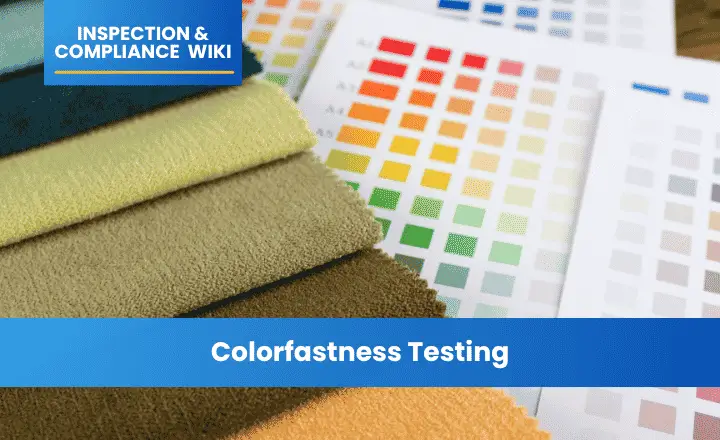
In global textile and apparel supply chains, colorfastness represents a primary indicator of fabric quality, dye quality, and material durability. Colorfastness defines a textile material's resistance to losing or transferring its color when subjected to environmental exposures, laundering, mechanical friction, or light during processing, storage, and consumer use.
Failure to meet specified colorfastness thresholds leads to severe commercial consequences, including garment color bleeding, staining of co-washed garments, premature fading, customer returns, and mass shipment rejections during Pre-Shipment Inspections (PSI).
Core Colorfastness Test Methods and International Standards
Textile laboratories evaluate colorfastness using standardized accelerated test procedures published by ISO (International Organization for Standardization), AATCC (American Association of Textile Chemists and Colorists), and GB (Chinese National Standards):
| Test Parameter | Primary Test Standard | Test Apparatus / Protocol | Evaluation Objective |
|---|---|---|---|
| Colorfastness to Rubbing (Crocking) | ISO 105-X12 / AATCC 8 | Electronic / Manual Crockmeter (dry and wet cotton peg rubbing) | Measure dye transfer onto adjacent un-dyed cotton fabrics under friction |
| Colorfastness to Washing | ISO 105-C06 / AATCC 61 | Launder-Ometer with steel balls and detergent solution | Evaluate color loss and staining onto multifibre adjacent fabric after laundering |
| Colorfastness to Light | ISO 105-B02 / AATCC 16 | Xenon Arc Lamp exposure chamber (simulated sunlight) | Measure photo-degradation and fading resistance over extended radiation hours |
| Colorfastness to Perspiration | ISO 105-E04 / AATCC 15 | Perspirometer with acidic and alkaline simulated human sweat | Assess dye stability against body sweat and localized staining |
Laboratory Rating Systems: Greyscale Evaluation
After performing accelerated physical exposures, laboratory technicians grade test specimens under standardized lighting cabinets (D65 light source) using standardized Greyscales:
- Greyscale for Color Change: Ranks the degree of color loss or shade alteration of the tested fabric on a numerical scale from Grade 1 (Severe Fading) to Grade 5 (Zero Color Change). Half-grade ratings (e.g., Grade 3-4) are standard.
- Greyscale for Staining: Measures the amount of color transferred onto un-dyed adjacent multifibre fabrics (wool, acrylic, polyester, polyamide, cotton, acetate) from Grade 1 (Heavy Staining) to Grade 5 (Zero Staining).
- Commercial Acceptance Pass Thresholds: Standard commercial apparel typically requires a minimum of Grade 4 for dry rubbing/washing and Grade 3 to 3.5 for wet rubbing and lightfastness.
Shade Sorting and Metamerism Controls
Beyond physical fastness, commercial bulk production must ensure color consistency across fabric rolls and garment panels:
- 555 Shade Sorting: A digital spectrophotometer system that categorizes dyed fabric rolls into three-digit color coordinates (Lab*) to ensure garments are stitched using matching fabric dye lots.
- Metamerism Verification: Inspects dyed swatches under multiple illuminants (e.g., D65 daylight, TL84 store lighting, CWF fluorescents) inside a light box to ensure two identical-looking swatches do not shift into different shades under different light sources.
Practical Module: On-Site Colorfastness & Shade Inspection Practice
Quality control inspectors conducting Pre-Shipment Inspections (PSI) on textile and apparel shipments must perform rapid on-site fastness checks before batch release:
Step 1: On-Site Dry and Wet Rubbing (Crocking) Check
- Take a standard white cotton crocking cloth and secure it to the peg of a portable crockmeter.
- Execute 10 back-and-forth rubbing cycles over a 100 mm track on the finished garment surface at a rate of 1 stroke per second.
- Repeat using a wet crocking cloth (65% water pickup). Compare stained cloths against an AATCC Greyscale for Staining inside a portable light box to verify Grade 3.5+ compliance.
Step 2: Dye Lot and Panel-to-Panel Shade Audit
- Spread garments from different production cartons side by side under a D65 light source to check for shade variation between body panels, sleeves, and collars.
- Verify that garment accessory trims (zipper tapes, ribbing, pocketing) match the primary shell fabric shade.
Step 3: Fabric Storage & Moisture Content Audit
- Audit warehouse storage conditions to confirm dyed fabric rolls are protected from ambient humidity, direct sunlight, and chemical fumes (preventing gas fading).
- Check fabric moisture regain percentages using a digital textile moisture meter prior to final polybag packing.
Verify Quality Before Shipment: Rigorous On-Site AQL Inspections.Don't risk fabric defects, color shade variations, or incorrect labeling. Verify workmanship, fiber content labeling, and physical colorfastness through our transparent, on-site inspection services. ➔ Get a Free Inspection Plan
Frequently Asked Questions (FAQ)
Q1: Why is wet rubbing (crocking) fastness almost always rated lower than dry rubbing fastness?
Water acts as a lubricant and solvent, breaking down unfixed surface dye molecules on textile fibers and enabling easier mechanical transfer onto adjacent surfaces during wet friction.
Q2: What is multifibre adjacent fabric used for in wash fastness testing?
Multifibre fabric strips contain narrow bands of six common textile fibers (e.g., cotton, wool, nylon, polyester, acrylic, acetate). Washing test samples alongside multifibre strips allows technicians to simultaneously measure how much bled dye stains different fiber types.
Q3: How does dark-dyed denim handle rubbing colorfastness standards?
Indigo dye used in traditional denim is a surface-applied pigment that inherently rubs off. Consequently, buyers often accept lower wet crocking ratings (e.g., Grade 2 to 2.5) for dark denim, provided explicit wash-care warning hangtags are attached to the garment.
Q4: What causes metamerism in dyed garments?
Metamerism occurs when two fabric samples are dyed using different chemical dye formulations that match under one light source (e.g., store fluorescent lights) but appear noticeably different under another (e.g., natural sunlight).
Q5: What is the standard minimum lightfastness rating for outdoor textiles?
While indoor fashion garments require lightfastness ratings around Grade 4 after 20 AFU (AATCC Fading Units), outdoor performance textiles, swimwear, and upholstery typically mandate Grade 4 or higher after 40 to 80 AFU exposure hours.
References
[1] International Organization for Standardization. ISO 105 Series: Tests for Colour Fastness of Textiles[S]. Geneva: ISO, 2026. https://www.iso.org/
[2] American Association of Textile Chemists and Colorists. AATCC Technical Manual: Standard Test Methods for Colorfastness[S]. Research Triangle Park: AATCC, 2026. https://www.aatcc.org/
[3] ASTM International. ASTM D2057 Standard Test Method for Colorfastness of Zippers to Laundering[S]. West Conshohocken: ASTM International. https://www.astm.org/
Reference Notes
- The ISO 105 series defines international laboratory standards for evaluating textile colorfastness across washing, rubbing, light, and perspiration exposures.
- AATCC test methods set industry-standard procedures for colorfastness evaluation across North American textile supply chains.
- ASTM textile standards provide specialized testing criteria for garment accessories, zippers, and trims.
Related Knowledge Base
TradeAider