- Über uns

- Unsere Dienstleistungen
- Ihre Branche
- Ressourcen
- Nachrichten & Blog
FDA 21 CFR 175/177: Indirect Food Additives, Polymers and Coatings
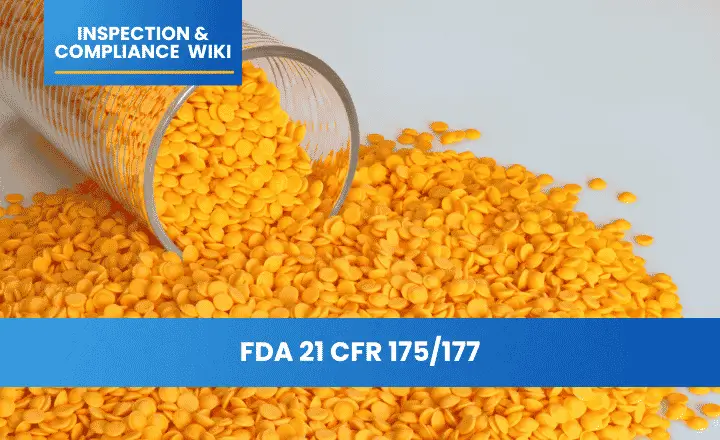
In the United States, materials and articles intended to come into contact with food—such as plastic kitchenware, food packaging films, non-stick cookware coatings, rubber seals, and beverage containers—are regulated by the US Food and Drug Administration (FDA) under Title 21 of the Code of Federal Regulations. Specifically, 21 CFR Part 175 (Adhesives and Components of Coatings) and 21 CFR Part 177 (Indirect Food Additives: Polymers) define mandatory chemical composition and extractable limit standards for indirect food contact substances.
Compliance with FDA food contact regulations is compulsory for legally importing or selling food preparation, packaging, and processing equipment in the US market, ensuring that zero toxic chemical constituents migrate from packaging or cookware into food products in quantities that pose health risks or alter taste and odor.
Regulatory Framework: 21 CFR 175 vs. 21 CFR 177
FDA indirect food additive regulations categorize materials based on their physical form, chemical synthesis, and operational application:
- 21 CFR Part 175 (Adhesives and Coatings): Regulates substances applied as continuous films over metal, paper, or plastic substrates. It covers can enamel linings, non-stick pan coatings (PTFE), resinous coatings, and adhesives used in food packaging laminates (e.g., 21 CFR 175.300 for resinous and polymeric coatings).
- 21 CFR Part 177 (Polymers and Plastics): Establishes explicit material specifications, allowed raw monomers, catalyst residues, and maximum extractable fraction limits for molded plastic articles, synthetic rubbers, and resin sheets.
Common Polymer Sections under 21 CFR Part 177
| Polymer Material Type | Specific 21 CFR Citation | Typical Food Contact Applications | Key Chemical Test Parameters |
|---|---|---|---|
| Polyolefin (Polyethylene / PE) | 21 CFR 177.1520 | Squeeze bottles, food storage bags, plastic caps | n-Hexane soluble fraction & xylene soluble fraction |
| Polypropylene (PP) | 21 CFR 177.1520 | Microwaveable containers, plastic cutlery, food trays | Density, melting point, n-hexane extractable limits |
| Polyethylene Terephthalate (PET) | 21 CFR 177.1630 | Clear beverage bottles, clamshell food packaging | Chloroform-soluble extractives in water & n-heptane |
| Polystyrene (PS / EPS) | 21 CFR 177.1640 | Disposable coffee cups, foam trays, plastic cutlery | Total residual styrene monomer content (≤ 0.5% to 1.0%) |
| Rubber / Elastomeric Articles | 21 CFR 177.2600 | Gaskets, blender seals, conveyor belts, baby bottle nipples | Total extractable fraction in distilled water & n-hexane |
Food Simulants and Extraction Test Protocols
To measure potential chemical leaching, laboratories expose test specimens to standardized food simulants under accelerated temperature and exposure durations that mimic real-world food storage and cooking:
- Distilled Water: Simulates aqueous, non-acidic, high-moisture foods (e.g., beverages, soups, fresh produce).
- 8% or 10% Ethanol Solution: Simulates alcoholic beverages and light water-alcohol mixtures.
- n-Heptane or n-Hexane: Simulates fatty, oily, or high-fat foods (e.g., cooking oils, butter, meats, fried foods).
- 3% Acetic Acid: Simulates acidic food contact environments (e.g., citrus juices, tomato sauce, vinegar dressings).
- Extraction Conditions: Test parameters vary based on intended use temperature, ranging from room temperature fill (Condition E) to high-temperature heat-sterilized or boiling water exposure (Condition A).
FDA Compliance Pathways: CFR Clearance vs. FCN (Food Contact Notification)
Manufacturers establishing FDA food contact compliance operate through two distinct legal pathways:
- Existing CFR Listing: If a plastic resin or coating formula matches the exact positive list of allowed ingredients, monomers, and extractable limits explicitly codified in 21 CFR 175 or 177, the material is self-compliant without filing a new petition to the FDA.
- Food Contact Notification (FCN) System: For newly invented polymer additives, novel monomers, or proprietary coatings not listed in 21 CFR, manufacturers must submit a formal Food Contact Notification (FCN) to the FDA. Once the FDA reviews and approves the FCN without objection, the specific formulation is cleared exclusively for that manufacturer.
Practical Module: On-Site FDA Food Contact Verification & QC Practice
Quality control inspectors conducting Pre-Shipment Inspections (PSI) on food contact items (such as plastic kitchenware, stainless steel flasks with silicone seals, or food packaging) must perform strict on-site audits:
Step 1: Raw Material Resin Verification
- Cross-check raw virgin plastic resin bags (e.g., PP or PE resin granules) in the factory molding workshop against the exact brand name and resin grade cited in the accredited FDA chemical test report.
- Verify that factory workers do not add unapproved recycled plastic regrind or non-food-grade masterbatch colorants into injection molding hoppers during production runs.
Step 2: Physical Workmanship and Odor/Sensory Audit
- Perform a hot-water rinse sensory check on finished plastic or silicone samples to ensure zero foul chemical odor, solvent smell, or off-taste leaching occurs when filled with 80°C.
- Inspect food contact surfaces for smooth finish, zero burrs, complete mold filling, and absence of surface oil contamination from molding machines.
Step 3: Test Report & Food Contact Symbol Verification
- Review third-party ISO 17025 lab reports to confirm that extraction tests were conducted according to the exact 21 CFR section (e.g., 21 CFR 177.1520 for PP or 21 CFR 177.2600 for silicone seals).
- Verify that outer retail packaging features the glass-and-fork food-safe symbol or explicit text statement (e.g., "Food Safe / BPA Free") matching buyer artwork specifications.
Verify Quality Before Shipment: Rigorous On-Site AQL Inspections.Don't risk customs holds, product recalls, or non-compliant factory batches. Verify physical safety, age grading, and packaging compliance through our transparent, on-site inspection services. ➔ Get a Free Inspection Plan
Frequently Asked Questions (FAQ)
Q1: What is the main difference between FDA food contact compliance and EU Food Contact Regulation (EC No 1935/2004)?
FDA rules (21 CFR) rely on material-specific positive chemical lists and overall/specific extractable limits measured in specific food simulants like n-hexane. EU rules (EC 1935/2004 and EU 10/2011) enforce overall migration limits (OML of 10 mg/dm2) and specific migration limits (SML) across a wider range of simulants, including 50% ethanol and vegetable oil.
Q2: Does the FDA issue official "FDA Food Contact Certificates" for plastic kitchenware?
No. The FDA does not issue physical compliance certificates for food contact articles. Compliance is demonstrated through third-party laboratory test reports verifying that materials meet the chemical extraction criteria defined in 21 CFR 175/177, after which manufacturers or importers issue a Letter of Guarantee (LOG).
Q3: Are silicone kitchen utensils tested under 21 CFR 177.1520 or another section?
Silicone rubber is tested under 21 CFR 177.2600 (Rubber articles intended for repeated use). It requires total extractable fraction testing in distilled water and n-hexane at reflux temperatures to ensure zero toxic filler or curing agent migration.
Q4: Why is n-hexane or n-heptane used as an extraction simulant for plastic food containers?
n-Hexane and n-heptane act as organic solvents that simulate the aggressive chemical solvency of fatty and oily foods (like oils, cheese, and meats), accelerating potential polymer degradation and extractable leaching during laboratory testing.
Q5: What happens if a shipment of kitchenware fails FDA 21 CFR extraction testing at the port of entry?
US Customs and Border Protection (CBP) and the FDA will issue a Notice of FDA Action detaining the shipment. If valid compliance reports cannot be provided, the shipment will be refused entry and ordered re-exported or destroyed at the importer's expense.
References
[1] US Food and Drug Administration. Title 21 Code of Federal Regulations Part 175 & Part 177: Indirect Food Additives[S]. Washington D.C.: US Government Publishing Office, 2026. https://www.ecfr.gov/
[2] US Food and Drug Administration. Guidance for Industry: Preparation of Premarket Submissions for Food Contact Substances: Chemistry Recommendations[R]. College Park: FDA Center for Food Safety and Applied Nutrition, 2025. https://www.fda.gov/
[3] European Commission. Regulation (EC) No 1935/2004 on Materials and Articles Intended to Come into Contact with Food[S]. Brussels: Official Journal of the European Union. https://eur-lex.europa.eu/
Reference Notes
- 21 CFR Parts 175 and 177 establish binding US federal regulations for adhesives, coatings, polymers, and synthetic rubber used in food contact applications.
- FDA CFSAN chemistry guidance outlines standardized food simulant selection, extraction protocols, and analytical procedures for evaluating indirect food additives.
- Regulation (EC) No 1935/2004 provides the European regulatory framework operating alongside US FDA food contact standards.
Related Knowledge Base
TradeAider