
- Acerca de Nosotros

- Nuestros Servicios
- Su Industria
- Recursos
- Noticias y Blog
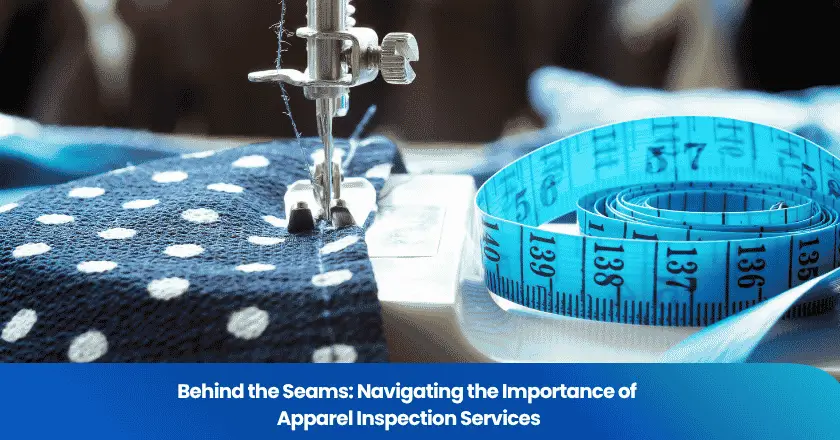
In the fast-paced world of fashion, consumer attention often lands on runway trends, seasonal collections and retail displays. What stays hidden behind the seams is the layered quality control work that determines whether a garment lives up to its brand promise when it reaches the wearer. For global brands, retailers and e-commerce sellers sourcing apparel from China — the world’s largest garment manufacturing base — this unseen work is where professional apparel inspection services deliver their core value. They turn vague quality expectations into standardized, verifiable checks across every stage of production, turning an otherwise opaque remote supply chain into a controlled, predictable process.
Quality Assurance: The Built-In Foundation of Every Garment
Quality in apparel goes far beyond a polished final appearance. It lives in the integrity of the fabric, the consistency of each stitch, the accuracy of sizing, the durability of trims and the correctness of compliance labeling — details that are easy to overlook in rushed mass production but directly shape customer satisfaction and brand reputation.
Defect Classification and Evaluation Standards
Professional apparel inspection brings structured rigor to quality evaluation. Trained inspectors assess garments against pre-agreed specifications and international Acceptable Quality Limit (AQL) standards, classifying defects by three severity tiers: critical defects that pose safety hazards or functional failure risks, major defects that would directly trigger customer returns, and minor flaws that do not impair wearability or salability. This graded framework ensures quality judgments are consistent and data-driven, rather than subjective.
Why Third-Party Inspection Outperforms Factory Self-QC
Unlike in-house factory QC teams, which often face internal pressure to prioritize shipment schedules over strict quality thresholds, third-party inspection operates with full impartiality. This objectivity ensures defects are not downplayed to meet deadlines, and that every batch meets the same consistent quality bar regardless of which factory produces the order. For buyers working with multiple suppliers, this independence creates a level playing field for quality accountability.
The Invisible Backbone of a Reliable Fashion Supply Chain
Apparel inspection is not a single, isolated checkpoint at the end of production — it is a threaded control mechanism that supports the entire supply chain from raw material arrival to container departure.
Pre-Production Material Verification
At the pre-production stage, inspectors verify fabric batches, trims and accessories against approved golden samples, catching material mismatches, shade deviations and specification errors before bulk manufacturing begins. This early intervention prevents costly full-batch rework that would otherwise derail entire production timelines.
During-Production Process Audits
During production, in-process audits identify recurring workmanship issues, alignment errors and process deviations while units are still on the sewing line. This allows factories to correct techniques and adjust workflows before defects are replicated across thousands of pieces, containing quality issues at their source.
Final Inspection and Loading Verification
At final inspection, completed and packed garments go through a full sampling audit to confirm overall batch quality. This is followed by container loading supervision for cross-border shipments, which verifies order accuracy, packaging integrity and proper stowage to prevent transit damage. Across every node, inspection creates a documented, time-stamped quality record that clarifies whether damage or defects originated in production or during logistics, reducing costly disputes between factories, carriers and buyers.
Navigating Mass Production Pressures Without Sacrificing Quality
The rise of fast fashion and compressed order cycles has amplified the challenges of mass garment production. Tighter turnaround times, frequent style rotations and high-volume output often create pressure to cut corners on process control, leading to batch-wide quality issues that only surface after goods reach their destination market.
Aligning Fast-Fashion Speed With Quality Consistency
Professional inspection acts as a stabilizing force through these pressures. It does not slow down production — it embeds quality checks into the existing workflow, so issues are resolved in line rather than after the fact. By catching problems early during production, inspectors help factories avoid full-batch rework, which is far more time-consuming and disruptive than targeted mid-line corrections.
Standardizing Quality Across Dispersed Manufacturing Hubs
For buyers managing multiple suppliers across different regions, standardized inspection also applies a uniform quality benchmark to every partner. This consistency is particularly valuable when sourcing across China’s dispersed apparel production hubs, where factory capabilities, internal QC systems and workmanship standards can vary widely from workshop to workshop. Instead of negotiating quality expectations separately with each supplier, buyers can rely on a single, impartial inspection standard to level the playing field.
The Practical Advantage of Local On-Site Inspection in China
For overseas buyers, managing quality across long distances carries inherent friction. Traveling to factories for every order is costly and slow, and relying solely on factory self-reporting leaves buyers with delayed, often filtered information.
Agile Deployment Across Core Production Provinces
Locally based apparel inspection services solve this gap. With inspectors stationed across China’s core garment manufacturing provinces — including Guangdong, Zhejiang, Jiangsu, Fujian and Shandong — services can typically be scheduled within one to two business days, even for tight turnaround orders. Local teams understand factory operating rhythms, can communicate directly with on-site production management in real time, and can coordinate on-the-spot rectifications while they remain on premises.
This proximity turns quality control from a periodic, reactive task into an agile, proactive process. Buyers receive timely, factual visibility into production quality without the expense and downtime of international travel.
TradeAider Apparel Inspection Services
TradeAider delivers professional third-party apparel inspection services across all major garment manufacturing regions in China, serving fashion brands, cross-border e-commerce sellers and global importers.
Our local inspectors follow standardized protocols aligned with international AQL standards, with customizable checklists tailored to specific product categories, buyer specifications and target market compliance requirements. We cover the full quality control lifecycle: pre-production material verification, during-production process audits, final random inspection and container loading supervision.
Clients receive official, photo-documented inspection reports within 24 hours of on-site completion. Through our online service system, buyers can also monitor inspection progress and view real-time findings, enabling fast, informed decisions on batch acceptance, on-site rework or shipment hold.
Frequently Asked Questions
What types of apparel can be inspected in China?
Professional inspection services cover all major apparel categories, including woven tops and bottoms, knitwear, sportswear, outerwear, underwear, children’s clothing and fashion accessories. Inspection protocols are adjusted based on product type, material construction and buyer-specific requirements.
How soon can an inspection be arranged after booking?
In most major apparel manufacturing regions across China, inspections can be scheduled 1–2 business days in advance. On-site work is typically completed within one business day, and official photo-documented reports are issued within 24 hours of inspection completion.
Does AQL random sampling cover all quality risks?
AQL sampling is the industry standard for bulk production orders, providing statistically reliable assessment of overall batch quality at moderate cost. It covers the vast majority of workmanship, sizing and material risks. For very high-value, low-volume products or zero-defect requirements, 100% full inspection can be arranged as a dedicated scope.
Can apparel inspection reduce post-delivery return rates?
Yes. Inspection catches workmanship defects, sizing deviations, material flaws and packaging issues at the factory before shipment, where corrective rework costs a fraction of post-delivery returns, reverse logistics and customer compensation. For most cross-border apparel sellers, the savings from reduced returns far exceed the cost of inspection services.
Conclusion
Fashion’s visible success is built on invisible discipline. Behind every well-made garment is a system of checks that verify fabric, validate workmanship, confirm compliance and protect product integrity from factory floor to end customer.
Apparel inspection services are not an auxiliary cost in the fashion supply chain — they are a foundational investment in brand credibility, supply chain efficiency and long-term customer loyalty. For businesses sourcing from China’s vast manufacturing ecosystem, professional on-site inspection is the reliable, cost-effective way to navigate the complexities of mass production and ensure that every piece that leaves the factory lives up to the quality promised behind the seams.
Artículos Relacionados


Haga crecer su negocio con el Servicio TradeAider
Haga clic en el botón de abajo para ingresar directamente al Sistema de Servicios TradeAider. Los pasos simples desde la reserva y el pago hasta recibir los informes son fáciles de operar.

