
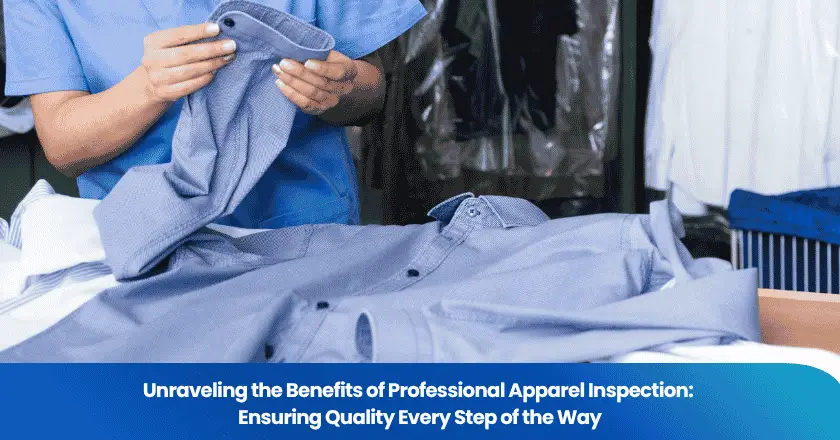
As the world’s largest apparel manufacturing base, China accounts for a substantial share of global garment production, serving fashion brands, retailers and e-commerce sellers across every market. For buyers sourcing from Chinese factories, however, geographic distance, varying production capabilities across suppliers and tight fast-fashion turnaround times make consistent quality control a persistent challenge.
Professional apparel inspection delivered by on-the-ground third-party experts addresses this gap, providing independent, standardized quality verification at every stage of the production cycle. It turns subjective quality expectations into measurable, batch-specific results, helping buyers avoid costly defects, supply chain disruptions and reputational damage.
Why Apparel Inspection Is Critical for China-Sourced Garments
China’s apparel supply chain is highly decentralized, with production hubs concentrated in Guangdong, Zhejiang, Jiangsu, Fujian and Shandong provinces. Factory capabilities range from fully certified large-scale facilities to smaller workshops with limited internal quality management systems. This variability creates inherent risks for remote buyers.
Fast-fashion order cycles, often compressed to just a few weeks, can further erode process control. Common issues include fabric shade deviation, stitching irregularities, sizing inconsistency, mismatched trims and labeling errors — problems that are frequently overlooked in factory self-inspection but become costly once goods reach destination markets.
Without independent on-site verification, buyers often only discover quality issues after containers arrive at port. At that point, rework, return shipping and customer compensation costs can multiply to 10–20 times the cost of fixing the same issue at the production line. Third-party inspection eliminates this gap by embedding quality checks directly into the local production workflow.
Core Benefits of Professional Apparel Inspection
A structured inspection program delivers measurable returns across quality, cost and operational dimensions.
Systematic Defect Reduction and Quality Consistency
Trained inspectors evaluate garments against agreed specifications and international AQL (Acceptable Quality Limit) sampling standards, covering workmanship, fabric, sizing, trims and finishing. This standardized assessment catches both obvious and subtle defects at the factory, ensuring batch-to-batch consistency even when sourcing from multiple suppliers. Defects are classified by severity — critical, major and minor — so factories can prioritize corrective action appropriately.
Lower Total Cost of Quality
Quality issues corrected during production incur minimal rework cost. The same issue discovered post-delivery triggers reverse logistics, warehouse processing, customer refunds and potential brand damage, all of which are far more expensive. By shifting quality control upstream, inspection reduces overall cost of quality and improves gross margins for imported apparel.
Protected Brand Reputation and Customer Trust
Consistent product quality is the foundation of long-term brand loyalty. Regular third-party inspection ensures every shipment matches the quality level promised in product listings and marketing. This reduces negative reviews, complaint rates and social media backlash, particularly important for e-commerce and DTC brands where customer feedback directly impacts conversion.
Improved Supply Chain Predictability
Inspection does more than catch defects — it also provides visibility into production progress and process risks. During-production inspections identify bottlenecks and process deviations early, allowing factories to adjust before issues delay the full order. This helps buyers plan logistics, marketing launches and inventory replenishment with greater accuracy, reducing costly schedule disruptions.
Clear Accountability and Dispute Resolution
Factory self-reported quality data is often biased toward passing shipment. An independent third-party inspection report with timestamped photo evidence creates an objective, defensible quality record. When quality disputes arise, the report clarifies whether issues originated in production or during transit, eliminating lengthy commercial disagreements and streamlining corrective action.
Regulatory and Market Compliance
Major import markets enforce strict rules for apparel labeling, fiber content disclosure, chemical safety and flammability — including EU REACH, US CPSC and Canada CCPSA requirements. Inspection verifies that care labels, country-of-origin markings and compliance documentation are accurate and complete, reducing the risk of customs detention, product recalls and administrative fines.
Key Inspection Stages Across the Production Cycle
Maximum value comes from deploying inspection at high-risk transition points, rather than relying on a single final check. A complete apparel quality control program covers four core stages.
Pre-Production Inspection (PPI)
Conducted before bulk manufacturing begins, this stage verifies raw fabrics, trims, accessories and approved golden samples against purchase order specifications. It catches material mismatches, color deviation and trim errors at the lowest-cost point, preventing fundamental quality issues from entering the production line.
During Production Inspection (DPI)
When 20–30% of the order is complete, inspectors audit semi-finished and finished garments on the production line. This stage evaluates process consistency, identifies recurring workmanship issues and verifies that factory teams are following approved techniques. Early correction prevents defects from being replicated across the full batch.
Pre-Shipment Inspection (PSI)/ Final Random Inspection (FRI)
Performed when production is 100% complete and at least 80% of goods are packed into export cartons, this is the standard pre-shipment quality gate. Inspectors draw random samples per AQL standards and conduct a full end-to-end evaluation of finished garments. The result is a clear pass / fail / hold recommendation that governs whether the order can be shipped.
Container Loading Supervision (CLS)
Loading supervision verifies that the correct quantity of qualified goods is properly loaded and secured into the container. It prevents short-shipment, wrong-SKU loading and transit damage caused by poor stowage, and creates a sealed, documented handover point between production and logistics.
Standard Apparel Inspection Checklist
A professional apparel inspection covers five core dimensions, with criteria tailored to specific product categories.
- Workmanship & Construction: Stitch density and consistency, seam strength, absence of open seams, skipped stitches and excessive loose threads; accurate alignment of panels, collars, sleeves and hems; clean bartacks at stress points.
- Fabric & Material Quality: Fabric weight, hand feel and shade consistency across the batch; absence of holes, runs, slubs, dye spots and printing defects; colorfastness verification where required.
- Measurement & Sizing: Key point measurements within approved tolerance; consistent sizing across all sampled units of the same size; size label accuracy.
- Trims & Functionality: Smooth operation of zippers, buttons, snaps and fasteners; correct trim color, material and placement; secure attachment of all accessories.
- Labeling & Packaging: Accurate care labels, fiber content labels, country-of-origin labels and size labels; correct hangtags and barcodes; appropriate polybag and carton protection; accurate shipping marks.
How Local On-Site Inspection Optimizes China Supply Chains
Having inspection teams based locally in China delivers specific operational advantages that overseas or remote quality teams cannot match.
Fast Deployment Across Core Hubs
With inspectors located in or near all major apparel manufacturing provinces, services can typically be scheduled 1–2 business days in advance, even for urgent orders. This eliminates travel time and cost for international buyer teams and supports tight production timelines.
Effective On-Site Problem Resolution
Local inspectors understand factory operational workflows and can communicate directly with production management teams in real time. When issues are identified, they can coordinate on-site rectification immediately while they are still on premises, speeding up correction and reducing rework delays.
Flexible, Scalable Cost Structure
Unlike maintaining an in-house quality team, third-party inspection is charged per service, making it scalable to order volume. Buyers can increase inspection frequency for new suppliers or high-risk styles, and reduce it for proven, stable partners, optimizing quality spend.
Transparent Visibility for Remote Buyers
Modern inspection platforms deliver real-time progress updates and photo-documented findings via online systems. Buyers can review issues as they are discovered and make shipment decisions promptly, without waiting for the full report or relying on secondhand factory updates.
Frequently Asked Questions
What types of apparel can be inspected in China?
Professional inspection services cover all major apparel categories, including woven tops and bottoms, knitwear, sportswear, outerwear, underwear, children’s clothing, fashion accessories and home textiles. Inspection protocols are adjusted based on product type, material and buyer specifications.
How does apparel inspection reduce return rates for imported garments?
Inspection catches workmanship defects, sizing deviations, material flaws and packaging issues at the factory before shipment. Since corrective rework at the production site costs a fraction of post-delivery returns, reverse logistics and customer compensation, pre-shipment inspection directly cuts the volume of defective goods reaching end customers.
Is AQL sampling sufficient for all garment orders?
AQL random sampling is the industry standard for most bulk production orders, providing statistically reliable quality assessment at a moderate cost. For very high-value, low-volume products or orders with strict zero-defect requirements, 100% full inspection can be arranged as an alternative.
How quickly can an inspection be scheduled at Chinese factories?
In most major apparel manufacturing regions in China, inspections can be scheduled 1–2 business days in advance. Inspectors complete on-site work within one business day, and official reports with photo documentation are typically issued within 24 hours of inspection completion.
TradeAider Apparel Inspection Services Across China
TradeAider provides professional third-party apparel inspection services covering all major garment manufacturing regions across China, including Guangdong, Zhejiang, Jiangsu, Fujian and Shandong provinces. Our local inspectors are trained in international AQL standards and follow customized checklists aligned with buyer specifications, product categories and target market compliance requirements.
From pre-production material verification and in-process quality audits to final random inspection and container loading supervision, we deliver end-to-end quality control support for fashion brands, e-commerce sellers and importers sourcing from China. Clients receive official photo-documented reports within 24 hours, and can monitor inspection progress and view real-time findings through our online service system, enabling timely decisions on batch acceptance, on-site rework or shipment hold.
With on-the-ground expertise across China’s apparel supply base, TradeAider helps buyers maintain consistent quality standards without the cost and complexity of building and managing internal on-site teams. Contact now.
Conclusion
For any business sourcing garments from China, professional apparel inspection is far more than a supplementary quality check — it is a foundational investment in supply chain reliability, cost control and brand integrity.
By embedding independent, standardized verification at every stage of production, buyers can systematically reduce defects, cut return costs, avoid delivery delays and ensure regulatory compliance. Local on-site inspection teams bridge the geographic gap between overseas buyers and Chinese factories, delivering transparent, actionable quality data that enables confident, data-driven sourcing decisions.
In a competitive global apparel market, consistent, verifiable quality is what separates enduring brands from disposable ones. Professional inspection services make that consistency achievable, batch after batch, across every supplier and production cycle.
Artículos Relacionados
Haga crecer su negocio con el Servicio TradeAider
Haga clic en el botón de abajo para ingresar directamente al Sistema de Servicios TradeAider. Los pasos simples desde la reserva y el pago hasta recibir los informes son fáciles de operar.

