
- About Us

- Our Services
- Your Industry
- Resources
- News & Blog
Quality control (QC) for fishing gear ensures that hardline products in the sports and outdoor sector meet rigorous performance standards. Manufacturers utilize advanced inspection methods to verify the integrity of carbon fiber rods and metal components. Inspection teams rely on mechanical strength assessments, fatigue analysis, and corrosion resistance testing to guarantee quality. Since gear often fails due to improper manufacturing or lack of quality assurance, experts employ salt spray and cyclic corrosion tests to validate durability. These steps allow anglers and professionals to trust their equipment for high performance and long-lasting strength.
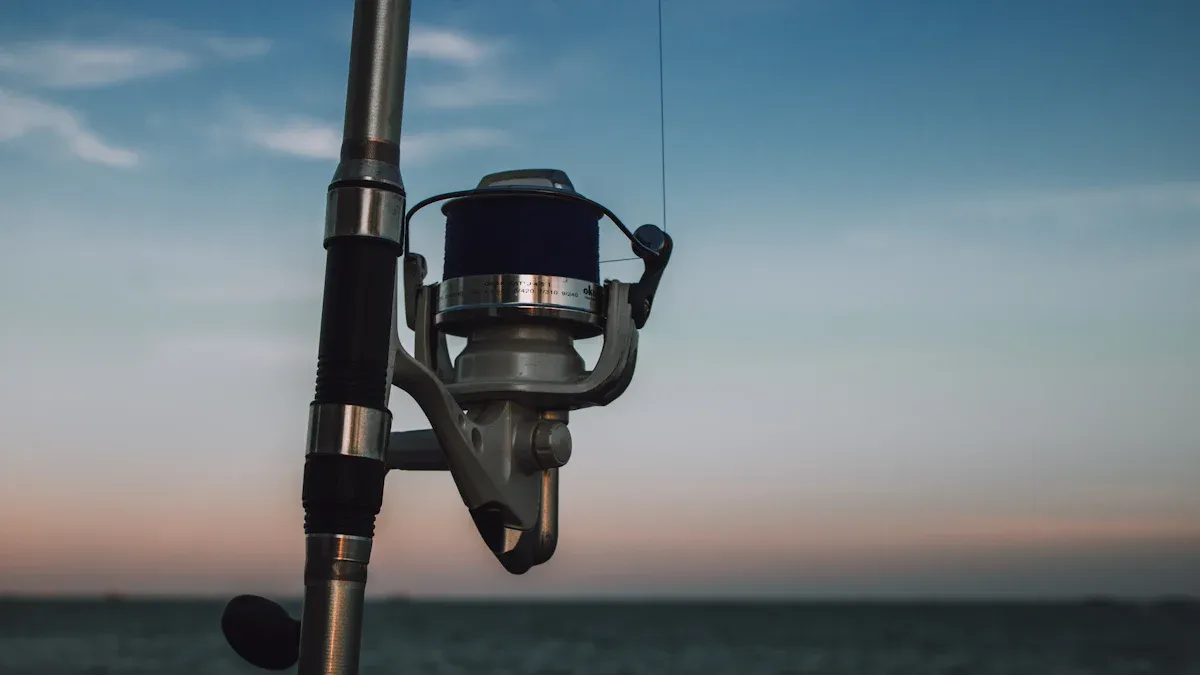
- Most rod breakages stem from manufacturing defects or material weaknesses that can be prevented with proper QC.
- Rigorous quality assurance during production remains essential for reliable gear.
Key Takeaways
- Quality control is essential for fishing gear to ensure durability and performance in tough conditions.
- Regular maintenance, like rinsing gear after use, prevents corrosion and extends the lifespan of fishing reels and rods.
- Mechanical strength tests, including tensile and impact assessments, verify that fishing gear can handle real-world stresses.
- Corrosion resistance testing, such as salt spray tests, helps manufacturers select materials that withstand harsh saltwater environments.
- Continuous improvement in manufacturing processes leads to better quality fishing gear, enhancing the fishing experience for enthusiasts.
Fishing Gear QC and Durability Testing
Mechanical Strength Assessment
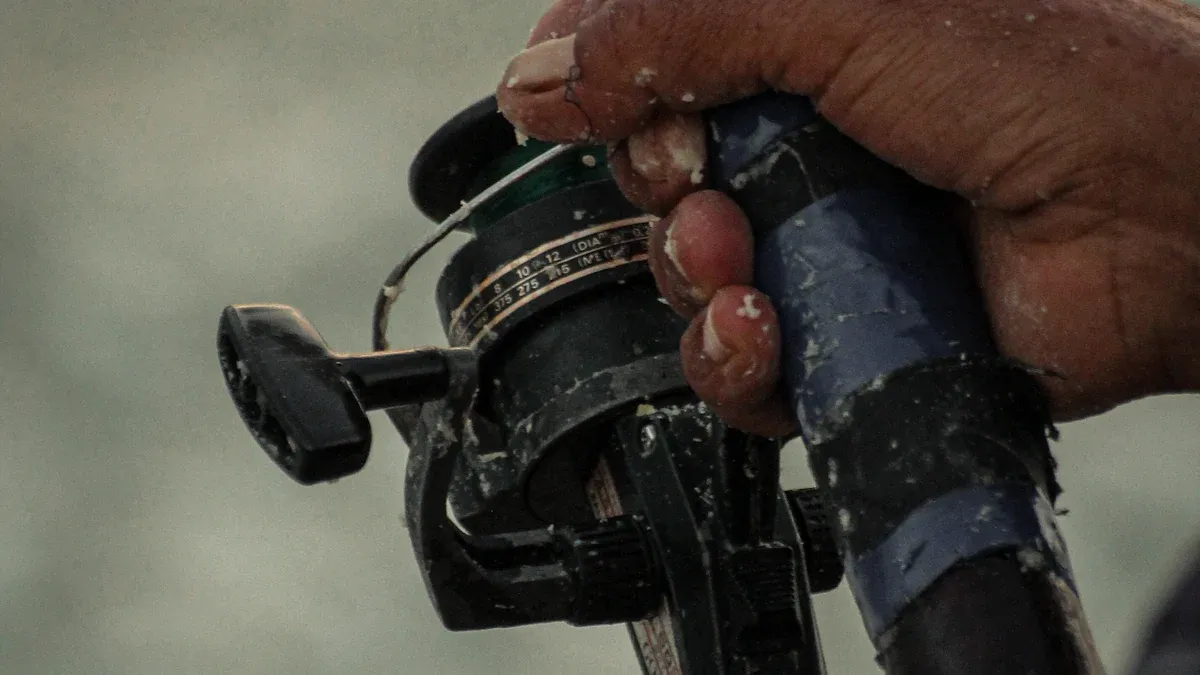
Fishing gear QC begins with mechanical strength assessment for rods and reels. Inspection teams focus on carbon fiber blanks and metal components to ensure durability in offshore and freshwater environments. Rods must withstand high drag forces and repeated casting, while reels require strong gears and smooth operation under pressure.
Experts use several methods to evaluate mechanical strength:
- Strain monitoring: Using fiber Bragg grating sensors to provide real-time feedback on rod performance during low-velocity impacts.
- Compressive and tensile response testing: Measuring how carbon fiber blanks react to squeezing and stretching.
- Flexural loading tests: Monitoring resistance to bending, which is critical for rod length and action, and identifying potential crack propagation.
Carbon fiber rods offer a superior strength-to-weight ratio compared to fiberglass. Advanced technologies, such as graphene integration, improve torsional rigidity and recovery speed. Anglers benefit from lighter rods with higher durability and better performance.
Note: Mechanical strength assessment ensures fishing gear meets industry standards for quality and durability. Teams follow GB, ISO, ASTM, and other recognized procedures for testing and quality control.
Tensile and Fatigue Analysis
Tensile and fatigue analysis play a vital role. Teams test rods and reels to verify their ability to handle high-tensile loads and repeated stress.
- Tensile tests: Measure the breaking strength of fishing rods and wire ropes. Samples from each production batch are tested to ensure consistency.
- Fatigue tests: Simulate real-world offshore fishing conditions. Machines apply cyclic loads to rods and reels, evaluating their durability over hundreds of thousands of cycles.
The tensile strength of carbon fiber used in fishing rods typically ranges from 3,500 MPa to over 7,000 MPa. This high strength allows for longer rod blanks and improved control.
Impact Strength and Non-Destructive Tests
Impact strength testing helps assess how fishing rods and reels respond to sudden shocks, such as accidental drops. Non-destructive tests, like ultrasonic testing and visual inspection, allow teams to evaluate gear without causing damage, identifying flaws in rod blanks and metal parts early.
Corrosion Resistance in Fishing Reels and Metal Parts

Salt Spray and Cyclic Corrosion Testing
Fishing reels, guides, and hardware face constant exposure to water, air, and salt. Corrosion resistance is vital for protecting these parts. Manufacturers use specific tests to check durability in harsh environments.
| Testing Method | Description |
|---|---|
| Salt Spray Testing | Evaluates resistance to corrosion when exposed to a salt spray in a controlled environment. |
| Humidity Testing | Assesses a part's resistance to corrosion from humidity, important for coating selection. |
| Copper Sulfate Testing | A more aggressive test for corrosion resistance, useful for plated and high-strength alloys. |
Salt spray testing simulates years of saltwater exposure in just a few days. Cyclic corrosion testing adds periods of drying and wetting, better mimicking real-world conditions.
| Standard | Issuing Organization | Scope |
|---|---|---|
| ASTM B117 | ASTM International | Standard practice for operating salt spray (fog) apparatus. |
| ISO 9227 | International Organization | Corrosion tests in artificial atmospheres - Salt spray. |
| ASTM G85 | ASTM International | Modified salt spray (fog) testing. |
Material Verification and Compliance
Material verification ensures that fishing reels and rod hardware use corrosion-resistant materials like stainless steel and anodized aluminum. Manufacturers use chemical analysis (spectrometry) to confirm the exact composition of metal alloys.
| Material Type | Properties | Impact on Lifespan |
|---|---|---|
| Anodized Aluminum | Corrosion-resistant, lightweight | Enhances durability against saltwater exposure. |
| Sealed Internal Workings | Protects vital components | Prevents rust and failure, extending gear lifespan. |
Corrosion resistance directly impacts the lifespan of fishing gear. Using verified materials helps reels and rods withstand the harsh conditions of saltwater fishing.
Tip: Regular maintenance, such as rinsing reels and rods with fresh water after saltwater fishing, helps prevent corrosion and extends the lifespan of fishing gear.
Integrating Durability and Corrosion Resistance in Production
QC Results and Manufacturing Decisions
Manufacturers rely on QC results to guide production decisions. If a batch fails tests, the production team reviews the process, potentially adjusting materials or rod blank designs. Data from mechanical strength and corrosion checks ensures that only the best materials are selected for offshore and saltwater gear.
Addressing Failures and Continuous Improvement
When failures occur, manufacturers implement structured improvements:
- Good Manufacturing Practices (GMP): Maintain consistency at every stage.
- Traceability Systems: Track gear from production to delivery to isolate defects.
- Continuous Training: Ensure workers are updated on quality procedures.
| Program | Benefit |
|---|---|
| Quality Management | Embeds quality practices to improve gear performance. |
| Regular Monitoring | Ongoing assessment leads to better reels, rods, and drag systems. |
Comprehensive fishing gear QC gives anglers confidence in their equipment. Tests confirm that gear withstands tough conditions and resists corrosion. By using stainless steel, anodized aluminum, and titanium, manufacturers ensure longevity. Prioritizing QC leads to better fishing experiences and reliable, long-lasting gear.
FAQ
What tests check the strength of carbon fiber fishing rods?
Quality control teams use compressive, flexural, tensile, and impact tests. These measure how much force the rod can handle before breaking or bending.
Why is salt spray testing important for fishing reels?
It simulates harsh saltwater conditions to verify that metal parts resist corrosion, ensuring reels last longer in marine environments.
How do manufacturers verify metal materials in fishing gear?
Through chemical analysis (spectrometry), hardness tests, and visual inspections to confirm the use of corrosion-resistant metals like 304 stainless steel.
What standards guide fishing gear quality control?
Industry standards such as ASTM, ISO, and GB provide guidelines for testing to ensure safety and durability requirements are met.
How does regular maintenance affect fishing gear lifespan?
Regular cleaning removes salt and dirt, preventing corrosion and damage. Anglers who maintain their gear enjoy significantly longer-lasting performance.

Related Articles


Grow your business with TradeAider Service
Click the button below to directly enter the TradeAider Service System. The simple steps from booking and payment to receiving reports are easy to operate.

