
- About Us

- Our Services
- Your Industry
- Resources
- News & Blog
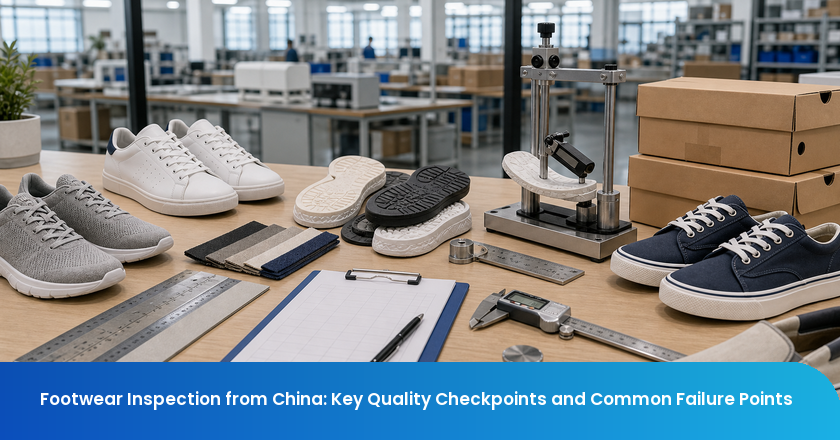
Footwear inspection from China should verify pair matching, size accuracy, upper workmanship, outsole bonding, flex and fit, material consistency, labels, odor, metal or sharp risks, accessories, and packaging before shipment. Shoes may look acceptable in a static photo, but many failures appear only when the pair is matched, flexed, measured, packed, or worn.
Footwear is a softline category with hardline-style failure points. A shoe has fabric or leather-like materials, stitching, trims, adhesives, molded soles, metal eyelets, laces, insoles, size markings, retail labels, and packing. A small error in any layer can create returns: left-right mismatch, loose outsole, wrong size label, color shade difference, glue stains, odor, poor flex, heel deformation, or damaged shoe box.
China footwear buyers should not rely on final photos alone. The inspector should open cartons, check pairs, measure sampled shoes, compare size markings, flex the shoe where appropriate, review bonding, inspect upper finish, verify labels, check odor or moisture clues, and confirm packaging. The AQL plan should be paired with footwear-specific defect examples.
- Pair-level checks: left-right match, size, color, shape, heel height, outsole direction, and pair packing.
- Construction checks: stitching, bonding, flex, insole, outsole, eyelets, laces, zipper, buckle, and trims.
- Material checks: shade, upper defects, leather or imitation-leather claim, fabric, odor, mold, and colorfastness risk.
- Decision rule: inspect footwear as a matched wearable pair, not as isolated single pieces.
The Direct Answer
A footwear PSI should combine AQL sampling with pair matching, size and fit checks, upper and sole workmanship, bonding, flex, labeling, and shoe-box protection.
ISO 2859-1:2026 is the current ISO standard for AQL-indexed sampling procedures for lot-by-lot inspection by attributes. Source: ISO 2859-1:2026.
FTC apparel and labeling resources include leather and imitation-leather matters, including guidance areas relevant to footwear and leather-like product claims. Source: FTC apparel and labeling.
A footwear inspection cannot replace material testing, slip-resistance testing, chemical testing, or legal review when a market or retailer requires it. Its job is to verify that the physical shipment matches the buyer file, size run, labels, packing, and visible workmanship standard.
Footwear Inspection Matrix
The most useful footwear checklist follows how customers experience the pair.
| Inspection Area | What To Check | Common Failure | Buyer Control |
|---|---|---|---|
| Pair matching | Left-right pair, size, color, shape, heel height, outsole direction | Mismatched pair or wrong size in box | Sample pairs from multiple cartons and sizes |
| Upper workmanship | Stitching, glue, stains, wrinkles, eyelets, trims, logos, ornaments | Visible defect on customer-facing area | Use approved sample photos and defect classes |
| Sole and bonding | Outsole adhesion, gaps, flex, heel, insole, outsole mark | Sole separation or weak bonding | Define flex and bonding checks where practical |
| Sizing and fit | Length, width, size mark, insole length, size ratio | Size label does not match physical shoe | Measure sampled sizes and compare size chart |
| Labels and packing | Shoe box, barcode, carton mark, hangtag, care or material claim, stuffing | Wrong label or crushed box | Open packs and inspect retail presentation |
The table shows why footwear needs more than surface inspection. A shoe may pass appearance checks and still fail because pairs are mismatched, the outsole is weak, the size run is shifted, or the shoe box is crushed. The checklist should reflect the full customer journey from opening the box to wearing the product.
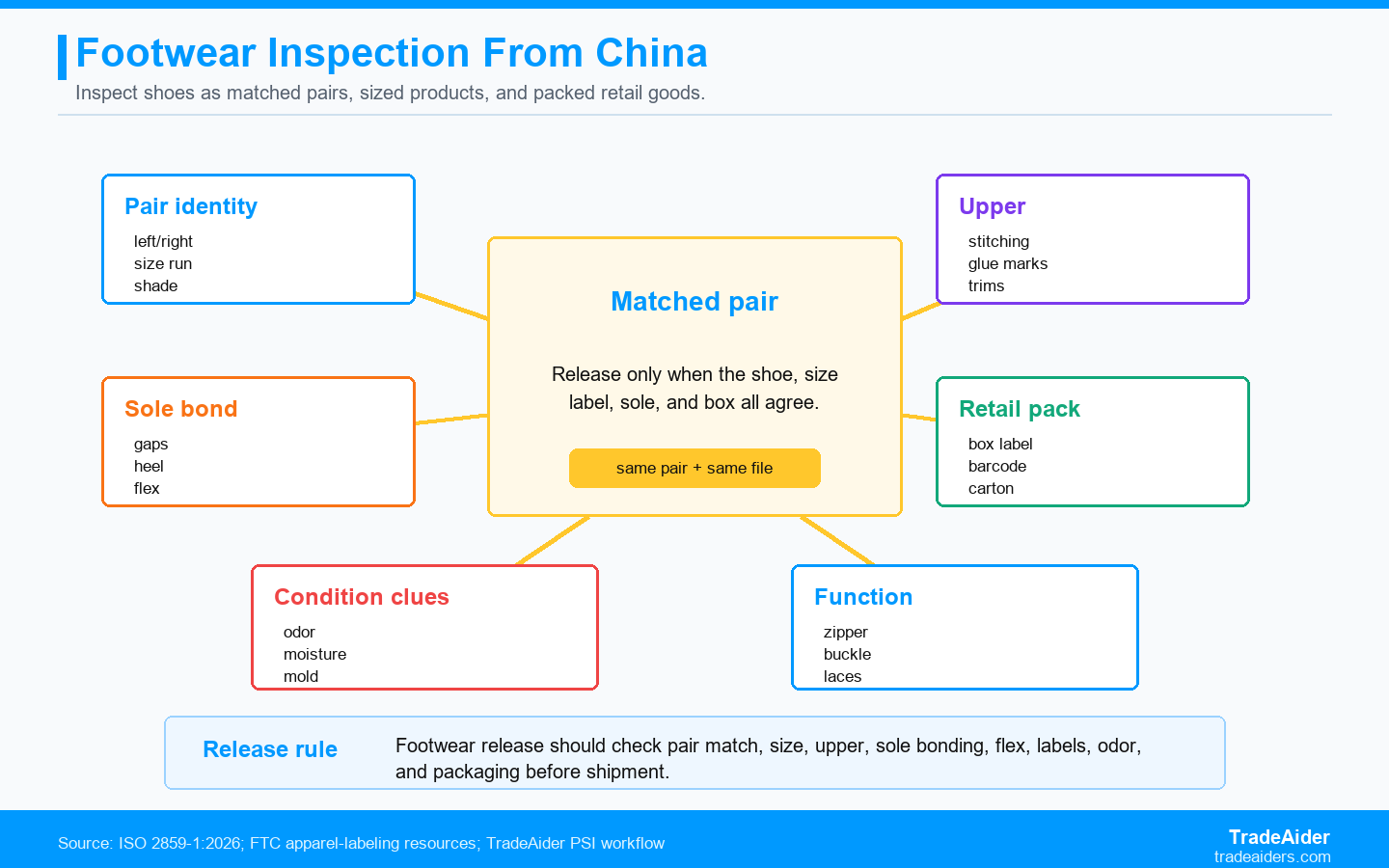
Footwear release should check pair match, size, upper, sole bonding, flex, labels, odor, and packaging before shipment.
Key Checkpoint 1: Pair Matching And Size Accuracy
A footwear customer buys a pair, so inspection should begin with pair identity.
The inspector should check whether the left and right shoes match in size, color, shape, heel height, outsole pattern, material, logo placement, and overall appearance. Mismatched pairs can occur when production, packing, or warehouse sorting is rushed. The defect is often obvious to the customer but can be missed if the inspector looks at single pieces instead of pairs.
Size accuracy should be checked in two ways: label and physical measurement. The shoe box, shoe tongue, outsole, hangtag, and carton may all show size information. Those markings should agree with each other and with the size assortment. Physical checks such as insole length or outsole length can catch a size-run issue before the whole shipment reaches customers.
For multi-size and multi-color orders, sample distribution matters. The inspector should cover the size range, colorways, and carton locations. A problem in size 42 or a seasonal color should not be hidden because the sample came mostly from size 39 black shoes near the front of the warehouse.
Key Checkpoint 2: Upper Workmanship And Materials
The upper is what customers see first and judge quickly.
Upper checks include stitching, seam alignment, glue marks, wrinkles, stains, scratches, holes, thread ends, logo placement, eyelets, laces, zipper function, buckles, ornaments, printing, embroidery, and material shade. Defect severity depends on location. A tiny mark inside the shoe may be minor, while a visible stain on the toe box may be major.
Material claims should be checked against the buyer file. If the product is sold as leather, suede, synthetic leather, mesh, knit, waterproof, or breathable, the visible material and label should match the approved product version. Inspection can verify labels and visible consistency, while lab or legal review may be needed for material claims.
Odor and moisture clues are important. Strong chemical smell, mold spots, damp shoe boxes, rusty eyelets, or sticky surfaces may indicate material, storage, adhesive, or packaging problems. These should be documented with photos and carton identity because they can worsen during transit.
Key Checkpoint 3: Sole Bonding, Flex, And Function
Sole failures can turn a cosmetic pass into a customer return.
Sole checks should include outsole adhesion, gaps, heel attachment, insole placement, outsole mark, tread, sidewall, and flex behavior where practical. A weak bond may not separate during a quick glance, but visible gaps, glue overflow, uneven bonding, or poor flex response can signal a process issue.
For footwear with zippers, buckles, hook-and-loop straps, elastic, laces, lights, wheels, or other functional elements, the inspector should check sampled function. Functional accessories can fail even when the shoe body looks good. The buyer should define how many pieces to check and what counts as failure.
Packaging can damage soles and uppers if shoes are packed too tightly or without protection. Tissue, shoe trees, stuffing, separators, silica gel where appropriate, retail box strength, and carton compression should be part of the inspection plan.
Where TradeAider Fits In Footwear Inspection
TradeAider fits by turning footwear size, pair, upper, sole, and packaging risk into a release checklist.
TradeAider can use Pre-Shipment Inspection to check footwear lots by AQL sampling, pair matching, size labels, measurements, upper workmanship, sole bonding, function, odor clues, packaging, barcode, and carton marks before release.
If footwear defects appear during cutting, stitching, lasting, bonding, finishing, or packing, During Production Inspection can catch issues before the whole lot is packed. For recurring bonding or process failures, factory audit service can review supplier controls.
The business fit is return prevention. Footwear returns are costly because size, fit, appearance, and pair mismatch are immediately customer-visible. TradeAider helps buyers catch those issues before shipment.
SPAR Scenario: The Shoes Passed Appearance But Failed Pair Matching
The defect was not one bad shoe; it was a packing-control failure.
Situation: A buyer orders 12,000 pairs of casual sneakers from a China factory in four colors and six sizes.
Problem: The upper workmanship looks acceptable, but PSI finds several mismatched pairs: right shoe size 42 packed with left shoe size 41, plus shade differences between left and right shoes in one colorway.
Action: TradeAider classifies mismatched pairs as major, documents carton IDs, and asks the supplier to sort the affected size-color range. Reinspection focuses on pair matching, size labels, and carton assortments.
Result: The buyer prevents an expensive customer-return problem that surface photos would not have caught.
Action Card: Footwear Inspection Checklist
Inspect the shoe as a matched product, a sized product, and a packed retail product.
- Define AQL level, defect classes, and sample distribution by size, color, and carton location.
- Check left-right pair match, size labels, outsole size, box label, color, shape, and heel height.
- Inspect upper workmanship: stitching, stains, glue, wrinkles, eyelets, laces, logos, trims, and ornaments.
- Check sole bonding, outsole gaps, insole placement, flex, heel attachment, and functional parts.
- Verify material labels, care or claim labels, hangtags, barcode, shoe box, carton marks, and size ratio.
- Document odor, moisture, mold, crushed boxes, internal rubbing, and packaging protection.
The buyer should also create a footwear defect photo guide. Show what counts as major glue stain, minor thread end, unacceptable toe-box wrinkle, visible shade difference, sole gap, crushed box, and mismatched pair. Photos reduce debate after the lot fails.
For repeat orders, review returns before every inspection. If customers complain about fit, strengthen size measurement. If they complain about sole separation, add bonding and flex checks. If they complain about damaged boxes, inspect packaging more deeply. Footwear inspection should learn from real customer pain.
The buyer should connect inspection to supplier CAPA. Pair mismatch may belong to packing control. Sole separation may belong to adhesive process or curing time. Odor may belong to material, glue, or storage. A useful report helps identify the factory owner of the defect.
Sampling Coverage Across Sizes And Colors
Footwear sampling should avoid the easy-carton problem.
Many footwear failures are not evenly distributed across the order. One size may use a different last, one color may use a different upper material, one sole color may come from a different bonding run, and one carton group may have been packed by a different line. If the inspector pulls most samples from the closest cartons, the report can look clean while a hidden size-color range still carries risk.
Before inspection, the buyer should provide the order breakdown by style, color, size, carton range, and packing ratio. The inspection plan should state whether samples must cover every size, every color, every carton zone, or every production batch. For a complex footwear order, the sample distribution is almost as important as the AQL value because customer returns often cluster around a specific size or colorway.
The report should also show where the samples came from. Photos of carton marks, size labels, opened shoe boxes, and sampled pair groups help prove that the inspection covered the real assortment. If a supplier later claims that the failed pairs were isolated, the buyer can use the report to see whether the problem was limited to one range or visible across the lot.
For launch orders, buyers should be stricter with pair matching, size labels, carton assortments, and packaging presentation. The first shipment sets customer expectations and marketplace reviews. A pair mismatch or wrong size label is not only a quality defect; it creates a trust problem that can be hard to recover after customers receive the goods.
If you are sourcing footwear from China, send TradeAider the size chart, sample photos, material file, outsole specs, packaging file, order quantity, and defect history. The next step is to ask TradeAider to build a footwear inspection checklist before shipment.
Frequently Asked Questions
What are common footwear inspection defects?
Common defects include pair mismatch, wrong size labels, upper stains, glue marks, weak sole bonding, wrinkles, loose eyelets, bad stitching, odor, crushed boxes, and wrong carton marks.
Should inspectors measure shoes?
Yes. Size labels should be checked against physical measurements such as insole or outsole length according to the buyer method.
Can footwear inspection verify leather claims?
Inspection can verify visible labels and consistency, but material claims may require supplier documents, testing, or legal review depending on market rules.
Is AQL enough for footwear?
AQL is useful for sampling, but footwear also needs pair matching, size coverage, bonding, flex, function, odor, and packaging checks.
Related Articles
Grow your business with TradeAider Service
Click the button below to directly enter the TradeAider Service System. The simple steps from booking and payment to receiving reports are easy to operate.

