
- About Us

- Our Services
- Your Industry
- Resources
- News & Blog
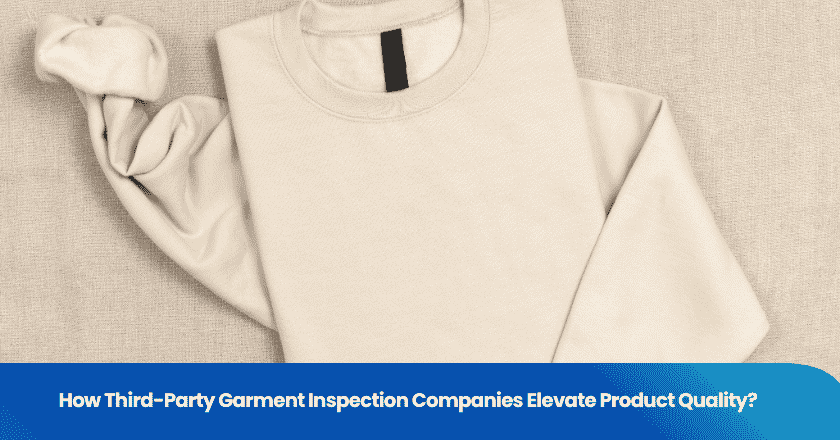
"Elevating quality" isn't a vague benefit — it's a measurable effect of catching defects earlier in production, where fixing them costs a fraction of what the same defect costs once goods have shipped. Third-party garment inspection works because it's independent of the factory's own incentive to ship on schedule, and because it's staged to catch different defect types at the point where each is still cheap to fix.
"Elevating Quality" Is a Claim You Can Actually Measure
Most descriptions of third-party garment inspection describe its value in abstract terms — objective, unbiased, compliant. All true, but none of it explains why inspection actually changes the outcome for a specific order. The mechanism is simpler and more concrete than that: the cost of fixing a defect rises sharply the later it's discovered in the production and shipping cycle.
A stitching error caught while 20% of a run is complete costs the time to adjust a machine setting and correct the remaining 80%. The same error caught at final inspection, with the full order already sewn, means reworking finished garments — more labor, more time, and a shipping deadline now at risk. The same error discovered after the goods have already reached a retailer or customer means a return, a chargeback, a negative review, or in the worst case a recall — costs that dwarf what a mid-production correction would have taken. TradeAider has documented this effect directly with clients: reviewed testimonials cite an 18% reduction in return rates attributed to catching defects in real time, and a 23% improvement in the rate of defects caught before shipment rather than after. That's what "elevating quality" concretely means — not a general assurance, but a shift in when problems get caught, which changes what they cost.
Where Each Inspection Stage Actually Changes the Cost Curve
Third-party inspection is staged specifically because different defect types become visible — and correctable — at different points in production:
- Pre-Production Inspection (PPI) catches the cheapest problems to fix: wrong fabric, wrong trims, materials that don't match the approved sample — all correctable before a single unit has been cut or sewn.
- During Production Inspection (DPI/DUPRO), typically done once a meaningful share of the run is complete, catches process drift — sizing, stitching consistency, assembly errors — while there's still time to correct the remaining production rather than reworking a finished batch.
- Pre-Shipment Inspection (PSI/FRI), sampling the finished, packed order against an AQL standard, is the last checkpoint before payment and shipment — the most expensive stage to find a problem at, but still far cheaper than finding it after arrival.
- Container Loading Supervision (CLS) closes the final gap — confirming that what was inspected is actually what gets loaded, since a mismatch here undoes the value of every check before it.
Skipping earlier stages to save cost on a single inspection often means the same defects simply get caught later, at a multiple of the cost — the inspection cost saved upfront is smaller than the rework or return cost it creates downstream.
An Inspection Report Only Elevates Quality If Something Happens With It
A defect list, on its own, doesn't fix anything. The value shows up in what happens next: a factory correcting a stitching issue after a mid-production finding, a batch being reworked to an acceptable level before shipment, or — when a defect can't be corrected — a shipment being held rather than released. This is also where independent inspection earns its cost over a factory's own internal QC: an inspector with no stake in the shipment schedule has no incentive to soften a finding to keep a shipment moving, while a factory's own QC team, judged in part on on-time shipment rates, does.
Documented, photo-based reports also matter beyond the immediate production run — they're the evidence a buyer needs if a quality dispute with a supplier ever needs to be resolved. See Inspection Reports as Dispute Evidence for how that documentation gets used in practice.
Choosing a Provider: Look Past "Experience" to What You Can Verify Before Booking
Most guidance on choosing an inspection provider stops at "check their experience and reputation" — reasonable, but not something a buyer can actually verify without just trusting the provider's own claims. A more useful filter is what a provider is willing to show before you commit:
- Can you see the inspection standard in advance? TradeAider publishes its Quality Inspection Standard so buyers can review the actual criteria before booking, rather than finding out what was checked only after the report arrives.
- Can you see a real report before you book? Sample Official Reports show the format and level of detail a client should expect.
- Can you see what's happening during the inspection, not just after? Online Real-time Reports let a client follow an inspection as it happens — useful specifically because it lets a buyer decide, in time to act on it, whether a defective batch can be reworked on the spot rather than only finding out once the inspector has already left.
- Does the provider cover garment-specific testing, not just visual inspection? Sizing, colorfastness, seam strength, and fabric composition need lab-based checks; see Softline Products Testing.
Measuring the Lift Over Time, Not Just Per Order
A single inspection report shows whether one shipment passed. The actual "elevation" in quality shows up when a buyer tracks results across multiple orders — a declining defect rate on a given product line, a falling return rate, fewer chargebacks. TradeAider's 12-metric scorecard lays out how factory-level defect data connects concretely to downstream returns, reviews, and margin — the framework for actually measuring whether inspection is doing what this article claims it does, rather than taking the claim on faith.
Frequently Asked Questions
Does a single final inspection provide the same quality benefit as staged inspection throughout production?
No — a final-only inspection can still catch a defective batch, but at the most expensive point to fix it: with the full order already produced and packed. Staged inspection catches most defect categories earlier, when correction is cheaper and doesn't put the ship date at risk.
How much does catching a defect earlier actually save, compared to catching it later?
The exact multiple varies by product and defect type, but the direction is consistent across the industry: a material issue caught before cutting costs little to correct; the same issue found in a finished, packed garment means reworking completed units; found after the customer has it, it costs a return, a chargeback, or reputational damage that has nothing to do with the unit cost of the garment itself.
Is "objective, third-party" really different from a factory's own quality team in practice?
Yes, in a specific and measurable way: a factory's internal QC is evaluated in part on shipping on time, which creates pressure to under-report issues that would delay a shipment. An independent inspector has no such incentive, which is why the finding itself — not just the inspector's title — is what changes.
What should I look at to compare inspection providers, beyond their stated experience?
Ask to see their published inspection standard and a sample report before booking. A provider willing to show both lets you verify what you're paying for in advance, rather than relying on a general claim of expertise.
Working With TradeAider
TradeAider provides staged, independent garment inspection — Pre-Production, During-Production, Pre-Shipment, and Container Loading Supervision — backed by Softline Products Testing for the checks a visual inspection alone can't cover. Reports are available as a standard Official Report within 24 hours, or as an Online Real-time Report while the inspector is still on-site.
- Review the Quality Inspection Standard before booking, or check sampling levels with the AQL Calculator.
- Contact TradeAider's team to stage inspection across your next production run, or book directly.
Related Articles

Grow your business with TradeAider Service
Click the button below to directly enter the TradeAider Service System. The simple steps from booking and payment to receiving reports are easy to operate.

