
- About Us

- Our Services
- Your Industry
- Resources
- News & Blog
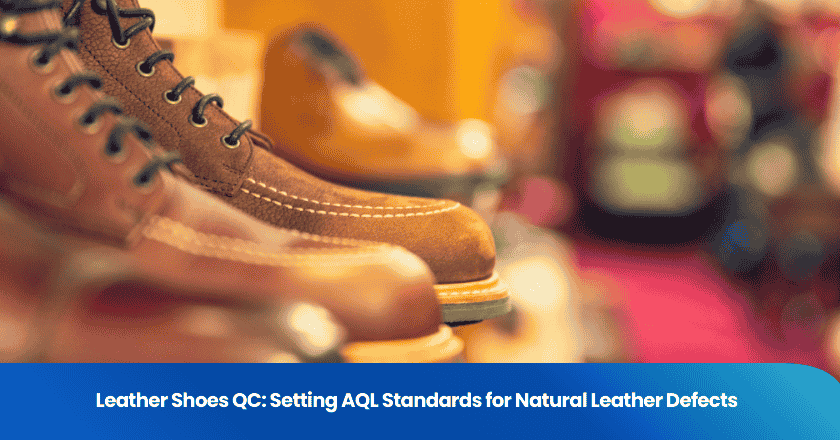
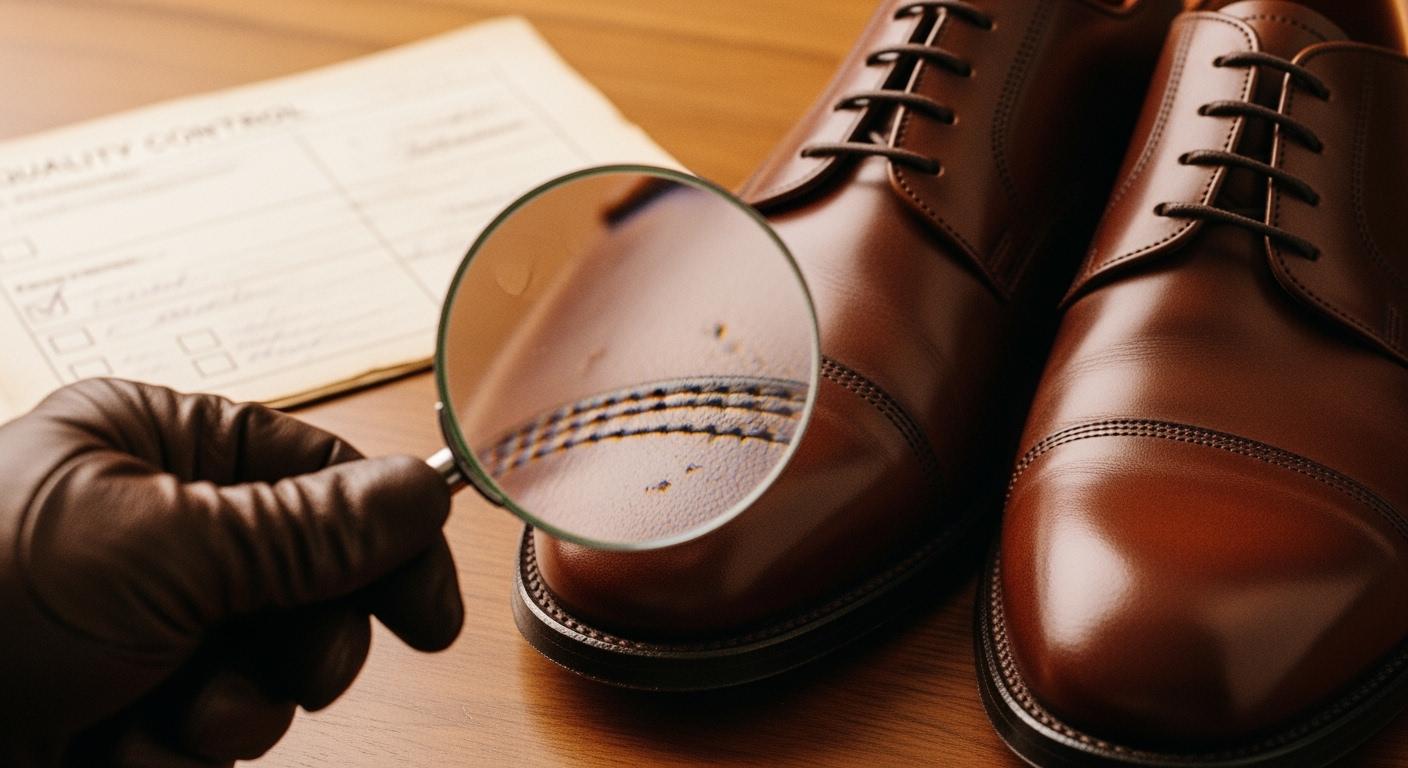
The structural fidelity of leather footwear is governed by the inherent heterogeneity of the biological substrate. Unlike synthetic materials, natural leather possesses an unpredictable matrix of fibers, pores, and surface characteristics that vary by animal breed, age, and environmental history. In professional footwear metrology, setting precise Acceptable Quality Level (AQL) standards is essential to distinguish between unique natural signatures and critical manufacturing flaws. A failure to establish clear benchmarks can lead to significant disputes between global buyers and industrial factories, resulting in rejected shipments or the acceptance of substandard goods. By integrating standardized inspection protocols with advanced colorimetric and mechanical testing, stakeholders can ensure that every pair of shoes meets the rigorous demands of the premium market.
Key Takeaways
- AQL standards provide a statistical basis for accepting or rejecting batches based on pre-defined defect tolerances (typically 1.5 for Major, 4.0 for Minor).
- Defect classification must separate "Natural Features" (e.g., neck wrinkles) from "Process Defects" (e.g., lasting wrinkles or cement failure).
- Metrological color management utilizes d/8 spectrophotometers to maintain shade consistency across diverse leather lots.
- Structural integrity is verified through ISO 20344 and SATRA standards for bond strength and flex resistance.
- Professional quality checks require a Limit Sample Board to align inspector perception with brand expectations.
- Real-time digital reporting and AI-assisted defect detection are becoming the industrial baseline for high-volume footwear production.
The Science of Leather as a Biomaterial in QC
Technical evaluation of leather footwear begins with an understanding of hide topography. Bovine hide consists of the epidermis, grain layer (corium minor), and flesh layer (corium major). The most valuable "Full-Grain" leather retains the natural pore structure, which also means it retains every healed scratch or insect bite the animal ever received. In footwear quality assurance, the objective is not to eliminate all marks, but to manage their frequency and location according to the "Zone System."
Zoning Protocols for Defect Placement
Inspectors utilize a zoning map to determine defect severity. Zone A (the vamp and toe cap) requires near-perfection, as it is the most visible area. Zone B (the quarters and heel) allows for minor natural variations, while Zone C (the medial arch or under-tongue) can absorb more significant natural features without affecting the shoe's market value.
| Inspection Zone | Technical Priority | Allowable Natural Variation |
|---|---|---|
| Zone A (Vamp/Toe) | Maximum Symmetry & Purity | Zero visible scars or loose grain |
| Zone B (Quarter/Heel) | Structural Consistency | Faint growth marks; minor shade shifts |
| Zone C (Medial/Internal) | Functional Integrity | Healed scars (< 5mm); distinct wrinkles |
| Lining & Insole | Dermal Comfort | Visible grain textures; zero sharp edges |
Statistical Framework of AQL Sampling
Quality control in mass production is a balance of risk management. Using a 100% inspection for every batch is often economically unfeasible; therefore, industry practitioners rely on the ISO 2859-1 standard (ANSI/ASQ Z1.4). This system calculates the sample size based on the total lot size and the required "Inspection Level."
Producer's Risk vs. Consumer's Risk
The AQL threshold defines the maximum defect rate that is considered acceptable for a process. In AQL manufacturing standards, the objective is to protect the "Consumer's Risk" (Type II error)—the probability of accepting a bad lot. For premium leather footwear, a General Inspection Level II is the standard. If the number of identified Major defects in a sample exceeds the "Ac" (Acceptance) number, the entire batch is rejected for rework.
| Defect Category | AQL Level | Technical Criteria | Examples |
|---|---|---|---|
| Critical | 0.0 | Life-safety risk or legal non-compliance | Metal fragments, sharp tacks, mold |
| Major | 1.5 / 2.5 | Function failure or severe aesthetic loss | Bond failure, asymmetric quarters, deep scratches |
| Minor | 4.0 | Cosmetic imperfection not affecting function | Loose threads, faint adhesive marks, light wrinkles |
Technical Standard: For children's leather footwear, the presence of Hexavalent Chromium (Cr VI) is a Critical defect. Regulatory compliance under REACH mandates that Cr VI must be below 3.0 mg/kg, as it is a potent allergen and carcinogen.
Metrological Color Management and Shade Validation
Color shading is the most frequent cause of "Minor" rejections in leather shoes. Because leather is dyed in batches (drums), "Lot-to-Lot" variation is inevitable. To maintain consistency, professional AQL quality inspections utilize both visual and instrumental methods.
CIE LAB and Spectrophotometry
Industrial inspectors utilize d/8 geometry spectrophotometers to measure the spectral reflectance of the leather. The color is mapped on the L* (lightness), a* (red-green), and b* (blue-yellow) axes. For a batch to be accepted, the Delta E (ΔE) color difference from the master standard must typically be less than 1.0. This ensures that the left and right shoes of a pair—and all shoes in a single shipment—maintain visual harmony under diverse retail lighting conditions.
Structural Integrity: Mechanical and Physical Testing
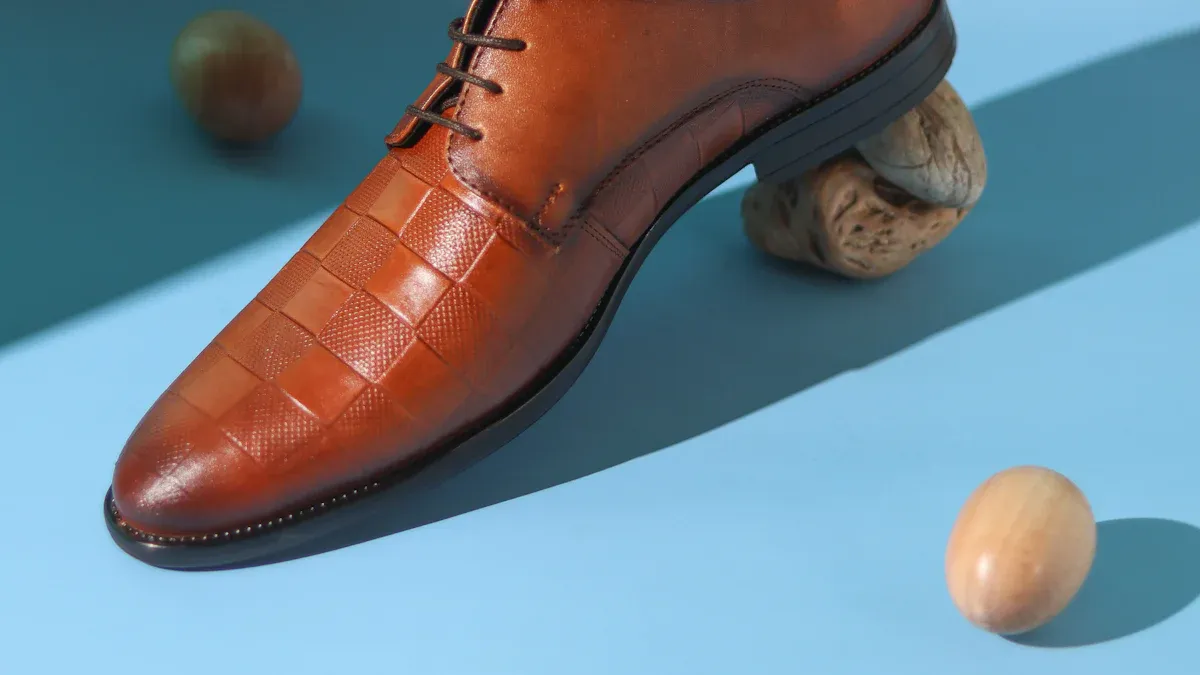
Beyond visual aesthetics, the mechanical durability of the assembly is paramount. Leather shoes must survive tens of thousands of flex cycles and withstand significant tensile forces at the upper-to-sole interface. Validation is performed according to ISO 20344 protocols.
- Upper-Sole Adhesion: Measured in N/mm. A professional-grade sport-leather shoe must exceed 4.0 N/mm to prevent delamination.
- Flex Resistance (Bally Flex): The leather must withstand 50,000 to 100,000 cycles at room temperature without surface cracking.
- Color Fastness (Rub Test): Evaluated using the SATRA STM 421 method to ensure dyes do not transfer to the wearer's socks when damp or dry.
- Needle Detection: Every pair of shoes should pass through a conveyorized metal detector to eliminate the risk of trapped broken needles.
Implementing consistency in shoe manufacturing requires that these tests be performed not just on the prototype, but on random samples from the actual production run to verify batch-level stability.
Practical Implementation: The Limit Sample Board
To reduce human subjectivity, leading brands install "Limit Sample Boards" on the factory floor. These boards contain physical cut-outs of leather showing the absolute "Limit" of acceptable natural defects. If a technician is unsure whether a specific growth mark is too aggressive, they compare it to the board. This calibration of the human eye is a vital component of modern shoe manufacturing quality control.
For importers, conducting a factory audit is the only way to ensure these boards are actually in use and that the testing equipment (e.g., tensile testers and light boxes) is properly calibrated against national standards.
Ready to secure your product quality before shipment?
As your third-party inspection, testing & certification partner in China, TradeAider supports brands and sourcing teams across the entire production process, helping you identify quality risks early, ensure compliance, and strengthen your team’s capabilities before shipment.
Book an Inspection or Testing Service with TradeAider today, or for tailored solutions and expert guidance, contact us at services@tradeaider.com or submit the request form on the right. →

Frequently Asked Questions (FAQ)
What is the difference between "Growth Marks" and "Loose Grain"?
Growth marks are natural stretching of the skin over the animal's life; they are purely aesthetic and do not affect durability. Loose grain (pipiness) is a technical defect where the grain layer separates from the fibrous layer below, causing deep, ugly wrinkles when the shoe is flexed. Loose grain is a Major defect.
Why is AQL 1.5 used for leather shoes?
AQL 1.5 represents a high-standard industrial benchmark. It implies that in a sample size of 200 units, the lot will be rejected if 8 or more Major defects are found. This level ensures a high probability of ship-quality goods while remaining operationally efficient for mass production.
Does "Real Leather" always have imperfections?
Yes. Technically, a flawless hide is exceedingly rare. Any product claiming "flawless" leather has either been heavily corrected (sanded and painted with pigments) or utilized an extremely low yield per hide, which significantly increases the unit cost.
How can I identify if a "Natural Mark" is actually a scratch?
A natural mark or healed scar will have a smooth surface and be covered by the dye and finish. A post-tanning scratch (manufacturing defect) will usually have rough edges, and the lighter "blue" or "crust" color of the internal leather may be visible under the surface.
What is the importance of SATRA certification?
SATRA is the world's leading technical authority for footwear. A lab that utilizes SATRA-standard equipment and methods provides the highest level of technical credibility for bond strength, slip resistance, and material endurance reports.

Related Articles



Grow your business with TradeAider Service
Click the button below to directly enter the TradeAider Service System. The simple steps from booking and payment to receiving reports are easy to operate.

