
- About Us

- Our Services
- Your Industry
- Resources
- News & Blog
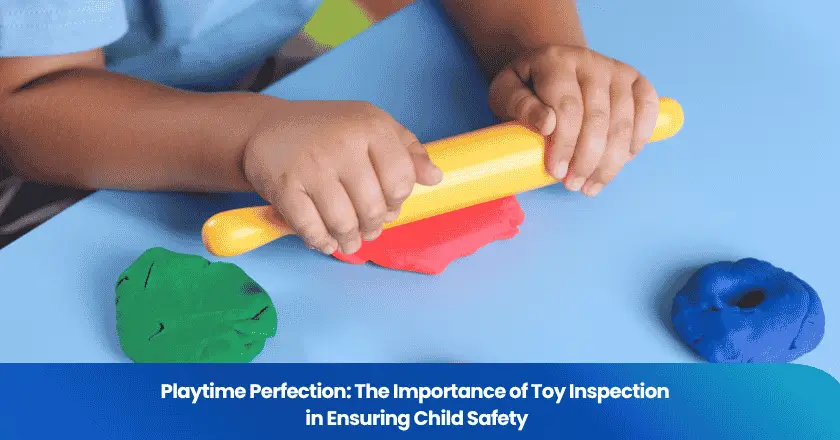
Toys are designed for children, but children do not always use them exactly as intended. Toys may be dropped, pulled, twisted, squeezed, bitten, or exposed to repeated handling during play. This makes product quality and safety particularly important throughout toy manufacturing.
For importers, brands, retailers, and e-commerce sellers sourcing toys from China, quality control should begin before finished products are shipped. Materials, construction, small components, sharp edges, labeling, packaging, and other characteristics can all affect the safety and quality of a toy.
Toy inspection provides an on-site quality-control checkpoint for evaluating products against defined specifications and identifying visible or measurable issues before shipment.
It is important to distinguish this from laboratory testing or regulatory certification. An on-site inspection can identify many physical and manufacturing problems, while chemical, flammability, or other specialized requirements may require appropriate laboratory testing.
Why Toy Inspection Matters
Children interact with toys differently from adults. They may pull components, drop products, put objects in their mouths, or repeatedly manipulate moving parts.
As a result, seemingly minor manufacturing problems can become relevant safety concerns.
Common toy quality and safety risks include:
| Potential Issue | Possible Concern |
|---|---|
| Loose small components | Choking or ingestion risk |
| Sharp edges or points | Cuts or puncture injuries |
| Weak attachments | Components may detach during use |
| Poor assembly | Product may break or malfunction |
| Cracked plastic | May expose sharp edges or internal components |
| Loose stitching | May release filling or small components |
| Incorrect materials | May create chemical or physical concerns |
| Defective batteries or compartments | Potential product malfunction or safety issue |
| Incorrect age information | Product may be unsuitable for the intended age group |
| Inadequate packaging | May create additional handling or packaging risks |
Toy inspection cannot eliminate every possible hazard, but it can provide a structured opportunity to identify problems within the agreed inspection scope.
What Does Toy Inspection Check?
The inspection criteria should be based on the specific toy, age grading, design, materials, market, and buyer requirements.
A typical inspection may cover:
| Inspection Area | Typical Checks |
|---|---|
| Appearance | Scratches, stains, cracks, deformation, color issues |
| Construction | Assembly, seams, joints, and component attachment |
| Small parts | Loose or detachable components |
| Sharp edges and points | Accessible edges and points within the inspection scope |
| Dimensions | Key measurements against specifications |
| Function | Basic operation and specified functional checks |
| Pull or tension checks | Attachment strength where applicable |
| Packaging | Packaging condition and specified configuration |
| Labels | Age information, product identification, warnings, and other specified information |
| Quantity | Product and assortment quantities |
The inspection checklist should not be treated as universal. Different toy designs can create different safety risks.
Small Parts and Choking Hazards
Small detachable components are one of the important areas of toy safety inspection, particularly for products intended for younger children.
Components such as buttons, beads, wheels, eyes, decorative pieces, and other small parts should be assessed according to the applicable requirements and the toy's intended age group.
An inspector may check whether components are securely attached and whether specified mechanical tests are required.
For plush toys, for example, attachment checks on eyes, noses, buttons, or other components can be particularly relevant. Seam condition should also be reviewed because a weak seam may allow filling or components to become accessible during use. TradeAider's toy inspection guidance identifies small-part attachment, seam strength, and metal detection as relevant QC areas for plush toys.
Sharp Edges and Points
Sharp edges and points can create physical injury risks.
These may result from:
- Poorly finished plastic edges
- Broken components
- Exposed metal parts
- Inadequately finished wooden components
- Cracked housings
- Protruding wires or other materials
Visual inspection can identify obvious sharp or unfinished areas, while standardized testing equipment and methods may be required when a formal safety evaluation is needed.
Drop or use-and-abuse testing can also be important because a toy that appears safe before testing may develop a sharp edge or expose a small component after impact. TradeAider's current toy inspection guidance specifically discusses the relationship between drop testing and post-test sharp-edge checks.
Durability and Use-Related Checks
Children's toys can experience repeated physical handling.
Depending on the product, inspection may therefore include specified checks relating to:
- Component attachment
- Seams
- Handles
- Wheels
- Hinges
- Moving parts
- Closures
- Battery compartments
- Structural components
The purpose is to identify weaknesses that could affect the product during reasonably foreseeable use.
However, a basic on-site inspection should not be presented as equivalent to complete laboratory compliance testing. If a buyer needs formal testing against a specific toy safety standard, the applicable test method and laboratory requirements should be established separately.
Material and Chemical Safety
Physical safety is only one part of toy quality.
Toys may contain plastics, paints, coatings, textiles, adhesives, metals, foam, or other materials. Depending on the product and destination market, certain chemical substances may be subject to restrictions or testing requirements.
Relevant quality-control activities may include:
- Reviewing material specifications
- Checking product construction
- Verifying specified material information
- Conducting appropriate laboratory testing
- Reviewing applicable test reports where required
Chemical safety cannot generally be confirmed through visual inspection alone. Laboratory analysis may be necessary to determine whether a product meets specific chemical requirements.
This distinction is especially important for toys because physical inspection and laboratory testing answer different questions.
Toy Inspection vs. Laboratory Testing
A practical toy quality-control program may use both inspection and testing.
| Quality Requirement | Inspection | Laboratory Testing |
|---|---|---|
| Appearance | ✓ | |
| Dimensions | ✓ | |
| Quantity | ✓ | |
| Assembly | ✓ | |
| Visible sharp edges | ✓ | |
| Packaging | ✓ | |
| Basic specified function | ✓ | |
| Chemical substances | ✓ | |
| Specific flammability requirements | ✓ | |
| Detailed material composition | ✓ | |
| Formal standard-based safety testing | Depending on requirement |
The exact testing program depends on the product and destination market.
For example, ASTM F963 is a key U.S. toy safety standard, while EN 71 is used for toy safety requirements in Europe. The applicable requirements should be determined based on the target market and product. TradeAider's toy inspection materials also distinguish on-site inspection from laboratory certification and testing.
The Importance of Age Grading
Toy safety requirements can vary according to the intended age group.
A product designed for very young children may require particular attention to small parts and accessible components, while toys for older children may have different foreseeable-use considerations.
Buyers should therefore provide clear age grading information before inspection.
Inspectors can then evaluate the product according to the agreed requirements rather than applying an inappropriate generic checklist.
Checking Labels and Warnings
Labels and warnings are another important part of toy quality control.
Depending on the product and market, inspection may check:
- Age grading
- Warning statements
- Product identification
- Brand information
- Batch or tracking information
- Barcode information
- Label placement
- Packaging markings
An inspector can verify physical labeling against approved specifications, but this does not necessarily constitute a complete regulatory labeling review.
For regulated markets, buyers should separately confirm the applicable labeling and documentation requirements.
Packaging Inspection
Toy packaging should also be considered during QC inspection.
Depending on the product, inspectors may check:
- Packaging condition
- Correct product-to-package matching
- Quantity per carton
- Inner packaging
- Carton markings
- Barcode or SKU information
- Warning information
- Accessories and instructions
Packaging mistakes can cause problems even when the toy itself is manufactured correctly. Incorrect assortments, missing accessories, or wrong labels can result in inventory and fulfillment issues for importers and retailers.
When Should Toys Be Inspected?
Toy inspection can be introduced at different stages of production.
| Inspection Stage | Main Purpose |
|---|---|
| Pre-Production Inspection | Check materials, components, samples, and production readiness |
| During Production Inspection | Identify manufacturing issues while production is underway |
| Pre-Shipment Inspection | Evaluate finished products before shipment |
| Container Loading Supervision | Check quantity, packaging, container condition, and loading process |
During-production inspection can be particularly useful when buyers want to identify recurring problems before the entire order is completed.
Pre-shipment inspection provides a later checkpoint when finished products are available for evaluation.
The appropriate combination depends on the product, production schedule, order value, and buyer's quality-control requirements.
What Buyers Should Prepare Before Toy Inspection
A clear inspection standard makes the results more useful.
Before arranging an inspection, buyers should provide relevant information such as:
| Information | Examples |
|---|---|
| Product specification | Dimensions, materials, functions |
| Approved sample | Reference product |
| Age grading | Intended age group |
| Packaging specification | Packaging structure and requirements |
| Label artwork | Approved labels and warnings |
| Defect criteria | Critical, major, and minor defect definitions |
| Testing requirements | Applicable physical or chemical tests |
| Target market | Country or sales market |
| Quantity | Order and inspection quantity |
The more clearly the requirements are defined, the easier it is to evaluate whether the production goods match the buyer's expectations.
Corrective Action After Inspection
Inspection is most useful when findings can lead to action.
If a toy inspection identifies problems, buyers and suppliers can review the affected products and determine whether corrective action is required.
For example, corrective actions may involve:
Identify the issue → Determine the affected production → Correct the cause → Verify the improvement → Re-inspect when necessary
TradeAider can help supervise corrective actions on site, verify improvements, and support re-inspection when required.
This approach is particularly useful when an issue is discovered during production because the factory may still have an opportunity to correct the process before the full order is completed.
Third-Party Toy Inspection in China
For overseas buyers sourcing toys from China, an independent third-party inspection can provide on-site visibility without requiring the buyer to travel to the factory.
TradeAider's toy-related quality-control services can be structured around buyer-defined requirements and may include checks of appearance, construction, dimensions, packaging, labeling, and specified physical characteristics.
Inspection information can also include photos, videos, measurements, and findings so that buyers can review the condition of the products remotely.
However, third-party inspection should be understood as a defined quality-control checkpoint. It does not replace required laboratory testing, regulatory assessment, or certification where those are applicable.
Building a Toy Quality-Control Process
A more complete toy quality-control process can combine different checkpoints:
Material Review → Production Monitoring → Toy Inspection → Laboratory Testing When Required → Pre-Shipment Inspection → Loading Supervision
Each stage addresses a different part of the quality process.
Material review focuses on incoming components and materials. Production monitoring helps identify manufacturing issues while work is underway. Toy inspection evaluates physical characteristics and workmanship. Laboratory testing addresses requirements that require specialized analysis. Pre-shipment inspection provides a final product-quality checkpoint, while loading supervision verifies the shipment as goods are loaded.
The objective is not to inspect everything at every stage, but to place the appropriate quality checks where they can provide useful information.
Frequently Asked Questions
What does a toy inspection check?
A toy inspection may check appearance, construction, dimensions, small parts, sharp edges or points, workmanship, basic functions, packaging, labels, and other buyer-defined requirements.
Is toy inspection the same as toy safety testing?
No. Inspection mainly evaluates observable and measurable product characteristics within a defined scope. Laboratory testing may be required for chemical, flammability, or other specialized safety requirements.
What are common safety issues found during toy inspection?
Common issues can include loose small parts, weak attachments, sharp edges, cracks, poor assembly, loose stitching, defective components, incorrect labeling, and packaging problems.
When should toys be inspected?
Toys can be inspected before production, during production, or before shipment. The appropriate stage depends on the product and the buyer's quality-control objectives.
Can a third-party inspection guarantee toy safety?
No. An inspection evaluates the products against the agreed scope and criteria at a particular stage. It does not replace laboratory testing, regulatory assessment, or other required safety evaluations.
Conclusion
Toy inspection plays an important role in identifying physical and manufacturing issues before products reach children. Small parts, sharp edges, weak attachments, construction defects, labeling errors, and packaging problems can all be relevant areas of quality control.
For toy importers and brands, the most effective approach is not to rely on a single final check. A combination of production monitoring, physical inspection, appropriate laboratory testing, and pre-shipment quality control can provide better visibility throughout manufacturing.
For toys sourced from China, a product-specific inspection plan based on the intended age group, product design, target market, and buyer requirements can help identify quality issues before shipment and support a more structured approach to child-safety risk control.
Related Articles

Grow your business with TradeAider Service
Click the button below to directly enter the TradeAider Service System. The simple steps from booking and payment to receiving reports are easy to operate.

