
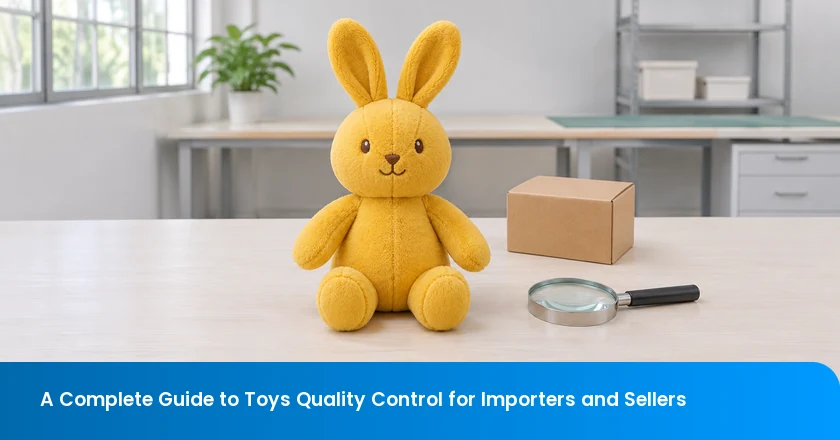
Toy quality control starts with the intended child, product design and destination market, then continues through supplier selection, testing, production, shipment and after-sale feedback. Importers and sellers need a plan that connects those stages to the actual toy being purchased. A useful plan makes the required checks, responsible people and unresolved issues visible before an order moves forward.
Safety, workmanship, function and correct delivery all matter. A well-finished toy can still have an unsuitable component, while a tested design can be manufactured incorrectly. Organize the work early enough to correct both kinds of problem.
Decisions to make before the toy order progresses
- Define the intended age, destinations, toy configuration and customer requirements before selecting tests.
- Connect supplier and laboratory evidence to the materials and construction actually used in production.
- Agree finished-lot checks, sampling and defect actions before inspection.
- Maintain market documents, change records and complaint follow-up through repeat orders.
Build a toy quality-control plan around the product and buyer
Toy quality control connects intended age and destination, product specifications, supplier qualification, sample testing, production controls, finished-lot inspection, market documents and post-sale follow-up. For each order, assign a responsible person and usable evidence to each stage. Record the applicable requirements and agreed acceptance criteria so purchasing, technical staff and the supplier work from the same references.
Begin with how children will actually use the toy. Describe play functions, accessible parts, foreseeable handling, power sources and packaging. Identify the importer, seller, supplier and any agent, then decide who obtains technical advice, arranges samples, approves changes and makes the shipment decision.
Keep safety requirements and commercial quality criteria clear. A cosmetic color variation may be assessed against an approved sample. A detached component that creates a safety concern needs technical escalation and a decision about the affected goods. Putting both observations into a single undifferentiated defect total can conceal the action each requires.
Match the toy to its destination-market requirements
The United States, European Union, India, Japan, Canada and Australia have different regulatory routes. Use the following orientation to brief the person assessing your toy. The applicable tests and documents depend on its age grading, materials, functions and destination, together with any additional retailer requirements.
United States
CPSC toy requirements use ASTM F963-23 through the mandatory toy standard for toys intended for children under 14. Applicable third-party testing and Children’s Product Certificate (CPC) duties generally concern children’s products intended primarily for children 12 or younger. Relevant sections and other rules are product-specific. Determine which requirements apply to the actual construction, including accessible components, coatings, batteries and labeling. A toy-standard report must describe the applicable work performed, and the product may need evidence for additional rules. Age grading should reflect the product’s design and use so the assessment follows the intended child. CPSC toy safety guidance.
European Union
EU toy manufacturers carry out a safety assessment and the applicable conformity procedure, prepare technical documentation and an EC Declaration of Conformity, and affix CE marking and required identifiers and warnings. Importers have corresponding verification, identification and documentation duties. Select the relevant harmonized standards and conformity route for the toy’s requirements, then keep the assessed configuration connected to the goods supplied. A laboratory report is one part of that work. European Commission market-placement guidance.
The current EU toy legislation page describes the Toy Safety Directive and other applicable legislation, including REACH substance restrictions. Regulation (EU) 2025/2509 generally applies from August 1, 2030, including the new digital product passport regime. Separate current obligations from that transition when planning future products. Current toy legislation and transition, digital product passport overview.
India
BIS’s current enforcement notice states that ordinary commercial toys within the Toys Quality Control Order require a valid BIS licence and ISI Standard Mark. Check the actual manufacturer’s licence and scope for the purchased toys. Confirm the applicable standards and licensing route before ordering, including arrangements for an overseas manufacturer where relevant. Match the supplier’s legal manufacturing identity, product scope and marked goods to that evidence. This gives purchasing a specific licensing question to resolve before relying on a sample test report or a sales statement about compliance. Current BIS toy certification enforcement notice.
Japan
Japan’s infant-toy regime applies to relevant toys intended for children under 3 manufactured or imported from December 25, 2025. Responsible manufacturers or importers notify their business, meet technical requirements, inspect and retain records, and provide the Child PSC mark, age and warnings as required. Establish the product’s age and scope before preparing its Japanese labeling. METI infant-toy requirements.
The Japan Toy Association’s ST mark is an industry scheme with its own licensing and testing conditions, separate from the statutory Child PSC regime. Japan Toy Association ST scheme.Japan’s designated toy materials can also be subject to Food Sanitation Act specifications and test methods. Include that material assessment where applicable when defining the evidence package. CAA toy material specifications.
Canada
Canada’s Toys Regulations address product-specific hazards, including mechanical, flammability and toxicological risks. Age and choking warnings are generally encouraged rather than universally mandatory under those regulations. Specific products and packaging have mandatory label rules, and other federal and provincial requirements can apply. Identify which labeling category the toy actually enters, including any language requirements, and select appropriate testing methods for its materials and construction. Keep the mandatory requirements and additional recommended warnings separately identified in the artwork brief so a generic bilingual-label checklist does not replace the product assessment. Health Canada toy safety guide.
Australia
Australia has a mandatory standard for toys for children up to and including 36 months. Actual intended use and recognized suitability matter, so an older-age label alone does not remove a suitable young-child toy from scope. Other applicable standards and bans depend on the product. Assess age suitability, accessible small parts and construction, then identify additional requirements for features such as batteries or magnets. The laboratory brief should identify the relevant mandatory provisions and test route for that product, with the resulting evidence linked to its actual configuration and packaging. ACCC young-child toy standard.
Qualify the supplier and agree responsibilities before ordering
Evaluate the proposed factory’s relevant toy experience, actual processes, material controls, capacity, subcontracting and response to defects. Separate product quality assessment from any buyer-required social or environmental audit, and agree agent and supplier responsibilities. An agent can coordinate communication and samples, while purchasing still needs to know which factory and processes will make the order.
For China sourcing, establish the manufacturing location and any outsourced molding, printing, coating or assembly. Request relevant examples and a practical explanation of how the factory controls those processes. A quality-system certificate can inform the discussion, while a site assessment and production evidence address the specific manufacturing work.
Translate the findings into the purchase arrangement. Define approved references, sample submission, inspection access, change notification, defect handling and records to be supplied. If an important process is subcontracted, agree how its materials and results enter the same controls. Discuss realistic production and correction time before the delivery commitment leaves little room to address findings.
Test representative samples against a defined product specification
Define the toy’s intended age, foreseeable use, destination, materials, bill of materials (BOM), drawing and sample revisions, components, packaging and labels before selecting the applicable tests. Link each laboratory sample to that controlled configuration. Record color and material variants so the technical reviewer can determine whether the proposed sample set represents them.
Ask the laboratory to explain which mechanical, physical, chemical, flammability or electrical checks apply, which samples it needs and which methods it will use. Chemical testing assesses specified substances under specified conditions. The report should identify the sample, methods, results and limitations clearly enough to compare them with the purchased product.
For applicable US children’s product requirements, use a laboratory that CPSC accepts for the relevant rule. Its accepted scope matters when selecting who performs the required testing. CPSC third-party testing requirements.
Review results before authorizing the corresponding production configuration. If the report lacks a material identity, model variant or applicable test, assign that gap for resolution. Purchasing can then distinguish a completed assessment from a pending sample submission, technical clarification or corrective action.
Keep approved materials and construction under control in production
Check incoming materials, first pieces, process settings, assemblies and packaging against the approved references. Record deviations and require agreed technical review of material, component, factory or construction changes before they enter the order. Keep the quality-control records linked to the toy order so later inspection can identify the affected quantity.
Choose checks around the toy’s failure modes. Plush construction may require attention to seam closure and attachments. Molded toys may need checks for flash, sharp edges, fit and component retention. Battery-operated toys introduce assembly and functional questions specific to their design. Define the actual method, equipment and criterion before expecting a factory or inspector to report a result.
When a defect appears, investigate where it began and which goods share that condition. Correct the material or process, identify affected work in progress, and verify the correction against the agreed requirement. A photograph of a repaired sample leaves the rest of the affected quantity unresolved unless that quantity has also been addressed.
Inspect the finished lot and record the sampling decision
TradeAider pre-shipment inspection is scheduled when the order quantity is 100% complete and at least 80% packed for export. Agree the references, sampling plan, checks and report, including observed discrepancies and any work that could not be performed.
Cover quantity, assortment, workmanship, dimensions, agreed functions, packaging, labels and carton information as relevant to the order. Make required equipment and samples available. Record which checks were completed and identify pending laboratory or technical questions that affect the shipment decision.
NIST explains that acceptance sampling uses a random sample to decide whether to accept or reject a lot. Its main purpose is a lot disposition decision rather than estimating lot quality. NIST acceptance-sampling explanation.
Where an acceptance quality limit (AQL) plan is used, record the standard or agreed scheme, lot definition and size, inspection level and severity, defect classes, AQL values, sample size and acceptance/rejection numbers. Derive them together from the selected plan. Address a suspected safety hazard through the applicable safety criteria and technical response, even when the workmanship count is within its acceptance number.
The buyer’s disposition should state whether the lot can proceed, needs correction and reinspection, or remains on hold for missing evidence. Preserve both the initial findings and the later verification so the final decision has an understandable basis.
Complete the market documents, labels and import handoff
Match reports, product identifiers, responsible business details, instructions, warnings and required marks to the destination configuration. Check the artwork used on actual goods and packaging. File the applicable declaration or certificate with the supporting test and production references so the importer can retrieve the basis for that shipment.
The responsible US domestic manufacturer or importer issues the Children’s Product Certificate on the basis of applicable testing. A laboratory report supplies evidence but does not transfer that certifier’s responsibility. CPSC certificate guidance.
CPSC’s certificate eFiling requirements for most imported regulated consumer products took effect on July 8, 2026. Products withdrawn from a Foreign Trade Zone for consumption or warehousing have a January 8, 2027 implementation date. Coordinate the applicable certificate-data handoff with the party handling entry. CPSC eFiling FAQ.
For other destinations, use the responsible-party and document route identified during market assessment. Resolve missing model coverage, inconsistent business names or obsolete artwork before relying on the file for the shipment.
Maintain controls through repeat orders and after sale
Keep repeat-order references current, name an owner for regulatory and customer-program updates, train affected teams, and link production and inspection records to lot and complaint information. Escalate a suspected safety issue for prompt assessment and applicable action. Review whether stock, customers or other lots could be affected, and identify the responsible person for any required reporting, withdrawal or recall assessment.
For US children’s products, after initial certification a material change affecting compliance requires testing of the affected product or component and a new CPC based on passing results. Continuous production also has periodic testing requirements. CPSC material-change and periodic testing guidance. Plan those obligations alongside the actual requirements for other destinations.
A shared digital register can connect the current BOM, reports, labels, lots, corrective actions and complaints. Set access and revision controls so old files remain distinguishable from current instructions. Review supplier performance using actual recurring defects and response effectiveness. Update the next order’s controls when the evidence identifies a recurring weakness.
Illustrative example of a plush-toy seam change
In this illustrative plush-rabbit order, the approved sample passed its applicable tests, but production introduces a different seam setup and thread. During an agreed construction check, a seam opens and exposes stuffing. The buyer holds the affected goods while the factory establishes when the change began and which units share it.
Compare the production construction with the approved sample and technical references. Have the supplier correct the process and identify how affected units will be repaired or replaced. The technical reviewer determines which safety assessments or tests the change affects and what evidence is needed before release.
Record the changed thread and setup, affected quantity, correction, required retesting and reinspection result in the order file. If the change affects US compliance after initial certification, apply the material-change testing and certificate steps described above. If the seam requirement or tested construction cannot be established, keep that decision open and obtain the missing reference. This hypothetical example shows how to act on a configuration change without inventing a test force or a customer result.
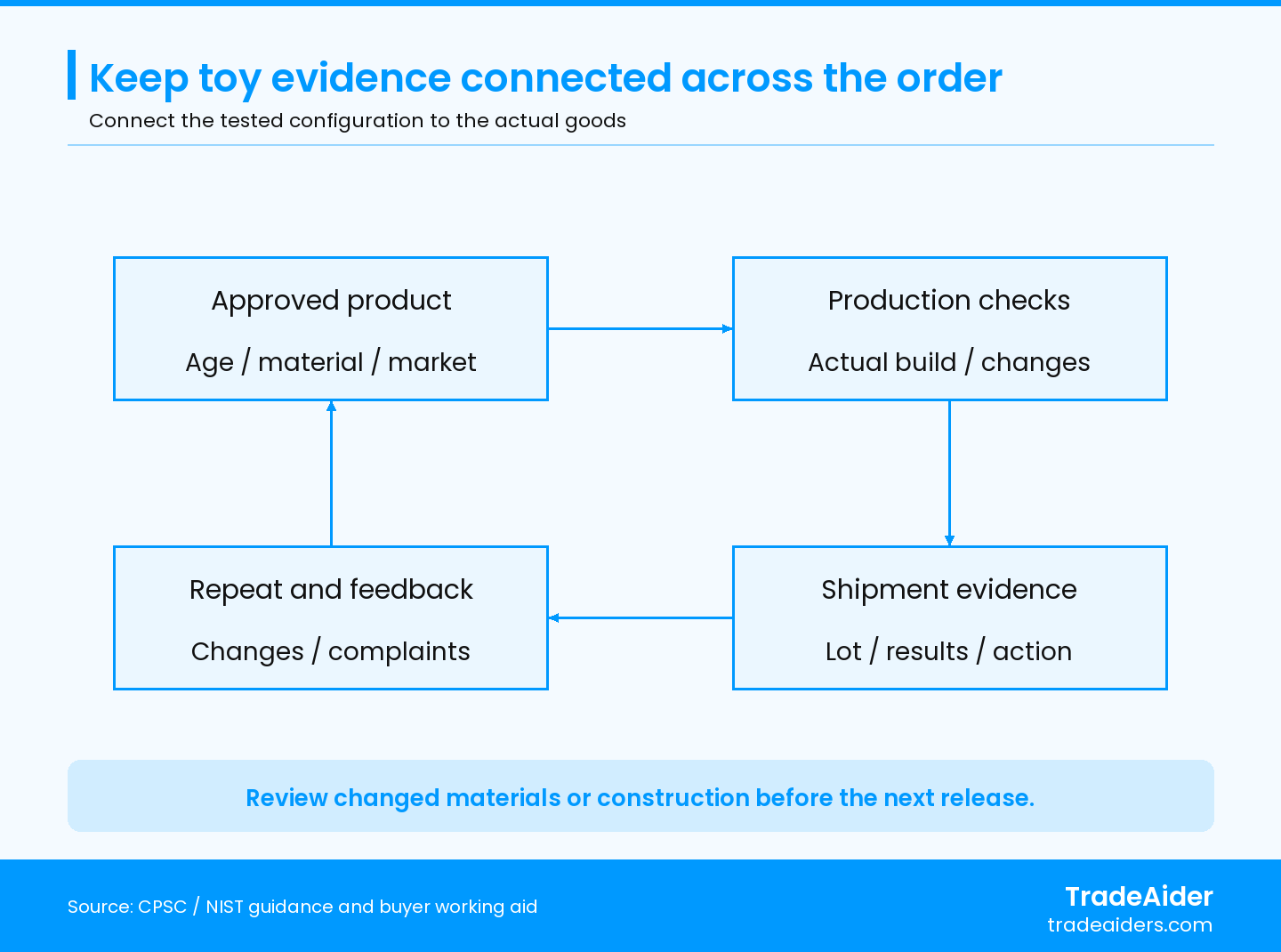
Working aid. Keep each toy configuration linked to production, shipment and later change evidence.
Use a lifecycle quality-control record for each toy order
For each toy order, record the controlled reference, observed result, unresolved action and its owner across the stages below. Use the record for the agreed quality-control review. Unknown acceptance criteria remain open actions before the relevant decision. Enter the actual document revision or result in each blank, together with the responsible person and due point.
| Stage | Check and controlled reference | Observed result and next action |
|---|---|---|
| Product and market | Age, destinations, functions, BOM, artwork and applicable requirements. Revision ___ | Confirmed scope / missing criterion ___. Owner / due point ___ |
| Supplier | Actual factory, processes, capacity, subcontracting and agreed duties. Reference ___ | Evidence reviewed / unresolved process ___. Action / owner ___ |
| Sample testing | Sample identity, variants, methods and applicable laboratory scope. Report ___ | Covered configuration / missing test ___. Action / owner ___ |
| Production | Incoming materials, first pieces, construction and changes. Lot / reference ___ | Deviation / affected quantity ___. Correction / owner ___ |
| Finished lot | Readiness, sampling plan, functions, packing and labels. Inspection ___ | Findings / unavailable check ___. Disposition / follow-up ___ |
| Market documents | Applicable certificates, declarations, marks and import-data handoff. File ___ | Matched product / outstanding item ___. Owner / due point ___ |
| Repeat orders | Current references, material changes, updates and required retesting. Revision ___ | Change impact / new evidence ___. Action / owner ___ |
| After sale | Complaints, lot identification and safety escalation. Record ___ | Affected goods / assessment ___. Responsible action / owner ___ |
For the rabbit example, the production row records the changed seam and affected goods. The testing and finished-lot rows track the evidence needed to close that issue. A corrected sample alone leaves those actions open until the responsible people record their results.
Prepare the inspection request from available order information
Start an inspection inquiry with available toy product and order information, factory, destinations, timing and known concerns. Share existing samples, specifications and reports, and identify missing information. Before the visit, agree the applicable technical references, sampling, feasible checks and report outputs for quality control. Contact our team to discuss an inspection scope and a report of the agreed checks, findings and limitations.
FAQ
Can a small toy order use a simpler quality-control plan?
A small order can use a proportionate quality-control inspection plan, but quantity alone does not remove applicable product-safety and certification requirements. Discuss lawful evidence routes and agreed inspection coverage early. Group variants only when the technical basis supports doing so, and compare the cost of resolving an uncertain product configuration before committing to the order.
Can one toy configuration be sold in several markets?
It can, if that configuration satisfies each intended market’s applicable requirements. Map the differences before approving shared packaging or stock. Where instructions, marks, warnings or components differ, identify the market variant in the order and warehouse records. This helps prevent goods prepared for one destination from being sent to another without the necessary assessment.
What if the supplier will not identify a material or tested model?
Keep the affected test or conformity conclusion unresolved until the supplier supplies traceable information or the product is reassessed. State exactly which material, model or construction detail is missing and why it affects the decision. Purchasing can then request the evidence, obtain technical reassessment or change the supply arrangement before authorizing the affected goods.
Artigos Relacionados
Expanda seu negócio com o Serviço TradeAider
Clique no botão abaixo para entrar diretamente no Sistema de Serviço TradeAider. Os passos simples desde a reserva e pagamento até o recebimento de relatórios são fáceis de operar.

