
- Sobre Nós

- Nossos Serviços
- Sua Indústria
- Recursos
- Notícias e Blog
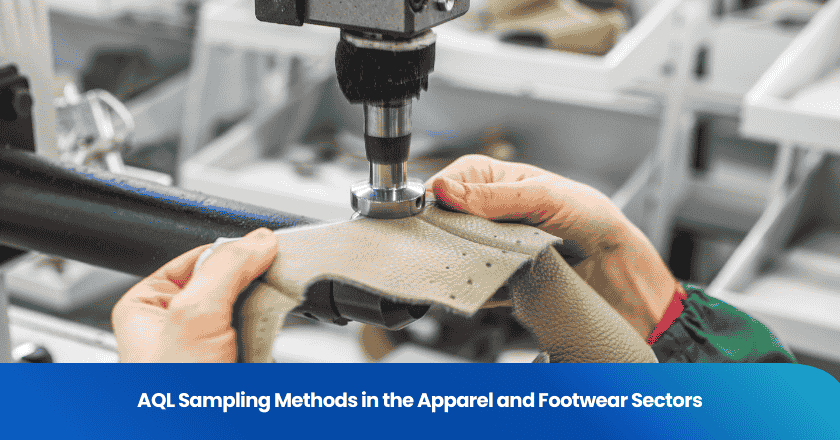
AQL sampling methods in apparel and footwear work by selecting a defined number of pieces from a defined lot, spreading samples across styles, sizes, colors, cartons, and production subgroups, then classifying defects as critical, major, or minor against agreed acceptance limits. For importers, the method only becomes useful when sampling is tied to measurement, workmanship, label, packing, safety, and reinspection decisions.
ISO 2859-1:2026 is the central reference for AQL-indexed sampling by attributes. It helps buyers decide how many units to inspect and what acceptance number applies, but the standard does not know whether a seam, sole bond, size label, heel mark, fiber label, or color mismatch matters to your buyer.
That product judgment belongs in the inspection file. Apparel and footwear are especially vulnerable to subgroup risk because one order may contain several styles, sizes, colors, fabrics, trims, lasts, soles, production dates, and packaging versions.
Label and composition checks also matter. The FTC textile and wool guidance explains that textile labeling can involve fiber content, origin, and identity information. If the product claim or market requires accurate labeling, the AQL inspection checklist should include label evidence.
For clothing safety, CPSC clothing guidance points to flammability requirements and children's product obligations. AQL appearance sampling cannot replace required testing, but it can verify whether visible labels, product identity, and sample coverage are consistent with the buyer file.
- AQL is not random picking: sample size, lot size, inspection level, and acceptance number should be defined before the visit.
- Spread matters in apparel and footwear: samples should represent style, color, size, carton, production date, and high-risk subgroup.
- Defect severity must be product-specific: wrong fiber label, broken seam, failed sole bond, missing accessory, and small loose thread are not equal.
- Inspection and testing are different: AQL can find visible and measured defects, but hidden composition, flammability, or durability claims may need testing.
How Should AQL Sampling Be Used for Apparel and Footwear?
For apparel and footwear, AQL sampling should start with a real lot map, choose the sample size from the agreed inspection level and lot size, spread samples across styles, sizes, colors, cartons, and production dates, classify defects by buyer consequence, check measurements and workmanship, verify labels and packing, then decide release, sort, rework, retest, or reinspection.
AQL does not mean zero defects. It is an acceptance-sampling method that helps the buyer decide whether a lot is acceptable based on the sample result. In apparel and footwear, that decision can be distorted if the sample is pulled from one easy size, one top carton, or one color while the order contains many subgroups.
TradeAider's AQL calculator can help importers plan sample size, but the buyer still needs to define severity. A broken needle hazard, wrong care label, open seam, failed zipper, visible stain, poor sole adhesion, wrong size marking, and small thread end should not share one category.
The Flammable Fabrics Act guidance is a reminder that some apparel risks sit outside ordinary visual inspection. AQL can verify visible product and label evidence; testing is needed where a hidden safety or material claim must be proven.
AQL Sampling Methods for Apparel and Footwear
Use the sampling method to protect the buyer from subgroup risk, not only to meet a sample-size number.
| AQL Step | Apparel Example | Footwear Example | Buyer Decision |
|---|---|---|---|
| Define the lot | Style, color, size, fabric, carton, production date | Style, size run, color, sole type, carton | Know what the sample represents |
| Choose sample size | Lot size and inspection level | Lot size and inspection level | Set acceptance logic before findings |
| Spread samples | Pull across sizes, colors, carton ranges | Pull across sizes, left/right pairs, colors | Avoid hiding subgroup defects |
| Classify defects | Open seam, stain, wrong label, shade mismatch | Sole gap, glue mark, size error, broken eyelet | Apply critical, major, minor rules |
| Check measurement | Garment points of measure and tolerance | Length, width, pair matching, fit points | Control fit and sizing complaints |
| Verify labels and packing | Care label, fiber label, hangtag, polybag, carton | Size label, barcode, shoebox, stuffing, carton | Protect receiving and selling |
| Set action | Release, sort by color, rework seam, reinspect | Release, sort pairs, rework glue, retest | Turn report into shipment decision |
The strongest AQL plan for apparel and footwear often includes a style or SKU allocation table. If one order has ten colors but the sample is not spread across colors, shade, stain, trim, and label risks can be missed. If footwear samples ignore left/right pairs or size extremes, fit and pair-matching problems may remain hidden.
The buyer should also decide whether some checks are 100% within the sampled units. For example, every sampled garment may need label and measurement checks, while only some units need more time-consuming functional or stress checks. The method should be clear before the inspector starts.
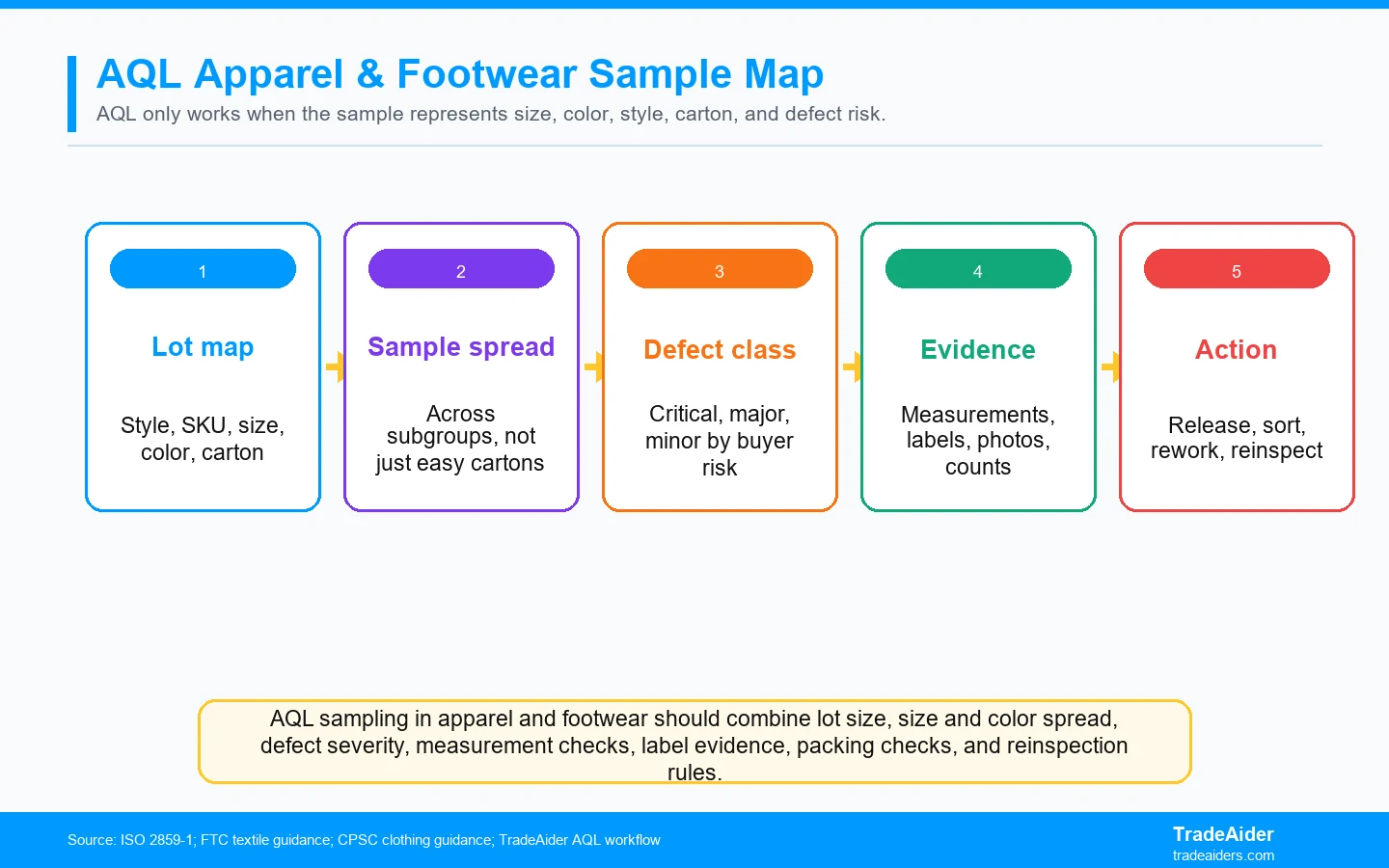
AQL sampling in apparel and footwear should combine lot size, size and color spread, defect severity, measurement checks, label evidence, packing checks, and reinspection rules.
AQL Sampling Starts With the Real Apparel or Footwear Lot
AQL is only as representative as the lot definition and sample spread that support it.
Mixed orders need subgroup visibility
Apparel and footwear orders rarely behave like one uniform lot. A single purchase order may include several styles, fabric lots, colors, sizes, linings, trims, outsole materials, cartons, production dates, and subcontracted processes. The sampling plan should identify those subgroups before inspection.
If a defect is concentrated in one color, one size, one production date, one carton range, or one subcontracted operation, a simple average defect count can understate the risk. The report should show where the samples came from and where defects were found.
Size and color spread should be planned
For garments, size extremes can reveal grading, measurement, shrinkage, seam, and fit problems. For footwear, size extremes and left/right pair matching can reveal last, sole, upper, label, and packing issues. Color spread matters because shade, stain, trim, and print defects may not appear in every color.
The sample spread does not need to inspect every possible combination at full depth, but it should be deliberate. The buyer and inspector should agree which subgroups are high risk and how the sample will cover them.
Defect Severity in Apparel and Footwear Should Follow Buyer Consequence
AQL limits are useful only after the buyer defines what counts as critical, major, and minor.
Workmanship defects need product-specific examples
Common apparel defects include open seam, skipped stitch, oil stain, shade variation, wrong trim, broken zipper, loose button, incorrect print placement, poor ironing, measurement out of tolerance, and wrong care label. Common footwear defects include glue mark, sole gap, wrong size label, broken eyelet, poor pair matching, color difference, deformed upper, and weak stitching.
Severity depends on where the defect appears and what the buyer promised. A small loose thread inside a seam may be minor. An open seam at a stress point may be major. A sharp object, needle fragment, or unsafe component can be critical.
Measurement failures should not be hidden under appearance
Garment measurement and footwear fit are frequent sources of buyer complaints because the product can look acceptable in a photo but fail in use. The checklist should specify measurement points, tolerance, method, and sample count.
For garments, points of measure may include chest, waist, hip, length, sleeve, shoulder, inseam, and opening. For footwear, checks may include pair length, width, size marking, heel height, outsole alignment, and left/right consistency. The report should show which sizes were measured.
Labels, Claims, and Packaging Need Separate Evidence
AQL sampling should include product identity and selling-channel evidence, not only workmanship.
Label checks protect product identity
Fiber label, care label, size label, origin marking, hangtag, barcode, warning label, retail sticker, polybag warning, and carton mark can all affect receiving and sale. If these are wrong, a clean seam and good outsole will not solve the shipment problem.
The inspector should photograph representative labels clearly and record mismatch counts. If one carton group has old labels and another has new labels, the report should separate the groups instead of blending them into one result.
Packaging should reflect the sales channel
E-commerce, retail, wholesale, and marketplace programs can have different packaging risks. Apparel may need correct polybag size, barcode, suffocation warning where applicable, folded presentation, carton assortment, and moisture control. Footwear may need shoebox condition, stuffing, size sticker, pair separation, and carton compression protection.
These checks belong in AQL inspection because packaging failures often become receiving issues, returns, or customer complaints even when the product itself is acceptable.
Reinspection and Sorting Rules Should Be Written Before the First Result
AQL methods are incomplete if the buyer has no rule for what happens after a failed lot.
Failed AQL is a decision point, not the end of the conversation
When a lot fails because of concentrated defects, the buyer may ask for sorting by affected color, size, production date, or carton group. When defects are random and minor, the buyer may negotiate correction or accept with reservation. When defects are critical or safety-related, the buyer should hold release until risk is resolved.
The reinspection rule should say whether the supplier must rework all goods, sort a subgroup, provide corrective evidence, open more cartons, retest, or invite reinspection. Without that rule, failed AQL can lead to a long debate while the shipment deadline moves closer.
Supplier correction needs evidence, not only a promise
For apparel, correction evidence may include repaired seams, replaced labels, cleaned stains, sorted shade groups, adjusted measurements, or refolded packing. For footwear, it may include reglued soles, sorted pairs, corrected size labels, replaced boxes, or cleaned upper defects.
The buyer should ask for photos, counts, and affected-carton identification before reinspection. Otherwise, the second inspection may repeat the first one without confirming whether the supplier corrected the real subgroup.
Scenario Estimate: A Small Size-Spread Miss Can Create Many Returns
Apparel and footwear sampling errors often hide in the sizes the inspector did not check.
Assume a footwear order has 8,000 pairs across eight sizes, but the inspection sample overrepresents middle sizes because those cartons were easiest to access. If the smallest and largest sizes have a 4% pair-matching problem, about 80 pairs may be affected in those two size groups alone.
If each return or replacement exposure costs $9 in freight, handling, support, and resale loss, that subgroup can create about $720 in direct exposure before counting customer dissatisfaction or marketplace performance impact. A planned size-spread rule would have made the risk visible before shipment.
This estimate is not a universal formula. It shows why apparel and footwear AQL should be planned around real subgroup risk, not only around total lot size.
Where TradeAider Fits in Apparel and Footwear AQL Inspection
TradeAider helps apparel and footwear importers build AQL inspection plans that cover lot structure, size and color spread, workmanship, measurement, labels, packing, evidence photos, and reinspection rules.
For shipment release, Pre-Shipment Inspection can apply the AQL plan to finished and packed apparel or footwear, with sample spread across styles, sizes, colors, cartons, and production groups.
If defects are likely to spread during sewing, assembly, bonding, finishing, or packing, During Production Inspection can check early output and correction evidence before all goods are packed.
When composition, flammability, restricted substances, durability, or performance claims need proof beyond visual inspection, TradeAider can coordinate product testing services alongside the AQL inspection plan.
SPAR Scenario: The Sample Passed, but One Color Failed
A better AQL spread isolated a color-specific defect before the second shipment.
Situation: An apparel importer ordered five colors of the same garment from a repeat supplier.
Problem: The first inspection sample was clean, but customer returns later showed shade staining in one dark color.
Action: TradeAider rebuilt the AQL plan with color allocation, carton range notes, stain checks, label photos, and measurement records.
Result: The buyer held 1,100 dark-color units for sorting, released the four clean color groups, and added a stain check to the next purchase order instead of rejecting the full lot.
AQL Sampling Checklist for Apparel and Footwear
Plan the sample so the report represents the product variation buyers will actually receive.
- Confirm lot size, carton count, style, SKU, color, size, production date, and packing version.
- Choose inspection level, AQL, sample size, and sample spread before the factory visit.
- Define critical, major, and minor defects with apparel or footwear examples.
- Set measurement points, tolerances, sample count, and tool method.
- Photograph labels, barcodes, care information, size marks, packing, and carton marks.
- Write release, sort, rework, retest, and reinspection rules before the report arrives.
The buyer should update the AQL plan after every return pattern, fit complaint, label issue, shade problem, or packing failure. Apparel and footwear quality improves when repeated field signals become the next inspection rule.
AQL sampling is strongest when the buyer knows what the sample represents. If the lot structure is unclear, fix that before arguing about acceptance numbers.
If your apparel or footwear order includes multiple styles, sizes, colors, labels, cartons, or defect risks, send TradeAider the style list, size and color breakdown, PO, approved sample, top defects, and packing plan. The next step is to plan an apparel or footwear AQL inspection before shipment release.
Frequently Asked Questions
Does AQL mean no defects in apparel or footwear?
No. AQL is an acceptance-sampling method. It helps judge whether a lot is acceptable based on sampled defects and agreed limits, but it does not guarantee zero defects.
How should samples be spread for apparel inspections?
Samples should be spread across styles, sizes, colors, carton ranges, production dates, and high-risk subgroups instead of being pulled only from accessible cartons.
What defects are usually major in footwear inspections?
Major defects often include sole separation, wrong size label, poor pair matching, broken eyelet, visible glue mark, damaged upper, failed function, or packing errors that affect saleability.
Should labels be part of AQL inspection?
Yes. Fiber, care, origin, size, barcode, warning, and carton labels can affect compliance, receiving, selling, and returns, so they should be checked where relevant.
When should apparel or footwear be reinspected?
Reinspection is useful after supplier sorting or rework when the first report shows failed AQL, concentrated defects, label errors, measurement failures, or unresolved safety evidence.
Artigos Relacionados
Expanda seu negócio com o Serviço TradeAider
Clique no botão abaixo para entrar diretamente no Sistema de Serviço TradeAider. Os passos simples desde a reserva e pagamento até o recebimento de relatórios são fáceis de operar.

