
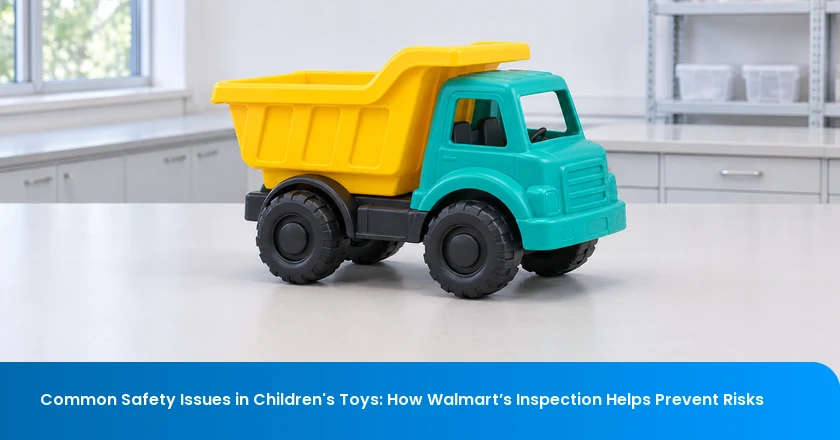
Common toy safety issues include small parts, hazardous substances, sharp edges, flammable materials, dangerous cords and accessible batteries. Walmart addresses these risks through applicable supplier requirements, testing, documentation and follow-up. Physical inspection adds evidence about the actual production lot, including construction, condition, labeling and packaging.
For a toy supplier, prevention begins with the toy’s intended age, design, materials and selling channel. A plush animal, a pull-along toy and a battery-operated truck need different safety assessments. Identify those differences before requesting a test report or booking an order inspection. The US supplier and Marketplace requirements below were checked in November 2026.
Connect each toy hazard to the evidence that addresses it
- Define the actual toy, intended age, materials, accessories and destination.
- Select the applicable tests and the Walmart channel’s documentation route.
- Inspect current goods against approved construction and pack references at the required stage.
- Resolve failures, changes and missing evidence through a recorded corrective process.
What Walmart’s toy-safety checks need to establish
Walmart expects suppliers to meet applicable laws and Walmart-specific requirements, provide documented verification when requested and submit products for testing where required. These expectations connect the product’s safety assessment with the evidence the supplier must maintain. Walmart product-safety expectations.
CPSC’s current US toy guidance identifies ASTM F963-23 for current production. The applicable requirements depend on the toy, intended age and manufacture date. Establish the destination and current production context before choosing the test program. CPSC toy-safety guidance and version table.
Start the file with the model, selling configuration, intended users, material list, battery specification and available approved references. For another destination, assess that market’s applicable rules separately. Keep the requirement source and version with the file so the laboratory and inspector work from the same reference set.
Give each participant a clear task. The laboratory evaluates the submitted toy or material against the applicable test methods. The order inspector records the agreed observations and checks on sampled goods. The responsible manufacturer or importer prepares the required certification, and the seller follows the relevant retailer submission process. This division makes missing work visible before shipment.
Common toy hazards and the checks they need
Assess toy hazards from the design, materials, intended age and components supplied with the product. Use the resulting list to assign physical checks and laboratory evidence. Consider the toy as received and what can become accessible or detach during the applicable use-and-abuse assessment.
Small parts and detached components
The US small-parts ban covers applicable products intended for children under 3. A small part can be a whole item, a separate component or a piece released during use-and-abuse testing. Assess the actual product scope, including the stated exclusions and any additional requirements for that toy type. CPSC small-parts guidance.
Identify decorations, wheels, buttons, fasteners and other attachments that could come loose. For a stuffed toy, include eyes, noses and seam openings in the construction review. Agree the relevant retention and use-and-abuse methods with the testing team. During order inspection, compare attachment construction with the approved reference and record looseness, missing fasteners or an opened seam.
Keep a detached component with the sampled unit’s identity and photographs. The follow-up record should show where it came from and which procedure produced it. A small-parts assessment needs the specified cylinder and applicable method, including the correct treatment of materials and toy categories.
Lead, phthalates and other regulated substances
CPSC distinguishes paint and surface-coating requirements from accessible substrate requirements and identifies applicable soluble-element requirements. Map the tested material to the actual toy. A paint result and a result for the material beneath it answer different chemical questions. CPSC material requirements.
CPSC’s phthalate guidance addresses specified phthalates in accessible plasticized components of covered toys and child-care articles. Conditional testing determinations preserve the underlying compliance responsibility. Have the laboratory identify the relevant material and any qualifying determination. CPSC phthalate guidance.
Request material and formulation identifiers for paints, soft plastics, printing and other relevant components. Match report photographs and descriptions to the current colors, material suppliers and production version. An inspector can record a material substitution or a changed finish. Chemical concentrations require suitable test evidence for the material in question.
Sharp edges, points and breakage
CPSC toy guidance addresses accessible edges and points before and after applicable use-and-abuse testing, with age and functional-design conditions. Those conditions determine the relevant assessment for a particular toy. CPSC mechanical-safety guidance.
Look for plastic flash, exposed fasteners, splinters, cracked housings and rough cut edges. Consider mechanisms such as hinges, folding joints and moving axles where access or breakage can create a hazard. Compare the current construction with the tested and approved reference, including fastener placement and protective covers.
Use the specified test method and equipment for formal edge, point or mechanical assessments. Describe a visible crack and its location precisely. If a planned test cannot be completed, identify the missing equipment or condition and the follow-up required. Keep the observation, test result and technical disposition distinguishable in the report.
Flammable materials
The flammability provision in ASTM F963 restates an existing flammable-solids ban. CPSC’s chart therefore treats it separately from the incorporated toy-standard requirement. Flammability remains part of the applicable safety assessment. CPSC requirements chart and flammability note.
Identify the actual fabric, filling, hair, decorative trim and other relevant materials. Ask the testing team which requirements and assessment apply to the toy or costume configuration. During order inspection, compare those materials with the approved specification and record substitutions. Use the prescribed laboratory or controlled testing route for the required flammability evidence.
Cords, loops and packaging
CPSC identifies toy-specific requirements for cords, straps, elastics and certain plastic film, including packaging. Applicability and performance depend on the actual toy and age group. Identify the relevant construction before selecting length, loop or film checks. CPSC cord and plastic-film guidance.
Put pull cords, carrying straps, elastic attachments and accessible loops on the inspection brief. Record their attachment points and the agreed dimensions or performance criteria. For bags and film, identify the packaging material, size and applicable thickness or perforation route. Select the actual requirement before deciding what the inspector must measure.
Check how packaging and ties are removed and whether a component is intended to remain with the toy during play. Keep the consumer pack and instructions available for assessment. A product photograph alone can omit the bag, accessory cord or fastening arrangement that the child receives.
Battery access and electrical or thermal hazards
Battery-powered toys need a battery-system assessment covering the intended cells, compartment construction, access, labeling and applicable electrical or thermal requirements. Record battery type and quantity, door and closure design, polarity information and any supplied charger. Compare these details with the report and approved construction.
CPSC explains a conditional exception from the button-cell consumer-product rule for toys for children under 14 that comply with toy battery-accessibility and labeling requirements. Separately supplied button or coin batteries can have packaging requirements. Apply the actual toy and battery scope when choosing the testing and packaging route. CPSC battery guidance and toy exception.
During the agreed inspection, compare the closure and fastening details, check intended operation and record damage or unusual behavior. Battery-access and thermal testing need their specified conditions. A smooth initial function check leaves those formal test questions to the applicable assessment. Include any batteries supplied loose in the pack when reviewing packaging evidence.
How Walmart’s requirements organize prevention
Walmart’s safety controls work through the requirements applicable to the item and selling arrangement. First identify whether the work concerns a supplier testing program, Marketplace listing documentation or both. Use the current item instructions, assigned laboratory route and relevant Walmart contacts to determine the required submissions.
Walmart’s public US manual distinguishes brand type and importer roles. Production samples must represent actual production lots with packaging and labeling, and direct-import production submissions require third-party sample sealing. Walmart public manual, testing cycles.
The public manual directs suppliers to detailed item protocols and assignments in Retail Link, Walmart’s supplier system. Obtain the instructions for the actual department and program. Record required sample selection, submission, testing and document steps before the production schedule is fixed. Keep each factory and material version identifiable through that process.
Walmart Marketplace requires covered children’s products to have a valid Children’s Product Certificate, or CPC, and a corresponding CPSC-accepted laboratory report. Both must be in English. Sellers upload the requested records through Seller Center when asked. Walmart Marketplace children’s-product policy.
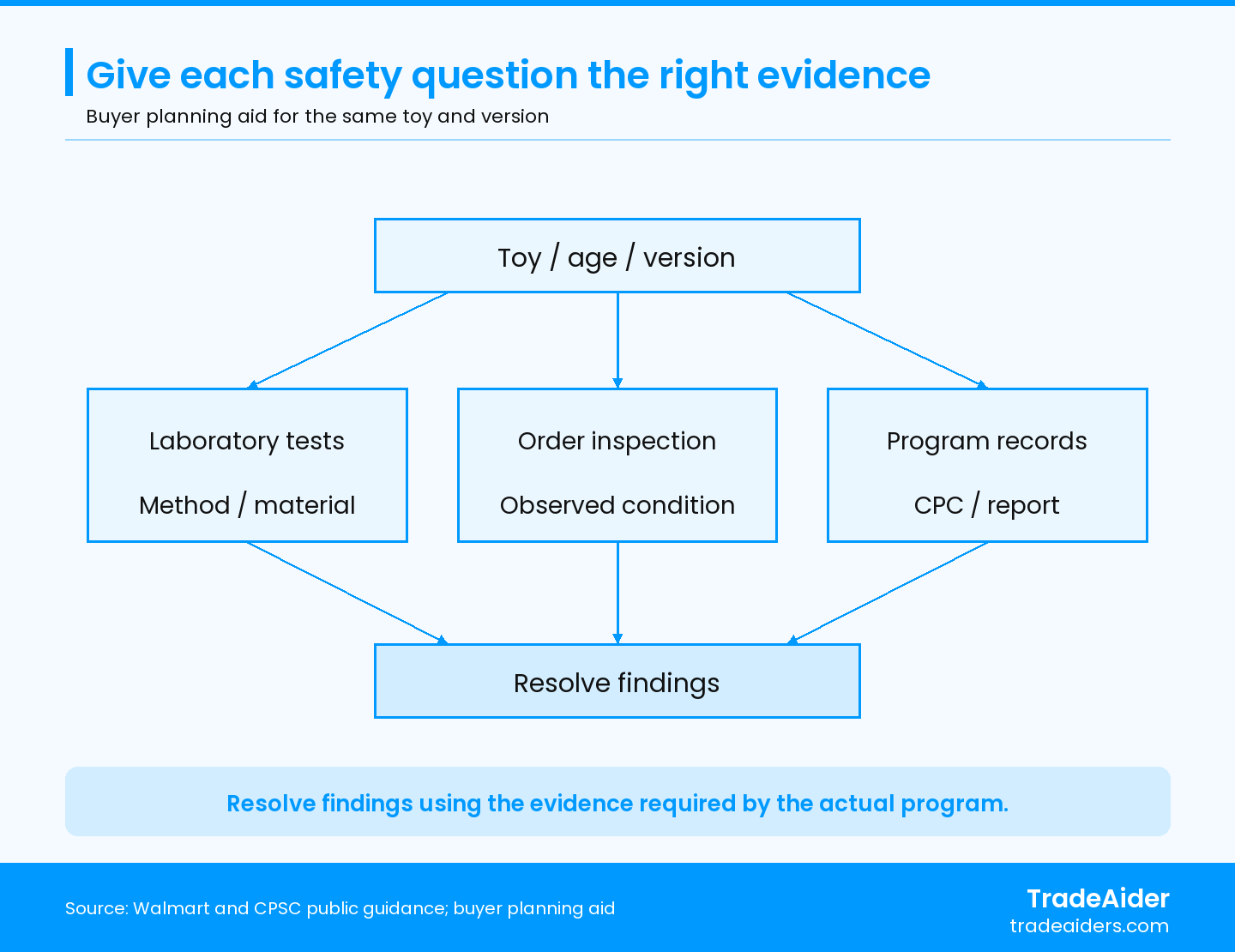
Buyer planning aid based on public guidance. Use current item-specific instructions and resolve outstanding findings.
Walmart describes separate product-testing and facility-oversight programs with requirements depending on product and sourcing scope. Responsible-sourcing audits use a risk-based approach to facility oversight. Identify the purpose of each requested audit or report in the toy’s file. Walmart audits, certifications and testing.
These controls help at different points. Early testing can identify a material or design issue before wider production. Production evidence connects the assessment to the manufactured item. Inspection can reveal an attachment defect or substitution in current goods. Corrective follow-up addresses the finding and checks the resulting change.
Inspect the production lot at the required stage
The final-inspection stage described in Walmart’s public US manual starts once a purchase order is 100% produced and packed. Use the applicable item and program instructions to establish the required readiness for the order. Walmart public manual, final inspection.
TradeAider’s standard pre-shipment inspection readiness is an order quantity that is 100% complete and at least 80% packed for export. For a Walmart assignment requiring the manual’s final-inspection stage, schedule the check after the order is fully produced and packed. Confirm that required samples, packs and references will be accessible at that stage.
Provide the approved toy specification, construction reference, applicable test evidence, age grade, labels, instructions and pack configuration. Agree the sampling approach, defect classifications and checks the site can support. The brief should identify which construction or material differences require escalation.
On the sampled units, compare current attachments, seams, closures, housings and accessories with the approved reference. Check agreed operation and inspect packaging, warnings and product identification. Photographs should show the issue in context and connect it to the sampled unit and lot. Record both completed checks and any limitations.
Keep safety-related observations available for the responsible technical and retailer-program decision. A broken battery door needs a clear finding and containment action even if routine appearance or carton checks were acceptable. The report should make that finding easy to locate and follow through.
Close findings and assess changes
Walmart’s public manual calls for full testing after a material or factory change. Assess the changed toy against the actual program instructions and resolve the required testing before proceeding. Walmart material and factory changes.
Illustrative scenario. A battery-operated toy truck has a substituted plastic housing. During agreed inspection handling, a hinge cracks and the battery door detaches. The supplied report covers the original housing. The buyer records the changed material and physical finding, holds the affected lots, and identifies the factory’s material and production records needed to determine the scope.
The supplier investigates the hinge failure and proposes a corrected construction or return to the approved material. The buyer follows the applicable program’s change and testing route. Corrected samples and later production checks need to address both the housing identity and the door finding. Keep the evidence with the affected-lot record before recording the final disposition.
For a test failure, Walmart’s public manual requires correction and retesting or verification with a corrective action plan. The plan must be approved before the corrected product is submitted for retest. Follow the program’s responsible approval route for that failure. Walmart failure-management process.
Walmart tells suppliers to inform it immediately if products fail regulatory or Walmart-specific requirements or pose an unreasonable risk of injury, and to participate in the resulting investigation or removal. Apply the required notification and follow-up to the actual finding and distribution status. Walmart product-safety notification expectations.
Use one toy-safety preparation record
Use a buyer working record linking toy identity, hazards, required evidence, physical findings, changes and the responsible follow-up action. Keep an unresolved item open with a named owner. The structure below is a recommended preparation aid that the team can adapt to its program.
| Field | Complete for this toy | Closing check |
|---|---|---|
| Product and program | Model ___ / age ___ / destination ___ / Walmart channel and program ___ | The actual selling configuration is identified. |
| Hazard and reference | Part/material ___ / hazard ___ / applicable requirement or protocol ___ | The check addresses the identified risk. |
| Test and documents | Sample/version ___ / laboratory and scope ___ / report ___ / CPC or other required record ___ | Evidence covers the current toy and material. |
| Order inspection | Lot ___ / readiness ___ / sampling and checks ___ / finding/photo ___ | The completed checks and limitations are clear. |
| Change or failure | Affected goods ___ / containment ___ / corrective plan and approval ___ / testing route ___ | The actual program’s follow-up is assigned. |
| Closure | Owner ___ / next action ___ / verification ___ / disposition and date ___ | The decision is supported by recorded evidence. |
For the illustrative truck, enter the substituted housing in the hazard row and keep the earlier report’s scope explicit in the evidence row. Record the cracked hinge, affected lots and hold. Leave closure open until the applicable corrective and testing work is completed and the responsible decision is recorded.
Discuss the checks for the actual toy order
Begin with the toy and order information available, intended age, Walmart channel or program, factory, destination and timing. Share existing reports and approved references where available. Before inspection, agree technical references, sampling, feasible checks, reporting language and how limitations will be recorded.
Contact our team to discuss a suitable toy-order inspection scope and a report of the agreed checks and findings.
FAQ
Does the online listing need the package’s choking warning?
Yes, when children’s toys are subject to the applicable choking-hazard warning requirement, their advertising must carry the same warning. Review the actual listing and package warning together, including updated images and copy after a revision. CPSC warning and advertising requirements.
Should included accessories be part of the toy assessment?
Include every supplied accessory in the assessment and identify its intended use. A cord, charger, detachable tool or spare battery can add a separate safety question. Put the actual pack contents beside the toy specification and ask the testing team to identify the applicable requirements for those items.
What should parents check when choosing and unpacking a toy?
Follow the age guidance and safety information, and choose toys that match the child’s abilities. CPSC also advises parents to remove plastic wrapping before it becomes a plaything. Keep the instructions and product identification available for future reference. CPSC toy-safety tips.
Artigos Relacionados
Expanda seu negócio com o Serviço TradeAider
Clique no botão abaixo para entrar diretamente no Sistema de Serviço TradeAider. Os passos simples desde a reserva e pagamento até o recebimento de relatórios são fáceis de operar.

