
- Sobre Nós

- Nossos Serviços
- Sua Indústria
- Recursos
- Notícias e Blog
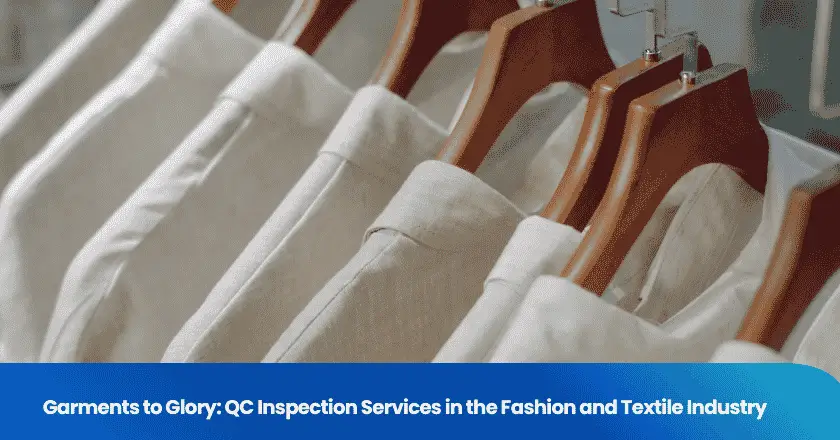
The fashion and textile industry moves quickly. New styles, seasonal collections, private-label products, and changing customer expectations all place pressure on manufacturers and buyers to maintain consistent product quality.
For brands and importers sourcing garments and textiles from China, quality control is not limited to checking finished products before shipment. Fabric quality, measurements, workmanship, trims, labels, color consistency, packaging, and production processes can all affect the final product.
This is where QC inspection services can provide practical support.
By introducing quality checks at appropriate stages of production, buyers can identify problems earlier, compare finished goods with approved specifications, and obtain objective information before products are released for shipment.
What Is QC Inspection in the Fashion and Textile Industry?
QC inspection is the process of checking products against predefined specifications, samples, workmanship requirements, and other buyer-defined criteria.
For garments and textile products, an inspection may cover areas such as:
| Inspection Area | Typical Checks |
|---|---|
| Fabric and materials | Composition, appearance, color, texture, visible defects |
| Measurements | Garment dimensions compared with size specifications |
| Workmanship | Stitching, seams, hems, construction, loose threads |
| Appearance | Stains, holes, marks, color variation, surface defects |
| Trims and accessories | Buttons, zippers, labels, drawcords, fasteners |
| Color and shade | Consistency between pieces, panels, or production lots |
| Printing and embroidery | Position, appearance, workmanship, and consistency |
| Labels | Brand, size, care, fiber-content, and other specified information |
| Packaging | Folding, polybags, cartons, assortment, and packing requirements |
The exact checklist should be adapted to the garment, material, target market, and buyer's specifications rather than applying one generic standard to every product.
Why Quality Inspection Matters for Fashion Brands
A garment can look acceptable in a factory sample but show inconsistencies during mass production.
For example, a factory may produce thousands of pieces using different fabric rolls, production lines, workers, or production batches. Small variations can therefore develop during manufacturing.
Common problems include:
- Measurement deviations
- Uneven stitching
- Loose or skipped stitches
- Fabric holes or stains
- Shade variation
- Incorrect labels
- Poor print or embroidery placement
- Damaged trims
- Packaging mistakes
- Missing accessories
These issues can affect product appearance, customer experience, returns, and rework costs.
Inspection cannot eliminate every manufacturing risk, but it can provide an additional opportunity to identify problems before the goods move to the next stage.
What Should Be Checked in Garment Inspection?
Fabric and Material Quality
Fabric is the foundation of most garments. Problems in the material can affect both appearance and finished-product performance.
Depending on the product, inspection may include checks for:
- Visible fabric defects
- Color and shade consistency
- Fabric width
- Weight or GSM
- Pattern alignment
- Surface appearance
- Material composition against specifications
Some characteristics require laboratory testing rather than visual inspection. For example, fiber composition, specific colorfastness properties, or chemical characteristics may need appropriate testing methods.
TradeAider's softline testing services include areas such as fiber composition and colorfastness testing, which can complement physical garment inspection when required.
Measurements and Fit-Related Specifications
Measurement accuracy is particularly important for apparel because even relatively small deviations can affect fit.
Inspection may compare finished garments with the buyer's measurement specification or approved sample.
Depending on the product, measurements may include:
- Chest or bust
- Waist
- Hip
- Shoulder width
- Sleeve length
- Garment length
- Inseam
- Rise
- Collar dimensions
The acceptable tolerance should be defined before inspection.
Sewing and Workmanship
Workmanship is one of the most visible aspects of garment quality.
Inspectors may examine:
- Seam construction
- Stitch density
- Stitch consistency
- Loose threads
- Skipped stitches
- Open seams
- Puckering
- Uneven hems
- Broken stitches
- Incorrect assembly
For garments with special construction requirements, the inspection criteria should be based on the approved sample, technical specification, or buyer's workmanship standard.
Color, Shade, and Appearance
Color consistency can be especially important when multiple fabric lots or production batches are involved.
An inspection can compare the production goods with the approved color standard or sample and identify visible shade differences.
For garments with multiple components, inspectors can also check whether the colors of different panels or matching pieces are visually consistent.
Appearance inspection may also identify:
- Stains
- Oil marks
- Water marks
- Holes
- Scratches
- Uneven dyeing
- Surface defects
- Printing problems
- Embroidery defects
For a fashion product, these details can have a significant commercial impact because customers often judge quality from appearance before they evaluate technical performance.
Labels, Trims, and Accessories
Labels and trims may seem like small details, but incorrect information or missing components can create practical problems for buyers.
Depending on the product, inspection can include:
| Component | Examples of Checks |
|---|---|
| Brand label | Correct design and placement |
| Size label | Correct size information |
| Care label | Required information and placement |
| Fiber-content label | Matches approved information |
| Hangtag | Design, wording, and attachment |
| Buttons | Quantity, type, attachment |
| Zippers | Type, function, and appearance |
| Drawcords | Length, placement, and specified requirements |
| Other accessories | Presence, appearance, and attachment |
Where destination-market requirements apply, buyers should provide the relevant specifications or approved artwork. Physical inspection can verify observable product and label characteristics, while regulatory or chemical compliance may require separate document review and testing.
Packaging and Carton Inspection
The quality of the garment itself is only one part of shipment readiness.
Packaging inspection can include:
- Folding method
- Individual polybag requirements
- Size assortment
- Carton quantity
- Carton markings
- Shipping marks
- Barcode or SKU information
- Carton dimensions and weight
- Packaging condition
For e-commerce sellers and retailers, correct SKU and size assortment can be particularly important because a packaging mistake can create inventory problems even when the garments themselves are correctly manufactured.
When Should Fashion Products Be Inspected?
Different inspection stages address different risks.
| Stage | Typical Purpose |
|---|---|
| Pre-Production Inspection | Review materials, specifications, samples, and production readiness |
| During Production Inspection | Check production quality while manufacturing is underway and identify problems early |
| Pre-Shipment Inspection | Evaluate finished products before shipment |
| Container Loading Supervision | Check goods, packaging, container condition, and loading process during shipment preparation |
TradeAider's current During Production Inspection is generally conducted when around 30%–50% of production has been completed, allowing buyers to identify quality issues while production is still underway.
A Pre-Shipment Inspection is performed when production is complete and the goods are sufficiently packed for final inspection. TradeAider uses ANSI/ASQ Z1.4-2008 sampling when no specific buyer sampling requirement is provided.
The appropriate inspection stage depends on the product, order size, production schedule, and buyer's quality-control objectives.
AQL Sampling for Garment Inspection
For many apparel orders, inspection is conducted using sampling rather than checking every unit.
AQL-based sampling can provide a structured method for selecting representative units from a production lot. The buyer should define the applicable sampling standard, inspection level, and defect acceptance criteria before the inspection.
For example, defects can generally be categorized according to their potential impact:
| Defect Category | Example |
|---|---|
| Critical | A serious safety or prohibited condition, where applicable |
| Major | A defect likely to affect product usability, appearance, or saleability |
| Minor | A smaller deviation that does not materially affect function or overall appearance |
The actual acceptance criteria should be agreed with the buyer rather than assumed by the inspector.
Inspection Should Follow the Buyer's Specifications
A good inspection is only as useful as the criteria against which the product is evaluated.
Before arranging an inspection, buyers should ideally provide:
- Technical specification or tech pack
- Approved sample
- Size chart
- Material specifications
- Color standards
- Label artwork
- Packaging requirements
- Defect classification
- Testing requirements
- Destination-market requirements where relevant
These documents give the inspector a clear basis for assessing the shipment.
Without defined requirements, different parties may have different interpretations of what constitutes an acceptable product.
From Finding Defects to Corrective Action
The purpose of QC inspection is not simply to produce a list of defects.
When problems are identified during production, the timing of the inspection can give the factory an opportunity to investigate and correct them before the entire order is completed.
TradeAider can help supervise corrective actions on site, verify improvements, and support re-inspection when needed.
This creates a more practical quality-control loop:
Identify → Correct → Verify → Re-inspect
Instead of discovering every issue only at the end of production, buyers can use inspection information to communicate with the factory while there is still an opportunity to make changes.
Real-Time Inspection Information
For buyers managing production remotely, timely information can be particularly useful.
TradeAider provides online real-time inspection information with photos, videos, measurements, and findings, allowing clients to see what is happening during the inspection. Formal inspection reports are also provided.
This can help buyers make decisions while the goods are still at the factory instead of waiting until the final report to understand the situation.
QC Inspection and Laboratory Testing Work Together
Not every quality requirement can be assessed through physical inspection.
For textile and apparel products, laboratory testing may be appropriate when buyers need information about characteristics such as:
- Fiber composition
- Colorfastness
- Physical performance
- Chemical substances
- Other product-specific requirements
Inspection and testing should therefore be treated as complementary tools.
Inspection answers: “Does the product match the defined physical and workmanship requirements?”
Testing answers: “Does the product meet specific measurable performance or chemical requirements under the applicable test method?”
The appropriate testing program depends on the product and destination-market requirements.
Why Use a Third-Party QC Inspection Service?
A third-party inspection provides an independent on-site assessment based on the buyer's defined requirements.
This can be particularly useful when:
- The buyer is located outside China.
- The buyer cannot visit the factory regularly.
- Orders involve multiple production batches.
- The buyer needs independent evidence of product condition.
- The factory's internal QC information is not sufficient for the buyer's needs.
- The buyer wants inspection records before shipment.
TradeAider provides inspection and QA services across apparel, accessories, textiles, and other softline products, with inspection scopes customized to product specifications and buyer requirements.
Building a Complete Fashion QC Process
For brands sourcing garments from China, quality control can be structured around several checkpoints rather than relying on a single final inspection.
A practical process may look like:
Material & Specification Review → Pre-Production Inspection → During Production Inspection → Finished Garment Inspection → Testing When Required → Container Loading Supervision
Not every order requires every step. The appropriate combination depends on product complexity, order value, production risks, testing requirements, and the buyer's quality objectives.
The key is to establish the right inspection criteria before production and apply them consistently throughout the order.
Frequently Asked Questions
What is a garment QC inspection?
A garment QC inspection is an assessment of apparel against defined requirements such as materials, measurements, workmanship, appearance, labels, accessories, packaging, and other buyer specifications.
What defects are commonly found during garment inspection?
Common defects include measurement deviations, loose or skipped stitches, open seams, stains, holes, shade variation, damaged trims, incorrect labels, poor printing or embroidery, and packaging errors.
When should garments be inspected?
Garments can be inspected at different production stages. Pre-production checks help review materials and readiness, during-production inspection helps identify issues while manufacturing is underway, and pre-shipment inspection evaluates finished goods before shipment.
What is checked during an apparel pre-shipment inspection?
Depending on the buyer's requirements, a pre-shipment inspection may cover appearance, workmanship, measurements, materials, labels, accessories, packaging, quantity, and specified functional checks.
Is AQL used for garment inspection?
Yes. AQL-based sampling is commonly used for apparel inspections when the buyer chooses a sampling approach. The applicable sampling standard and acceptance criteria should be defined before inspection.
Can garment inspection verify chemical compliance?
Not by visual inspection alone. Chemical requirements may require laboratory testing using appropriate methods. Physical inspection can check related product characteristics and documentation within the agreed scope.
Can textile testing be combined with garment inspection?
Yes. Textile laboratory testing can complement physical garment inspection when buyers need to evaluate characteristics such as fiber composition, colorfastness, physical performance, or chemical substances.
What documents should I provide before a garment inspection?
Useful documents include the tech pack, approved sample, size specifications, material requirements, color standards, label artwork, packaging instructions, defect criteria, and any required testing or destination-market requirements.
Can a third-party inspector supervise corrective actions?
Depending on the service scope, an inspector can help observe corrective actions, verify improvements on site, and support re-inspection when required. This helps buyers follow issues from identification through verification.
Does garment inspection guarantee that every product is defect-free?
No. Inspection evaluates products within a defined scope, at a specific production stage, and usually through an agreed sampling plan. It cannot guarantee that every individual unit is free from defects.
Conclusion
In fashion and textile manufacturing, quality is built through multiple decisions rather than a single final check.
Fabric, measurements, workmanship, color, trims, labels, packaging, and other product characteristics can all influence the final result. A structured QC inspection process gives buyers better visibility into these areas and provides opportunities to identify and address problems before shipment.
For brands and importers sourcing garments from China, combining appropriate inspection stages with product-specific testing and clear quality requirements can create a more practical approach to managing apparel quality from production to shipment.
Artigos Relacionados
Expanda seu negócio com o Serviço TradeAider
Clique no botão abaixo para entrar diretamente no Sistema de Serviço TradeAider. Os passos simples desde a reserva e pagamento até o recebimento de relatórios são fáceis de operar.

