
- Sobre Nós

- Nossos Serviços
- Sua Indústria
- Recursos
- Notícias e Blog
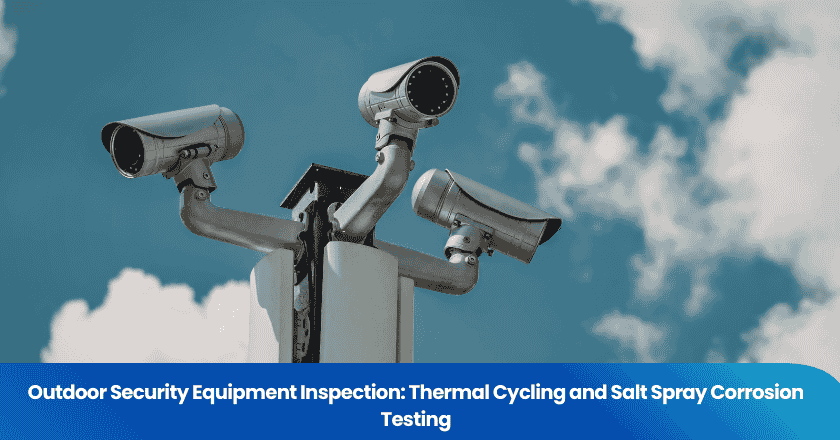
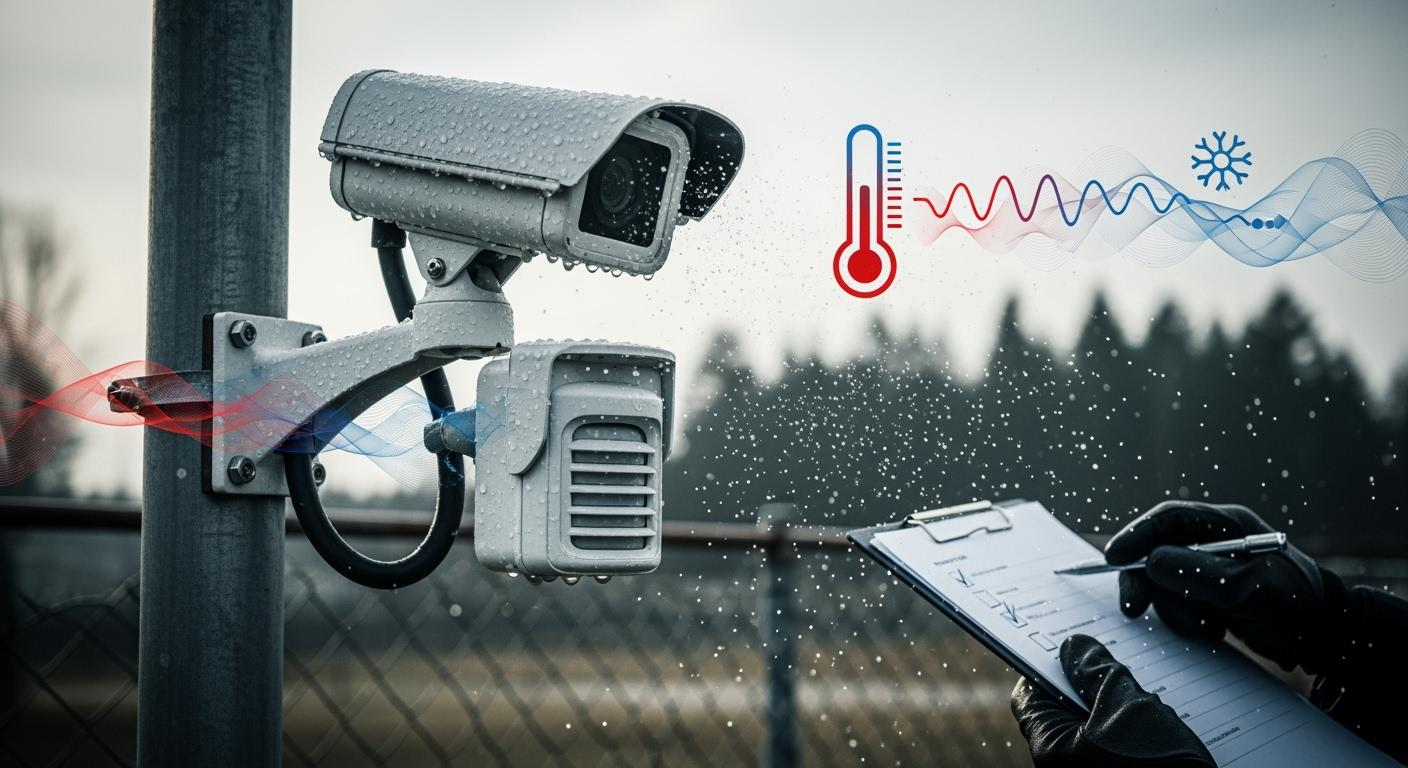
Outdoor security equipment faces harsh conditions every day. Specialized inspection teams use thermal cycling and salt spray testing to determine whether products can survive real-world environments. These tests expose weak spots in coatings, materials, and internal components before the equipment ever reaches the field. When products pass, buyers have documented evidence of long-term reliability.
| Aspect | Thermal Cycling Test | Salt Spray Test |
|---|---|---|
| Purpose | Validates performance under repeated temperature changes | Checks corrosion resistance in saltwater and humid environments |
| What It Reveals | Fatigue cracks, connection failures, and material weakening | Coating defects and material incompatibilities |
| Best Suited For | Equipment deployed across all climate zones | Products for coastal, marine, or humid environments |
Key Takeaways
- Thermal cycling testing checks how outdoor security equipment handles extreme temperature swings, ensuring long-term reliability across climates.
- Salt spray testing evaluates corrosion resistance, helping buyers select durable products for coastal or high-humidity environments.
- Real-time monitoring during tests enables immediate decision-making and prevents defective products from advancing in the supply chain.
- Regular maintenance based on test outcomes prevents unexpected field failures and extends equipment lifespan.
- Understanding test results helps security teams select the best equipment for their specific deployment environment.
Thermal Cycling Testing for Outdoor Security Equipment
What Is Thermal Cycling?
Thermal cycling moves outdoor security equipment between high and low temperatures to simulate the expansion and contraction experienced in real deployments. Repeated thermal stress can cause cracks in housings, loose solder joints, and broken electrical connections if materials or assemblies are not robust. Testing occurs inside an environmental chamber that controls temperature and cycle timing precisely. Typical conditions range from -55 degrees C to +125 degrees C, with specific hold times and cycle counts tailored to the target market's climate.
Why Thermal Cycling Matters
Outdoor equipment faces constant temperature swings — from predawn cold to afternoon heat — and these cycles accumulate stress in materials. Integrated circuits react to heat changes that alter electrical properties. High temperatures accelerate aging in circuit components, reducing performance and lifespan. Thermal cycling testing compresses months or years of environmental exposure into days, helping manufacturers and buyers understand failure modes before products leave the factory.
| Factor | Effect on Outdoor Security Equipment |
|---|---|
| Circuit sensitivity to heat | Temperature changes alter electrical properties, affecting detection accuracy and connectivity. |
| Accelerated aging | High temperatures speed up component degradation, shortening operational lifespan. |
| Physical fatigue | Repeated expansion and contraction creates cracks in housings and loosens connections. |
Testing Steps and Standards
TradeAider's inspection team follows a systematic approach to thermal cycling. Inspectors first examine all components for pre-existing defects. Products then undergo repeated heating and cooling cycles with soak periods at each temperature extreme. Post-test evaluation covers both physical inspection for cracks or deformation and electrical performance testing to confirm the device still operates within specification.
| Temperature Range | Cycle Count | Common Application |
|---|---|---|
| -55 degrees C to +125 degrees C | 5 - 1,000 cycles | High-performance military and industrial equipment |
| -40 degrees C to +150 degrees C | 1,000 cycles minimum | Automotive and extreme outdoor use |
| -40 degrees C to +85 degrees C | 50 - 100 cycles | Commercial outdoor security equipment |
| -55 degrees C to +85 degrees C | 500 - 1,000 cycles | Security devices for harsh climates |
Inspector customizes testing parameters to match each product's design and the target market's climate. Buyers can request specific temperature ranges and cycle counts. Advanced failure analysis techniques — including scanning acoustic microscopy and X-ray inspection — identify root causes when issues arise, ensuring every product meets strict endurance requirements.
Salt Spray Test and Corrosion Resistance
What Is a Salt Spray Test?
A salt spray test is a laboratory method that evaluates how well materials and coatings resist corrosion. Products are exposed to a fine mist of saltwater inside a controlled chamber, accelerating the corrosion process to reveal defects in coatings and materials within hours rather than months. The test follows ISO 9227 or ASTM B117 standards for reproducible, comparable results across suppliers and markets.
Salt Spray vs. Cyclic Corrosion Testing
Both methods measure corrosion resistance, but with different approaches. Salt spray testing maintains a constant salt mist environment, making it faster and better suited to screening products with steady saltwater exposure, such as coastal or marine installations. Cyclic corrosion testing alternates between wet and dry cycles to simulate real outdoor weather changes, producing a more accurate prediction of long-term field durability for equipment that experiences fluctuating humidity and temperature.
| Feature | Salt Spray Testing | Cyclic Corrosion Testing |
|---|---|---|
| Environment | Steady-state salt mist | Alternating wet and dry cycles |
| Real-World Accuracy | Best for constant-exposure environments | Better simulation of variable outdoor conditions |
| Test Speed | Faster — simpler single-environment test | Slower — more complex cycle management |
| Best For | Coastal and marine installations | Inland and variable-climate deployments |
Salt Spray Test Process and Standards
Salt spray testing follows ASTM B117 and ISO 9227, which define procedures, salt concentration, temperature, and duration. The complete process includes:
| Step | Description |
|---|---|
| Sample Preparation | Clean the sample of oil, dirt, or debris before placing it in the testing chamber. |
| Solution Preparation | Prepare a 5% sodium chloride solution, filtered and pH-adjusted to 6.5 - 7.2. |
| Chamber Setup | Place solution in the chamber, set temperature to 35 degrees C, ensure continuous atomization. |
| Test Execution | Salt mist settles on specimens at a specified rate for the required duration. |
| Monitoring | Check chamber temperature, salt fog distribution, solution pH, and nozzle performance throughout. |
| Post-Test Evaluation | Remove sample, rinse with deionized water, dry, and evaluate for rust, blistering, or coating breakdown. |
| Test Variant | Salt Concentration | pH Range | Max Exposure (hours) |
|---|---|---|---|
| Neutral Salt Spray (NSS) | 5% NaCl | 6.5 - 7.2 | 720 |
| Acidified Salt Spray (ASS) | 5% NaCl | 3.1 - 3.3 | Varies by material |
| Copper-Accelerated ASS (CASS) | 5% NaCl | 3.1 - 3.3 | Varies by material |
Material Verification and Durability Assessment
Material verification confirms that metals and coatings match product specifications in terms of coating thickness, uniformity, and material type. Products with thicker coatings consistently show longer time-to-rust in salt spray testing. By identifying weak coatings or incorrect materials before products reach the market, manufacturers can improve formulations and reduce field failure rates. This process directly supports long-term reliability and reduces the risk of warranty claims or product recalls.
Tip: Always review salt spray test results and material verification data before selecting outdoor security equipment. Documented corrosion resistance data protects your investment and confirms the product will perform in its intended environment.
Real-Time Monitoring and Reporting
Immediate Decision-Making During Testing
TradeAider's real-time monitoring system allows inspection teams to upload photos, videos, and performance data as inspection progresses. If a product shows signs of failure — corrosion, cracking, or malfunction after a temperature cycle — the inspector uploads the result immediately. The client can then accept the batch, request repairs, or reject the shipment while the inspector is still on-site. This eliminates delays and prevents defective products from advancing in the supply chain.
Official Verification and Documentation
After the inspection, TradeAider issues a comprehensive third-party inspection report within 24 hours. The report includes detailed test results, AQL sampling data, defect classification (critical, major, and minor), pass/fail conclusions, and high-resolution photos and videos as visual evidence.
The inspection process covers product specifications verification, quantity confirmation, workmanship assessment, packaging and labeling checks, on-site functional testing, and compliance verification against client requirements and international standards.
This independent documentation provides reliable proof of product quality and regulatory compliance.
FAQ
What is the main goal of thermal cycling testing?
Thermal cycling testing determines whether outdoor security equipment can handle repeated temperature changes without cracking, losing connections, or degrading electrically. It reveals failure modes in materials and assemblies that would only become apparent after months of field use.
How does salt spray testing help buyers?
Salt spray testing provides documented evidence of how long a product's coatings and materials resist corrosion under accelerated conditions. Buyers use these results to compare suppliers and select products proven to last in coastal or high-humidity environments.
Why is real-time reporting important during testing?
Real-time reporting gives clients visibility into test progress and enables immediate decisions. If a failure occurs, the client can act before the inspector leaves the facility — accepting partial shipments, requesting rework, or rejecting the entire batch without waiting days for a formal report.
What happens if a product shows signs of failure during testing?
The inspector documents and reports the failure immediately. The client then decides whether to repair, reject, or retest the affected batch. This on-site decision-making capability prevents defective products from entering the supply chain and reaching end customers.
Artigos Relacionados



Expanda seu negócio com o Serviço TradeAider
Clique no botão abaixo para entrar diretamente no Sistema de Serviço TradeAider. Os passos simples desde a reserva e pagamento até o recebimento de relatórios são fáceis de operar.

