
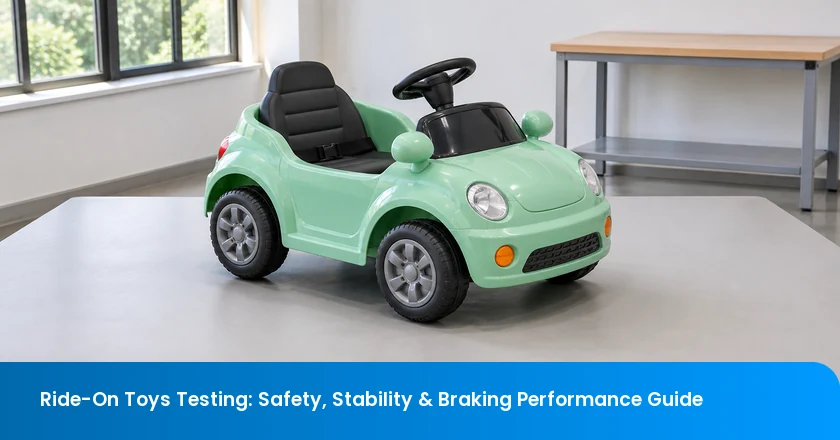
Ride-on toys testing should establish whether the actual product has adequate strength, stability and stopping performance for its intended rider and use. Begin with the product classification, age range, rider-mass claim and destination market. Then specify the applicable methods, loads, configurations and acceptance criteria. A toy that rolls smoothly across a sample room has not demonstrated loaded stability, structural durability or braking performance.
Foot-propelled toys, pedal products, battery-powered vehicles and scooters can need different assessments. The guide below explains the main test questions, what a useful result should record, and what parents can safely check. Formal performance testing and everyday precautions serve related but different purposes.
Connect each ride-on safety claim with the right evidence
- Classify the product before choosing a toy standard or accepting a report.
- Record the tested configuration, load and operating conditions.
- Assess strength, stability and stopping as distinct performance questions.
- Keep missing methods and unperformed checks visible in the test record.
- Follow age, supervision and operating instructions even when test evidence is available.
Classify the ride-on and its intended rider
The starting point is the actual design and intended use. Identify the age group, maximum rider mass, seating position, wheels, propulsion, steering, stopping features and operating environment. A foot-to-floor toy, pedal product, powered toy and scooter do not become the same test category because a retailer lists all of them as ride-ons.
For a foot-to-floor design, understand how the child propels and controls it. For a pedal product, identify the transmission and the intended stopping arrangement. A powered model adds electrical drive, controls and power-supply questions. A scooter can involve standing balance, a folding joint and a different braking arrangement. Resolve the applicable classification rather than copying requirements from the nearest-looking product.
Match the instructions, packaging, model designation and product construction. An age label should reflect the intended user and foreseeable play behavior. A rider-mass limit is a product claim to evaluate, not a substitute for selecting the prescribed test load. Record adjustable seat or steering positions and any variants that may affect the assessment.
Also identify where the toy is intended to be used. A domestic play toy is not automatically suitable for traffic, rough terrain or use near water. Those distinctions affect product classification, assessment and the instructions provided to caregivers.
Match standards and documents to the destination
CPSC guidance explains that ASTM F963 excludes bicycles, tricycles and specified scooter categories. Its toy scope generally concerns children under 14, while CPSC third-party testing and Children’s Product Certificate, or CPC, requirements concern toys primarily intended for children 12 or younger. Determine the actual classification before accepting a generic toy report. CPSC toy-safety guidance.
For applicable US provisions, identify the testing needed from a CPSC-accepted third-party laboratory. Limited relief can apply to qualifying registered small-batch manufacturers, but they still have CPC obligations. The manufacturer or importer must determine the applicable provisions and supporting evidence. A CPC is a US compliance document, not a certificate of compliance with European toy standards. CPSC testing-requirement chart.
The European Commission describes CE marking as the manufacturer’s declaration that a toy satisfies essential safety requirements. Manufacturers must carry out safety and conformity assessment, prepare technical documentation and the declaration of conformity, and provide required identification and warnings. The appropriate route may use internal production control or notified-body type examination. CE marking does not mean every toy has received independent certification. Commission market-placement guidance; Commission conformity-assessment overview.
The Commission states that Regulation (EU) 2025/2509 entered into force on 1 January 2026 and generally starts applying on 1 August 2030. Entry into force does not make the whole future regime immediately applicable. Match the legal route to the relevant market-placement date. EU toy-safety transition.
For the European route, use the applicable harmonised-standard references and withdrawal information. The Commission publishes references through implementing decisions and describes its consolidated summary as informational. A standard’s newest published edition and the applicable harmonised reference need not be identical. Official toy-standard reference page.
EN 71 mechanical, flammability and chemical assessments, and relevant electrical requirements, address different hazards. ASTM and ISO standard numbers are not universal approval seals. A report should identify the standard, edition, applicable sections, exact product and tested configuration rather than merely display familiar acronyms.
Check assembly, steering and wheel retention first
Assemble the retail configuration using the controlled instructions. Record settings, fastener condition, locks, steering travel, wheel attachment and axle retention before performance testing. Formal loading, incline, impact and braking work needs controlled conditions, suitable fixtures and representative test loads. Never use a child as a formal test load.
Inspect the frame, seat attachment, wheel-retaining hardware and accessible mechanisms. Look for missing parts, cracks, burrs, exposed points and pinching or entrapment concerns. Check steering for binding, interference and unintended looseness. A handlebar that looks aligned does not demonstrate that its connection remains secure under the required test.
Preserve the initial condition before making adjustments. If a loose connection is found, record it before tightening. A later successful check after correction answers a different question from whether the toy was supplied correctly assembled. Keep any permitted setup adjustments and retests identifiable.
Assess strength, dynamic loading and durability
CPSC guidance says ride-on toys within ASTM F963 must meet applicable stability requirements and must not collapse during the overload test. The actual product and applicable provisions determine the method. A supplier’s generic load demonstration does not establish that the required test was performed. CPSC stability and overload guidance.
Distinguish static loading, dynamic strength, impact and supplementary durability work. A static test applies a defined load at a stated position. Dynamic or impact work introduces prescribed movement or energy, while repeated cycling investigates specified repeated-use conditions. Record load position, direction, duration or cycles, fixture arrangement, specimen sequence and observations afterward.
A test rig’s maximum speed or capacity is not the toy’s acceptance value. Obtain the actual procedure instead of copying an equipment listing. Record whether the method uses a fresh specimen or a defined sequence on the same specimen. Damage from an earlier test can affect a later result.
After the required sequence, examine the seat, frame, steering, wheels and attachments for the defects and functional changes defined by the method. Keep photographs and measurements linked to the specimen. Supplementary wear or climate conditioning should state its purpose and conditions; accelerated cycling alone does not establish years of safe use.
Evaluate stability in the required configurations
ISO 8124-1 describes age-dependent toy requirements and reasonably foreseeable normal use and abuse. Its public scope mentions minimum tip angles for certain ride-on categories. That abstract does not supply one universal slope, load or pass limit for every ride-on. The actual applicable method is needed. ISO mechanical and physical toy-safety scope.
A meaningful stability record identifies the configuration, steering position, prescribed load and load location, support surface, direction and restraint conditions. Assess the applicable static and dynamic questions separately. A test-platform angle is a controlled assessment condition, not permission for a child to ride on that slope.
Record wheel spacing, seat position, attached accessories and adjustable settings that may affect the assessed configuration. Changes to seating height or wheel arrangement can alter the stability question. A report for a visually similar version may not cover the revised product.
Where the method requires an incline, document the platform setting, orientation and treatment of the wheels or brakes. Restraints used for positioning must follow the method; an improvised support can conceal the behavior being assessed. Keep the original observations of wheel lift, overturning or movement, then apply the specified criterion.
A design that relies on rider balance presents different questions from a self-supporting seated vehicle. Likewise, a stationary loaded assessment does not reproduce every event during turning or braking. Identify the required configurations and relevant dynamic assessments without extending one result into an unrestricted safe-use claim.
Test braking and powered stopping under defined conditions
Braking performance needs a design-specific method with defined approach speed, test load, surface, direction, control input, sequence and acceptance criterion. Record whether the control can be operated as intended and what happens when it is released. Interrupting motor drive, slowing the vehicle and holding it stationary are distinct functions.
First identify the intended stopping arrangement. A hand-operated brake, pedal brake, automatic stopping action and a foot-propelled toy cannot be assessed by one generic pedal check. For a powered model, verify the specified response when the drive control is released and when any separate brake or remote control is used. Do not assume switching off propulsion provides a parking function.
Where an agreed optional record measures stopping distance from brake actuation, mark the position of a defined point on the toy at the input and at final rest. Keep the approach distance separate. Use the actual method’s reference if it differs; this measurement convention is not a universal standard test.
Record the input and stopping observations as well as the distance. An unloaded trial, an unspecified surface or an uncertain input point makes comparison difficult. Repeat only according to the agreed sequence and examine any resulting brake, wheel or control changes. If the method includes parking or holding performance, keep that result separate from stopping distance.
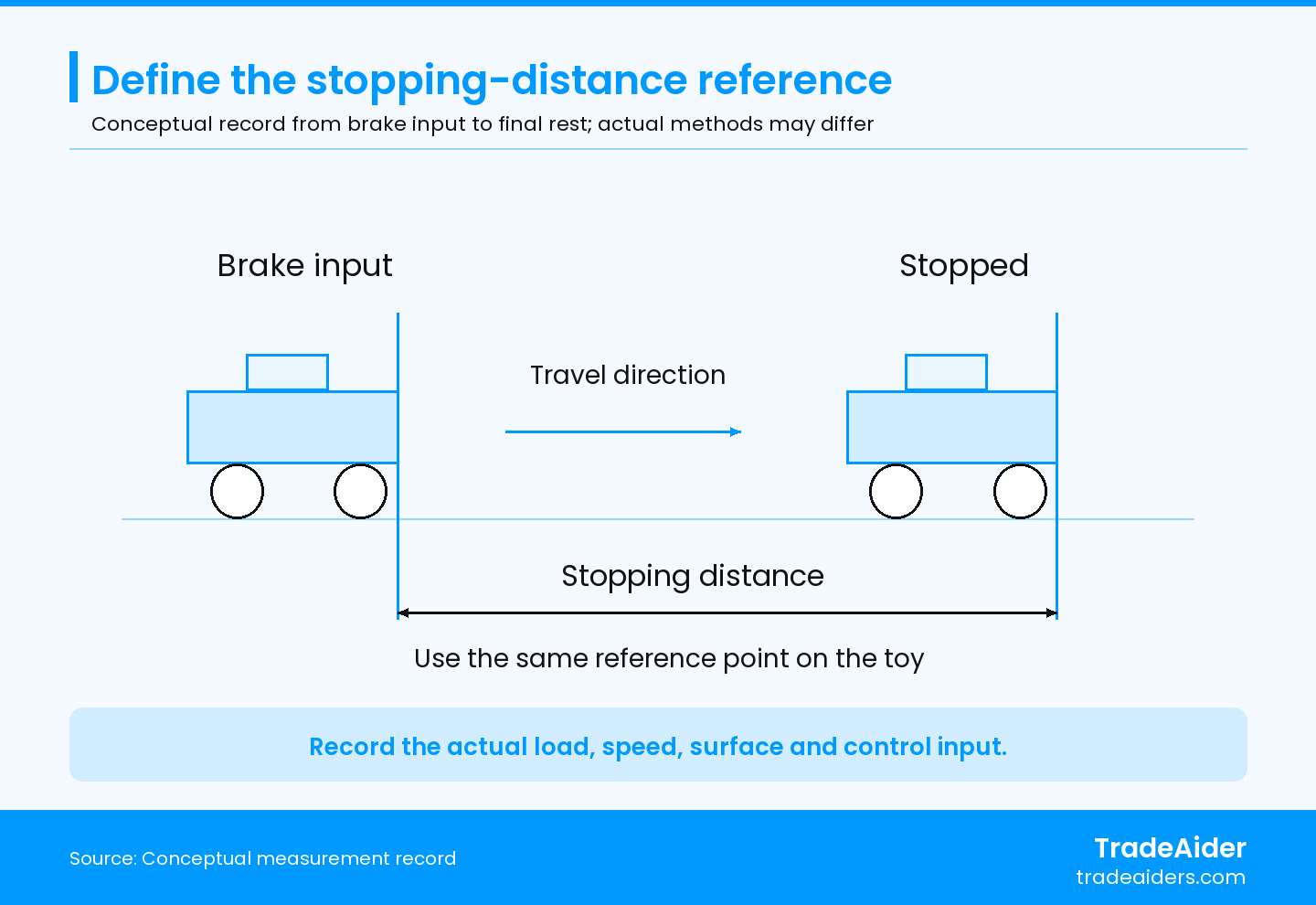
Conceptual optional stopping-distance record, not a universal standard test. Use the actual method’s start and stop references, setup and criterion; no child is used as a test load.
A 2019 CPSC recall of specified Power Wheels Barbie Dream Campers identified vehicles continuing to run after the foot pedal was released. This historical, model-specific failure illustrates why the release response matters. It is not evidence that every powered ride-on has that defect. CPSC recall notice.
Keep electrical and material safety in the plan
IEC 62115 covers safety relating to electric toys’ electrical functions. Its public consolidated-edition description includes remote controls for electric ride-on toys among its topics. That scope does not establish mechanical compliance or automatic adoption of an IEC edition in every market. IEC electric-toy safety scope.
For a powered model, include the battery compartment, wiring, supplied charging arrangement, controls and applicable electrical tests in the assessment. Check the actual battery and charger configuration against the report. A remote-control stop feature and a secure battery enclosure answer different safety questions.
The Commission describes REACH as a chemical-regulation framework and RoHS as restrictions for electrical and electronic equipment, subject to scope exclusions. Determine the relevant material and electrical-product obligations. A mechanical pass does not establish chemical compliance. Commission REACH overview; Commission RoHS overview.
Keep applicable small-parts, sharp-edge, entrapment, sound, flammability and material requirements in the wider toy-safety plan. Select relevant checks for the age and construction. A clean-looking surface or a “non-toxic” sales description cannot replace the required material evidence.
Use a ride-on test and inspection record
Use this record to link the actual model and revision with its methods, setup, original results and decision. Replace the blanks with approved project information. Keep required-but-unperformed checks separate from passed checks and assign missing criteria to the responsible technical owner.
| Assessment item | Record the actual setup | Evidence and decision |
|---|---|---|
| Product and route | Model/revision: ___; age/mass claim: ___; market/classification: ___ | Applicable rules/method versions: ___; technical owner: ___ |
| Assembly and retention | Instructions/settings: ___; locks, steering, wheels and axles: ___ | Initial findings: ___; permitted adjustment/retest: ___ |
| Strength and durability | Method: ___; load/position: ___; duration/cycles: ___; specimen sequence: ___ | Criterion: ___; observations before/after: ___; result: ___ |
| Stability | Load/location: ___; steering/configuration: ___; surface/slope/direction: ___ | Method/restraints: ___; observations and criterion: ___; result: ___ |
| Braking and stopping | Speed/load/surface: ___; input/reference: ___; sequence: ___ | Stopping, release and holding results as applicable: ___; criterion: ___ |
| Other safety and labels | Electrical/material scope: ___; report model: ___; warnings/traceability: ___ | Supporting evidence: ___; gaps and owner: ___ |
| Disposition and follow-up | Passed: ___; failed: ___; unperformed/pending: ___; change history: ___ | Product action: ___; technical follow-up/review date: ___; decision owner: ___ |
A report should preserve enough original measurements and photographs to explain the recorded conclusion. When equipment or conditions are unavailable, identify the unperformed check and arrange the appropriate assessment. Do not convert “not checked” into “pass.”
TradeAider’s product testing service describes needs alignment around the test objects, projects and standards, followed by identified samples, testing, review and a report. Use those planning questions to specify the actual ride-on configuration and required evidence. Agree the relevant methods and feasible test scope for the product rather than inferring coverage from the service name.
Illustrative example. A seat revision changes the evidence needed
Illustrative example, not client data. A factory introduces a seat molding that raises the seating position of a four-wheel battery ride-on. The supplier offers a report for the earlier version. Record the changed configuration and hold the affected release decision for technical review. Reusing the model name does not establish coverage of the new geometry.
Enter the old and new revisions in the product row and identify the changed seat in the stability setup. The responsible technical reviewer determines the implications for stability, loading and access to controls, and specifies relevant assessment of the revised configuration. Preserve the earlier report as a reference rather than editing its identity.
After an authorized design correction, confirm which specimens and production version were actually assessed and compare the supplied goods with that version. Close the affected item only on the resulting applicable evidence. If the load position or method remains unresolved, keep the item pending with its owner and review date. A relabeled report alone does not close the change.
What parents should check before and during use
CPSC advises parents and caregivers to follow age guidance and safety information and match toys to the child’s abilities. It also recommends helmets and safety gear for scooters and other riding toys. These precautions support safer use; they do not establish that a product passed its tests. CPSC toy-safety tips.
Follow the product’s rider-mass, environment, supervision and charging instructions. Before play, look for a damaged frame, loose wheels, missing fasteners, damaged wiring or uncertain stopping behavior. Stop using a toy with such a concern and follow the manufacturer’s safe follow-up instructions. Do not improvise incline, impact or child-loaded tests at home.
Choose a suitable play area within the instructions and keep children away from traffic, stairs, drop-offs and water hazards. Check the model for recalls, retain its identification and use the specified charging equipment. Supervision should suit the child and the activity; a belt, speed setting or remote control does not remove the need to follow the operating restrictions.
When reviewing test information, look for the exact model and construction, the applicable requirements and the actual results. A familiar mark or a broad claim such as “safety tested” does not explain what was assessed. Caregivers should request clarification from the seller when safety information is missing rather than try to reproduce formal tests.
Discuss checks for your ride-on toy order
Start with the product and order information you have, model and variants, age and rider-mass claims, destination, factory, timing and known concerns. Share available specifications and reports. Before inspection, agree references, samples, equipment, feasible checks and reporting limitations. Contact our team to discuss an inspection scope and a report of the agreed findings.
FAQ
Does a passed incline test mean a child can ride on that slope?
No. A test-platform condition is not an operating permission. Follow the toy’s actual instructions and operating restrictions. The tested setup may include prescribed loading, orientation or restraints that do not represent ordinary riding.
What if a report omits the load or braking criterion?
Obtain the applicable method and criterion before accepting the conclusion. Ask the responsible technical owner to resolve the gap. Keep the check unperformed or its conclusion pending, as appropriate, instead of supplying a convenient value after the test.
Does a toy without a separate brake automatically fail?
No. Determine which stopping provisions apply to the actual classified design. The absence of a separate brake is different from failure of a required or claimed stopping function. Do not transfer a scooter or powered-vehicle criterion to every foot-propelled toy.
Artigos Relacionados
Expanda seu negócio com o Serviço TradeAider
Clique no botão abaixo para entrar diretamente no Sistema de Serviço TradeAider. Os passos simples desde a reserva e pagamento até o recebimento de relatórios são fáceis de operar.