
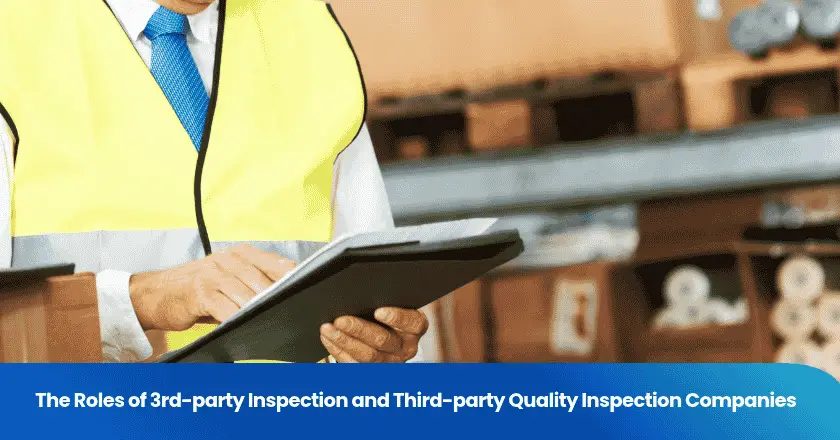
Third-party quality inspection companies play an important role in helping international buyers verify product quality during manufacturing. Acting independently of both the buyer and the manufacturer, they conduct inspections based on agreed specifications, inspection criteria, and sampling requirements.
For buyers sourcing products from China, these companies provide on-site quality verification when direct supervision is difficult. Their role is not to manage the factory or take over the manufacturer's quality control responsibilities. Instead, they provide independent inspection findings that help buyers understand product conditions and address quality issues at the appropriate stage.
What Does a Third-Party Quality Inspection Company Do?
A third-party quality inspection company provides independent inspection services to assess whether products, materials, and selected production activities meet the buyer's specified requirements.
Its responsibilities typically include:
- Reviewing product specifications and inspection requirements before the inspection.
- Assigning inspectors with relevant product or industry experience.
- Conducting on-site inspections at agreed production stages.
- Checking product appearance, workmanship, dimensions, functions, quantities, packaging, and labeling, where applicable.
- Recording defects and comparing inspection results with the agreed acceptance criteria.
- Providing inspection reports with photographs, measurements, and supporting findings.
- Communicating identified issues and, when requested, following up on corrective actions or re-inspection.
The exact scope depends on the service requested. A pre-shipment inspection, for example, does not automatically include laboratory testing, a factory management audit, or a full assessment of the manufacturer's production system.
The Main Roles of Third-Party Quality Inspection Companies
1. Provide Independent Product Quality Verification
Manufacturers are responsible for controlling the quality of their own production. Buyers may also conduct internal inspections or appoint their own representatives.
A third-party inspection company adds an independent assessment to this process. Its inspectors examine the products against the buyer's requirements rather than relying solely on the manufacturer's internal quality records.
This can help identify differences between the supplier's reported quality status and the actual condition of the inspected products.
2. Check Products at Different Production Stages
Third-party quality inspection companies can conduct inspections at different stages, depending on the order requirements and potential quality risks.
| Inspection stage | Main role |
|---|---|
| Pre-Production Inspection (PPI) | Check relevant materials, components, product specifications, and production preparations before mass production |
| During Production Inspection (DUPRO/DPI) | Examine products while manufacturing is underway and identify recurring defects before the order is completed |
| Pre-Shipment Inspection (PSI) | Assess finished products, workmanship, quantities, packaging, and labeling before shipment |
| Container Loading Supervision (CLS) | Monitor loading arrangements and verify product quantities, packaging condition, and container loading activities |
Not every order requires all four services. The inspection plan should reflect the product, production schedule, supplier experience, and buyer's quality requirements.
3. Identify and Document Product Defects
An important part of an inspector's work is identifying defects and documenting them clearly.
Depending on the product category and inspection scope, checks may cover:
- Appearance and workmanship: scratches, stains, dents, poor finishing, stitching problems, or other visible defects.
- Dimensions and specifications: measurements, weight, materials, colors, and other agreed product characteristics.
- Function and operation: basic functional checks or specified operational tests within the inspection scope.
- Quantity and assortment: quantities, model variations, sizes, colors, and product assortment.
- Packaging and labeling: packaging condition, carton markings, product labels, barcodes, and other specified information.
Findings should be recorded with clear descriptions and supporting evidence. When an AQL-based sampling plan is specified, the inspector follows the agreed sampling standard, inspection level, and acceptance criteria.
AQL sampling is an acceptance-sampling method. It does not mean that every unit is inspected or that the accepted lot is guaranteed to be defect-free.
4. Report Findings and Support Corrective Action
An inspection report should do more than state whether an order passes or fails. It should give buyers enough information to understand the findings and decide what to do next.
A useful report typically includes:
- Inspection details and product identification
- Inspection scope and sampling information
- Quantities inspected
- Defect descriptions and classifications
- Measurements and test results within the inspection scope
- Photographs and other supporting evidence
- Overall results based on the agreed acceptance criteria
If defects are identified, the buyer can discuss corrective action with the supplier. Where requested, the inspection company can conduct a follow-up inspection to verify whether the reported issues have been addressed.
The inspection company documents findings and verifies specified conditions; responsibility for manufacturing changes and corrective action remains with the supplier.
5. Improve Communication Between Buyers and Manufacturers
Quality discussions can become difficult when buyers and manufacturers describe the same problem differently.
An independent inspector can provide a common, evidence-based reference by recording the defect location, affected quantity, measurements, and photographs.
This helps both parties discuss specific issues rather than relying on general statements such as "the quality is not good" or "the goods are acceptable."
When real-time communication is available, buyers can also review findings during the inspection and provide instructions while the inspector is still at the factory.
Third-Party Inspection Companies vs. Other Quality Control Parties
Third-party inspection companies are one part of a broader quality control system. Their responsibilities should be distinguished from those of manufacturers, buyers, and testing laboratories.
| Party | Main responsibility |
|---|---|
| Manufacturer's QC team | Monitor production quality and carry out internal quality checks |
| Buyer's own QC team | Represent the buyer's quality requirements and conduct or supervise inspections |
| Third-party inspection company | Independently inspect products or specified production conditions and report findings |
| Testing laboratory | Conduct defined tests using appropriate methods and equipment to evaluate specific product characteristics |
These roles can complement one another. For example, a manufacturer may conduct routine in-process checks, a third-party inspector may perform a pre-shipment inspection, and a laboratory may test chemical properties or product performance.
A visual or functional inspection should not be presented as a substitute for laboratory testing when a particular test method or technical result is required.
What Should Buyers Expect from a Third-Party Quality Inspection Company?
Before arranging an inspection, buyers should establish what the service provider will actually do. The company should be able to explain its inspection scope, reporting process, and limitations clearly.
| Area | What buyers should confirm |
|---|---|
| Product experience | Whether inspectors have relevant experience with the product category |
| Inspection criteria | Whether checks will follow the buyer's specifications and agreed standards |
| Sampling method | Whether the sampling plan, inspection level, and acceptance criteria are clearly defined |
| Inspection evidence | Whether reports include defect descriptions, photographs, measurements, and relevant results |
| Communication | Whether buyers can receive timely updates and clarify findings during the inspection |
| Follow-up | Whether corrective-action verification or re-inspection can be arranged |
| Service scope | Whether inspection, laboratory testing, factory audits, and certification are clearly distinguished |
The most important consideration is whether the inspection service matches the buyer's actual requirements. A provider's company size or general claims about quality expertise do not replace evidence of relevant inspection competence and transparent reporting.
How TradeAider Performs Third-Party Quality Inspections in China
TradeAider provides independent inspection services for international buyers working with manufacturers in China. Its services cover different stages of production, including pre-production inspection, during-production inspection, pre-shipment inspection, factory audit, and container loading supervision. TradeAider's nationwide network includes 80,000+ quality specialists throughout China. Inspectors assess products according to the buyer's requirements and the agreed inspection scope.
Through real-time online reporting, buyers can review inspection photographs, videos, measurements, defect records, and findings while the inspection is taking place. They can also communicate with the inspection team and provide instructions when issues require further attention. When corrective action is needed, TradeAider can support follow-up and re-inspection to verify whether specified improvements have been made. An official PDF inspection report is generally provided within 24 hours after the inspection is completed.
This approach combines on-site inspection with transparent reporting, helping buyers maintain visibility into product quality throughout the manufacturing and shipment process. Contact now.
Frequently Asked Questions
Are third-party quality inspection companies independent of manufacturers?
A third-party inspection provider is engaged to perform an assessment independently of the manufacturer's internal QC team and the buyer's own inspection team. Buyers should still confirm the provider's actual independence, inspection procedures, and reporting arrangements.
Do third-party inspection companies inspect every product?
Not necessarily. The inspection may use random sampling or another agreed inspection method, depending on the product, order, and inspection scope. Buyers should confirm the sampling plan before the inspection.
Can a third-party inspection company test product safety?
An inspector can conduct checks that fall within the agreed inspection scope, but specialized safety or performance testing may require a qualified laboratory and defined test methods. Buyers should not assume that a routine product inspection replaces laboratory testing.
Can third-party inspectors require a factory to correct defects?
Inspectors can document defects and communicate findings, but they do not normally have authority to manage the factory or compel the manufacturer to make changes. The buyer and supplier remain responsible for agreeing on corrective actions. A third-party provider may verify the results through follow-up inspection.
When should buyers hire a third-party inspection company?
Buyers may arrange inspections when working with a new supplier, introducing a new product, monitoring production, checking finished goods before shipment, or verifying corrective actions. The appropriate timing depends on the order's quality requirements and potential risks.
Conclusion
Third-party quality inspection companies provide independent product assessments and documented findings that help buyers understand the actual condition of goods during manufacturing. Their role includes conducting inspections, identifying defects, reporting results, and supporting follow-up verification when requested.
For international buyers sourcing from China, an effective third-party inspection service provides an additional layer of quality verification alongside the manufacturer's own quality control system. The value lies in clear inspection criteria, competent on-site execution, transparent evidence, and timely communication.
Artigos Relacionados
Expanda seu negócio com o Serviço TradeAider
Clique no botão abaixo para entrar diretamente no Sistema de Serviço TradeAider. Os passos simples desde a reserva e pagamento até o recebimento de relatórios são fáceis de operar.

