
- Sobre Nós

- Nossos Serviços
- Sua Indústria
- Recursos
- Notícias e Blog
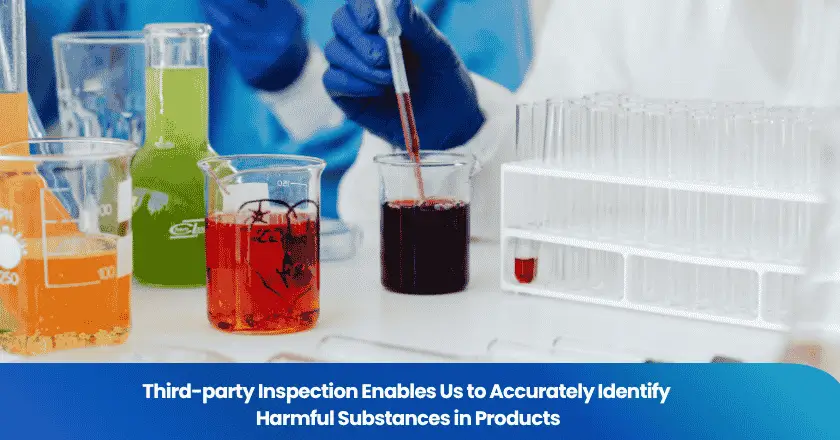
Product quality is not limited to what can be seen or measured during a routine visual inspection.
A product may look acceptable while containing substances that require further assessment through laboratory testing. This is particularly relevant for products made with plastics, textiles, coatings, adhesives, metals, electronics, and other materials that may be subject to chemical-substance requirements in their target markets.
For importers, brands, manufacturers, and retailers, independent third-party inspection and product testing can provide additional visibility into product quality and help identify potential chemical risks before products enter the supply chain.
However, inspection and laboratory testing serve different purposes. Understanding the difference is important when developing an effective product quality-control process.
What Are Harmful Substances in Products?
"Harmful substances" is a broad term that can refer to chemical substances restricted or controlled under applicable product, environmental, or market requirements.
The substances of concern depend on the product and destination market.
Examples can include certain:
- Heavy metals
- Phthalates
- Formaldehyde
- Restricted dyes
- Residual chemicals
- Solvents
- Plasticizers
- Other restricted chemical substances
Not every product is subject to the same chemical requirements.
For example, the relevant testing for a children's product may differ from that for apparel, electrical products, furniture, packaging, or industrial goods.
Therefore, buyers should identify the applicable requirements before selecting a testing program.
Can a Visual Product Inspection Identify Harmful Substances?
Usually, no.
A routine product inspection can identify observable characteristics such as:
- Appearance
- Workmanship
- Dimensions
- Materials that can be visually verified
- Labels and markings
- Packaging
- Basic functions
However, the presence or concentration of many chemical substances cannot be reliably determined simply by looking at a product.
This is where laboratory testing becomes important.
For example, a plastic component may appear normal during a visual inspection, but laboratory analysis may be necessary to determine whether it contains a restricted substance above an applicable limit.
Therefore, buyers should distinguish between:
Inspection: What can be observed, measured, or functionally checked on or around the product?
Testing: What properties or substances require laboratory analysis to determine?
These two activities can complement each other but should not be treated as interchangeable.
How Does Third-Party Testing Help Identify Chemical Risks?
Third-party testing provides an independent laboratory assessment based on defined test methods and requirements.
Depending on the product and testing scope, a laboratory may analyze selected materials or product samples for specified substances or physical properties.
A typical process can include:
Product Requirements → Test Plan → Sample Collection → Laboratory Analysis → Test Results → Compliance Review
The testing scope should be determined according to the product, destination market, applicable requirements, and buyer's objectives.
The laboratory report can then provide analytical results for the substances or characteristics covered by the selected test program.
Why Should Buyers Test Products Before Shipment?
Testing after products have already been shipped or distributed can make problems more expensive to address.
If a buyer identifies a chemical issue before shipment, there may still be an opportunity to:
- Discuss the result with the supplier
- Identify affected materials or components
- Investigate the cause
- Request corrective action
- Replace affected materials
- Arrange additional testing
- Review whether production should continue
The earlier a potential issue is identified, the more options the buyer may have.
For this reason, product testing can be incorporated into a broader quality-control plan rather than treated as an isolated activity after production is complete.
Which Products May Require Chemical Substance Testing?
The appropriate testing depends on the product and its intended market.
Products that may require chemical or material testing can include:
Consumer Products
Products containing plastics, coatings, adhesives, or other materials may require testing for specified restricted substances depending on the market and product category.
Toys and Children's Products
Children's products may be subject to specific chemical requirements covering accessible materials or components.
Testing requirements should be determined according to the applicable regulations and product characteristics.
Apparel and Textiles
Textile products may require testing related to dyes, formaldehyde, certain chemicals, or other restricted substances depending on the destination market and buyer requirements.
Electrical and Electronic Products
Electrical and electronic products can contain multiple materials and components that may be subject to substance restrictions in certain markets.
Furniture and Household Products
Furniture and household products may involve materials such as wood-based panels, coatings, plastics, adhesives, textiles, and foams.
The applicable chemical requirements depend on the product, materials, and destination market.
What Is the Difference Between RoHS and General Product Testing?
RoHS is one specific regulatory framework concerning the restriction of certain hazardous substances in electrical and electronic equipment.
It should not be treated as a general test for all products.
The original article uses RoHS as an example of third-party inspection and chemical control, but a more accurate approach is to determine the applicable requirements based on the product category and destination market.
For an electrical or electronic product, a buyer may need to evaluate relevant substance restrictions and applicable testing requirements.
For a textile, toy, furniture product, or other consumer product, a different set of requirements may apply.
The important question is therefore not simply:
"Does this product need RoHS testing?"
but rather:
"Which substance requirements apply to this product in its target market, and what testing is needed to verify them?"
When Should Product Testing Be Conducted?
Testing can be arranged at different stages depending on the product and risk.
Before Mass Production
Testing materials or samples before mass production can help identify potential material-related problems before large quantities are manufactured.
This can be particularly useful when a product uses new materials, new suppliers, or newly developed formulations.
During Production
For higher-risk products, testing may be incorporated into production quality control when appropriate.
This can help buyers investigate whether production materials remain consistent with the approved requirements.
Before Shipment
Testing finished products before shipment can provide analytical information about the final product before it enters the next stage of the supply chain.
The appropriate timing depends on the product, testing method, production schedule, and buyer's requirements.
How Does Product Inspection Work With Laboratory Testing?
Inspection and testing can work together as complementary quality-control measures.
For example:
Step 1: Define Requirements
The buyer identifies product specifications, destination market, material requirements, and relevant chemical or performance requirements.
Step 2: Inspect Production
An inspector checks observable product characteristics such as workmanship, dimensions, appearance, packaging, and other specified requirements.
Step 3: Select Samples for Testing
Where laboratory testing is required, appropriate samples can be collected according to the agreed test plan.
Step 4: Laboratory Analysis
The selected samples are tested for specified chemical substances or physical properties.
Step 5: Review Results
The buyer reviews the laboratory results against the applicable requirements or agreed specifications.
This combination can provide a broader quality-control picture than either inspection or testing alone.
What Should Buyers Prepare Before Product Testing?
Before arranging a test, buyers should provide as much relevant information as possible.
This may include:
- Product name and model
- Product composition
- Material information
- Intended use
- Target market
- Applicable requirements
- Supplier information
- Approved specifications
- Previous test reports
- Specific substances or properties to be tested
- Required test methods where applicable
Clear information helps the testing provider determine an appropriate testing scope.
A generic test package is not necessarily suitable for every product.
What Happens If a Test Identifies a Restricted Substance?
A test result indicating a substance above an applicable limit should be reviewed against the specific requirement and test scope.
The buyer may then need to:
- Confirm the result and applicable limit.
- Identify the affected material or component.
- Discuss the finding with the supplier.
- Investigate the source of the substance.
- Determine appropriate corrective action.
- Test corrected materials or products when necessary.
- Decide whether affected products can be released.
The appropriate response depends on the product, applicable requirements, contract, and test results.
A third-party testing provider can provide analytical results, but the final commercial or regulatory decision may require additional review by the buyer or relevant compliance professionals.
How Can Buyers Reduce Chemical Compliance Risks?
Know the Target Market
Chemical requirements vary by market and product category. Identify the relevant requirements before production rather than after the goods are completed.
Understand Product Materials
Knowing which materials, coatings, adhesives, dyes, plastics, or other components are used can help determine which risks should be evaluated.
Test High-Risk Materials
Where the product or material presents a known chemical risk, appropriate laboratory testing can provide evidence that cannot be obtained through visual inspection alone.
Keep Test Documentation
Maintain laboratory reports, material information, specifications, and supplier documentation as part of the product quality records.
Combine Testing With Production Quality Control
Laboratory testing should not necessarily replace production inspection.
A stronger process can combine:
Supplier Requirements → Material Control → Production Inspection → Product Testing → Final Quality Review
This gives buyers visibility into both observable product quality and selected chemical or physical characteristics.
How TradeAider Supports Product Quality and Testing
TradeAider provides third-party inspection, product testing, and quality-assurance services for buyers sourcing products from China.
Its product testing services cover different product categories, including hardline, softline, electrical and electronic, and industrial products.
Depending on the product and requirements, testing can address physical performance and chemical-substance requirements.
TradeAider's inspection services can also be used alongside testing to assess observable product quality, workmanship, dimensions, functionality, packaging, and other buyer-defined criteria.
This allows buyers to separate two important questions:
Does the product meet the visible and measurable quality requirements?
and
Does the product require laboratory testing to verify specific chemical or physical properties?
Using the appropriate combination of inspection and testing can give buyers a more complete view of product quality before shipment.
Frequently Asked Questions
Can third-party inspection detect harmful substances?
Routine visual inspection cannot reliably identify many chemical substances. Laboratory testing is generally required when the presence or concentration of a specific substance needs to be determined.
Is product inspection the same as product testing?
No. Inspection generally evaluates observable or measurable product characteristics, while laboratory testing analyzes specific physical, chemical, or other properties using defined test methods.
Does every product need chemical testing?
No. Testing requirements depend on the product, materials, intended use, destination market, and applicable requirements.
Is RoHS testing required for all products?
No. RoHS is specifically associated with restrictions on certain hazardous substances in electrical and electronic equipment. Other product categories may be subject to different requirements.
When should buyers test products?
Testing may be appropriate before mass production, during production, or before shipment, depending on the product and risk. For many buyers, identifying material or chemical issues before large-scale production or shipment provides more opportunities for corrective action.
Can an inspection report prove that a product is free from harmful substances?
No. A routine inspection report should not be treated as proof that a product contains no harmful substances. Where chemical composition needs to be verified, appropriate laboratory testing should be used.
Conclusion
Product safety and quality involve more than what can be seen during a factory inspection.
A product can meet its visual and workmanship requirements while still requiring laboratory analysis to determine whether specific chemical substances or physical properties meet applicable requirements.
For this reason, buyers should distinguish between inspection and testing and use each for the questions it is designed to answer.
Third-party inspection can provide independent information about product condition and manufacturing quality, while laboratory testing can provide analytical results for selected chemical or physical characteristics.
By combining clear product requirements, appropriate inspection, and targeted testing, buyers can make better-informed quality decisions before products move into the supply chain.
Artigos Relacionados
Expanda seu negócio com o Serviço TradeAider
Clique no botão abaixo para entrar diretamente no Sistema de Serviço TradeAider. Os passos simples desde a reserva e pagamento até o recebimento de relatórios são fáceis de operar.

