
- Sobre Nós

- Nossos Serviços
- Sua Indústria
- Recursos
- Notícias e Blog
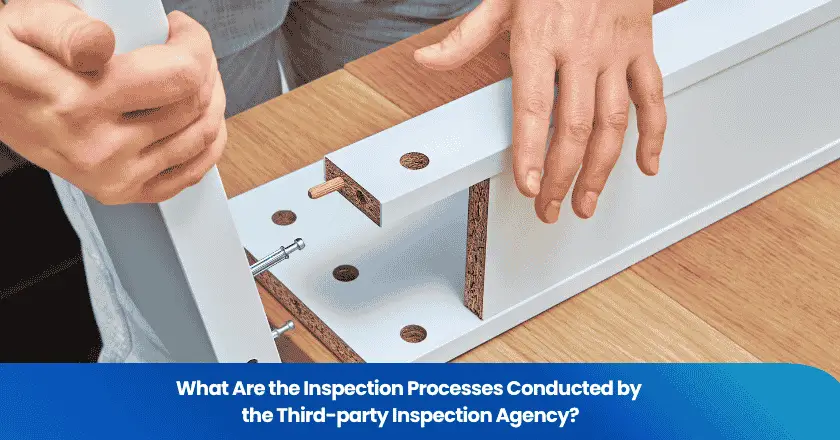
Third-party inspection provides buyers with an independent way to check products and production conditions against agreed requirements.
For international buyers, the process can be particularly useful when the supplier and buyer are located in different countries. Instead of relying only on supplier-provided information or waiting until goods arrive at the destination, buyers can arrange an independent inspection at an appropriate stage of production.
The exact inspection process varies by product, order, and buyer requirements. However, a typical third-party inspection involves several basic stages, from defining inspection requirements and arranging the inspection to conducting on-site checks and issuing a report.
This guide explains how a third-party inspection process works from the buyer's perspective and what information should be prepared before the inspection.
What Is a Third-Party Inspection?
A third-party inspection is an independent assessment of products, production, or other defined requirements by an organization that is separate from the buyer and supplier.
The purpose is to provide the buyer with objective information about the conditions or products observed during the inspection.
Depending on the service, an inspection may evaluate:
| Inspection Area | Examples |
|---|---|
| Product appearance | Surface defects, workmanship, color, finish |
| Dimensions | Size, weight, measurements, tolerances |
| Function | Basic functional or operational checks |
| Quantity | Finished quantity, carton quantity, SKU quantity |
| Materials | Visible or document-based material verification |
| Packaging | Inner and outer packaging, carton condition |
| Labels | Product labels, markings, barcodes |
| Production status | Production progress and readiness |
| Loading | Container condition, quantity, loading process |
The inspection criteria should be based on the buyer's specifications, approved samples, drawings, purchase requirements, or other agreed standards.
What Are the Main Steps in a Third-Party Inspection Process?
A practical third-party inspection process can be summarized as:
Define Requirements → Book Inspection → Prepare Inspection Criteria → Conduct On-Site Inspection → Record Findings → Review Results → Issue Report → Corrective Action or Re-Inspection When Needed
Not every order requires the same inspection stage or scope.
The appropriate process depends on factors such as product type, production stage, order value, supplier history, quality risks, and buyer requirements.
Step 1: Define the Inspection Requirements
Before an inspection is arranged, the buyer should clearly define what needs to be checked.
Useful information can include:
| Information | Examples |
|---|---|
| Product | Product name, model, SKU |
| Quantity | Total order quantity |
| Specifications | Dimensions, materials, functions |
| Reference | Approved sample, drawings, product photos |
| Quality criteria | Defect classifications and tolerances |
| Packaging | Packaging specifications and carton requirements |
| Labeling | Labels, markings, barcodes |
| Testing | Required functional or laboratory tests |
| Inspection stage | Pre-production, during production, or pre-shipment |
The clearer the requirements, the more consistently an inspector can evaluate the products.
For example, "good quality" is difficult to inspect objectively. A defined requirement such as a specific dimension tolerance, material specification, or approved sample provides a much more practical inspection reference.
Step 2: Select the Appropriate Inspection Stage
Third-party inspection does not have to take place only after production is finished.
Depending on the order, buyers may arrange inspection at different stages.
| Inspection Type | Typical Timing | Main Purpose |
|---|---|---|
| Pre-Production Inspection (PPI) | Before mass production | Check materials, components, specifications, and production readiness |
| During Production Inspection (DPI/DUPRO) | During manufacturing | Check production progress, consistency, workmanship, and recurring defects |
| Pre-Shipment Inspection (PSI/FRI) | After production is substantially complete | Verify finished products before shipment |
| Container Loading Supervision | During loading | Verify products, quantity, container condition, and loading process |
| Factory Audit | Before or during supplier evaluation | Assess factory facilities, processes, and quality-related capabilities |
These services address different questions and can be used individually or as part of a broader quality-control plan.
Step 3: Book the Inspection
Once the inspection requirements and timing are confirmed, the inspection is scheduled with the supplier's factory.
The buyer normally provides information such as:
- Supplier or factory details
- Factory address
- Product information
- Order quantity
- Expected production status
- Inspection date or preferred timing
- Inspection requirements
- Reference documents or samples
The supplier should also be aware of the inspection arrangements so that the required products, production areas, documents, and samples are available when the inspector arrives.
Step 4: Prepare the Inspection Checklist
Before going to the factory, the inspection criteria should be converted into a practical inspection checklist.
The checklist may cover several categories:
| Category | Typical Checks |
|---|---|
| Quantity | Total quantity, SKU quantity, carton quantity |
| Appearance | Defects, color, finish, workmanship |
| Dimensions | Measurements and tolerances |
| Function | Functional tests specified by the buyer |
| Materials | Material or component requirements |
| Accessories | Correct accessories and components |
| Packaging | Inner packaging, cartons, protection |
| Labeling | Labels, markings, barcodes, warnings |
| Special requirements | Buyer-specific inspection points |
For products with complex requirements, additional tests or laboratory analysis may be required.
A visual inspection should not be treated as a substitute for laboratory testing when a specific chemical, material, or physical property needs analytical verification.
Step 5: Conduct the On-Site Inspection
The inspector visits the factory and performs the inspection according to the agreed scope.
The actual checks depend on the product.
For example, an apparel inspection may focus on measurements, workmanship, fabric appearance, stitching, labels, and accessories.
An electrical product inspection may include dimensions, appearance, labeling, basic functional checks, and other product-specific requirements.
A furniture inspection may focus on dimensions, materials, construction, surface finish, hardware, stability, packaging, and other specified characteristics.
The inspection therefore should be customized rather than based on exactly the same checklist for every product category.
Step 6: Record Inspection Findings
During the inspection, findings should be documented with appropriate evidence.
Depending on the inspection scope, this may include:
- Inspection results
- Measurements
- Product photographs
- Videos
- Defect photographs
- Quantity information
- Packaging photographs
- Functional test results
- Other relevant observations
Photographic and measurement evidence can help buyers understand the actual condition of the inspected goods without being physically present at the factory.
Step 7: Evaluate the Results
The inspection findings are then compared with the agreed inspection criteria.
Depending on the inspection plan, the result may consider:
- Critical defects
- Major defects
- Minor defects
- Specification deviations
- Functional failures
- Quantity discrepancies
- Packaging issues
- Other buyer-defined acceptance criteria
Where an AQL-based sampling plan is used, the inspection result is evaluated according to the selected sampling plan and acceptance criteria.
A failed inspection does not necessarily mean that every product in the order is defective. It means that the inspected sample or findings did not meet the defined acceptance criteria under the applicable inspection plan.
Step 8: Issue the Inspection Report
After the inspection, the buyer receives a report documenting the inspection findings.
A typical report can include:
| Report Section | Information |
|---|---|
| Inspection details | Factory, date, product, order |
| Quantity | Ordered and inspected quantity |
| Inspection scope | Areas and tests performed |
| Findings | Defects and deviations |
| Measurements | Actual measurement results |
| Photos | Product and defect evidence |
| Packaging | Packaging and carton findings |
| Functional checks | Results of applicable tests |
| Final result | Result according to the defined criteria |
The report provides a documented record of what was inspected and what was found at the time of inspection.
Step 9: Decide on the Next Action
After receiving the inspection findings, the buyer can determine the appropriate next step.
Depending on the results, the buyer may:
| Inspection Finding | Possible Buyer Action |
|---|---|
| Meets requirements | Release or proceed with shipment |
| Minor issues within acceptance criteria | Proceed according to agreed criteria |
| Defects exceed acceptance criteria | Request corrective action or rework |
| Significant specification deviation | Discuss correction with supplier |
| Unresolved issues | Request further verification or re-inspection |
| Testing issue | Investigate material/product and determine next steps |
The appropriate decision depends on the buyer's specifications, contract, commercial arrangements, and inspection results.
Step 10: Corrective Action and Re-Inspection
An inspection report identifies findings, but quality control does not necessarily end with the report.
If significant defects are identified, the supplier may need to correct the affected products or production process.
For recurring production problems, the buyer may also want to understand the underlying cause rather than simply correcting individual defective units.
After corrective action, re-inspection can be arranged when the buyer needs verification that the identified issues have been addressed.
This creates a more complete quality-control loop:
Identify → Correct → Verify
TradeAider can help supervise corrective actions on site, verify improvements, and support re-inspection when required.
What Factors Affect the Inspection Process?
The inspection process is not identical for every order.
Several factors can influence the inspection scope and timing.
Product Type
Different products require different inspection criteria.
A garment, electrical appliance, piece of furniture, and industrial component will have different quality requirements.
Production Stage
The appropriate inspection depends on whether production has not yet started, is underway, or is substantially complete.
Order Quantity
Larger orders may require different sampling or inspection arrangements than smaller orders.
Product Risk
Products with complex functions, strict specifications, or high consequences of failure may require more detailed inspection or testing.
Supplier History
Buyers may adjust their quality-control approach based on previous supplier performance and known quality issues.
Buyer Requirements
The buyer's own specifications ultimately determine many of the inspection points.
What Should Buyers Prepare Before a Third-Party Inspection?
A well-prepared inspection can be more efficient and produce more useful results.
Before the inspection, buyers should ideally provide:
| Required Information | Purpose |
|---|---|
| Product specifications | Define what the product should be |
| Approved sample | Provide a physical reference where applicable |
| Drawings | Define dimensions and construction |
| Material requirements | Define required materials or components |
| Packaging specifications | Define packaging expectations |
| Label artwork | Verify printed information |
| Defect criteria | Establish acceptance standards |
| Order quantity | Determine inspection scope |
| Special instructions | Cover product-specific requirements |
| Testing requirements | Identify checks requiring testing |
If the buyer does not have a formal inspection checklist, the inspection provider can help translate product requirements into practical inspection criteria.
How Does Third-Party Inspection Differ From Factory Quality Control?
The supplier's own quality-control team is responsible for controlling production.
Third-party inspection serves a different purpose.
| Factory Quality Control | Third-Party Inspection |
|---|---|
| Conducted by the supplier | Conducted by an independent inspection provider |
| Controls the supplier's production process | Provides independent verification |
| Takes place as part of normal manufacturing | Arranged according to buyer requirements |
| Focuses on internal quality management | Focuses on buyer-defined inspection criteria |
| Supports production control | Provides documented information to the buyer |
The two approaches can work together.
A supplier's internal quality control helps prevent and correct production problems, while third-party inspection gives the buyer an additional source of independent information.
Can Third-Party Inspection Guarantee Product Quality?
No inspection can guarantee that every unit in an order will be free from defects.
An inspection assesses products, samples, or conditions within a defined scope and at a specific point in time.
The inspection result therefore needs to be understood in the context of:
- Inspection scope
- Sampling plan
- Inspection date
- Product quantity
- Defined specifications
- Test methods
- Acceptance criteria
For products requiring laboratory analysis, laboratory testing may also be necessary because some characteristics cannot be established through routine visual or functional inspection.
How TradeAider Conducts Third-Party Inspections
TradeAider provides third-party inspection and quality-assurance services for buyers sourcing products from China.
Its inspection services include:
- Pre-Production Inspection
- During Production Inspection
- Pre-Shipment Inspection
- Factory Audit
- Container Loading Supervision
The inspection scope can be based on buyer-defined product specifications, approved samples, drawings, quality criteria, and other requirements.
TradeAider's inspection system also provides online access to inspection information such as photos, videos, measurements, and findings, followed by an official inspection report.
For buyers who cannot regularly visit factories themselves, this provides an additional way to monitor production and verify product quality.
Frequently Asked Questions
What is the first step in a third-party inspection?
The first step is to define what needs to be inspected. Product specifications, approved samples, drawings, packaging requirements, defect criteria, and other relevant information should be established before the inspection.
How long does a third-party inspection take?
The duration depends on the product, quantity, inspection scope, factory location, and required tests. Some inspections can be completed within one man-day, while more complex orders may require additional inspection time.
When should a third-party inspection be conducted?
It can be conducted before production, during production, after production, or during container loading. The appropriate timing depends on the risks the buyer wants to control.
What happens if an inspection fails?
The buyer can review the findings with the supplier and determine whether corrective action, rework, replacement, or re-inspection is appropriate.
Does third-party inspection replace factory quality control?
No. Third-party inspection provides independent verification, while the supplier remains responsible for its own production and quality-control processes.
Is laboratory testing part of a third-party inspection?
It can be, depending on the service and requirements. However, laboratory testing and routine product inspection serve different purposes. Testing is appropriate when specific physical, chemical, or other properties require analytical verification.
Conclusion
A third-party inspection process is more than sending an inspector to a factory and receiving a report.
A well-structured process begins with clear product requirements and continues through inspection planning, on-site verification, documentation, result evaluation, corrective action, and re-inspection when necessary.
The exact process should be adapted to the product, production stage, order, supplier, and buyer's quality requirements.
For international buyers, third-party inspection provides an independent source of information about production and product quality before goods move to the next stage of the supply chain.
TradeAider supports buyers with third-party inspection and quality-assurance services across different production stages, helping them verify products against their defined requirements and obtain documented inspection evidence.
Artigos Relacionados

Expanda seu negócio com o Serviço TradeAider
Clique no botão abaixo para entrar diretamente no Sistema de Serviço TradeAider. Os passos simples desde a reserva e pagamento até o recebimento de relatórios são fáceis de operar.

