
- Sobre Nós

- Nossos Serviços
- Sua Indústria
- Recursos
- Notícias e Blog
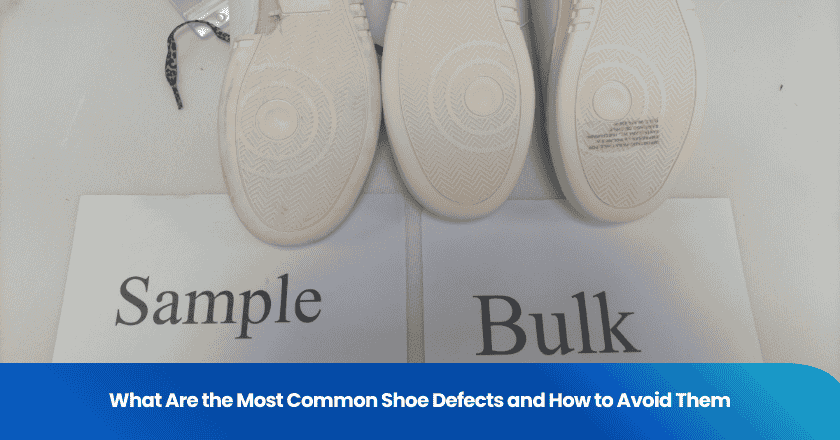
The most common shoe defects importers should catch before shipment are weak sole bonding, poor stitching, size mismatch, color shade variation, upper wrinkles, stains, odor, metal contamination, poor pair matching, wrong labels, and weak packaging. The safest inspection plan connects each defect to its likely root cause and release decision.
Footwear quality is difficult because a shoe is both a fitted product and a fashion product. ISO 9001 gives the process mindset: requirements must be controlled and consistently met. For shoes, those requirements include fit, appearance, function, materials, pair matching, packing, and durability signals.
When importers use sampled inspection, ISO 2859-1:2026 provides the lot-by-lot AQL sampling framework many buyers apply. AQL does not decide which shoe defects matter; the buyer must define critical, major, and minor defects before inspection.
Sole bonding deserves special attention. SATRA notes that adhesive bond testing is important because sole adhesion problems can lead to consumer complaints and returns. Even when the shoe looks acceptable in a photo, a weak bond can become a costly post-sale failure.
- Highest return risk: sole opening, size mismatch, pair mismatch, and comfort or fit complaints.
- Most visible defect: color shade variation, stains, glue marks, wrinkles, and poor finishing.
- Most overlooked issue: carton, box, size label, barcode, and pair split mistakes.
- Best prevention: freeze the approved sample, define defect classes, inspect during production, and run PSI before release.
What Are the Most Common Shoe Defects?
The most common shoe defects are sole separation, weak bonding, skipped stitching, loose thread, size mismatch, left-right pair mismatch, color shade difference, upper wrinkles, stains, glue marks, odor, material damage, metal contamination, wrong labels, wrong box, and poor carton packing.
Not every shoe defect has the same business impact. A small glue mark on an inner area may be minor, but sole opening, broken stitching, size mismatch, metal contamination, or wrong pair packing can become major or critical depending on product type and destination requirements.
That is why the inspection file should define defect severity before the inspector arrives. TradeAider buyers can combine an AQL sampling plan with a product-specific footwear checklist so the factory, inspector, and buyer do not debate severity after defects are found.
Footwear inspection should also check both individual shoes and pairs. A single shoe can pass appearance inspection while the pair fails because color, height, outsole, last shape, size label, or left-right matching is wrong.
Shoe Defect Inspection Table
Use this table to separate appearance issues from release-stopping defects.
| Defect Type | What to Check | Likely Root Cause | Release Decision |
|---|---|---|---|
| Sole bonding | Opening, gap, weak adhesion, delamination | Wrong adhesive, curing, surface prep | Hold if repeated or functional |
| Stitching | Skipped stitch, loose thread, broken stitch | Machine setting, operator skill, material tension | Sort or rework by severity |
| Size and fit | Length, width, pair match, last shape | Wrong mold, size mark, mixed lot | Hold affected sizes |
| Color shade | Upper, sole, trims, left-right match | Material batch variation | Sort by shade and approve tolerance |
| Surface finish | Wrinkle, stain, glue mark, scratch | Handling, finishing, packing | Classify major/minor by visibility |
| Odor and contamination | Chemical smell, mildew, metal pieces | Material, storage, process control | Escalate before release |
| Packing | Wrong box, label, barcode, carton mix | Warehouse or label control | Correct before shipment |
The table should be adapted to the buyer's shoe type. A fashion sneaker, hiking boot, children's shoe, leather dress shoe, slipper, and safety shoe do not share the same defect tolerance. The approved sample and sales channel should set the severity rules.
A useful importer rule is to separate visible cosmetic defects from durability defects. Cosmetic defects may be sorted or discounted in some channels. Durability and fit defects usually create returns, complaints, and repeat business damage.
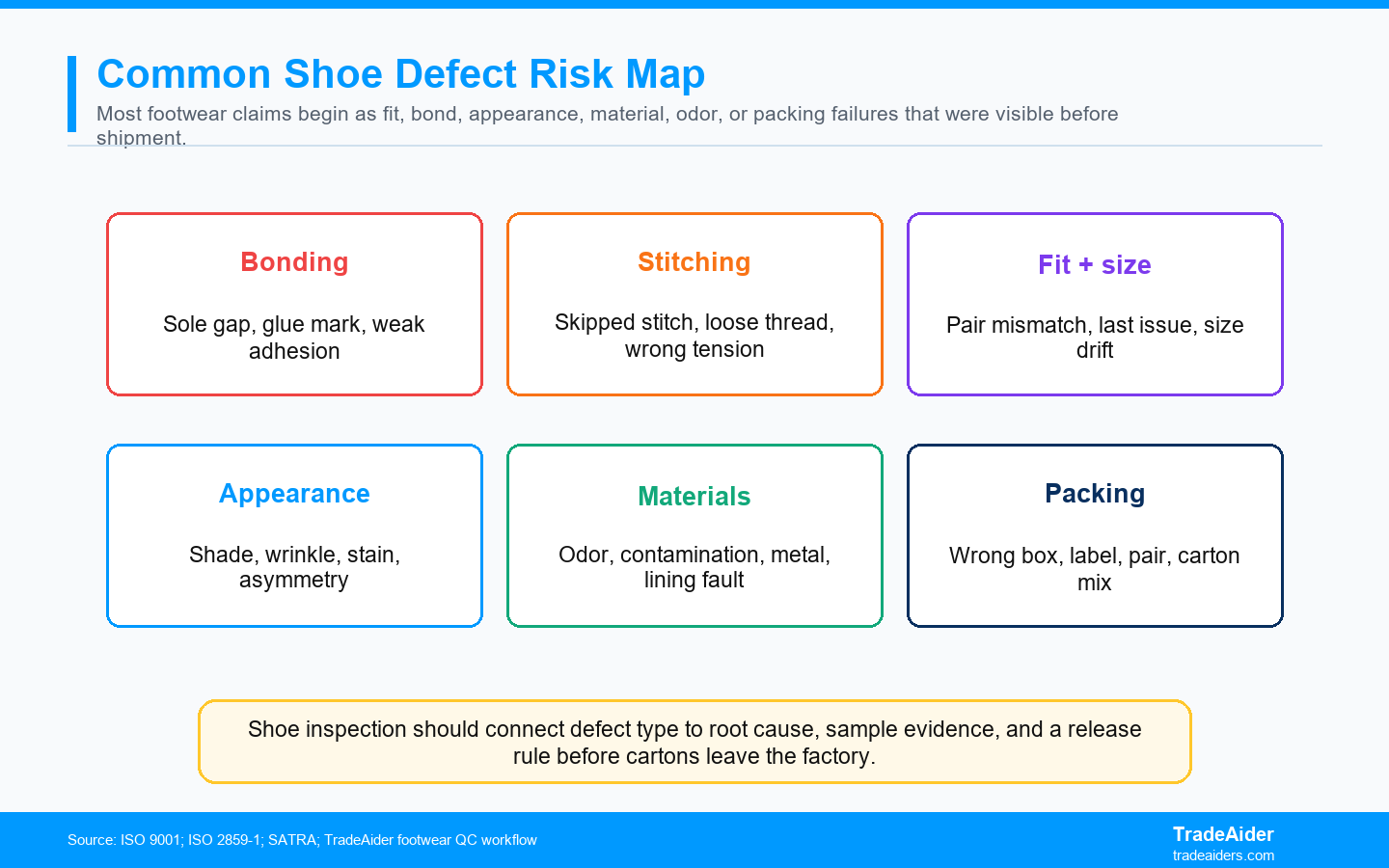
Shoe inspection should connect defect type to root cause, sample evidence, and a release rule before cartons leave the factory.
Sole Bonding Is the Defect Importers Should Fear Most
A shoe can look acceptable before shipment and still fail if the outsole bond is weak.
Bonding failures often come from process control
SATRA footwear guidance highlights the importance of testing adhesive bonds because poor adhesion can lead to sole detachment and returns. In production, bonding can fail because of wrong adhesive, poor surface preparation, insufficient curing, contamination, humidity, or rushed assembly.
Inspection should check visible sole gaps, glue overflow, lifting edges, outsole alignment, flex areas, and whether the failure concentrates in one size, material, color, or production line. A few random gaps may indicate handling. A repeated pattern usually means process control is weak.
Do not approve repeated bonding defects as cosmetic
A glue mark may be cosmetic. A sole opening is not. If the bond is already separating before shipment, customer wear will make it worse. The buyer should hold or rework repeated bonding defects and consider additional testing when the risk affects durability or safety.
For higher-risk footwear, the buyer should add flex-related checks, bond-strength testing coordination, or during-production inspection before the whole lot is finished. Catching bonding drift early is cheaper than sorting thousands of pairs after packing.
Stitching, Upper, and Pair Matching Defects Need Visual Discipline
Footwear appearance problems become expensive when the buyer does not define visibility and pair tolerance.
Stitching defects show both workmanship and durability risk
Skipped stitches, uneven stitch length, loose thread, broken thread, frayed edges, and wrong seam tension can be cosmetic or functional. The inspector should check high-stress areas such as eyelets, straps, heel counter, tongue, collar, outsole edge, and upper joins.
The approved sample should define acceptable stitch density, thread color, trim placement, reinforcement, and finishing. If the supplier changes thread, needle, material, or machine settings, the finished shoe can look close in a distant photo while failing closer inspection.
Left-right matching is its own inspection point
Pair matching is easy to overlook because each shoe may look acceptable alone. The inspector should check left and right color shade, size, height, last shape, outsole pattern, logo placement, eyelet count, trim direction, and packaging pair. A mixed left-right pair creates an immediate customer complaint.
Shade matching also matters across cartons when the seller ships multiple pairs to one retailer or customer. If the material batch differs, the buyer may need shade sorting or a narrower approval tolerance before release.
Original Cost Screen: A 1.5% Major Defect Can Erase a Cheap Inspection Saving
Footwear inspection pays for itself fastest when it prevents repeated fit, bond, or pair-matching returns.
Consider an 8,000-pair sneaker order with a 1.5% repeated major defect such as sole opening or wrong pair matching. That equals 120 affected pairs. If each return, replacement, or warehouse handling event costs $12, the direct handling exposure is about $1,440 before counting reviews, retailer penalties, or lost repeat purchase.
This scenario estimate does not prove every inspection has the same return. It shows why repeated major defects should be treated as a release decision, not a normal factory allowance. A buyer who saves one inspection day but ships 120 bad pairs has not saved money.
The right response depends on concentration. If defects appear in one size, color, or line, sort and isolate that group. If defects are scattered across the lot, the buyer may need broader reinspection or a process correction before release.
Packaging and Label Errors Are Common Shoe Defects Too
A perfect pair in the wrong box can still fail receiving, returns, or marketplace listing accuracy.
Shoe shipments often fail in the warehouse layer: wrong box size, wrong barcode, mismatched color label, missing tissue, crushed retail box, mixed cartons, wrong hangtag, or wrong inner pack. These problems may not affect product durability, but they can stop retail receiving or create online return claims.
The inspection checklist should include retail box, size label, style code, color code, barcode, carton mark, pair count, assortment ratio, and packaging strength. For e-commerce sellers, the retail box may be the customer-facing package, so damage or mismatch can become a customer complaint.
If the buyer sells through marketplaces or retail chains, barcode and carton evidence should be photographed. A shoe order with clean workmanship but wrong carton labels can still create a costly receiving delay.
Size Runs and Carton Assortments Need Their Own Sampling Logic
Footwear inspection should verify the order structure, not only the visual condition of sampled pairs.
Shoe orders often ship in multiple sizes, colorways, and carton assortments. If the inspector samples only the most accessible cartons, the report can miss a size-run problem hidden in the back of the packed lot. The inspection plan should identify size distribution, color distribution, carton sequence, and whether the supplier has packed solid-size or mixed-size cartons.
The buyer should ask the inspector to verify size labels against physical pairs, retail boxes, inner labels, hangtags, and carton marks. A pair with correct workmanship but wrong size label is still a release problem because it creates returns, exchange costs, and warehouse confusion.
For large footwear orders, defects should be reported by size, color, and carton group rather than only as total counts. That structure tells the buyer whether to release the clean portion, sort one size, rework one colorway, or reinspect the whole lot.
Where TradeAider Fits in Shoe Quality Control
TradeAider helps footwear importers turn sample approval into product, pair, carton, and release evidence before shipment.
TradeAider can support footwear buyers through Pre-Shipment Inspection, checking appearance, workmanship, sizing, pair matching, labels, packaging, carton marks, and sampled functional checks before final balance payment.
When the order uses new materials, new outsole construction, new supplier, or new size run, During Production Inspection can catch bonding, stitching, material shade, or packaging drift while correction is still possible. Pre-Production Inspection can help verify sample, material, and readiness before mass production starts.
TradeAider can also help buyers define a footwear-specific checklist using inspection standard guidance and AQL sampling logic. The result is a report that supports release, hold, sort, rework, or reinspection instead of a vague pass/fail note.
SPAR Scenario: The Shoe Looked Fine, but the Sole Bond Failed
The buyer prevented a durability return problem by treating sole bonding as a release risk.
Situation: A US importer orders 8,400 casual shoes from a factory that passed sample approval three months earlier.
Problem: During production, the factory changes adhesive supplier for one colorway, and early packed pairs show small outsole openings near the toe.
Action: The buyer asks TradeAider to inspect by colorway and size, photograph outsole gaps, check pair matching, and isolate cartons from the affected production date.
Result: TradeAider identifies 146 affected pairs, so the buyer holds those cartons for rework and accepts a two-day delay instead of shipping a known durability defect.
Shoe Inspection Checklist Before Shipment
Use this checklist when approving a footwear lot before balance payment.
- Check sole bonding, outsole alignment, and visible gaps.
- Inspect stitching, loose thread, trims, and high-stress areas.
- Measure size, pair matching, color shade, and left-right symmetry.
- Check stains, glue marks, odor, mildew, and contamination.
- Verify box label, barcode, carton mark, and pair count.
- Hold repeated major defects by size, color, or production date.
The checklist should be customized for the shoe type and sales channel. A buyer selling premium leather footwear should define stricter appearance tolerance than a buyer selling low-cost slippers, but both need release rules for bonding, size, and pair identity.
If your shoe order has bonding, stitching, sizing, shade, or packing risk, send TradeAider the approved sample photos, size run, material list, defect concerns, PO, and packing status. The next step is to schedule a footwear inspection before shipment release.
Frequently Asked Questions
What is the most serious shoe defect?
Sole separation or weak bonding is often the most serious because it can pass a quick appearance check but fail during customer wear, causing returns and brand damage.
Are glue marks major or minor defects?
Glue marks can be minor or major depending on visibility, location, product positioning, and buyer tolerance. Repeated visible glue marks on customer-facing areas should be treated seriously.
How should importers inspect shoe size defects?
Inspect size labels, actual measurements, left-right matching, outsole length, fitting consistency, and whether the size run matches the PO and carton marks.
Can AQL sampling find all shoe defects?
No. AQL sampling estimates lot quality from a sample. It should be combined with clear defect classes, approved samples, risk-based checks, and reinspection when repeated defects appear.
How can TradeAider help with shoe defects?
TradeAider can inspect footwear before shipment, document defects by size and color, verify packaging and labels, and help the buyer decide release, hold, sort, rework, or reinspection.
Artigos Relacionados
Expanda seu negócio com o Serviço TradeAider
Clique no botão abaixo para entrar diretamente no Sistema de Serviço TradeAider. Os passos simples desde a reserva e pagamento até o recebimento de relatórios são fáceis de operar.

