
- Sobre Nós

- Nossos Serviços
- Sua Indústria
- Recursos
- Notícias e Blog
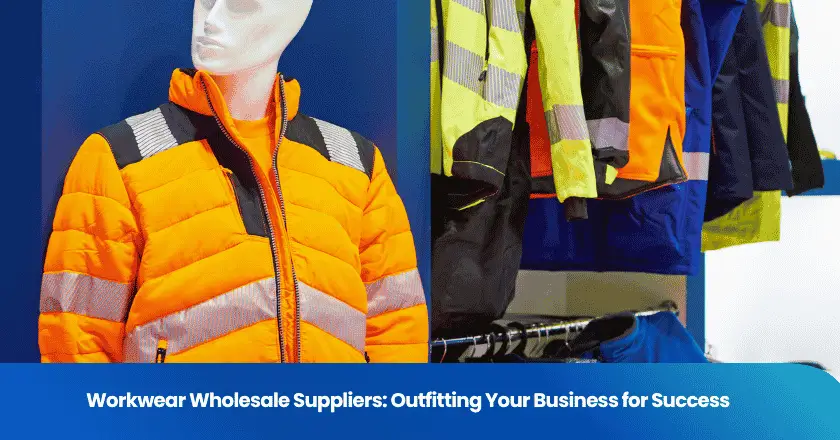
Finding the right workwear wholesale suppliers is an important step for businesses that need to purchase uniforms, protective clothing, or professional apparel in bulk.
However, choosing a supplier should involve more than comparing wholesale prices. Workwear is often expected to withstand repeated use, washing, movement, and demanding working environments. Fabric quality, stitching, sizing, closures, color consistency, labeling, and packaging can all affect the final product.
For businesses sourcing workwear from China or other manufacturing markets, a structured supplier evaluation and quality-control process can help reduce the risk of receiving products that do not match approved samples or specifications.
This guide explains what to consider when evaluating workwear wholesale suppliers and how product inspection and testing can fit into the purchasing process.
What Are Workwear Wholesale Suppliers?
Workwear wholesale suppliers provide work-related clothing in larger quantities to businesses, distributors, retailers, contractors, and other organizations.
Depending on the supplier, their product range may include:
- Work shirts and trousers
- Coveralls and overalls
- Jackets and outerwear
- High-visibility workwear
- Industrial uniforms
- Hospitality uniforms
- Healthcare workwear
- Construction clothing
- Corporate uniforms
- Custom-branded workwear
Some suppliers offer standard products, while others provide OEM or customized production based on a buyer's specifications.
When comparing suppliers, buyers should consider not only the available product range but also their ability to consistently manufacture products according to defined requirements.
What Should You Look for in a Workwear Wholesale Supplier?
1. Product and Manufacturing Capability
Start by determining whether the supplier regularly produces the type of workwear you need.
Consider:
- Product categories
- Fabric and material options
- Available sizes
- Customization capabilities
- Production capacity
- Minimum order quantities
- Packaging options
- Lead times
A supplier experienced in producing a specific type of workwear may already have suitable production processes and equipment for that product.
2. Fabric and Material Quality
The fabric can have a significant effect on workwear performance, comfort, durability, and appearance.
Depending on the intended application, buyers may specify requirements for:
- Fiber composition
- Fabric weight
- Color
- Construction
- Shrinkage
- Colorfastness
- Abrasion resistance
- Tear or tensile strength
- Water or stain resistance where applicable
For functional or protective workwear, laboratory testing may be necessary to verify specific performance or chemical requirements. Visual inspection alone cannot establish every material or performance characteristic.
3. Customization Capability
Businesses may require customized:
- Colors
- Logos
- Embroidery
- Printed graphics
- Labels
- Sizes
- Pocket configurations
- Closures
- Reflective elements
- Packaging
Before mass production, buyers should approve samples and clearly document the required specifications.
An approved sample can then serve as a reference during production inspection.
How to Evaluate Workwear Wholesale Suppliers
Price should be only one part of the evaluation.
A practical supplier review can consider:
| Evaluation Area | What to Check |
|---|---|
| Product capability | Experience with similar workwear |
| Production capacity | Ability to handle the required quantity |
| Materials | Fabric and component specifications |
| Quality control | Inspection procedures and production controls |
| Customization | Ability to reproduce approved designs |
| Lead time | Production and delivery schedule |
| Packaging | Individual and export packaging requirements |
| Documentation | Product specifications and test reports where applicable |
For larger or higher-risk orders, buyers can also consider an independent factory audit to obtain on-site information about production facilities, processes, and quality-related practices.
Why Product Inspection Matters When Buying Workwear
A supplier may provide an acceptable sample, but mass production can still develop inconsistencies.
Common workwear quality issues can include:
- Incorrect measurements
- Uneven stitching
- Loose or skipped stitches
- Broken or incorrectly installed buttons
- Defective zippers
- Poor embroidery or printing
- Color variation
- Fabric defects
- Incorrect labels
- Missing accessories
- Packaging errors
A third-party inspection provides an independent check of actual production against the buyer's requirements.
For apparel, inspection can cover garment appearance, workmanship, measurements, accessories, labels, packaging, and other product-specific requirements. TradeAider's apparel quality-control guidance also recommends combining material/sample checks, in-process inspection, and final inspection as appropriate to the order.
When Should Workwear Be Inspected?
Different inspection stages address different production risks.
Pre-Production Inspection
Before mass production starts, buyers can confirm key requirements such as:
- Fabric and materials
- Approved samples
- Colors
- Accessories
- Labels
- Packaging
- Production specifications
This is particularly useful for customized workwear.
During Production Inspection
During Production Inspection can identify problems while production is still underway.
Inspectors may check:
- Production progress
- Workmanship
- Fabric consistency
- Measurements
- Stitching
- Accessories
- Printing and embroidery
- Product consistency
If recurring defects are identified, the buyer can communicate with the supplier while there is still an opportunity to correct the production process.
Pre-Shipment Inspection
A Pre-Shipment Inspection is performed when the finished goods are ready for shipment.
For workwear, the inspection may include:
- Quantity verification
- Appearance and workmanship
- Garment measurements
- Fabric and color
- Stitching
- Zippers, buttons, and other accessories
- Labels and markings
- Packaging
- Carton quantity
TradeAider's inspection services can be customized according to buyer specifications and product requirements.
Workwear Testing vs. Inspection
Inspection and laboratory testing serve different purposes.
Inspection generally checks whether the product conforms to defined requirements through visual examination, measurements, functional checks, and other on-site inspection methods.
Testing can evaluate characteristics that cannot be reliably confirmed through routine visual inspection.
Depending on the workwear product and its intended use, testing may address areas such as:
- Physical performance
- Fabric strength
- Colorfastness
- Abrasion resistance
- Chemical substances
- Specialized functional properties
For workwear marketed with specific protective or performance claims, buyers should identify the applicable testing requirements before production and use appropriate laboratory testing where necessary.
A Simple Workwear Quality-Control Checklist
Before releasing a bulk workwear order, buyers can review:
Product
- Correct style and SKU
- Correct fabric and material
- Correct color
- Correct size range
- Measurements meet specifications
- Stitching meets requirements
- Buttons, zippers, and accessories are correct
- Embroidery and printing are correct
- Labels and markings are correct
Production
- Approved sample is available
- Production specifications are documented
- During-production inspection is considered where appropriate
- Recurring defects are monitored
- Corrective actions are followed up
Before Shipment
- Quantity is verified
- Finished garments are inspected
- Packaging is checked
- Carton markings are correct
- Required testing has been completed where applicable
- Outstanding quality issues are resolved or formally accepted
How to Reduce Quality Problems When Buying Workwear Wholesale
Define Requirements Before Ordering
Avoid relying on general descriptions such as "high-quality workwear."
Instead, define measurable requirements for materials, dimensions, colors, workmanship, accessories, packaging, and performance.
Approve a Production Sample
A physical or otherwise clearly documented approved sample gives the supplier and inspector a reference for mass production.
Inspect Before Shipment
Do not wait until the goods arrive at your warehouse to discover widespread defects.
A pre-shipment inspection can provide an additional quality checkpoint before the products leave the factory.
Use Testing When Inspection Is Not Enough
If the workwear has specific material, physical-performance, or chemical requirements, use appropriate testing rather than relying only on visual inspection.
Track Corrective Actions
When defects are found, document what needs to be corrected and verify the improvements when necessary.
This creates a more complete quality-control process than simply recording defects in a final report.
Working With Workwear Suppliers in China
China has a large and diverse apparel manufacturing base, including suppliers producing uniforms, workwear, technical garments, and customized apparel.
For overseas buyers, one practical challenge is verifying production quality without being physically present at the factory.
A third-party inspection can provide an independent on-site quality check.
TradeAider provides inspection and quality-assurance services for apparel and other product categories. Depending on the order, buyers can use Pre-Production Inspection, During Production Inspection, Pre-Shipment Inspection, Factory Audit, Container Loading Supervision, and product testing.
The inspection criteria can be based on the buyer's product specifications, approved samples, and quality requirements.
How TradeAider Supports Workwear Quality Control
TradeAider does not act as a workwear wholesaler or sourcing agent. Its role is to provide independent third-party inspection, testing, and quality-assurance support.
For workwear orders, the quality-control process can include:
Product Requirements → Sample Approval → Production Monitoring → Inspection → Corrective Action → Re-Inspection When Needed → Shipment
TradeAider's inspection system provides buyers with inspection information such as photos, videos, measurements, and findings, followed by an official inspection report.
For workwear buyers, this provides an additional quality-control layer between the factory and the final shipment.
TradeAider supports workwear buyers with factory audits, pre-production, in-line, and pre-shipment inspection, container loading supervision, and lab-based softline product testing covering fabric composition, colorfastness, and seam strength — the verification layer a wholesale supplier's own quality claims don't provide on their own.
- Check sampling levels and expected cost with the AQL Calculator and inspection service charge calculator.
- Contact TradeAider's team to set up inspection for your next bulk workwear order, or book directly through TradeAider's service system.
Conclusion
Choosing a workwear wholesale supplier involves more than finding a competitive price.
Buyers should evaluate production capability, material quality, customization, capacity, packaging, and quality-control processes before placing large orders.
Once production begins, inspection and testing can provide additional assurance that the finished workwear matches the agreed requirements.
For higher-risk or customized orders, combining supplier evaluation with pre-production checks, during-production inspection, pre-shipment inspection, and appropriate laboratory testing can give buyers better visibility throughout the production process.
TradeAider provides independent inspection, testing, and quality-assurance services to help buyers verify workwear quality against their own specifications before products move to the next stage.
Frequently Asked Questions
Does a wholesale workwear supplier's own quality control cover this already?
A supplier's internal QC checks its own output against its own process — useful, but not independent. For safety-rated workwear specifically, a buyer relying solely on the supplier's own assurance has no independent confirmation that a flame-resistance or visibility claim actually holds, which is a different risk than a cosmetic defect.
Is lab testing necessary for standard (non-safety-rated) workwear too?
It's lower-priority but not irrelevant — colorfastness and seam strength testing still matter for uniform programs expected to hold up to frequent industrial laundering, even without a formal safety rating attached.
At what order size does inspection become worth the cost?
Cost scales with risk, not just order size. A small order of safety-rated FR or hi-vis workwear can carry more actual risk than a large order of standard polo shirts — the inspection service charge calculator can help estimate cost against a specific order's size and risk profile.
Can inspection catch sizing inconsistency across a large multi-size uniform order?
Yes — this is one of the more common findings in bulk uniform runs. A During Production Inspection checking units across sizes and across the production timeline is the practical way to catch sizing drift before the full order is finished and packed.
Artigos Relacionados

Expanda seu negócio com o Serviço TradeAider
Clique no botão abaixo para entrar diretamente no Sistema de Serviço TradeAider. Os passos simples desde a reserva e pagamento até o recebimento de relatórios são fáceis de operar.

