
- About Us

- Our Services
- Your Industry
- Resources
- News & Blog
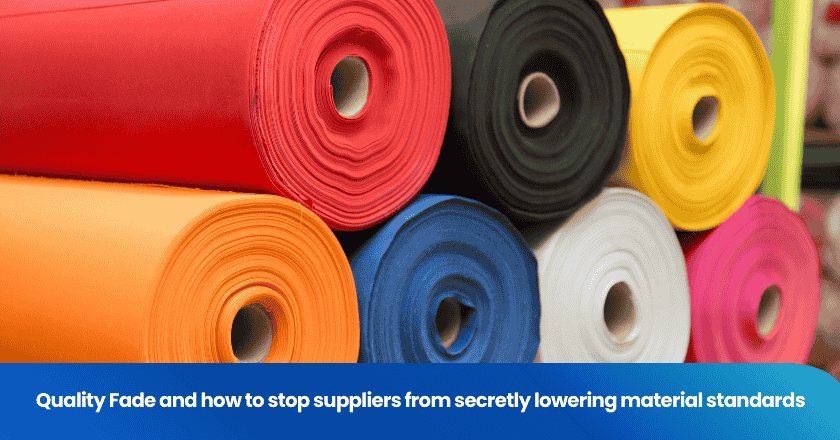
Quality fade poses a silent but deadly threat to businesses relying on global supply chains. It occurs when suppliers intentionally and gradually lower material standards to increase their margins, often after the initial "golden sample" has been approved. This erosion of quality can lead to catastrophic financial losses and irreparable reputational damage.
Trust forms the foundation of customer loyalty. When customers believe in a brand's quality, they remain loyal. However, focusing on short-term gains by ignoring supplier degradation inevitably leads to brand erosion.
Key Takeaways
- Vigilance is key: Quality fade destroys product reliability and customer trust if left unchecked.
- Systematic control: Implement a strong quality control process including pre-production and in-process inspections.
- Legal protection: Use clear contracts that explicitly state inspection rights and financial penalties for non-compliance.
- Golden Sample: Always keep a sealed reference sample to resolve disputes during inspections.
Understanding Quality Fade

What Is Quality Fade?
Quality fade describes a gradual, often intentional decline in product quality. Suppliers may substitute cheaper materials (e.g., using a lower grade alloy or thinner fabric) to widen profit margins. This process is insidious because it happens slowly—a 1% reduction in material quality per batch might go unnoticed until the product fails in the market.
The consequences extend far beyond the factory floor:
| Consequence | Description |
|---|---|
| Reduced Reliability | Frequent failures and safety hazards, especially in critical electronics or safety gear. |
| Brand Damage | Recurring issues destroy reputation, making it nearly impossible to retain customers. |
| Legal Risks | Non-compliance with safety standards can result in lawsuits and regulatory fines. |
| Financial Loss | Increased warranty claims, returns, and the cost of scrapping defective inventory. |
Key Indicators of Quality Fade
Buyers can spot quality fade by watching for subtle warning signs. The most common indicators include:
- Initial orders are perfect, but defects increase slightly with each subsequent shipment.
- Suppliers make unexplained "minor" changes to materials or production methods.
- Unexplained price reductions or resistance to price increases (suppliers may cut costs elsewhere).
- Material substitutions (e.g., changing from polyamide to polyester) that reduce durability.
Deviations from approved samples often show up in finished products. For example, changes in paper weight, ink color, or binding method can signal non-conformance.
Why Quality Fade Happens
Supplier Motivations
Manufacturers often face intense pressure to reduce costs. Without strict oversight, the temptation to cut corners becomes overwhelming. This is often a calculated risk: suppliers bet that the buyer won't notice a slight downgrade.
| Factor | Impact on Supplier Behavior |
|---|---|
| Profit Margins | Suppliers reduce quality to increase margins, often without notifying the buyer. |
| Weak Penalties | If importers don't enforce penalties, suppliers feel little risk in lowering standards. |
| Lack of Leverage | Smaller importers often have less influence, making them easier targets for quality fade. |
Common Scenarios
Quality fade is prevalent in specific situations:
- Seasonal Rush: During peak seasons, manufacturers rush orders, leading to sloppy workmanship.
- Sub-Supplier Changes: A main supplier might switch to a cheaper raw material provider without your knowledge.
- "Golden Sample" Trap: The factory produces a perfect sample to get the order, then immediately reverts to standard (lower) quality for mass production.
Quality Control Strategies to Prevent Quality Fade
To stop suppliers from secretly lowering standards, companies must implement a robust quality control process spanning the entire production lifecycle.
1. Pre-Production Inspection & Material Verification
The first line of defense is verifying raw materials before mass production begins. This ensures that the components match the approved sample specifications.
- Inspect Raw Materials: Check materials as soon as they arrive at the factory.
- Lab Testing: Conduct chemical or physical tests to verify material composition (e.g., verifying fabric blends).
- Match the Sample: Ensure components perfectly match the "Golden Sample."
2. In-Process Quality Control (DUPRO)
Quality fade often creeps in during the middle of a production run. In-process inspections allow you to catch these deviations early.
Inspectors should visit the factory while goods are being produced (10-30% completion) to verify that the processes match the agreed standards. If results fall outside the accepted range, production can be halted immediately to fix the issue.
3. Final Product Testing & Contract Enforcement
Before shipping, a final Pre-Shipment Inspection (PSI) is non-negotiable. This step confirms that the finished goods meet all quality standards.
| Contract Clause | Function |
|---|---|
| Inspection Rights | Explicitly grants the right to inspect goods at any stage without prior notice. |
| Performance Guarantees | Defines financial penalties for defects exceeding the Acceptable Quality Limit (AQL). |
| Defect Remediation | Requires the supplier to repair or replace defective goods at their own cost. |
Pro Tip: Always keep a sealed reference sample on site. This sample serves as the undeniable standard for quality and helps prevent "he said, she said" disputes.
Companies prevent quality fade not by trusting blindly, but by verifying constantly. By setting clear performance metrics, conducting regular inspections, and enforcing strict contracts, you protect your brand's reputation. Don't wait for a crisis—review your supplier management process today.
FAQ
What is the main cause of quality fade?
Suppliers often lower material standards to save money or increase profits. They calculate that buyers won't notice subtle changes if strict quality controls aren't in place.
How can a company detect quality fade early?
Compare every shipment against a sealed "Golden Sample." Regular third-party inspections and lab testing are the only reliable ways to catch chemical or structural changes in materials.
Why is a reference sample important during inspections?
A reference sample acts as the agreed-upon standard. Inspectors use it to verify that the mass-produced goods match the original quality, preventing disputes over subjective quality assessments.
What should a company do if it finds quality fade?
Immediately halt the shipment, notify the supplier with evidence (photos/test results), and enforce contract penalties. Demand rework or replacement before paying the balance.
Related Articles


Grow your business with TradeAider Service
Click the button below to directly enter the TradeAider Service System. The simple steps from booking and payment to receiving reports are easy to operate.

