
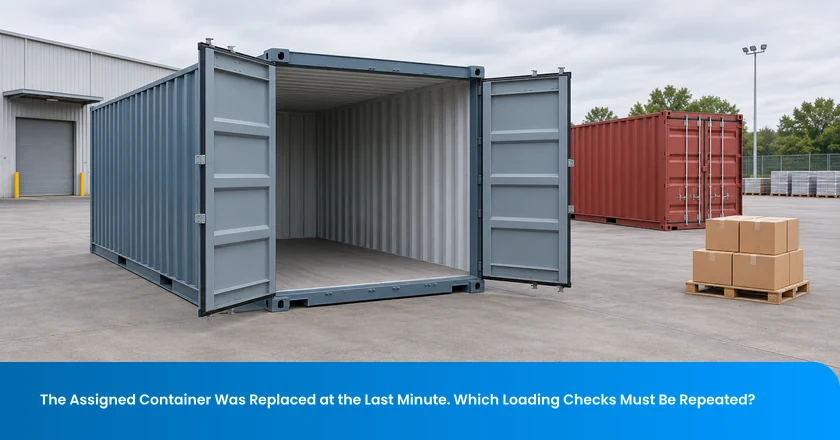
Repeat the container number, empty condition and loading-plan checks on the replacement. Keep earlier inspection and packing evidence for the same unchanged cargo. If loading had started, reconcile what entered the original container, what came out and what enters the replacement. Record the actual tally, closing and seal on the new unit, then have the responsible parties update the shipping records.
Establish when the container was replaced
Record the physical replacement and whether the original container had received any cargo. Ask the loading lead for the two container numbers, the reason for the change, the time and location, and the latest observed loading stage. Match the old and new numbers to dated photos or observations of the physical units. If only the paperwork differs, verify the physical identity and have the issuer resolve the record difference before treating it as a swap.
- Check the replacement number, condition, dimensions and fit against the actual cargo plan.
- Keep useful cargo evidence tied to its original scope and tally any goods transferred.
- Issue new observations of loading and sealing under the replacement container number.
Have the party arranging the equipment confirm the new assignment. Record whether the original was empty or partly loaded. If cargo already entered it, pause the affected loading steps and preserve the last observed tally and photographs. Record the cartons or groups staged outside it so the crew starts with a clear account of where the goods are.
Repeat the checks tied to the replacement container
Check the replacement as the unit that will actually carry the shipment. Confirm its identity and condition while the cargo area can still be seen. Then verify that the planned cargo and method still suit the unit. An identical booking description gives a useful starting point for the comparison.
TradeAider lists container condition and quantity among the points it checks during container loading supervision. If a replacement arrives, confirm which checks can be witnessed on that unit and how the report will show where the earlier observations ended.
Confirm the new container number and condition
Verify the replacement’s full container number and record its empty condition against the agreed criteria. Photograph the markings while they can be read, compare the number with the equipment instruction, and record the size and type code and unit-specific weight markings. Record any disagreement before the unit is loaded.
The Bureau International des Containers guide identifies door markings for container identity, size and type, maximum gross mass, tare and maximum payload. Tare is the weight of the empty unit. Use the actual new unit’s marks and confirmed data where they affect the plan and documents.
The IMO/ILO/UNECE Code of Practice for Packing of Cargo Transport Units, commonly called the CTU Code, advises verifying the unit’s suitability before packing begins. Record visible condition where the team has safe access. Check the floor, walls, roof, doors and seals around the door edges for relevant damage, moisture or contamination. Refer a structural concern or a condition that cannot be safely seen to the operator or responsible technical person before relying on the unit.
Recheck fit, payload and the loading plan
Recheck the planned load against the replacement’s verified opening, usable space, payload and securing arrangements. Compare the dimensions of the packed goods and the clearance needed for handling with the door opening and usable interior. Verify the payload for the actual unit and any tighter limits that apply to the movement. Have the loading lead review the weight distribution, planned block sequence and securing provisions with the responsible parties.
Use TradeAider’s inspection standard when agreeing the order-specific cargo and packing criteria. Attach the loading plan and confirm its revision after the equipment change. If fit, mass, handling or securing assumptions change, obtain approval of the revised plan before moving the goods into the replacement.
Carry forward only the evidence that still describes the cargo
Keep prior cargo evidence for the same unchanged goods and make a new record of what enters the replacement. Link every carried-forward record to the same order, lot and identifiable packages. Use the table to decide what stays historical and which checks must cover the actual next loading event.
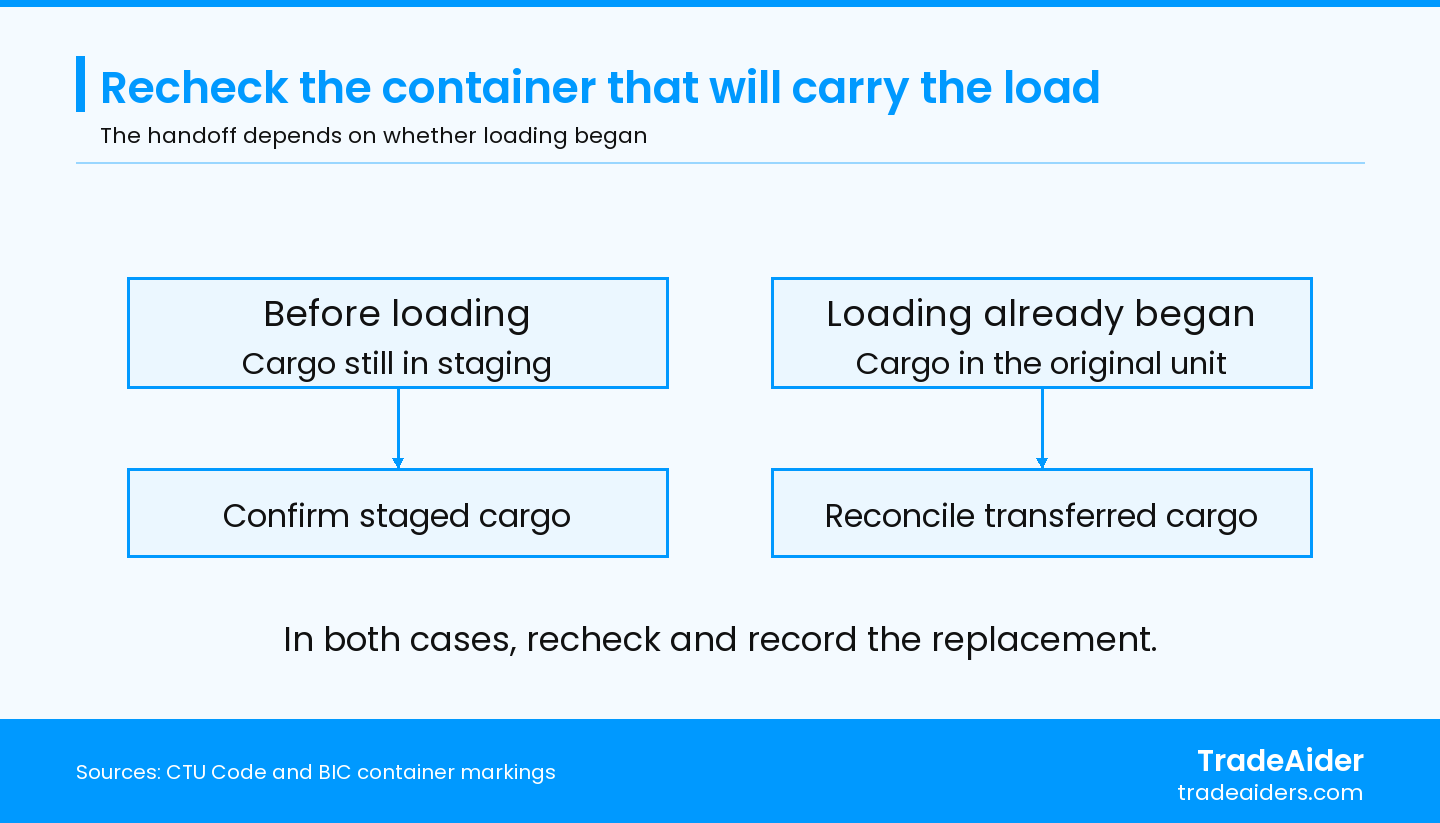
Confirm which cartons are still in staging and which must be transferred from the original container. Check the replacement container itself in either case.
Earlier recordWhat remains usefulWhat to verify on replacementContainer ID and empty conditionDated history of the original unitNew number, marks, visible condition and suitabilityCargo inspection and packing or staging listEvidence for identifiable, unchanged goodsGoods still staged or transferred and any new handling or damageLoading plan and any original tallyPlan assumptions and a record of earlier movementFit and plan approval, then actual new loading tallyClosing, seal and shipment recordsSuperseded draft or evidence for the earlier eventActual new closure, seal, weight and amended records as applicable
When nothing had entered the old unit, confirm the staged cargo identity and visible condition and start the new tally as it loads. If loading had begun, have the responsible crew account for the cargo taken out of the original, identify where it was staged and check for handling damage or mix-ups. Record the tally going into the replacement independently of the earlier one. Keep any unexplained carton or handling concern pending with its affected scope until reconciled.
The old plan used a high cube, but the replacement is lower
Illustrative scenario. A factory stages 240 cartons on eight loaded pallets for a previously checked 40-foot high-cube container. No pallets have entered it when the forwarder sends a 40-foot standard-height replacement. The goods stay identified in the same staging area. The loading lead checks the new container number and empty condition and compares the new opening with the prepared load.
A replacement can be clean and serviceable but too low for the prepared load. In this example, the prepared pallet load measures 2.46 m from its base to its highest point. The replacement’s clear door height is 2.28 m. The pallet load alone is 0.18 m taller than the opening, before allowing for handling clearance.
Keep the pallets staged. Ask for suitable equipment or have the responsible team confirm and approve a revised arrangement, including clearances, support, securing and quantity. If the approved change alters how goods are handled or packed, check the affected condition or quantity again. The original cargo inspection remains evidence for the unchanged cargo. The previous empty-container check and loading plan refer to the original equipment and assumptions.
Link the final tally and documents to the new container
Tie the approved loading plan, actual tally and final records to the replacement container. During loading, record the container number, actual package count by relevant group, any deviations and the observations needed to confirm the plan. Record the final closure and the seal physically applied under the current container number. Preserve superseded records with their original units and times.
Where verified gross mass is required, the IMO’s gross mass guidance describes a certified summation method that includes the tare mass of the container. Have the responsible shipper confirm the applicable method and current verified gross mass for the actual packed replacement. If the shipment is weighed as a whole, associate that weighing record with the actual packed unit.
Have the authorized parties reconcile the current loading report and packing list with any affected carrier submission, shipping instruction or handoff document. Record who confirmed the replacement and who accepted the final plan and any exception. If a stage was missed, state exactly what remains unobserved before authorizing the next movement.
For an agreed loading recheck, contact TradeAider with the two container numbers, the stage reached at replacement, the current cargo list and the revised plan or fit question. Identify which checks can still be observed on the replacement.
FAQ
What if the original and replacement are the same size and type?
Repeat identity and empty-container condition checks even when the size and type match. Verify the actual door clearance, usable space, allowable load and securing provisions against the plan. You can retain the earlier plan version if the responsible parties verify that its assumptions still hold.
Can the replacement take the original seal number on the paperwork?
Record the seal actually applied to the replacement container. If the original seal was set aside and unused, follow the applicable seal-control procedure for its disposition. If a seal was applied to the original unit, keep its number on that event’s record and use the observed seal number from the replacement’s closing event.
What if the replacement arrives after the supervisor leaves?
Record which stages were observed and agree how to cover the outstanding checks before loading. Arrange another visit or a separately approved way to document the required observations while the unit is still accessible. Label any evidence supplied later with its source, time and the checks it actually shows.
Related Articles
Grow your business with TradeAider Service
Click the button below to directly enter the TradeAider Service System. The simple steps from booking and payment to receiving reports are easy to operate.