
- About Us

- Our Services
- Your Industry
- Resources
- News & Blog
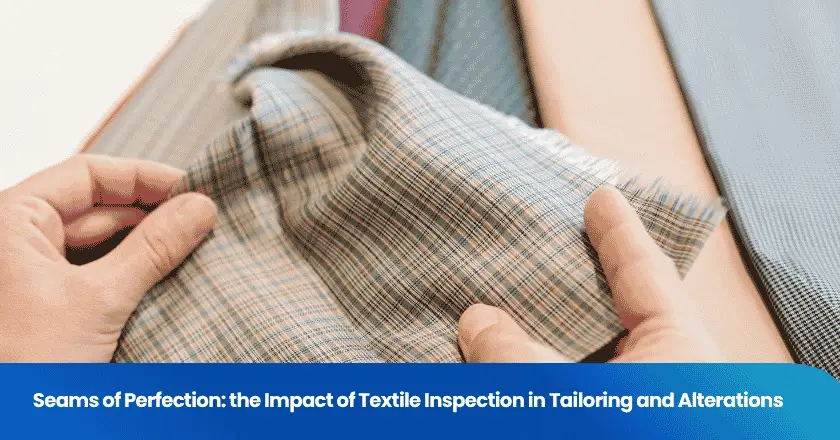
Tailoring and alterations depend heavily on the quality and condition of textile materials. Whether a garment is being manufactured from new fabric, customized for a specific customer, or altered after production, the material itself can directly affect the final appearance, fit, durability, and overall quality.
Fabric may look acceptable at first glance but still contain issues such as uneven color, weaving defects, poor dimensional stability, colorfastness problems, or inconsistent weight. If these problems are not identified before cutting and tailoring, they can become more difficult and expensive to correct later.
Textile inspection provides a practical quality-control checkpoint before and during garment production. By checking fabric characteristics against defined requirements, buyers and manufacturers can identify material problems earlier and reduce the risk of defects carrying through to finished garments.
Why Textile Quality Matters in Tailoring and Alterations
Tailoring involves more than cutting and sewing fabric. The behavior and characteristics of the textile influence how a garment can be constructed and how it will perform after use and care.
For example, fabric shrinkage can affect garment dimensions after washing, while inconsistent color between fabric lots can create visible differences between garment panels. Fabric defects may also become more noticeable after cutting because they can appear in prominent areas of the finished garment.
Common textile quality concerns include:
| Textile Issue | Potential Impact on Tailoring |
|---|---|
| Color variation | Visible differences between garment panels or production lots |
| Fabric holes or tears | Material loss and unusable sections |
| Weaving or knitting defects | Uneven appearance or weakened areas |
| Uneven fabric width | Cutting difficulties and material waste |
| Excessive shrinkage | Changes in garment dimensions after washing |
| Poor colorfastness | Color transfer or fading during use and care |
| Uneven GSM | Differences in fabric weight and hand feel |
| Surface defects | Poor appearance of finished garments |
| Distortion or skew | Problems with pattern alignment and garment shape |
For alteration businesses, the impact can be even more noticeable because the available fabric may be limited. A fabric defect discovered after an alteration has started can make it difficult to replace the affected section or reproduce the original appearance.
What Does Textile Inspection Cover?
Textile inspection can be designed around the buyer's specifications, fabric type, end use, and production requirements.
A typical inspection may consider several characteristics:
| Inspection Area | What Is Checked |
|---|---|
| Fabric appearance | Holes, stains, marks, slubs, uneven surfaces, and other visible defects |
| Color | Shade consistency and differences between rolls or lots |
| Width | Actual usable fabric width against requirements |
| Weight | GSM or other specified weight requirements |
| Construction | Weave, knit structure, density, or other agreed characteristics |
| Length | Roll length and quantity |
| Dimensional stability | Shrinkage or dimensional changes when specified |
| Colorfastness | Resistance to color change or transfer when testing is required |
| Packaging | Roll condition, labeling, and protection during storage or transportation |
Not every textile inspection requires every test. The inspection scope should reflect the material, product requirements, and intended use.
Textile Inspection Before Cutting
One of the most practical opportunities for textile quality control is before the fabric is cut.
Once fabric has been cut into individual garment components, a material defect can affect multiple pieces and may create additional labor and material costs.
A pre-production textile inspection can help identify whether the material generally matches the agreed requirements before it enters the cutting and sewing stages.
For example, buyers may want to verify:
- Fabric type and composition
- Color and shade
- Width and length
- Visual appearance
- Fabric construction
- Weight
- Packaging and labeling
- Specified testing requirements
The objective is not simply to find defective fabric. It is to provide information that allows the production team to decide whether the material is suitable for the planned tailoring work.
Fabric Defects Can Affect Cutting Efficiency
Fabric quality also affects how efficiently material can be used.
A fabric roll containing frequent defects may require defective sections to be marked or avoided during cutting. This can increase fabric consumption and potentially reduce the number of usable garment pieces obtained from a roll.
For customized garments or small-batch tailoring, this can be particularly important because there may be little flexibility to absorb material losses.
Inspection findings can therefore provide useful information for production planning as well as quality control.
The Importance of Color Consistency
Color consistency is one of the most visible aspects of textile quality.
A garment can have accurate measurements and good workmanship but still look inconsistent if different fabric sections have noticeably different shades.
This can happen because of differences between:
- Fabric production lots
- Dyeing batches
- Rolls
- Fabric panels
- Replacement materials
For this reason, textile inspection may include shade comparison and identification of noticeable color variation before fabric is cut.
When a specific color standard or approved sample exists, it should be provided to the inspection team so that the fabric can be assessed against the buyer's defined reference.
Textile Testing and Inspection Are Not the Same
Inspection and laboratory testing serve different purposes.
Visual inspection can identify observable defects and verify measurable characteristics such as fabric width, length, weight, and appearance. Laboratory testing may be necessary when buyers need to evaluate specific performance or chemical characteristics.
For example:
| Requirement | Possible Quality-Control Method |
|---|---|
| Visible fabric defects | Visual inspection |
| Fabric width | Measurement |
| Fabric weight/GSM | Measurement |
| Color variation | Visual comparison/instrumental measurement where applicable |
| Shrinkage | Specified testing method |
| Colorfastness | Laboratory testing |
| Fiber composition | Laboratory testing |
| Chemical substances | Laboratory testing |
| Physical performance | Laboratory testing |
This distinction is important because not every textile characteristic can be reliably evaluated through visual inspection alone.
For products where specific performance or chemical requirements matter, appropriate laboratory testing should be considered alongside physical inspection.
Textile Inspection During Tailoring and Alterations
Textile quality control does not necessarily stop after the fabric has been accepted.
During tailoring and alterations, the material may be exposed to cutting, sewing, pressing, washing, finishing, and other processes. These stages can introduce additional quality issues.
Depending on the product, buyers may monitor:
- Pattern alignment
- Fabric direction
- Matching of patterns or stripes
- Seam appearance
- Stitching quality
- Pressing marks
- Damage caused during sewing
- Color consistency between components
- Finished garment measurements
For alterations, the original garment may also impose additional constraints. The replacement or added material needs to work visually and technically with the existing garment.
This is why material quality and workmanship should be considered together rather than treating textile inspection as an isolated activity.
Textile Inspection for Different Types of Garments
The inspection focus can vary depending on the garment and its intended use.
| Garment Type | Relevant Textile Considerations |
|---|---|
| Formalwear | Appearance, shade, drape, surface defects, dimensional stability |
| Workwear | Fabric strength, weight, colorfastness, durability-related requirements |
| Sportswear | Stretch characteristics, recovery, colorfastness, performance requirements |
| Children's clothing | Material safety, colorfastness, physical and chemical testing where applicable |
| Home textiles | GSM, dimensions, color, shrinkage, appearance, durability |
| Customized garments | Shade consistency, fabric availability, dimensions, and matching |
The inspection criteria should therefore be product-specific rather than relying on a single generic textile checklist.
How Textile Inspection Can Reduce Rework
Identifying material problems early can help reduce avoidable rework.
Consider a simple production sequence:
Fabric received → Fabric inspected → Cutting → Sewing → Finishing → Final inspection
If a significant fabric defect is discovered only during final inspection, the manufacturer may need to rework or replace completed garments.
If the issue is identified earlier, the buyer and factory may have more options, such as:
- Separating affected fabric rolls
- Marking defective areas
- Adjusting cutting plans
- Replacing unsuitable material
- Reviewing production requirements
- Conducting additional testing where necessary
Inspection does not eliminate production problems, but earlier information can make quality decisions easier and potentially reduce downstream costs.
What Buyers Should Provide Before Textile Inspection
Clear requirements are essential for meaningful inspection results.
Before arranging an inspection, buyers should provide the available specifications and reference materials.
| Information | Examples |
|---|---|
| Fabric specification | Fiber composition, construction, GSM |
| Color requirement | Pantone/reference sample or approved sample |
| Dimensions | Width, length, tolerance |
| Appearance standard | Approved sample or defect criteria |
| Testing requirements | Shrinkage, colorfastness, strength, or other tests |
| End use | Garment type and intended application |
| Quantity | Number of rolls, meters, or production quantity |
| Packaging requirements | Roll labeling and packaging method |
The clearer the requirements, the more consistently the inspection team can evaluate the material.
The Role of Third-Party Textile Inspection
For buyers sourcing textiles or garments remotely, an independent inspection provides an additional source of on-site quality information.
A third-party inspection can help buyers assess whether materials or finished products correspond with agreed requirements without relying exclusively on the factory's internal quality-control records.
TradeAider provides textile and apparel inspection support covering areas such as fabric appearance, measurements, workmanship, packaging, and other buyer-defined requirements. For products requiring specific physical or chemical evaluations, laboratory testing can also be incorporated into the quality-control process.
The exact inspection scope should be determined according to the product, specifications, production stage, and buyer's requirements.
Building a More Complete Textile Quality-Control Process
Textile inspection is most effective when it forms part of a broader quality-control process.
For apparel and tailoring projects, buyers may use different checkpoints throughout production:
Material Inspection → Production Monitoring → Finished Garment Inspection → Laboratory Testing When Required → Final Shipment Check
Each stage addresses a different type of risk.
Material inspection focuses on the fabric before or during production. Production monitoring looks at workmanship and consistency as garments are made. Finished product inspection evaluates completed garments against the agreed specifications. Laboratory testing can address performance or chemical characteristics that cannot be determined through visual inspection alone.
This approach reduces reliance on a single final inspection and provides buyers with greater visibility throughout production.
Conclusion
Textile quality has a direct influence on tailoring, alterations, and finished garment quality. Problems with fabric appearance, color, construction, dimensions, shrinkage, or colorfastness can affect cutting, sewing, fit, appearance, and durability.
Textile inspection provides an opportunity to identify relevant material issues before they become larger production problems. When combined with appropriate production inspection and laboratory testing, it can form part of a more complete quality-control process for textile and apparel products.
For buyers sourcing textiles or garments from China, working with defined inspection criteria and independent on-site quality checks can provide clearer information about material and production quality before products move further through the supply chain.
Related Articles

Grow your business with TradeAider Service
Click the button below to directly enter the TradeAider Service System. The simple steps from booking and payment to receiving reports are easy to operate.

