
- About Us

- Our Services
- Your Industry
- Resources
- News & Blog
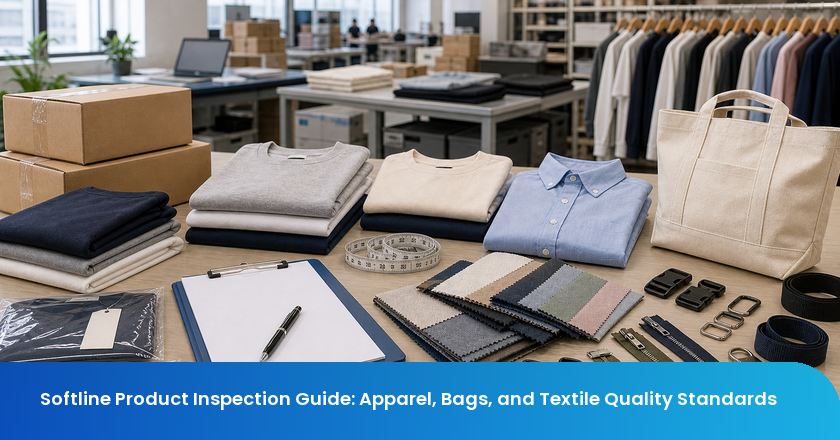
Softline product inspection should combine AQL sampling with category-specific checks for fabric, workmanship, measurements, labels, trims, hardware, seams, color, odor, packing, and destination-market requirements. Apparel, bags, and textile goods share soft materials, but they fail in different ways, so one generic checklist is not enough.
Softline importers often treat apparel, bags, towels, bedding, and textile accessories as one quality category. That is partly useful because these products share fabric, stitching, labels, color, and packing risks. But it can also be dangerous. A garment fails through fit and care labels. A bag fails through straps, zippers, load points, and hardware. A home textile fails through size, fabric defects, shade, shrinkage, and packing presentation.
A good softline inspection plan starts with AQL sampling but does not stop there. The buyer must define measurement rules, defect classes, product-specific functions, label requirements, color standards, hardware checks, packing method, carton marks, and any compliance evidence needed for the destination market. The report should support a release decision, not merely count defects.
- Apparel: check measurements, fit points, seams, trims, labels, care instructions, shade, and packing.
- Bags: check stitching, straps, zippers, hardware, lining, load points, dimensions, labels, and packaging.
- Textiles: check fabric defects, size, GSM or construction evidence where relevant, shade, odor, hem, labels, and carton presentation.
- Decision rule: keep the AQL framework shared, but customize the checklist by softline category.
The Direct Answer
Softline inspection works best when AQL, measurements, workmanship, labels, trims, hardware, and packing are checked under one release rule.
ISO 2859-1:2026 is the current ISO standard for AQL-indexed sampling procedures for lot-by-lot inspection by attributes. Source: ISO 2859-1:2026.
FTC apparel labeling guidance explains that most textile and wool products require labels showing fiber content, country of origin, and responsible business identity. Source: FTC apparel labeling.
FTC care labeling guidance explains care-instruction requirements for covered textile wearing apparel and certain piece goods. Source: FTC Care Labeling Rule.
CPSC clothing guidance explains US flammability requirements for wearing apparel under 16 CFR part 1610 and related children's sleepwear rules. Source: CPSC clothing business guidance.
Softline inspection cannot replace lab testing, fiber-content verification, flammability testing, or legal compliance review when those are required. It verifies that the shipment matches approved files and that visible product, label, and packing risks are controlled before release.
Softline Category Matrix
Apparel, bags, and textiles share materials but need different inspection emphasis.
| Category | Main Quality Risks | Inspection Focus | Release Risk |
|---|---|---|---|
| Apparel | Fit, measurement, seam, shade, care label, fiber label, trims, packing ratio | Measure sizes, inspect workmanship, labels, and size-color spread | Returns, fit complaints, label failure |
| Bags | Strap strength, zipper, hardware, stitching, lining, logo, odor, dimensions | Check load points, function, hardware, seams, lining, and branding | Breakage, customer complaints, brand damage |
| Textiles | Fabric flaws, shade, size, hem, GSM or construction, odor, shrinkage risk, pack | Check fabric, dimensions, shade, edge finish, label, and carton presentation | Visible defects, size mismatch, retailer rejection |
| Shared packing | Wrong barcode, crushed carton, wrong ratio, moisture, mixed colors | Open cartons and verify label, pack, ratio, and marks | Receiving errors, transit damage, warehouse disputes |
The table shows why a softline checklist should be modular. The AQL plan can be shared across the order, but each product group needs its own defect examples and function checks. A loose thread on a towel, a weak strap on a bag, and a wrong size label on a shirt do not carry the same commercial risk.
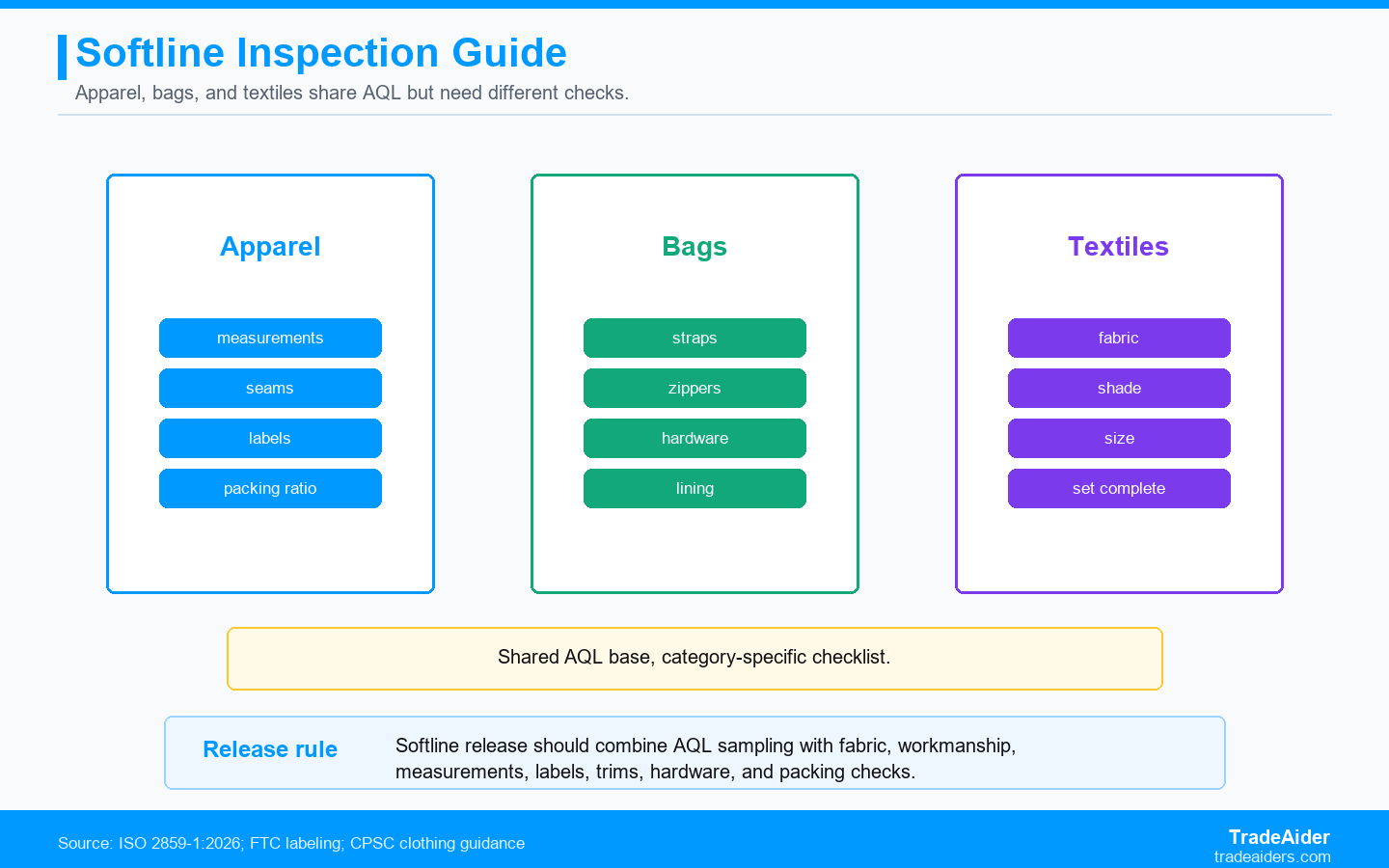
Softline release should combine AQL sampling with fabric, workmanship, measurements, labels, trims, hardware, and packing checks.
Apparel: What To Check
Apparel inspection must protect fit, appearance, labels, and packing.
Apparel checks include fabric defects, shade, stains, sewing, seam strength, loose threads, buttons, zippers, snaps, embroidery, prints, trims, measurements, size labels, care labels, fiber labels, country of origin, hangtags, barcode, packing ratio, and carton marks. The inspector should cover size and color spread, not only the easiest cartons.
Measurements should be checked against the tech pack. Points of measurement and tolerance should be defined before inspection. Fit-related failures can affect a whole size or color, so measurement results should be reported separately from ordinary cosmetic AQL defects.
Care and fiber labels should be treated as release requirements. A garment that looks well made can still be unsellable if the care label, fiber label, size label, or country-of-origin label is wrong. The buyer should provide approved label artwork and placement instructions.
Bags: What To Check
Bags need more function and hardware checks than many apparel items.
Bag inspection should include fabric or material surface, stitching, seam allowance, strap attachment, handle strength clues, zipper function, buckle, snap, magnet, lining, inner pockets, logo placement, dimensions, odor, color, barcode, hangtag, dust bag, and packing. If the product is a backpack, tote, cosmetic bag, luggage piece, or pouch, the checklist should reflect its use.
Load points are especially important. A bag can pass appearance checks but fail when straps, handles, or seams carry weight. The buyer should define reasonable pull or function checks where practical and safe. Formal load testing may be separate, but on-site inspection can catch obvious weak stitching or loose hardware.
Hardware color and finish should match the approved sample. Zippers, pulls, rings, buckles, studs, locks, and decorative metal parts can tarnish, scratch, bind, or detach. The inspector should check function and appearance across sampled units.
Textile Goods: What To Check
Textile goods need fabric, size, shade, hem, and packing discipline.
Textile goods such as towels, bedding, throws, curtains, table linens, and fabric accessories should be checked for fabric defects, shade variation, stains, holes, odor, size, hem, sewing, labels, folding, packaging, carton marks, and set completeness. If the buyer specifies GSM, yarn, construction, shrinkage, or colorfastness evidence, lab or supplier records may also be needed.
Set products require special attention. A bedding set, towel set, or table-linen set can fail if one component is missing, the colors do not match, or the pack sequence is wrong. Inspectors should open sampled sets and verify every component, not only inspect the outer packaging.
Packaging should protect fabric presentation. Moisture, odor, crushed packs, poor folding, wrong barcode, or mixed colors can create retailer or customer complaints. For e-commerce textile goods, the retail pack is often part of the product experience.
Where TradeAider Fits In Softline Inspection
TradeAider fits by adapting the AQL framework to each softline product type.
TradeAider can use Pre-Shipment Inspection to check apparel, bags, and textile goods against AQL sampling, measurements, workmanship, labels, trims, hardware, packing, carton marks, and buyer release rules.
If softline defects may appear during cutting, sewing, finishing, washing, printing, or packing, During Production Inspection can catch problems earlier. For repeated supplier failures, factory audit service can review process controls.
The business fit is checklist precision. TradeAider helps buyers avoid one generic softline checklist that misses category-specific risk.
SPAR Scenario: The Bag Shipment Needed More Than Apparel AQL
The buyer used an apparel checklist for a bag order and missed hardware risk.
Situation: A buyer sources canvas tote bags from China and books a standard softline PSI using a garment-style checklist.
Problem: The report checks stitching and stains, but the key risk is weak handle attachment and defective magnetic snaps. Early samples from customers later show handle tearing.
Action: TradeAider updates the checklist: handle attachment, strap stitching, snap function, lining, dimensions, logo placement, odor, barcode, and packing are added as required checks. DPI is added for the next order to check stitching reinforcement before packing.
Result: The buyer learns that bags require softline inspection plus product-use checks, not only apparel workmanship sampling.
Action Card: Softline Inspection Checklist
Keep the AQL base, then add category-specific controls.
- Define lot, sample size, AQL values, and defect classes before inspection.
- For apparel, check size-color spread, measurements, seams, trims, labels, care, fiber, and packing ratio.
- For bags, check straps, handles, zipper, hardware, lining, logo, dimensions, odor, and packing.
- For textiles, check fabric defects, shade, size, hem, set completeness, labels, folding, and carton presentation.
- Separate lab testing or compliance evidence from shipment inspection where rules apply.
- State rework, sorting, reinspection, and payment rules before the supplier requests release.
The buyer should maintain a category defect library. Apparel defects, bag defects, and textile defects need different photos and severity rules. A loose thread on a hidden seam, a weak bag strap, and a towel shade band should not be treated with the same language.
Softline teams should also connect customer returns to inspection updates. Fit complaints should change apparel measurement sampling. Broken straps should change bag stress checks. Shade complaints should change textile fabric checks. Inspection becomes stronger when it learns from real outcomes.
For first orders, inspect more broadly and document more photos. For repeat orders, narrow the focus toward known supplier risks while still checking core AQL, labels, and packing. The best softline inspection plan is both systematic and responsive.
How To Classify Softline Defects
Softline defect classification should reflect customer visibility, product function, and legal or retailer exposure.
A softline defect list should not treat all visible problems the same way. A loose thread on an inside seam, a broken zipper, a missing fiber label, a wrong size sticker, and a torn carton create different kinds of risk. The buyer should define critical, major, and minor defects before inspection, using product photos and examples that the supplier can understand.
Critical defects may include safety hazards, sharp exposed parts, mold, wrong compliance label, or a condition that makes the product unsafe or clearly unsellable. Major defects may include wrong size, out-of-tolerance measurement, broken hardware, visible stain, shade mismatch, missing component, wrong barcode, or incorrect carton ratio. Minor defects may include small workmanship issues that do not affect use, sale, or customer perception beyond the agreed tolerance.
The classification should also consider the sales channel. A premium boutique garment, marketplace apparel item, promotional tote, and private-label bedding set do not share the same presentation standard. Retailer routing and labeling requirements can make packing mistakes commercially serious even when the product itself is acceptable.
When the inspection fails, the classification should guide rework. Cosmetic stains may need cleaning or sorting. Measurement failures may need production review. Wrong labels may require relabeling and broader carton checks. Broken bag hardware may require supplier process correction. A clear defect class turns the report from a complaint list into a practical correction plan.
Softline buyers should also define when a finding becomes a lot-level concern. One wrong care label may be isolated, but several wrong labels across cartons may show that the whole label roll or packing process is wrong. One out-of-tolerance garment may be acceptable under the plan, but repeated measurement drift in the same size can mean the cutting or sewing setup is unstable. The report should make those patterns visible.
If you need a softline inspection plan for apparel, bags, or textile goods, send TradeAider the tech pack, sample photos, label files, packing plan, order details, and defect history. The next step is to ask TradeAider to build a softline inspection checklist before shipment.
Frequently Asked Questions
What is softline product inspection?
It is inspection for products made mainly from soft materials, such as apparel, bags, textiles, and related accessories, using AQL plus product-specific checks.
Can one checklist cover apparel and bags?
A shared AQL framework can work, but bags need additional checks for straps, hardware, zipper, lining, dimensions, and load points.
Do softline inspections check labels?
Yes. Labels, care instructions, fiber content, size, country of origin, barcode, and hangtags should be checked against buyer files.
Does inspection replace textile testing?
No. Inspection verifies the shipment. Testing or compliance review may still be needed for flammability, fiber content, care labels, or retailer requirements.
Related Articles
Grow your business with TradeAider Service
Click the button below to directly enter the TradeAider Service System. The simple steps from booking and payment to receiving reports are easy to operate.

