
- About Us

- Our Services
- Your Industry
- Resources
- News & Blog
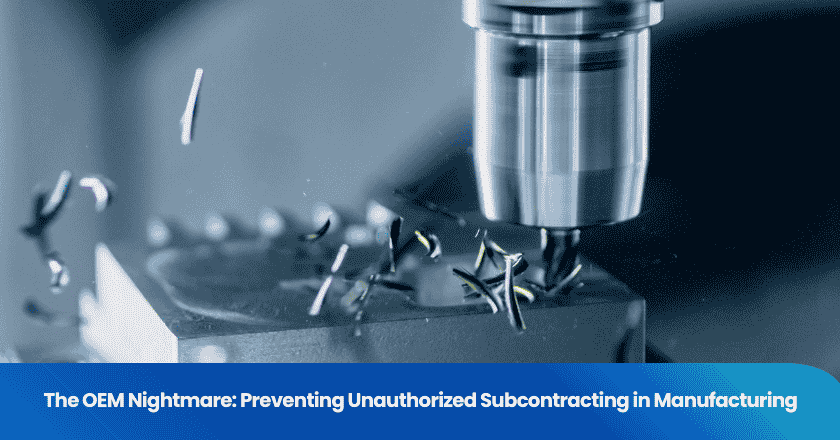
A single act of unauthorized subcontracting can trigger an "OEM nightmare." When a factory secretly shifts production to an unapproved site, the OEM faces immediate risks to product quality, intellectual property (IP), and regulatory compliance. The collapse of Rana Plaza tragically demonstrated how hidden subcontracting can lead to public outrage, legal penalties, and lasting damage to a company's reputation. Proactive quality assurance systems and real-time monitoring are essential to prevent these costly consequences and protect every link in the supply chain.

Key Takeaways
- Unauthorized subcontracting severely harms product quality and creates legal liabilities. Close monitoring is mandatory.
- Regular factory audits verify compliance with ethical standards and detect unauthorized shifting of production early.
- Continuous on-site monitoring provides real-time insights, ensuring production stays within approved facilities.
- Predictive data models can alert companies to volume anomalies that suggest outsourcing.
- Establishing a rapid response protocol allows for swift action to limit damage if a breach occurs.
OEM Nightmare: Understanding the Risk

What Is Unauthorized Subcontracting?
Unauthorized subcontracting occurs when a supplier secretly outsources production to a third party without the buyer's approval. This practice destroys transparency. The "OEM nightmare" begins when the original supplier loses control over the process. The unapproved site often uses untrained workers, inferior equipment, or substandard materials. These changes make it nearly impossible to track the movement of goods or verify production conditions, leading to potential fraud and significant IP leakage.
Key Risks to Quality and Integrity
The risks extend across the entire supply chain. The following table outlines the primary threats:
| Risk Type | Description |
|---|---|
| Safety Incidents | Untrained workers and unregulated environments increase accident risks. |
| Human Rights Violations | Lack of oversight hides poor working conditions, unfair wages, or forced labor. |
| Financial Instability | Shadow subcontractors are often financially vulnerable, risking bankruptcy and delays. |
| Quality Issues | Loss of visibility into components inevitably leads to product defects. |
| Cyber & IP Threats | Unsecured networks at subcontractor sites expose designs to theft and cyber-attacks. |
Unauthorized subcontracting is a primary vector for intellectual property theft. When proprietary designs leave the approved facility, they are exposed to potential counterfeiting and competitors without legal recourse.
Why Factories Subcontract Without Authorization
Economic and Capacity Pressures
Factories often face economic pressures that drive them toward unauthorized subcontracting. Operating on razor-thin margins, suppliers may accept orders exceeding their capacity to avoid losing business. To meet deadlines, they quietly outsource the overflow. This creates a dangerous pattern where efficiency is prioritized over compliance.
| Trigger | Description |
|---|---|
| Margin Compression | Suppliers outsource to cheaper, unregulated workshops to increase profit margins. |
| Capacity Overflow | Taking on more orders than the facility can handle forces outsourcing to meet deadlines. |
| Domino Effect | Once a supplier successfully subcontracts without detection, they are likely to repeat the behavior. |
Tip: Monitor your supplier's total production capacity against their order volume. If the numbers don't add up, unauthorized subcontracting is likely occurring.
Weak Oversight and Compliance Gaps
Weak oversight creates the perfect environment for unauthorized subcontracting. Complex global supply chains make manual tracking difficult, and regulatory gaps in certain regions allow shadow factories to operate with impunity.
| Oversight Issue | Implication |
|---|---|
| Global Complexity | Extended supply chains make it difficult to verify the physical location of production. |
| Regulatory Gaps | Lack of local enforcement allows subcontractors to evade labor and environmental laws. |
| Passive Monitoring | Relying solely on scheduled, announced audits gives suppliers time to hide evidence. |
Protection Through Quality Assurance Systems

A robust quality assurance system is the most effective defense against the OEM nightmare. From initial audits to final inspections, every touchpoint serves as a verification barrier.
Factory Audits and Baseline Integrity
Factory audits establish the baseline for security. Auditors verify that the machinery, workforce, and materials on-site match the production requirements. They check production logs and employee records to ensure the facility has the actual capacity to fulfill the order. Regular, unannounced audits are critical to ensuring the factory remains compliant.
Pre-Production and Material Verification
Pre-production inspections (PPI) lock down the manufacturing location. Inspectors verify the arrival of specific raw materials at the approved site before production begins. This prevents suppliers from shipping materials to a cheaper, third-party workshop.
- Inspectors confirm raw material quantity and quality on-site.
- Machinery setup is verified against the production schedule.
- This step establishes a "chain of custody" for materials immediately.
Continuous On-Site Monitoring
Continuous monitoring replaces periodic checks with real-time visibility. Modern strategies involve placing third-party QA staff on production lines or utilizing digital monitoring tools that track machine uptime and output. If a machine is reported as "offline" but production numbers remain high, it is a red flag that goods are being made elsewhere.
Pre-Shipment Inspection for Final Protection
Pre-shipment inspection (PSI) is the final gatekeeper. Inspectors check workmanship, packaging, and labeling. Subcontracted goods often show subtle differences in assembly techniques or packaging materials compared to the approved standard. Catching these discrepancies before shipment is crucial to preventing brand damage.
Detection and Response to Unauthorized Subcontracting
Predictive Models and Data Monitoring
Data analytics can often reveal what physical inspections might miss. Predictive models analyze historical production data to identify anomalies. For example, if a factory's reported output exceeds its theoretical maximum capacity, outsourcing is the only logical explanation.
Financial monitoring is equally powerful. If a supplier requests payments to unknown entities or shows discrepancies in bill-of-material costs, it suggests unauthorized third-party involvement.
| Tool Type | Purpose | Example Alert |
|---|---|---|
| Predictive Analytics | Identify impossible output rates | Sudden spike in production volume beyond capacity |
| Payment Monitoring | Detect financial irregularities | Invoices from unknown third parties |
| IP Access Tracking | Prevent data leakage | Design files accessed from unapproved IP addresses |
Immediate Actions and Supply Chain Protection
Upon detecting unauthorized subcontracting, immediate action is required to limit liability. The first step is to halt all production and freeze shipments. Managers must secure all intellectual property and demand the return of molds or tooling.
A rapid response protocol should include:
- Stop Production: Immediately halt lines at the unauthorized site.
- Secure Assets: Retrieve all IP, molds, and raw materials.
- Legal Action: Engage legal teams to enforce contract penalties.
- Audit: Conduct a deep-dive audit of the supplier to assess the full extent of the breach.
Continuous oversight forms the backbone of a secure OEM supply chain. By integrating factory audits, real-time data monitoring, and strict legal protocols, companies can effectively immunize themselves against the risks of unauthorized subcontracting. Real-time insights allow you to see where risks appear before they become crises. Ultimately, maintaining strict control over where and how your products are made is the only way to guarantee quality, protect intellectual property, and ensure the long-term integrity of your brand.
FAQ
What is the main reason OEMs worry about unauthorized subcontracting?
OEMs worry because unauthorized subcontracting severs the link between the brand and the manufacturing process. This leads to unmonitored quality, loss of intellectual property, and severe ethical or legal violations that can destroy a brand's reputation.
How does continuous monitoring help protect IP?
Continuous monitoring ensures that production—and the proprietary designs used—stays within the secure, approved facility. It prevents sensitive files or physical molds from being moved to unsecured third-party workshops where theft is common.
What role does pre-shipment inspection play in IP protection?
Pre-shipment inspection serves as a final verification. Inspectors look for inconsistencies in manufacturing techniques that reveal unauthorized production, ensuring that only compliant, high-quality goods reach the market.
Why should companies limit access to IP during manufacturing?
Limiting access ensures that only vetted personnel at the approved site can view sensitive designs. This "need-to-know" approach minimizes the risk of files being copied or shared with unauthorized subcontractors.
Can digital tools improve IP safety in the supply chain?
Yes. Digital tools can track file access logs and machine locations. If a design file is downloaded in a city where the approved factory is not located, the system triggers an immediate alert, allowing the OEM to investigate potential leakage instantly.
Related Articles

Grow your business with TradeAider Service
Click the button below to directly enter the TradeAider Service System. The simple steps from booking and payment to receiving reports are easy to operate.

