
- About Us

- Our Services
- Your Industry
- Resources
- News & Blog
When sourcing kitchenware from China, understanding AQL (Acceptable Quality Limit) standards is essential for maintaining product quality and protecting your brand reputation. Kitchenware products—including cookware, utensils, and tableware—face rigorous safety requirements in major markets like the US and EU. Without proper AQL-based inspection protocols, importers risk costly returns, compliance failures, and customer complaints that can devastate an e-commerce business. This guide explains how to apply AQL standards specifically for kitchenware products, helping you establish effective quality control procedures that ensure consistent product quality while maintaining reasonable inspection costs.
Key Takeaways
- AQL fundamentals for kitchenware — Understanding how ISO 2859 sampling standards apply to cookware, utensils, and tableware products
- Defect classification systems — Critical, major, and minor defect categories specific to kitchenware products
- Sample size determination — How to calculate inspection samples based on order quantity and inspection levels
- Industry best practices — Recommended AQL levels for different kitchenware categories and market requirements
What is AQL and Why It Matters for Kitchenware
The Acceptable Quality Limit (AQL) is a statistical sampling method defined under ISO 2859-1 that determines how many units from a production batch should be inspected and what defect levels are acceptable. For kitchenware importers, AQL provides an objective, internationally recognized framework for evaluating product quality without the impractical requirement of 100% inspection.
The AQL system works by establishing a maximum acceptable percentage of defective items in a batch. When the number of defects found during inspection exceeds the AQL threshold, the entire batch is considered unacceptable, giving importers leverage to require corrective action from suppliers before shipment. This statistical approach balances quality assurance needs against the practical constraints of time and cost that make full inspections impossible for large kitchenware orders.
The AQL Table Structure
The AQL system uses two interconnected tables to determine inspection parameters. The first table identifies the appropriate sample size code letter based on lot size and inspection level. The second table then uses this code letter to specify the exact number of units to inspect and the maximum allowable defects for each AQL level. For kitchenware products, importers commonly use General Inspection Level II, which provides a balanced approach between sampling intensity and inspection cost.
Understanding how to read these tables is crucial for kitchenware sourcing. The lot size (your total order quantity) determines which row to use, while the inspection level determines the sample size code letter. Once you have this code, you can find the corresponding sample size and acceptance numbers for your chosen AQL levels. Tools like our AQL calculator can simplify this process by automatically computing sample sizes and acceptance limits based on your order parameters.
Recommended AQL Levels for Kitchenware Products
Industry standards for kitchenware typically recommend the following AQL levels, though specific requirements should be adjusted based on product risk profile, market regulations, and customer expectations:
| Defect Type | AQL Level | Application |
|---|---|---|
| Critical Defects | 0 (Zero acceptance) | Safety hazards, sharp edges, toxic materials, non-compliance with food safety standards |
| Major Defects | 2.5 | Functional problems, significant cosmetic flaws, dimension errors affecting usability |
| Minor Defects | 4.0 | Small cosmetic imperfections, minor packaging issues, slight color variations |
Critical Defects in Kitchenware: Zero Tolerance
Critical defects in kitchenware demand the strictest control because they directly impact consumer safety. A critical defect is any condition that could cause harm to the user or render the product non-compliant with mandatory safety regulations. For kitchenware specifically, critical defects include sharp edges or burrs that could cut users, the presence of heavy metals or other toxic substances in food-contact materials, structural weaknesses that could cause breakage during normal use, and failures to meet food safety standards such as FDA requirements in the US or EU Regulation 1935/2004.
Setting AQL 0 for critical defects means zero tolerance—if any critical defect is found during inspection, the entire batch fails. This strict standard reflects the severe consequences of safety-related defects in kitchenware products, which can lead to product recalls, legal liability, and permanent damage to brand reputation. Importers should work with inspection providers who understand how to properly test for these critical safety parameters, including food-grade material verification and sharp edge detection.
Common Kitchenware Defect Categories
Understanding the specific types of defects common in kitchenware products helps importers create effective inspection checklists and train inspectors to identify quality issues. Kitchenware defects can be broadly categorized into safety-related defects, functional defects, and cosmetic defects, each with different implications for product acceptance.
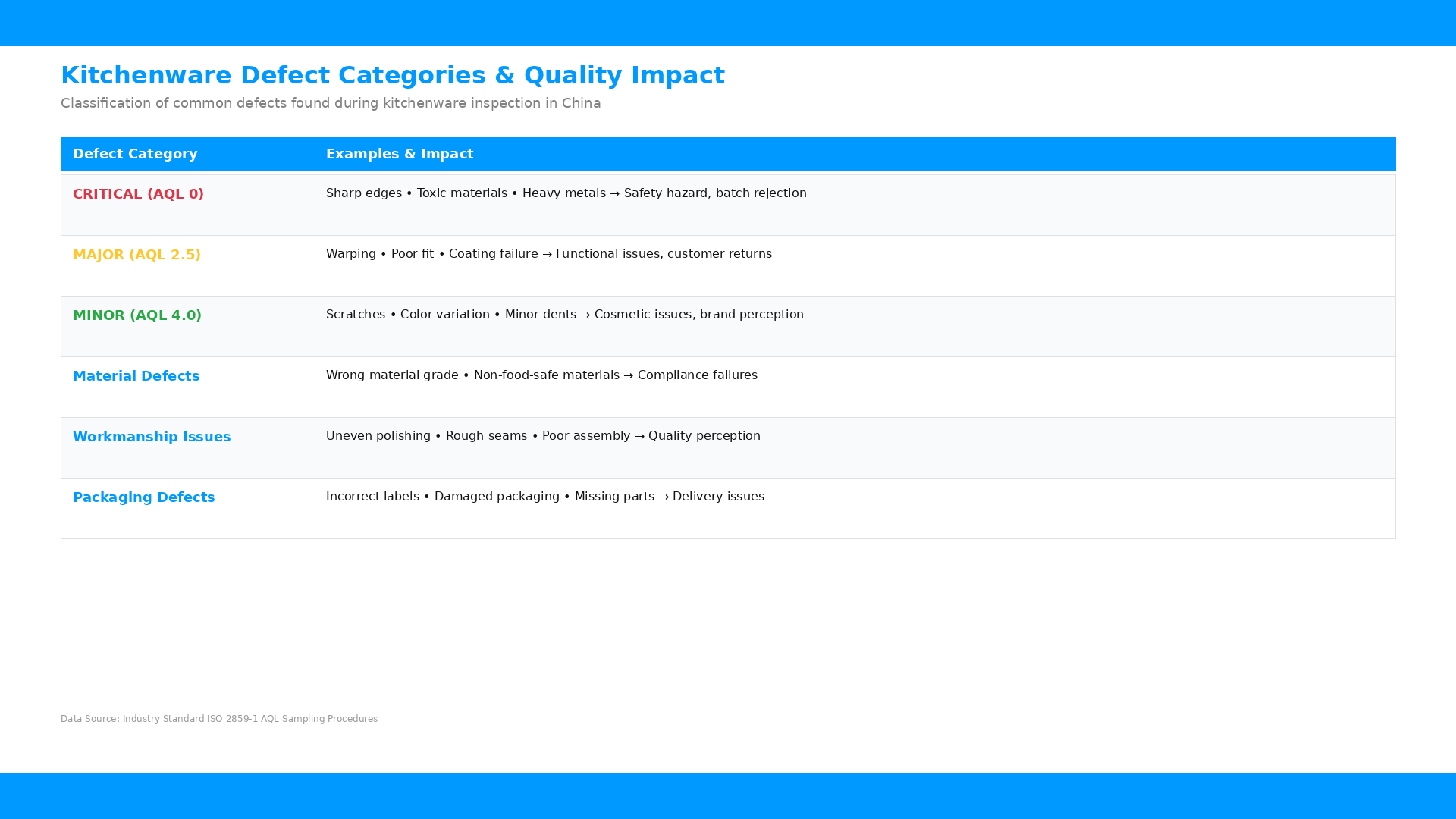
Figure 1: Common kitchenware defect categories and their quality impact
Safety-Related Defects
Safety defects represent the most serious quality concerns for kitchenware products because they can cause physical harm to end users or violate food safety regulations. These defects require immediate attention and typically trigger batch rejection. Common safety defects in kitchenware include sharp edges and burrs on metal cookware or utensils, which can cut users during food preparation or serving. Surface defects in non-stick coatings that could flake into food represent another serious safety concern, as ingestion of coating particles poses health risks.
Material composition issues are particularly critical for kitchenware because these products contact food directly. Heavy metals such as lead and cadmium can leach from ceramic glazes or metal alloys into food, causing serious health problems with long-term exposure. Testing for compliance with standards like FDA 21 CFR or EU Regulation 1935/2004 should be part of any comprehensive kitchenware inspection. Additionally, handles and attachments must be securely fastened—loose handles on pots or knives can cause burns, spills, or cuts during use.
Functional Defects
Functional defects affect how well a kitchenware product performs its intended purpose without necessarily creating safety hazards. These defects impact customer satisfaction and can lead to returns and negative reviews, even if the product remains safe to use. For cookware, functional defects include warping that prevents even heat distribution, lids that don't fit properly, and non-stick coatings that don't perform as expected. Utensils may have functional defects like flexibility issues, poor balance, or designs that don't work effectively for their intended purpose.
For tableware and glassware, functional defects often relate to stability and durability. Cups and bowls that tip easily, plates with uneven surfaces, or glasses with walls too thin for practical use all represent functional quality issues. While these defects may not trigger immediate safety concerns, they significantly impact customer perception of product quality and brand value. Setting AQL 2.5 for major defects allows for a small percentage of functional issues while maintaining overall product quality.
Cosmetic Defects
Cosmetic defects affect the appearance of kitchenware products without impacting safety or functionality. While less critical than safety or functional defects, cosmetic issues can still influence purchasing decisions and customer satisfaction, particularly for premium kitchenware brands where aesthetics are part of the value proposition. Common cosmetic defects in metal kitchenware include scratches, dents, surface discoloration, and inconsistent polishing or finishing. For ceramic and porcelain products, cosmetic defects may include glaze imperfections, pattern misalignment, color variations, and minor surface irregularities.
The appropriate AQL level for cosmetic defects depends on your market positioning and customer expectations. Premium brands targeting discerning consumers may want to maintain AQL 2.5 for cosmetic defects, while value-oriented products might accept AQL 4.0 or higher. When setting these standards, consider how visible the defects are during normal use, whether they affect the overall product aesthetic, and how they might impact customer reviews and return rates.
Sample Size Determination for Kitchenware Inspection
Determining the correct sample size is crucial for statistically valid inspection results. The AQL system provides a scientific framework for sample size calculation based on lot size and inspection level. For kitchenware products, importers typically use General Inspection Level II for standard inspections, which provides a good balance between statistical confidence and inspection cost efficiency.
| Order Quantity | Sample Size (Level II) | Max Critical (0) | Max Major (2.5) | Max Minor (4.0) |
|---|---|---|---|---|
| 151-280 | 32 | 0 | 2 | 3 |
| 281-500 | 50 | 0 | 3 | 5 |
| 501-1,200 | 80 | 0 | 5 | 7 |
| 1,201-3,200 | 125 | 0 | 7 | 10 |
| 3,201-10,000 | 200 | 0 | 10 | 14 |
Inspection Levels Explained
The AQL system offers three general inspection levels (I, II, III) and four special inspection levels (S-1 through S-4). General Inspection Level II is the default for most kitchenware inspections because it provides statistically reliable results while keeping inspection time and costs manageable. Level I requires smaller sample sizes and is appropriate when supplier quality history is excellent or when inspection costs need to be minimized. Level III requires larger sample sizes and provides greater discrimination between acceptable and unacceptable lots, making it suitable for critical products or new suppliers without established quality track records.
Special inspection levels (S-1 through S-4) use much smaller sample sizes and are typically reserved for situations requiring destructive testing or when inspection costs are extremely high relative to product value. For kitchenware products, special levels might be appropriate for expensive laboratory testing of material composition, where each test destroys the sample. However, special inspection levels provide less statistical confidence and should not be used for routine quality inspection of critical safety parameters.
Special Considerations for Kitchenware AQL
Food Safety Compliance Testing
Kitchenware products face unique regulatory requirements because they contact food directly. In the United States, the FDA regulates food-contact materials under 21 CFR, while the European Union enforces Regulation 1935/2004 for materials intended to contact food. These regulations establish limits for heavy metals migration, specific substance restrictions, and labeling requirements that must be verified during inspection.
For ceramic and enamel cookware, testing for lead and cadmium leaching is essential. China's national standard GB 4806.9-2016 establishes limits for heavy metals in metal kitchenware, and compliance with this standard should be verified for products manufactured in China. Testing for these parameters typically requires laboratory analysis, which should be specified as part of your quality control protocol even if it falls outside routine AQL sampling.
Multi-Item Sets and Kits
Many kitchenware products are sold as sets or kits containing multiple items, which creates special considerations for AQL application. When inspecting product sets, importers must decide whether to treat each item in the set as an individual unit or to treat the complete set as a single unit. This decision affects sample size calculation and defect counting methodology.
For consumer-facing sets where all items are used together, treating the complete set as a single inspection unit often makes more sense because a defect in any component affects the entire product's usability. In this approach, a set is defective if any item within it fails inspection. For large sets or when items are sold both individually and as part of sets, treating each item as an independent unit may be more appropriate. Your inspection protocol should clearly specify which methodology applies to each product type.
Best Practices for Kitchenware Inspection
Develop Comprehensive Inspection Checklists
Effective kitchenware inspection requires detailed checklists that cover all relevant quality parameters. Generic checklists are insufficient because kitchenware products vary widely in materials, construction, and intended use. Work with your inspection provider to develop product-specific checklists that address safety requirements, functional performance, and cosmetic standards appropriate for your brand positioning.
For metal cookware, checklists should include items such as material thickness verification, coating adhesion testing, handle attachment security, flatness of cooking surfaces, and surface finish quality. Ceramic and porcelain items require checks for glaze integrity, pattern registration, dimensional accuracy, and thermal shock resistance. Your inspection standard documentation should be regularly updated to reflect regulatory changes and lessons learned from previous inspections.
Choose the Right Inspection Timing
The timing of quality inspection significantly impacts your ability to address quality issues. Pre-shipment inspection (PSI) is the most common choice for kitchenware products, conducted when at least 80% of production is complete and packed. This timing allows detection of quality issues before goods leave the factory while ensuring the inspected sample represents the actual shipment. For high-value orders or when working with new suppliers, consider adding during-production inspection (DPI) to catch quality issues earlier in the manufacturing process when corrections are easier and less costly to implement.
TradeAider's PSI inspection service provides real-time visibility into inspection progress, allowing importers to make informed decisions about shipment approval. This transparency is particularly valuable for kitchenware products where quality issues can have significant safety implications and where batch rejections may require production rework that affects delivery schedules.
Common Questions About AQL for Kitchenware
What AQL level should I use for food-contact kitchenware?
For food-contact kitchenware products, we recommend AQL 0 for critical defects (zero tolerance for safety hazards), AQL 2.5 for major defects, and AQL 4.0 for minor defects. These levels balance quality assurance with practical inspection economics. However, premium brands or products for highly regulated markets may want to tighten major defect limits to AQL 1.5. Always verify that your chosen AQL levels meet or exceed the requirements of your target markets, as some regulatory frameworks may specify minimum quality standards that affect your inspection protocols.
How many samples should I inspect for a 2,000-unit kitchenware order?
Using General Inspection Level II (the standard level for routine inspections), a 2,000-unit order would require a sample size of 125 units. Under AQL 0 for critical defects, zero critical defects are allowed. Under AQL 2.5 for major defects, acceptance is up to 7 defects. Under AQL 4.0 for minor defects, acceptance is up to 10 defects. If defect counts exceed these acceptance numbers, the batch fails inspection and should be rejected or subject to 100% sorting.
Can I use different AQL levels for different kitchenware products?
Yes, different AQL levels are appropriate for different products based on risk profile, market positioning, and regulatory requirements. High-risk products like children's dishware or products for healthcare settings may warrant stricter AQL levels, while lower-risk items might accept slightly higher defect tolerance. Your quality control documentation should specify which AQL levels apply to each product category, and this information should be communicated clearly to inspection providers to ensure consistent application across all inspections.
How do I handle AQL inspection for mixed product shipments?
For shipments containing multiple product types, each product type should be treated as a separate lot with its own sample size calculation and defect counting. This approach ensures that quality issues in one product type don't mask problems in another. If inspection resources are limited, prioritize products with higher risk profiles or those with previous quality issues. Your inspection provider should be able to advise on optimal sampling strategies for complex shipments based on your specific product mix and quality priorities.
Conclusion
Implementing proper AQL standards for kitchenware sourcing protects your business from costly quality failures while maintaining reasonable inspection costs. By understanding defect categories, selecting appropriate AQL levels, and working with qualified inspection partners, you can establish quality control processes that consistently deliver products meeting both regulatory requirements and customer expectations. For complex kitchenware products with significant safety implications, consider TradeAider's WeGuarantee Total Quality Control service, which provides enhanced quality assurance with shared accountability for product quality outcomes.
Ready to implement AQL-based quality inspection for your kitchenware sourcing? Contact our team to discuss your specific requirements and develop a customized inspection protocol that addresses your product categories and market requirements.

Related Articles


Grow your business with TradeAider Service
Click the button below to directly enter the TradeAider Service System. The simple steps from booking and payment to receiving reports are easy to operate.

