- معلومات عنا

- خدماتنا
- صناعتك
- الموارد
- الأخبار والمدونة
Golden Sample
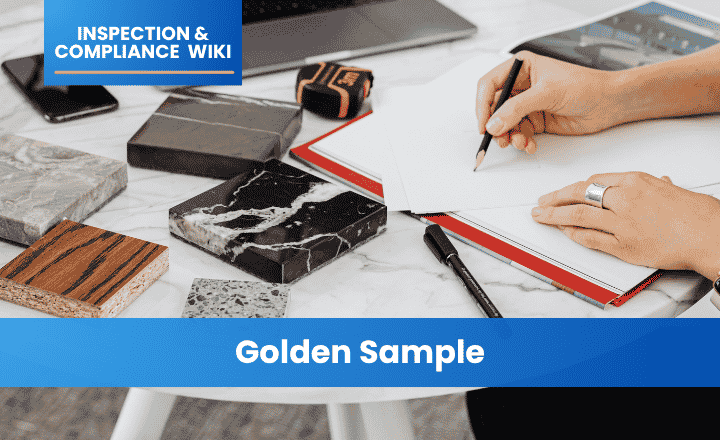
In global sourcing, writing detailed product specifications into a purchase order is essential—but sometimes, words, drawings, and even CAD models are not enough.
How tight should a snap-fit lid feel? How deep should the texture of a matte plastic surface be? What is the exact shade of crimson red when printed on a specific fabric?
To bridge the gap between digital specifications and real-world execution, the manufacturing industry relies on a physical "source of truth": the Golden Sample (also known as the approval sample or pre-production sign-off sample).
What is a Golden Sample?
A Golden Sample is the final, approved physical unit of a product that represents the absolute benchmark for mass production. It is not a rough prototype; rather, it is a fully functional, cosmetically perfect item that has been manufactured using the exact materials, components, tooling, molds, and assembly processes planned for the actual production run.
Once signed off by the buyer, the Golden Sample becomes a legally binding and physical quality standard. It establishes the baseline against which every single mass-produced unit will be evaluated.
Golden Sample vs. Prototype: What is the Difference?
Many importers confuse prototypes with Golden Samples, which can lead to major quality disasters:
| Feature | Prototype | Golden Sample |
|---|---|---|
| Purpose | To test design concept and basic functionality. | To freeze product design and set the production benchmark. |
| Manufacturing Method | Often hand-crafted, 3D printed, or machined individually. | Created using mass-production tooling, molds, and assembly lines. |
| Materials | Temporary or simulated materials. | Production-grade materials from the approved Bill of Materials (BOM). |
| Use in QC | Not suitable for quality control. | The primary physical reference for quality inspectors. |
Why a Golden Sample is Critical for Your Supply Chain
Operating without an approved Golden Sample is one of the riskiest mistakes a sourcing professional can make. Here is why this sample is the ultimate shield for your brand:
Reason 1: It Aligns Expectations and Eliminates Subjectivity
"Good quality" or "matte finish" is highly subjective. A factory manager in Asia and an importer in North America may have completely different definitions of these terms. A Golden Sample removes the guesswork. When your supplier commits to mass-producing your order, they are committing to matching that physical reference unit.
Reason 2: It Prevents "Quality Fade"
Quality fade is the gradual, systematic degradation of product quality over time—usually because a factory swaps out premium components for cheaper alternatives to increase their margins. If you have a sealed, dated Golden Sample, you have indisputable physical proof of what you originally paid for, allowing you to reject shipments that do not match the standard.
Reason 3: It Empowers Your Third-Party QC Inspectors
When a quality inspector visits your partner factory to perform a Pre-Shipment Inspection (PSI), they do not just read your PDF checklist. They hold the finished goods side-by-side with the Golden Sample. They touch both, test both, and visually compare them under standard lighting. If there is a mismatch, the inspector immediately flags it as a non-conformance.
Inspect Before You Ship: Eliminate Quality Risks on Site. Eliminating quality risks before your cargo leaves the factory floor. ➔ Book an Inspector
How to Manage and Distribute Your Golden Samples
A single Golden Sample is not enough. Because multiple stakeholders need to refer to this benchmark, you must implement a strict Golden Sample Distribution Strategy.
Best practices dictate that you should have at least three identical units approved, signed, and dated:
- Sample 1: The Factory's Master Copy. This unit stays at the manufacturer's facility, typically locked in their sample room or placed directly on the assembly line. Workers and internal QC technicians refer to it constantly during production.
- Sample 2: The Third-Party Inspector's Copy. This unit is either kept by your independent QC agency or sent directly to their local office. The inspector brings it to the factory on the day of the inspection to perform side-by-side comparisons.
- Sample 3: The Buyer's Master Copy. This unit stays in your office. It is your ultimate baseline to verify incoming shipments at your own warehouse, or to use as reference if a quality dispute ever arises with the factory.
Crucial Security Action: Signing and Sealing
To prevent factory personnel (or anyone else) from tampering with or swapping out your approved sample, always sign, date, and seal the Golden Samples. Use tamper-evident security tape, permanent markers directly on the product's non-functional casing, or custom tags that cannot be removed without breaking.
The Role of "Limit Samples" in Color and Texture
While the Golden Sample represents "perfection," mass production naturally involves slight variances due to tolerances, raw material batches, or machine heat. For example, anodized aluminum or dyed fabrics will always have minor color shifts.
To handle this, professional importers supplement their Golden Sample with Limit Samples (Boundary Samples).
Limit Samples define the exact boundary of what is acceptable and unacceptable. For a color-critical product, you might have:
- The Golden Sample: The target, perfect color.
- Limit Sample A (Light): The lightest acceptable shade.
- Limit Sample B (Dark): The darkest acceptable shade.
Any mass-produced unit that falls outside this range is rejected; anything within it is accepted. This establishes clear, objective rules of tolerance, preventing unnecessary manufacturing delays while protecting your aesthetic standards.
Conclusion: Don't Press "Go" Without a Gold Standard
A Golden Sample is not a bottleneck in your launch schedule; it is the ultimate insurance policy. By taking the time to test, approve, sign, and distribute physical gold standards before mass production begins, you eliminate misunderstandings, hold your factory accountable, and ensure your brand's quality remains consistent across every single production run.
Related Knowledge Base
TradeAider