
- About Us

- Our Services
- Your Industry
- Resources
- News & Blog
Understanding the true cost of quality inspection services in China is essential for importers budgeting their sourcing operations. While many inspection companies advertise attractive base rates, the final cost often includes hidden fees that can significantly impact your quality control budget. In 2026, China inspection service rates typically range from $199 to $320 per man-day, but this figure alone doesn't tell the complete story. This guide breaks down the real costs of third-party inspection services in China, helping you understand pricing structures, identify hidden fees, and make informed decisions about your quality control investment.
Key Takeaways
- Man-day pricing fundamentals — How inspection companies calculate costs and what the standard rate includes
- Hidden fees to watch for — Travel surcharges, weekend rates, holiday premiums, and report fees that inflate final costs
- Service type comparison — Pricing differences between PSI, DPI, factory audits, and container loading supervision
- Cost optimization strategies — How to reduce inspection costs without compromising quality assurance
Understanding Man-Day Pricing
The man-day is the standard pricing unit for quality inspection services in China and throughout Asia. One man-day represents one inspector working for one standard working day, typically 8 hours of on-site inspection time. According to industry data, China inspection service rates range from $149 to $320 per man-day depending on the inspection company, service type, and location. However, the market has seen significant pricing evolution, with transparent pricing models emerging that challenge traditional pricing structures.
When evaluating inspection costs, it's crucial to understand what the man-day rate includes. A truly all-inclusive rate should cover the inspector's time, basic travel expenses within major manufacturing clusters, standard reporting, and administrative overhead. Some companies like TradeAider offer transparent pricing at $199/man-day with no hidden fees, while others advertise lower base rates but add surcharges that can increase the final cost by 30% or more. Understanding these pricing models is essential for accurate budgeting and cost comparison.
What's Included in a Standard Man-Day
A standard man-day of inspection service should include several core components that importers often assume are automatic but may not be. The inspector's time is the primary component, covering approximately 8 hours of on-site work including the actual inspection, documentation, and report preparation. Transportation within the designated service area should be included, though the definition of "service area" varies significantly between providers—some limit this to specific cities while others offer truly nationwide coverage without additional charges.
Report delivery is another component that can carry hidden costs. Standard practice includes delivery of an inspection report within 24-48 hours after the inspection, but some providers charge extra for expedited reports or comprehensive documentation with extensive photo and video evidence. Communication costs, including phone calls and messaging with the client during and after inspection, should also be included but may be billed separately by some providers. When comparing inspection costs, always request a detailed breakdown of what's included in the quoted man-day rate.
China Inspection Service Cost Comparison 2026
The China inspection market offers a wide range of pricing options, reflecting differences in service quality, company reputation, and pricing transparency. Understanding the pricing landscape helps importers make informed decisions that balance cost considerations against quality assurance needs.
| Service Type | Market Range | Transparent Pricing | Notes |
|---|---|---|---|
| Pre-Shipment Inspection | $199-$320/man-day | $199/man-day | Most common service type |
| During Production Inspection | $199-$298/man-day | $199/man-day | Early defect detection |
| Factory Audit | $220-$458/man-day | $199/man-day | Supplier verification |
| Container Loading Supervision | $200-$320/man-day | $199/man-day | Shipment verification |
| Social Compliance Audit | $350-$500/man-day | Varies | Ethical sourcing requirements |
Pre-Shipment Inspection Costs
Pre-shipment inspection (PSI) is the most commonly requested quality control service, and for good reason. Conducted when at least 80% of production is complete and packed, PSI provides the final quality check before goods leave the factory, giving importers the opportunity to identify and address quality issues before shipment. The cost of PSI in China typically ranges from $199 to $320 per man-day, with variations based on the inspection company's pricing model and the complexity of the inspection requirements.
According to industry analysis, inspection service rates in China range from $149 to $320 per man-day. However, rates at the lower end of this spectrum often come with limitations or hidden fees that reduce the apparent savings. TradeAider's pre-shipment inspection service offers transparent pricing at $199/man-day with real-time reporting capabilities, representing excellent value for importers seeking reliable quality assurance without surprise costs.
Hidden Fees That Increase Inspection Costs
One of the most significant challenges for importers budgeting for quality inspection is identifying and accounting for hidden fees. Many inspection companies advertise attractive base rates while adding various surcharges that can significantly increase the final invoice. Understanding these potential fees helps importers accurately budget for inspection services and compare true costs between providers.
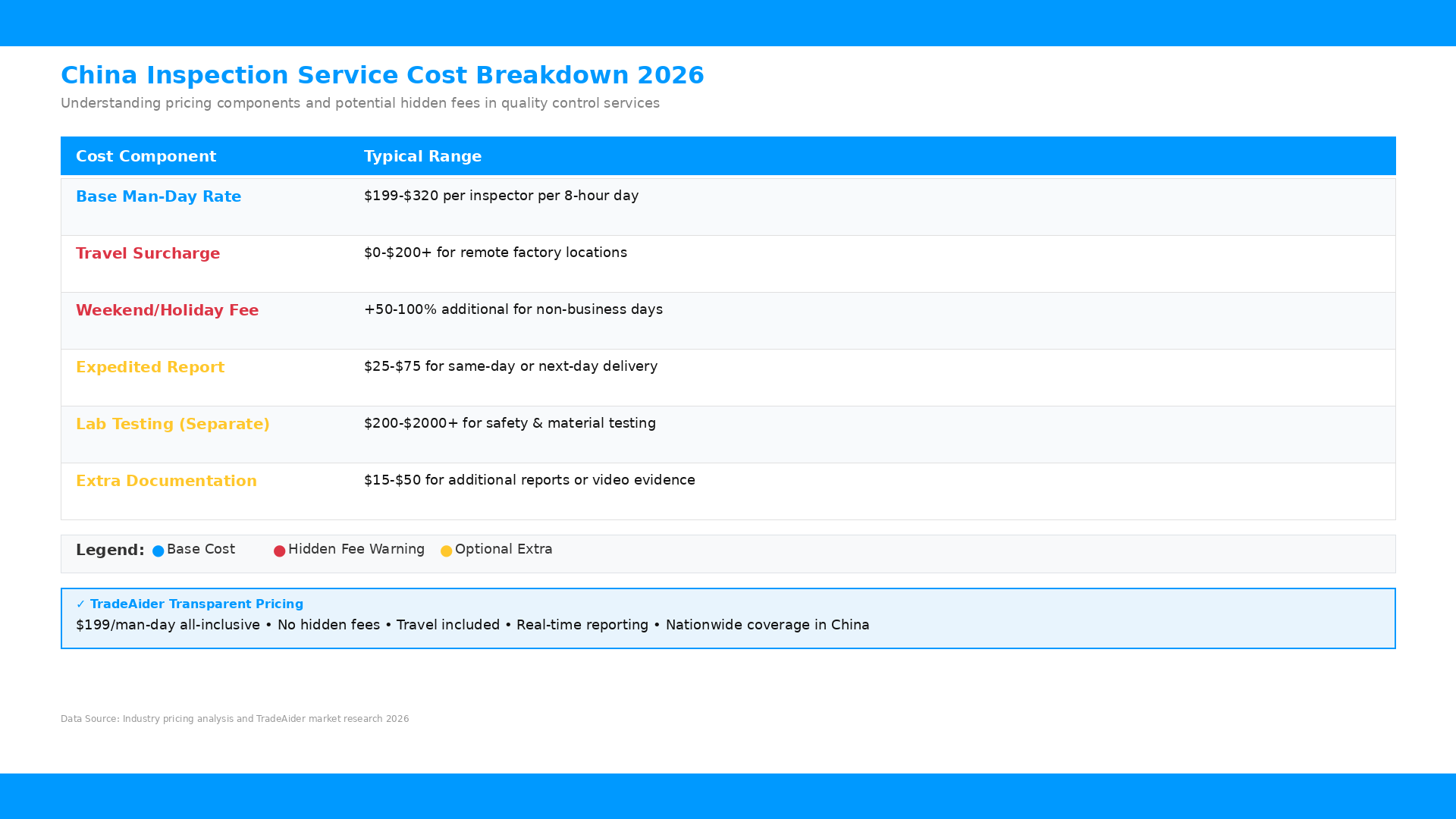
Figure 1: Typical cost breakdown for China inspection services showing base rates and common additional fees
Travel Surcharges
Travel costs represent one of the most common hidden fees in inspection pricing. While many companies advertise all-inclusive rates, the definition of "all-inclusive" varies significantly. Some providers include transportation only within specific city limits or major manufacturing hubs, adding surcharges for factories located outside these areas. According to pricing data from various inspection companies, travel surcharges can add $50 to $200 or more to the base inspection cost depending on distance and location.
Truly transparent pricing should include travel costs to any location within China without additional charges. When evaluating inspection providers, ask specifically about travel fee policies and request written confirmation that the quoted rate covers your specific factory locations. TradeAider's transparent pricing model includes travel costs throughout China, eliminating the uncertainty that plagues many inspection quotes.
Weekend and Holiday Premiums
Inspection services required on weekends or Chinese holidays often incur premium charges that can add 50-100% to the base rate. Chinese manufacturing operates on varied schedules, and factories may request inspections during weekends or holidays to meet tight shipping deadlines. Importers should budget for these potential premiums or work with inspection providers who offer consistent pricing regardless of scheduling.
Major Chinese holidays when premium rates may apply include Chinese New Year (typically late January to mid-February), Qingming Festival (April), Labor Day (May 1-5), Dragon Boat Festival (June), Mid-Autumn Festival (September), and National Day Golden Week (October 1-7). During these periods, inspector availability may be limited and premium rates are common. Planning inspections around these holidays when possible can help control costs while maintaining quality assurance coverage.
Report and Documentation Fees
Standard inspection reports are typically included in the man-day rate, but enhanced documentation may incur additional charges. Some providers charge extra for comprehensive photo reports, video documentation, expedited report delivery, or additional report copies. While these fees may seem minor individually, they can accumulate to add 10-20% to the total inspection cost.
Modern inspection platforms like TradeAider provide real-time reporting as a standard feature, allowing importers to access inspection progress and results immediately without waiting for report delivery or paying premium fees for expedited service. This real-time visibility represents a significant advancement over traditional inspection reporting models and should be a consideration when evaluating inspection service value.
Factors Affecting Inspection Costs
Beyond the standard man-day rate and potential hidden fees, several factors influence the total cost of quality inspection services in China. Understanding these factors helps importers optimize their quality control budgets while maintaining effective product verification.
Order Quantity and Sample Size
The quantity of products to inspect directly affects inspection time and cost. Using AQL sampling standards, larger orders require larger sample sizes, which translates to more inspection time. For example, an order of 5,000 units under General Inspection Level II requires a sample size of 200 units, while an order of 500 units requires only 50 units for inspection. Use our inspection calculator to estimate inspection time requirements based on your specific order parameters.
Product complexity also affects inspection duration. Simple products with few inspection points can be evaluated more quickly than complex products requiring extensive testing, measurement, or documentation. When budgeting for inspection, consider not just order quantity but also the number of inspection checkpoints, testing requirements, and documentation needs.
Product Category and Testing Requirements
Different product categories require different inspection approaches, which affects cost. Consumer electronics may require functional testing, safety verification, and compliance documentation that increases inspection time. Textiles require fabric testing, color matching, and construction quality checks. Food-contact products demand specific material verification and regulatory compliance testing that goes beyond standard inspection procedures.
For products requiring laboratory testing in addition to on-site inspection, costs increase substantially. Laboratory testing fees are typically charged separately from inspection services and can range from several hundred to several thousand dollars depending on the tests required. Integrating testing requirements into your quality control planning helps avoid unexpected costs and ensures comprehensive product verification.
Inspector Expertise and Specialization
Some product categories require specialized inspector expertise, which may affect pricing. Technical products such as electronics, machinery, or medical devices require inspectors with specific knowledge and experience. Soft goods like garments and textiles demand inspectors with expertise in fabric quality, construction techniques, and sizing standards. While the man-day rate may be similar, the availability of specialized inspectors can affect scheduling flexibility and lead times.
TradeAider maintains a network of qualified inspectors across product categories, ensuring that your inspection is conducted by professionals with relevant expertise. This specialization improves inspection quality and efficiency, providing better value than generic inspection services regardless of product type.
Cost-Benefit Analysis: Is Professional Inspection Worth It?
When evaluating inspection costs, importers should consider the potential cost of quality failures against the investment in professional inspection services. A single quality failure can result in costs far exceeding years of inspection expenses, making professional quality control a prudent investment rather than an optional expense.
The True Cost of Quality Failures
Quality failures carry direct and indirect costs that can devastate import businesses. Direct costs include product returns, refunds, replacements, and shipping expenses for defective merchandise. For e-commerce sellers, these costs are compounded by platform penalties, lost inventory, and storage fees. Indirect costs include damaged brand reputation, negative reviews, decreased customer loyalty, and potential legal liability for safety-related defects.
Consider a scenario where a $10,000 shipment of kitchenware contains 15% defective products. Without inspection, these defects reach customers, resulting in returns, complaints, and potential safety incidents. The cost of processing returns alone can exceed the original inspection cost, while damage to seller ratings and brand reputation carries long-term consequences that far outweigh inspection expenses. Professional inspection provides insurance against these risks at a fraction of the potential failure cost.
ROI of Professional Inspection
The return on investment for professional inspection services is compelling when analyzed systematically. An inspection costing $199-400 can protect shipments worth thousands or tens of thousands of dollars, identifying quality issues before they become costly problems. For importers with consistent order volume, establishing an inspection program with a reliable provider creates predictable quality control costs while reducing the variability and risk associated with unverified shipments.
TradeAider's WeGuarantee Total Quality Control service takes this value proposition further by providing quality accountability that extends beyond traditional inspection. With WeGuarantee, TradeAider shares responsibility for quality outcomes, creating aligned incentives that traditional inspection services cannot match. For importers seeking comprehensive quality assurance with financial protection, this service represents the ultimate ROI on quality control investment.
How to Reduce Inspection Costs
While professional inspection is a worthwhile investment, there are legitimate strategies for optimizing inspection costs without compromising quality assurance effectiveness.
Strategic Inspection Scheduling
Timing inspections strategically can reduce costs while maintaining quality coverage. Consolidating multiple product inspections at the same factory reduces per-inspection costs by sharing travel time and administrative overhead. Scheduling inspections during regular working hours avoids weekend and holiday premiums. Coordinating with suppliers to align production completion with inspection scheduling minimizes the risk of delays that might require expedited or rescheduled inspections.
For regular suppliers with established quality track records, consider implementing risk-based inspection protocols that reduce inspection frequency for consistently reliable suppliers while maintaining full coverage for new or problematic suppliers. This approach optimizes inspection resources while maintaining appropriate quality oversight.
Choose Transparent Pricing Providers
Selecting inspection providers with truly transparent pricing eliminates the uncertainty and hidden costs that complicate budgeting. Look for providers who publish clear pricing structures, explicitly state what's included in their rates, and commit to no-surprise invoicing. The apparent savings from lower base rates with hidden fees are often illusory compared to transparent pricing that accurately reflects the true cost of service.
TradeAider's commitment to transparent pricing at $199/man-day for inspection services throughout China represents the industry best practice in pricing clarity. This straightforward approach allows importers to budget accurately and compare true costs without decoding complex fee structures or anticipating surprise charges.
Common Questions About China Inspection Costs
What is the average cost of a pre-shipment inspection in China?
The average cost of pre-shipment inspection in China ranges from $199 to $320 per man-day for standard consumer products. Rates vary based on inspection company, product complexity, and location. Premium inspection companies may charge higher rates, while some providers offer promotional rates for new customers. The key is to understand what's included in the quoted rate—transparent pricing at $199/man-day that includes travel, reporting, and communication provides better value than lower advertised rates with hidden surcharges.
How much does a factory audit cost in China?
Factory audit costs in China typically range from $220 to $458 per man-day depending on audit scope and provider. Simple factory capability audits verifying production capacity and basic quality systems cost less than comprehensive audits that include quality management system evaluation, social compliance verification, and detailed capability assessment. Social compliance audits specifically designed for ethical sourcing verification typically cost $350-$500 due to their specialized nature and documentation requirements.
Are there additional fees beyond the man-day rate?
Many inspection companies charge additional fees beyond the base man-day rate. Common additional charges include travel surcharges for remote locations (typically $50-200+), weekend and holiday premiums (often 50-100% additional), expedited report fees, extra documentation charges, and per-report fees for multiple report copies. Transparent pricing providers like TradeAider include these services in the standard rate, eliminating surprise charges and simplifying cost planning.
How do I estimate total inspection cost for my order?
Estimating total inspection cost requires considering order quantity, product complexity, inspection level, and inspection type. Use an AQL calculator to determine sample size based on your order quantity. Factor in product complexity—simple products require less inspection time than complex items. Consider inspection timing to avoid weekend or holiday premiums. For accurate budgeting, request a detailed quote that specifies all included services and potential additional charges.
Conclusion
Understanding China inspection service costs empowers importers to make informed decisions about quality control investment. In 2026, the market offers options ranging from budget providers with hidden fees to transparent services that deliver genuine value. By understanding pricing structures, identifying potential hidden costs, and selecting providers with transparent pricing models, importers can establish cost-effective quality control programs that protect their businesses from costly quality failures.
For importers seeking reliable inspection services with transparent pricing, TradeAider offers comprehensive quality control solutions at $199/man-day throughout China. Our real-time reporting platform provides immediate visibility into inspection results, while our commitment to transparent pricing eliminates budget surprises. Contact our team to discuss your quality control requirements and receive a detailed quote for your inspection needs.
Related Articles
Grow your business with TradeAider Service
Click the button below to directly enter the TradeAider Service System. The simple steps from booking and payment to receiving reports are easy to operate.

