
- About Us

- Our Services
- Your Industry
- Resources
- News & Blog
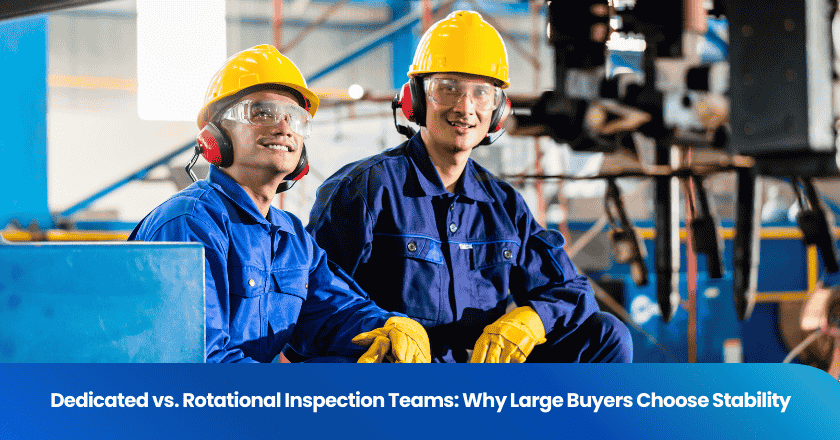
For high-volume buyers, the choice between dedicated inspection teams and rotational staff often determines the stability of their supply chain. Dedicated teams deliver uninterrupted oversight, advanced technical knowledge, and robust risk prevention. By maintaining consistent quality control across large OEM orders and long production cycles, these experts build a foundation of trust. Buyers gain confidence knowing that specialists who understand their specific products are protecting their shipments.

Key Takeaways
- Consistent Oversight: Dedicated teams stay on-site, reducing production errors through familiarity with the product line.
- Specialized Expertise: Deep knowledge leads to early defect detection and stricter compliance with industry standards.
- Real-Time Problem Solving: Continuous monitoring allows for immediate corrective actions, improving safety and efficiency.
- Shared Accountability: Dedicated teams align their success with the buyer's, ensuring higher commitment to quality standards.
- Streamlined Communication: Direct reporting lines help buyers make faster decisions, reducing delays and misunderstandings.
The Strategic Value of Dedicated Teams
Continuity And Consistency
Scale-driven buyers prioritize dedicated inspection teams because they provide unmatched continuity. Unlike rotational staff who may need retraining with every shift change, dedicated inspectors remain on-site from pre-production to final shipment. This ongoing presence ensures that every product meets strict industry standards and safety compliance requirements without the variability introduced by changing personnel.
Inspector turnover often disrupts quality control. Differences in training and experience among rotational staff can lead to inconsistent defect identification. High turnover requires constant retraining, which drains resources and dilutes standardized practices. Dedicated teams eliminate these risks, ensuring every product is evaluated against the same high benchmarks. They maintain detailed records of each inspection, providing transparency and supporting operational efficiency.
Specialized Technical Expertise
Specialized technical expertise sets dedicated inspection teams apart. In complex sectors like electronics and automotive, inspectors must possess deep knowledge of product requirements and compliance regulations. Dedicated staff often hold certifications from organizations like the American Society for Quality (ASQ), demonstrating a commitment to industry best practices.
- Certifications: Validated credentials demonstrate a commitment to understanding quality control nuances.
- Industry Standards: Familiarity with ISO and specific technical requirements is essential for high-stakes manufacturing.
- Conformity: Ensuring products meet the exact specifications set by manufacturers and regulators.
Technical expertise enables early defect detection. When combined with modern tools, expert oversight can detect patterns that rotational staff might miss. Dedicated teams understand the unique requirements of each product category, from hardlines to complex electronics. Their expertise ensures that every inspection, from pre-production to warehouse distribution, enforces safety measures and quality standards effectively.
Continuous Control And Warehouse Safety
Real-Time Problem Solving
Stationed inspection teams deliver continuous monitoring that protects warehouse safety and product quality. These experts remain on-site, ready to address issues as soon as they arise. Their presence ensures that every inspection meets strict industry standards. Dedicated teams use advanced tools to maintain quality control and prevent last-minute surprises.
- Proactive Maintenance: Using historical data to identify potential equipment failures before they disrupt production.
- IoT Monitoring: Utilizing sensors to detect anomalies like vibration or temperature changes in real-time.
- Immediate Response: Rapidly addressing safety incidents to minimize production downtime and protect workers.
Dedicated inspection teams communicate faster and resolve quality issues more efficiently than rotational staff. The table below highlights the differences:
| Aspect | Dedicated Inspection Teams | Rotational Staff |
|---|---|---|
| Real-time Visibility | Instant reporting and deep contextual knowledge | Rely on standard protocols without historical context |
| Communication | Direct, often real-time interaction with factory management | Formal, periodic reporting that may delay action |
| Issue Resolution | Immediate response and follow-through on corrective actions | May experience delays due to shift transitions |
Comprehensive Oversight Model
A comprehensive oversight model transforms warehouse safety and product quality for large buyers. Inspection teams stationed at the warehouse oversee every stage of production and inventory management. This guarantees that every inspection follows strict standards and supports efficient distribution. Inspectors supervise pre-shipment inspection, ensuring that every product meets industry standards before leaving the facility.
Data-Driven Quality And Accountability

Actionable Defect Tracking
Dedicated inspection teams transform product quality by collecting actionable data at every stage. They monitor product assembly, cosmetic defects, dimensional accuracy, and label alignment with precision. By recording timestamped inspection data, they trigger immediate actions when issues are detected.
| Data Point | Description |
|---|---|
| Part Presence | Inspections to ensure all required parts are present in the assembly. |
| Cosmetic Defects | Detection of surface imperfections or aesthetic issues. |
| Dimensional Accuracy | Verification that parts meet specified size and shape requirements. |
| Label Alignment | Ensuring labels are correctly placed and oriented. |
| Immediate Triggers | Logging issues and tagging for rework immediately upon detection. |
Teams use advanced analytics to detect trends across batches and identify root causes. This process improves quality control and supports efficient layout for warehouse distribution. Maintaining a clear audit trail builds trust and transparency for large buyers.
Shared Accountability
Dedicated inspection teams operate on a model of shared accountability. Unlike transient staff, dedicated teams are integrated into the success of the production run. This alignment motivates all parties to maintain high standards for product quality and safety.
Buyers gain confidence knowing that dedicated teams act as their eyes and ears on the ground, safeguarding inventory and ensuring strict adherence to standards.
Communication And Cost Efficiency
Streamlined Reporting
Dedicated inspection teams transform communication by providing immediate access to results. Buyers can make quick decisions about shipment approvals without waiting for batched reports. Direct communication channels between the buyer and the on-site team help resolve issues fast and keep production on schedule.
- Instant Access: Online reports provide real-time visibility into inspection status.
- Visual Proof: Mobile-uploaded data, including photos and videos, offers undeniable evidence of quality.
- Direct Alerts: Immediate notifications ensure that critical issues are addressed without delay.
Long-Term Savings
While dedicated teams may seem like a higher initial investment, they deliver significant long-term savings. By identifying quality issues early in production, they minimize costly rework, product recalls, and warranty claims. Their proactive approach ensures that errors are caught before they become expensive problems.
| Benefit Type | Description |
|---|---|
| Return on Investment | Preventing major defects can save multiples of the inspection cost. |
| Risk Mitigation | Avoiding products with major issues protects brand reputation and profits. |
| Peace of Mind | Professional, consistent inspections support informed decision-making. |
Dedicated teams also reduce training costs. Buyers do not need to invest time in retraining new staff for every inspection cycle. This consistency supports warehouse efficiency and keeps distribution running smoothly.
Conclusion
Large buyers choose dedicated inspection teams for unmatched quality, safety, and risk control. As demands for zero-defect products rise, especially in sectors like automotive and electronics, the shift toward dedicated oversight becomes essential. These teams deliver the confidence and results large-scale buyers need for long-term success.
FAQ
What makes dedicated inspection teams more reliable for large buyers?
Dedicated teams stay on-site and monitor every production stage. They build deep product knowledge and maintain strict quality standards. Buyers trust these teams to catch issues early and prevent costly mistakes.
How do dedicated teams reduce operational risk?
Dedicated inspection teams provide continuous oversight, which helps prevent shipment delays and product recalls. Buyers gain peace of mind knowing experts are protecting their investments.
Can dedicated inspection teams adapt to different product categories?
Yes! These teams include specialists for hardline, softline, and electronic products. Each expert understands unique requirements and compliance standards. Buyers receive tailored quality control for every order.
Do dedicated teams improve communication with buyers?
Absolutely. Dedicated teams provide real-time updates and clear reports. Buyers see inspection results instantly and make fast decisions. This transparency builds trust and speeds up the approval process.
Are dedicated inspection teams cost-effective for long-term projects?
Yes. Dedicated teams lower training costs and reduce errors. Buyers save money by avoiding recalls and warranty claims. Over time, these savings make dedicated teams the smart choice for large-scale orders.
Related Articles


Grow your business with TradeAider Service
Click the button below to directly enter the TradeAider Service System. The simple steps from booking and payment to receiving reports are easy to operate.

