
- About Us

- Our Services
- Your Industry
- Resources
- News & Blog
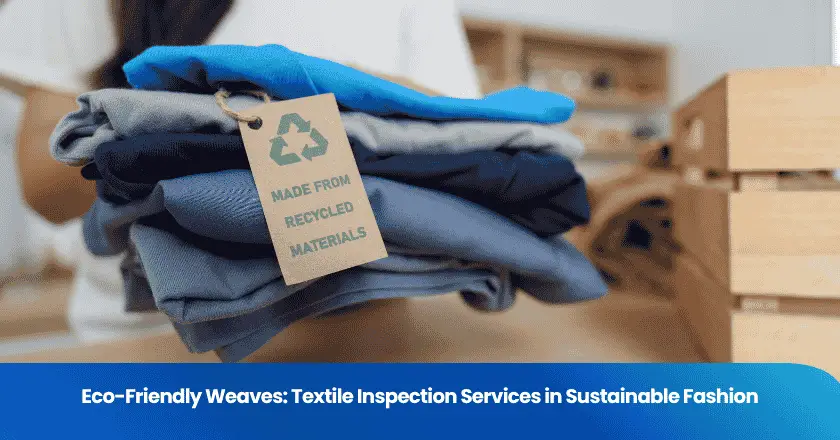
As consumer demand for ethical, low-impact apparel accelerates, sustainable fashion has shifted from a niche marketing angle to a core compliance and brand reputation requirement. Yet claims of “eco-friendly fabrics” and “sustainable production” carry little credibility without independent, batch-level verification across the textile supply chain. For organic cotton, recycled polyester, hemp, linen and other low-impact materials, professional textile inspection services bridge the gap between corporate sustainability commitments and real-world factory practice.
Sustainable textile inspection goes far beyond checking for weaving defects or colour irregularities. It verifies fibre composition, chemical safety, certification validity and process compliance against globally recognised standards. It protects brands from greenwashing accusations, reduces regulatory detention and recall risk in target markets, and ensures that the eco-friendly weaves marketed to consumers deliver on their environmental promises.
The Rise of Sustainable Fashion and Supply Chain Compliance Risks
Driven by tighter regulation, investor ESG requirements and shifting consumer preferences, the sustainable textile market continues to expand rapidly. Brands increasingly market organic, recycled and low-carbon fabric lines as points of differentiation. However, the complexity of global textile supply chains creates inherent verification challenges.
Fibre substitution — such as conventional cotton passed off as organic, or virgin polyester blended into recycled yarn — remains a widespread risk. Chemical non-compliance in dyeing and finishing can also turn an “eco-friendly” product into a regulatory violation. Meanwhile, jurisdictions including the EU and France have strengthened anti-greenwashing rules, requiring public environmental claims to be supported by verifiable evidence.
For brands and importers, the cost of getting this wrong is high: customs detention, product recalls, certification suspension, consumer distrust and reputational damage. Independent textile inspection is the most practical line of defence, turning sustainability claims into auditable, batch-specific records.
Key Global Standards for Sustainable Textiles
Credible sustainable textile inspection is built on alignment with established international standards. The following frameworks are the most widely required by brands, retailers and market regulators.
GOTS (Global Organic Textile Standard)
GOTS is the world’s leading benchmark for organic fibre textiles. It requires a minimum of 95% organic fibre content to carry the “organic” label, and at least 70% for “made with organic” claims. The standard covers the entire supply chain — from fibre farming and spinning through dyeing, finishing and packaging — and includes mandatory requirements for chemical restriction, wastewater treatment, environmental management and social labour practices. It is the gold standard for organic cotton, organic linen and organic hemp products.
OEKO-TEX® Standard 100
OEKO-TEX Standard 100 is the most widely adopted harmful-substance testing standard for textiles. It classifies products into four tiers based on end use — from Class I (baby products, strictest limits) through Class IV (furnishing materials) — and sets threshold limits for hundreds of hazardous substances including formaldehyde, heavy metals, azo dyes, allergenic disperse dyes and phthalates. Unlike GOTS, it focuses on finished-product safety rather than organic fibre origin, and applies to all fabric types.
GRS and RCS (Global Recycled Standard / Recycled Claim Standard)
Administered by Textile Exchange, GRS and RCS validate recycled fibre claims. GRS applies to products with at least 20% recycled material and includes requirements for supply chain traceability, environmental management, social compliance and chemical restrictions. RCS is a lighter framework focused solely on recycled content verification and traceability, with a minimum 5% recycled material threshold. Both are standard requirements for recycled polyester, recycled cotton, recycled wool and regenerated cellulosic products.
bluesign® System
The bluesign system is a whole-supply-chain chemical management framework. It approves chemical inputs at the formulation stage, restricts hazardous substances from entering production, and sets benchmarks for resource consumption, emissions and occupational safety. It is widely required by premium outdoor, apparel and home textile brands as evidence of responsible manufacturing.
ZDHC MRSL
The Zero Discharge of Hazardous Chemicals Manufacturing Restricted Substances List defines chemical substances that are banned or restricted for use in textile, leather and footwear manufacturing. Aligned with the goal of near-zero discharge of hazardous chemicals, MRSL compliance is a common requirement for brands selling into the EU and US premium markets, particularly for dyeing, printing and finishing processes.
EU REACH SVHC Regulation
Under EU REACH, articles placed on the EU market must not contain substances of very high concern (SVHC) above 0.1% w/w per article. For textiles, this applies to finished fabrics, trims and accessories. Non-compliance can result in import rejection, market withdrawal and notification obligations. SVHC screening is therefore a standard component of sustainable textile inspection for EU-bound goods.
The Core Role of Textile Inspection in Sustainable Fashion
Textile inspection serves five essential functions in a sustainable fashion quality programme.
Validates Sustainability Claim Authenticity
Inspection cross-checks declared fibre content, certification scope and batch records against the actual product, reducing the risk of conventional materials being sold as organic or recycled.
Controls Chemical Safety Risk
On-site document review and targeted sampling ensure fabrics meet applicable harmful substance limits, preventing customs holds, market withdrawals and consumer safety issues.
Preserves Physical Quality Performance
Eco-friendly materials must still meet commercial quality expectations. Inspection verifies consistent weight, dimensional stability, colour fastness and strength so that sustainability does not come at the cost of durability.
Supports Certification and Audit Compliance
Inspection records provide auditable batch evidence that supports annual certification reviews, customer audits and regulatory due diligence requirements.
Builds Consumer and Stakeholder Trust
Verifiable inspection data gives brands tangible evidence to back public sustainability claims, reducing greenwashing criticism and strengthening brand credibility.
End-to-End Inspection Workflow for Eco-Friendly Textiles
Maximum risk control requires inspection at multiple supply chain stages, not just a single final check. A complete sustainable textile inspection programme covers four key stages.
1. Raw Material & Fibre Verification (Pre-Production)
Before bulk production begins, inspectors verify incoming fibre and yarn batches: reviewing certification documents, confirming material traceability records, checking fibre identification and validating that the declared organic or recycled content matches the purchase order. This stage catches fibre substitution risk at the earliest, lowest-cost point.
2. Greige & Dyeing Process Inspection (In-Production)
During manufacturing, inspectors audit greige (unfinished) fabric for weight, width, density and visual defects, and review dyeing and finishing practices. They verify that chemical auxiliaries and dyestuffs align with applicable MRSL or certification requirements, and conduct in-line checks for colour consistency, staining and process deviations.
3. Finished Fabric / Garment Final Inspection (Pre-Shipment)
Once production is complete and packed, inspectors draw random samples per AQL standards and conduct a full evaluation: visual workmanship, measurement compliance, functional performance, labelling accuracy and packaging integrity. For sustainable products, this stage also includes a final cross-check of certification labels, fibre content labels and country-of-origin marking.
4. Documentation & Traceability Audit
Alongside physical inspection, inspectors review batch records, material flow documents, test reports and valid certification scopes to confirm that every production tier can be traced back to the certified fibre or material source.
Critical Inspection Checkpoints for Sustainable Fabrics
A comprehensive sustainable textile inspection covers three broad categories of verification.
Physical Performance Checks
- Fabric weight, width and yarn density consistency
- Colour fastness (washing, rubbing, light, perspiration)
- Dimensional stability and shrinkage after washing
- Tensile strength, tearing strength and seam performance
- Visual defects: broken yarns, holes, dye spots, misweaves, streaks and stains
Chemical Safety Verification
- Formaldehyde content
- pH value of fabric
- Banned azo dyes and allergenic disperse dyes
- Heavy metal extractables
- Phthalates and other restricted plasticisers
- REACH SVHC compliance screening
Sustainability Compliance Checks
- Fibre composition consistency with declared content
- Recycled / organic material ratio verification
- Validity and scope of third-party certification
- Correct use of certification logos on labels and hangtags
- Supply chain traceability documentation per batch
- Factory environmental and chemical management records
How Third-Party Inspection Mitigates Greenwashing Risk
Greenwashing exposure extends far beyond bad publicity. Under the EU CSRD and national anti-greenwashing laws, unsubstantiated environmental claims can lead to administrative fines, product delisting and class-action risk. In-house or supplier-provided quality records are often viewed as self-serving and may not satisfy regulators or consumers.
Independent third-party inspection addresses this by delivering:
- Impartiality: Inspectors have no commercial stake in the production outcome, so findings are objective and defensible.
- Standard expertise: Trained inspectors understand the fine print of GOTS, GRS, OEKO-TEX, REACH and other frameworks, avoiding common compliance gaps.
- Auditable evidence: Time-stamped, photo-documented inspection reports create a formal record that can be used in audits, regulatory enquiries and customer transparency disclosures.
- Early correction: Issues are identified at the factory, before shipment, so that corrective action is faster and far less costly than post-market remediation.
TradeAider Sustainable Textile Inspection Services
TradeAider provides specialised textile inspection services for sustainable fashion brands, e-commerce sellers and global importers, with on-site inspectors deployed across major textile manufacturing regions in China.
Our inspectors are trained in all mainstream sustainable textile standards — including GOTS, OEKO-TEX Standard 100, GRS, RCS, ZDHC MRSL and EU REACH — and can tailor inspection checklists to your brand’s specific sustainability claims and target market requirements.
From in-process audits to final random inspection and documentation review, we deliver official photo-documented reports within 24 hours. Clients can also monitor inspection progress and view findings in real time through our online service system, enabling timely decisions on batch acceptance, on-site factory rectification or shipment hold.
Whether you are sourcing organic cotton fabrics, recycled polyester apparel or hemp home textiles, TradeAider helps you turn sustainability commitments into verifiable supply chain practice, reducing greenwashing risk and protecting your brand reputation.
Frequently Asked Questions
What is the difference between GOTS and OEKO-TEX Standard 100?
GOTS certifies that a textile is made from organic fibres and that the full supply chain meets environmental and social standards. OEKO-TEX Standard 100 certifies that a finished textile is free from harmful substances above defined limits, regardless of fibre origin. Many sustainable brands require both to cover organic integrity and finished-product safety.
Can textile inspection confirm a fabric is made from recycled materials?
Inspection includes on-site verification of traceability documents, batch records and certification scope. For definitive quantitative confirmation of recycled content, inspection can be paired with laboratory testing. The combination of document audit and physical inspection provides the strongest defence against recycled-content misrepresentation.
Is sustainable textile inspection legally required?
There is no universal legal requirement for inspection itself, but inspection is widely used to demonstrate compliance with mandatory regulations such as EU REACH, and to satisfy certification scheme obligations. For brands making public sustainability claims, inspection is a standard due diligence step to manage anti-greenwashing legal risk.
When should I schedule sustainable textile inspection?
For maximum risk coverage, schedule inspection at three milestones: pre-production raw material verification, in-process dyeing and finishing audit, and pre-shipment final inspection. For repeat orders with stable, pre-audited suppliers, final inspection plus periodic documentation audits is a common cost-effective approach.
Conclusion
Sustainable fashion cannot be built on marketing claims alone. Eco-friendly weaves and ethical production need independent, standardised verification at every layer of the supply chain to deliver real environmental value and withstand regulatory scrutiny.
Professional textile inspection turns abstract sustainability promises into measurable, documentable facts. It ensures that organic fibres are genuinely organic, recycled materials are traceable, and finished products meet both commercial quality standards and global chemical safety rules.
For brands building their reputation on sustainable values, textile inspection is not an extra cost — it is the foundation of credible, long-term growth. With rigorous third-party inspection, every eco-friendly weave can reach consumers with the transparency and integrity the market demands.
Related Articles
Grow your business with TradeAider Service
Click the button below to directly enter the TradeAider Service System. The simple steps from booking and payment to receiving reports are easy to operate.

