
- About Us

- Our Services
- Your Industry
- Resources
- News & Blog
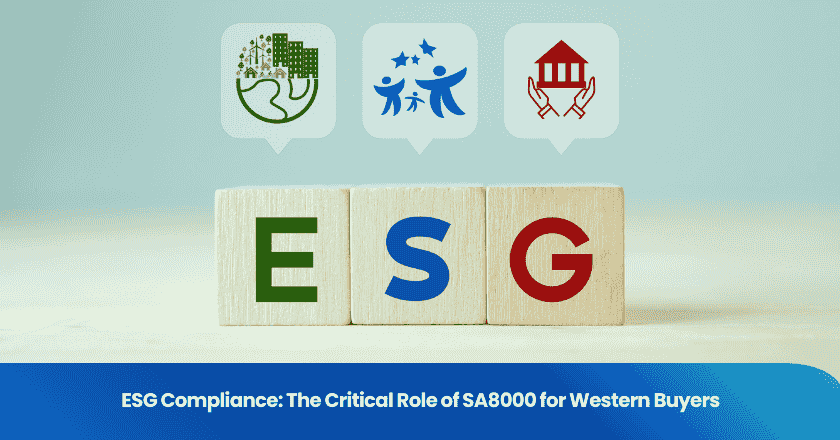
Western buyers face mounting pressure to prioritize SA8000 for ESG compliance as consumers and stakeholders demand greater transparency. Expectations have shifted; companies are now required to actively protect workers and uphold rigorous social standards. Neglecting these obligations places both human capital and business continuity at significant risk.
| Risk Type | Description |
|---|---|
| Legal & Regulatory | Lawsuits and penalties for failing to adhere to emerging social accountability laws. |
| Financial | Significant losses and damaged brand value stemming from allegations of poor labor practices. |
| Reputational | Severe impact on public perception following negative publicity regarding supply chain ethics. |
| Operational | Disruptions caused by labor strikes, health hazards, or forced labor scandals. |
Clear trends in ESG compliance are emerging:
- There is a growing demand for ESG disclosures driven by increasing global regulations.
- Procurement teams are under pressure to adopt ethical practices to avoid compliance failures.
- High ESG scores correlate with lower capital costs and improved access to financial resources.
SA8000 strengthens sustainability efforts by protecting workers and ensuring ESG compliance aligns with global expectations.
Key Takeaways
- Prioritize SA8000 certification to enhance social accountability and meet growing ESG expectations.
- Investing in social accountability leads to higher customer satisfaction and a stronger corporate reputation.
- Conduct regular audits to ensure compliance with labor standards and protect your brand.
- Integrate SA8000 with other sustainability certifications to create a comprehensive ESG strategy.
- Take actionable steps like gap analysis and corrective actions to successfully implement SA8000.
The Role of Social Accountability in ESG Compliance

Why Social Accountability Matters
Procurement leaders recognize that the social dimension of ESG is more than a trend; it is a core component of responsible business. Investing in social accountability demonstrates respect for workers and the communities where operations take place. This commitment yields tangible benefits:
- Higher Customer Satisfaction: End-users increasingly value ethical brands.
- Stronger Reputation: Ethical practices attract investors and build stakeholder trust.
- Community Engagement: Smoother operations with fewer local disruptions.
- Regulatory Adaptability: Improved ability to adapt to new governance requirements.
SA8000 vs. Other Standards
Buyers often compare SA8000 with other social responsibility standards, such as BSCI. While both aim to improve supply chain conditions, they differ in approach:
| Aspect | SA8000 | BSCI |
|---|---|---|
| Focus | Labor rights and working conditions | Social compliance within supply chains |
| Application | Certifiable standard for any organization | Social audits by accredited third parties |
| Framework | Comprehensive management system | Code of Conduct for improvement |
SA8000 distinguishes itself by offering a systematic management system, whereas BSCI focuses on governance through audits and codes of conduct. SA8000 provides a more structured path to long-term compliance.
SA8000 Standard and Industry Relevance

Application in Softline and Hardline Products
SA8000 sets a global benchmark across diverse industries. It is particularly critical for sectors including apparel, textiles, toys, home furnishings, electronics, automotive, food production, and even service sectors like hospitals and educational institutions.
With thousands of certified facilities worldwide, SA8000 shapes expectations for working conditions. Buyers use it to ensure suppliers maintain safe and fair environments, building trust with regulators.
The SA8000 certification cycle follows a clear process:
| Step | Description | Duration |
|---|---|---|
| Preparation | Initial review to understand the organization. | Varies |
| Readiness Assessment | Stage 1 Audit to identify gaps. | Varies |
| Auditing | Stage 2 Audit to evaluate full compliance. | Varies |
| Issuance | Certification granted, valid for three years. | 3 years |
| Surveillance | Periodic audits to ensure ongoing compliance. | Annual |
Factory Audits and Supplier Qualification
Factory audits are vital for qualifying suppliers. These audits evaluate compliance with ethical labor practices. Third-party auditors observe conditions, interview employees, and review documentation to ensure suppliers meet strict requirements.
Third-party audits provide an objective view, confirming that suppliers follow local laws and international standards. This approach protects brand reputation and supports long-term success.
ESG Compliance Ecosystem
Integrating Environmental and Product Safety Standards
SA8000 is a pillar of the ESG ecosystem, but true sustainability requires addressing environmental risks and product safety as well. Western buyers often require suppliers to meet multiple certifications, such as OEKO-TEX, ZDHC, CPSIA, and CE.
| Certification | Focus Area | Integration with ESG |
|---|---|---|
| SA8000 | Labor Standards | Ensures social responsibility. |
| Higg FEM | Environmental Performance | Benchmarks environmental management. |
| ISO 14001 | Environmental Management | Framework for ecological responsibility. |
| ZDHC | Chemical Discharge | Controls chemical use in production. |
Legal Frameworks and Market Access
Governments in the EU and US have established programs recognizing companies with SA8000 certification. Market access increasingly depends on meeting these ESG standards.
| Region | Incentives |
|---|---|
| European Union | Incentive programs for certified companies; strict due diligence laws. |
| United States | Recognition and preferred market access for compliant suppliers. |
Sustainability reporting helps companies demonstrate compliance, attracting investors and avoiding penalties.
Benefits & Risks for Western Buyers
Financial and Operational Impact
Investing in SA8000 yields clear financial advantages. It signals a commitment to social standards, attracting reputation-sensitive clients and increasing order volumes.
Social certification acts as a credible signal of quality and ethics. International buyers react to this through increased orders, creating real economic value from social commitments.
Compliance streamlines operations by reducing supply chain disruptions caused by labor disputes. Furthermore, banks and investors favor organizations with strong ESG profiles, offering lower capital costs.
Reputational Protection
High-profile scandals—from Nike's child labor issues in the 90s to the Deepwater Horizon spill—prove that public opinion can shift instantly. Buyers who neglect social concerns risk severe damage. SA8000 demonstrates a commitment to corporate responsibility, building necessary trust.
Real-World Consequences
Failure to meet ESG requirements exposes buyers to penalties:
- Financial Fines: Violating ESG obligations can result in fines reaching millions of euros (e.g., up to 2% of annual turnover in Germany).
- Legal Liability: Lawsuits for false ESG claims or negligence.
- Capital Restrictions: Poor ESG profiles limit access to loans.
- Market Exclusion: Non-compliance can lead to exclusion from government contracts.
Implementing SA8000 in Global Supply Chains
Overcoming Challenges
Western buyers often face misconceptions. Some believe SA8000 guarantees instant perfection, while critics argue voluntary audits can be superficial. Barriers such as increased labor costs and "audit fatigue" (where suppliers hide issues) are real challenges.
| Misconception | Reality |
|---|---|
| "Guaranteed Monitoring" | Audits provide a snapshot; continuous improvement is required. |
| "Instant Fix" | Real change requires long-term commitment, not just a certificate. |
Actionable Steps for Compliance
To successfully integrate SA8000 into supplier qualification:
- Gap Analysis: Assess current practices against standards.
- Audit: Arrange a thorough audit with an accredited body.
- Corrective Actions: Fix non-compliances immediately.
- Certification: Obtain certification and maintain it through surveillance.
Western buyers who prioritize SA8000 position themselves for lasting success. Strong ESG practices boost profitability, attract capital, and ensure resilience during economic downturns. Invest in SA8000 certification now to lead in ethical sourcing.
FAQ
What is SA8000 certification?
SA8000 certification is a global standard for social accountability. It verifies a company's commitment to fair treatment of workers, helping Western buyers gain trust and market access.
How does SA8000 benefit Western buyers?
It mitigates legal risks, prevents reputational damage, and ensures suppliers deliver safer products. Certified supply chains are more stable and attractive to investors.
Which industries need SA8000 compliance most?
Labor-intensive sectors like textiles, apparel, toys, and home furnishings face the strictest demands and benefit most from compliance.
How can companies start the SA8000 certification process?
Begin with a gap analysis of your supply chain, followed by scheduling a third-party audit and addressing any identified non-conformities.
Related Articles


Grow your business with TradeAider Service
Click the button below to directly enter the TradeAider Service System. The simple steps from booking and payment to receiving reports are easy to operate.

